Washington City History: The Cotton Mission, the Dam and the Washington Fields
How Washington City, Utah went from an 1857 Cotton Mission settlement and a hard-won dam to the Washington Fields neighborhoods, plus landmarks to visit.
Washington City is one of the fastest-growing places in Southern Utah, and most of its new neighborhoods sit on land that was farmed for more than a century. Its history explains a lot about the town today, from the name "Dixie" to the canal that still runs through the Washington Fields. Here's how Washington went from a struggling cotton settlement to a city of new subdivisions, and the historic sites still worth visiting. For homes in the area, browse Washington City homes for sale.
The Cotton Mission
In 1857, church leaders called families to the warm Virgin River valley to grow cotton, cut off from supplies back east. On April 15, ten families led by Samuel Jefferson Adair arrived, and in early May 28 more families followed under Robert Covington, a former plantation foreman who knew how to grow cotton. The two groups met at a spring, now Adair Spring, laid out a town and named it after George Washington. Many of the settlers came from Southern states, which is one reason the region became known as Utah's Dixie.
Washington became the leading cotton producer of the mission, but life was hard: heat, malaria, alkali soil and, above all, floods.
The Cotton Factory
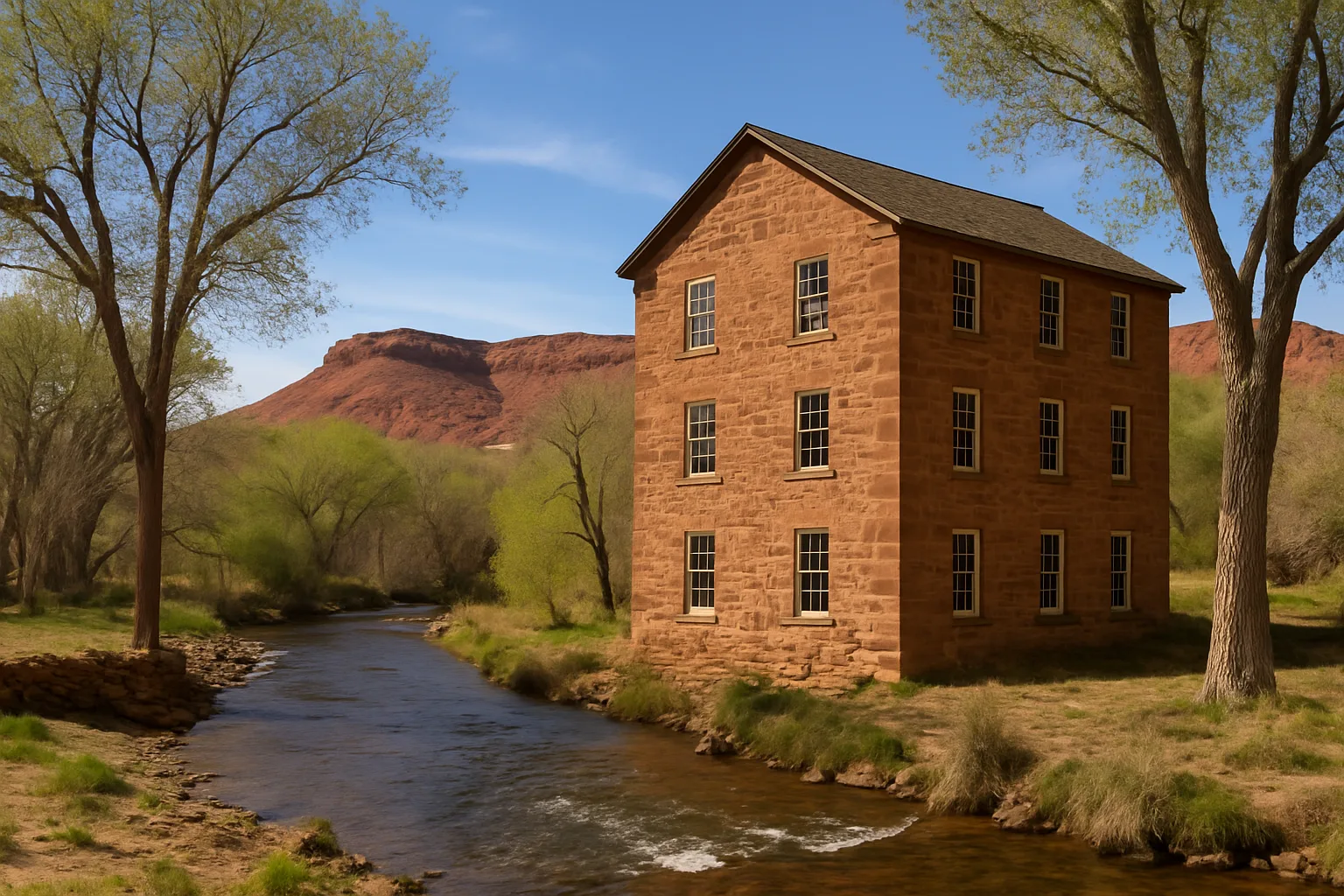
To turn local cotton into cloth, settlers began building the Washington Cotton Factory in 1865 on Mill Creek. The sandstone mill was completed in stages, with more stories added by around 1870. It struggled with an unreliable cotton supply and uneven water power and operated on and off until it closed for good in 1898, later serving as a warehouse. The building still stands and is listed on the National Register of Historic Places.
Taming the Virgin River
The broad, flat land southeast of town was ideal for farming, but it had no water. Settlers dammed the Virgin River again and again, and floods washed the dams away, twice in 1857, twice in 1858, three times in 1859 and at least once a year for decades. A canal company formed in the 1870s, and in 1891 a permanent diversion dam was finally completed at a site where a rock ledge crosses the river, with a spillway large enough to let floods pass. A canal of roughly ten miles carried water to the fields.
That water created "the Fields." Families farmed thousands of acres. The canal was piped in 2004 for safety and still irrigates the remaining farmland.
Farm Life in the Washington Fields
For generations, nearly every family in Washington had a farm in the Fields, and kids grew up working them. As cotton faded, farmers turned to other crops:
- Sorghum cane: pressed and boiled down into molasses, a key sweetener for pioneer families.
- Alfalfa: known to pioneers as "lucern," it became the main forage crop.
- Grain and feed: barley, wheat and tall forage sorghum for silage supported dairies, feed yards and cattle operations.
- Seed crops: sugar beet seed became a valuable cash crop for the area in the 20th century.
Many ranching families ran cattle on the desert range in winter and on Pine Valley Mountain in summer. Hay and grain went to markets as far away as Las Vegas.
From Farms to Neighborhoods
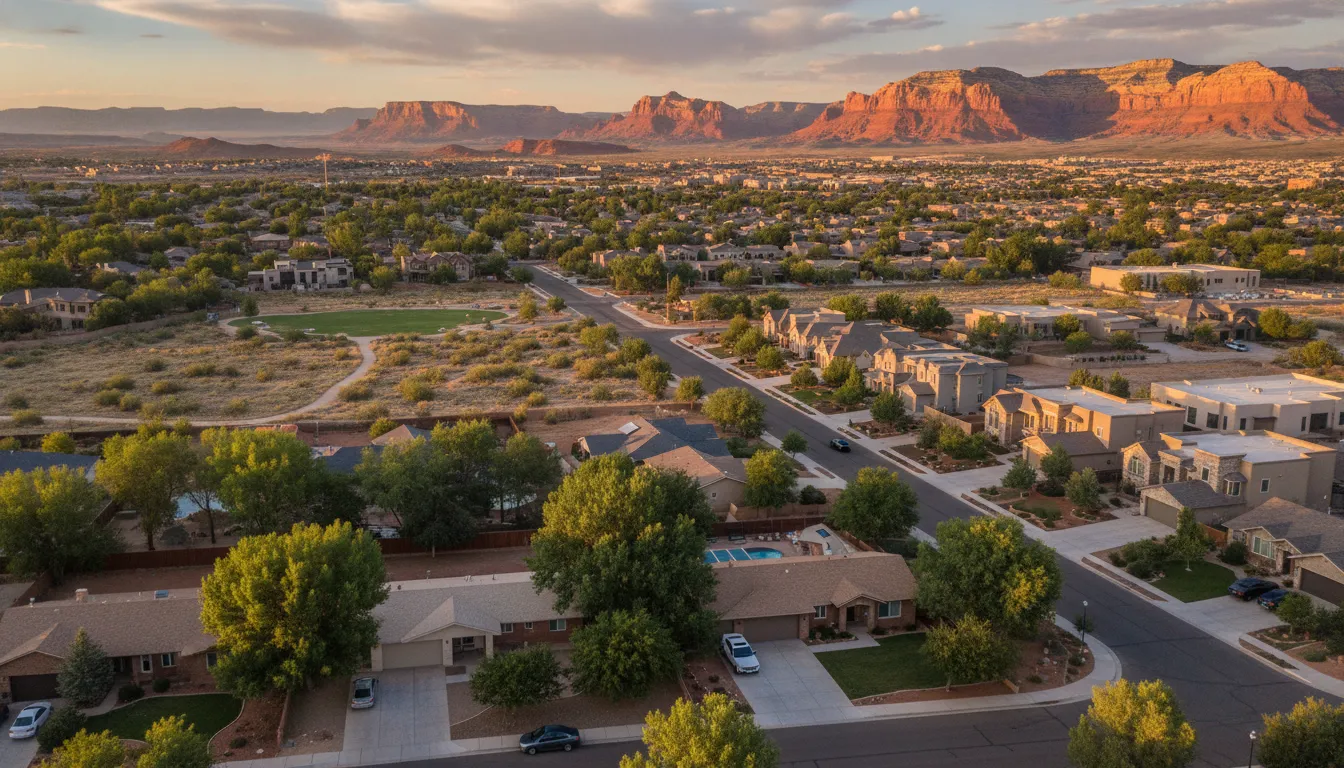
As St. George grew, the Fields' flat land and water rights made them a natural place for homes. Over the past few decades, much of the farmland has turned into subdivisions with wide streets, parks and schools, while some fields along the river are still farmed. Today the Washington Fields area is one of the most popular places in the county for buyers looking for newer homes and bigger lots. See homes in the Washington Fields, what $1 million buys in Washington Fields and the pros and cons of living in Washington City.
Historic Sites to Visit
- Adair Spring: the spring where the first settlers met, now a monument park at 122 N 200 E.
- Washington Cotton Factory: the sandstone pioneer mill on Mill Creek.
- Robert Covington Home: the home of the leader of the larger settler group.
- Old School Museum: local history exhibits in a historic school building.
- Pioneer cemetery, Relief Society building and granary: small reminders of early town life.
- The Boilers: the historic warm springs once used for drinking, irrigation and swimming, now a park.
The Virgin River Trail along the Fields' northern edge is an easy way to see the river and remaining farmland on foot or by bike.
Bottom Line
Washington City's story is one of persistence: decades of washed-out dams before the Fields could be farmed, and a century of farming before they became neighborhoods. Knowing that history adds depth to living here. For help finding a home in Washington City, contact Best Utah Real Estate.
Posted by Kristopher Larson
Frequently asked questions
When was Washington City, Utah settled?
In 1857. Ten families led by Samuel Adair arrived on April 15, 1857, followed in early May by 28 families led by Robert Covington, as part of the Cotton Mission to grow cotton in Southern Utah.
Why is Southern Utah called Dixie?
Many of the first Cotton Mission settlers came from Southern states and were sent to grow cotton in the warm Virgin River valley, so the area became known as Utah's Dixie.
Is the old cotton factory in Washington still standing?
Yes. The sandstone Washington Cotton Factory, begun in 1865, still stands on Mill Creek near Washington's historic center and is listed on the National Register of Historic Places. It closed as a mill in 1898.
How did the Washington Fields get water?
Settlers built dam after dam on the Virgin River, and floods washed them out repeatedly for more than three decades. A permanent diversion dam was completed in 1891, and a canal carried water to the farmland that became the Washington Fields.
What was grown in the Washington Fields?
Cotton came first, followed over the years by sorghum cane for molasses, alfalfa, grains, livestock feed and seed crops. Much of that farmland has since become neighborhoods, though some still irrigates from the historic canal.
What historic sites can you visit in Washington City?
Highlights include Adair Spring, the Cotton Factory, the Robert Covington home, the old school museum, the pioneer cemetery and the Boilers, the historic warm springs.
Washington, Utah housing market
A quick read on what homes are doing in Washington right now — pulled live from the MLS.
Keep reading
More from the blog
Zion Shores: The Surf Lagoon Community Coming to Washington City
What $1 Million Buys in Washington Fields, Utah
Baxter Aerospace Expands in Washington City: 90 New Jobs for Southern Utah