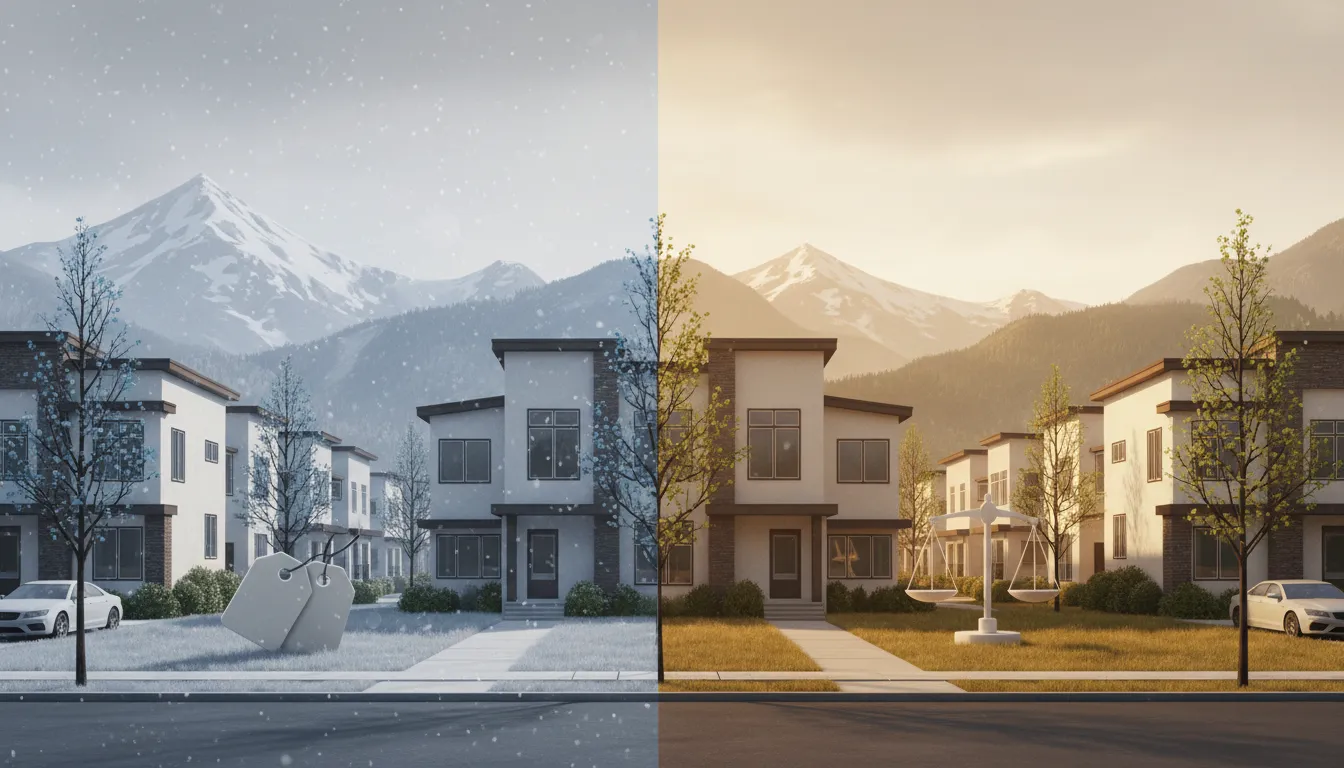
Utah Housing Market Update: Spring Arrived Early, and Townhouses Are Where Buyers Have More Leverage
Political uncertainty, rising interest rates, and the headlines around the Iran situation have created a lot of “shouldn’t the market slow down?” anxiety. In Utah, at least so far, the story is more nuanced.
Political uncertainty, rising interest rates, and the headlines around the Iran situation have created a lot of “shouldn’t the market slow down?” anxiety. In Utah, at least so far, the story is more nuanced.
In Salt Lake County and Utah County, the spring market is still picking up earlier than usual. But not every property type is behaving the same way. The biggest buying opportunities right now may be coming from townhouses and condos, where inventory and negotiation leverage are showing up more clearly.
How February 2026 Ended in Salt Lake and Utah Counties (All Home Types)
Using data reported to Utahrealestate.com for all housing types (single family, townhomes, condos, and more), the market ended February 2026 with mixed signals:
- Average sales price dropped: from about $636,000 in January to $618,000 in February (roughly a $20,000 decrease).
- Days on market increased slightly: up about 2% to 73 days on average.
- More sales closed: about 1,498 sales in February, which is roughly 300 more than January.
- Inventory is building: there are more listings in January and February than seen in prior years (with March still partial, data pulled through the morning of March 11).
Many headlines focus on the “buyer’s market” angle, because price softening and longer days on market usually point that direction. But the more accurate takeaway is this: the market is shifting unevenly, and the type of home matters.
More Listings and More Under Contracts, but Not a Total Freeze
Inventory is increasing, and listings under contract are also running higher. The comparison matters here: 2022 was unusual, but relative to the years 2023 through 2025, there are more under-contract listings already showing up in January and February 2026 than in those earlier years.
That helps explain why home sales are not collapsing even with rates climbing again and war-related uncertainty in the news. Buyers are still moving. They are just behaving more strategically.
The Buyer-Seller “Balance” Depends on Home Type (Not Just the Market)
One of the biggest gaps in market reporting is that most public summaries lump everything together. Even if overall Utah supply looks “balanced,” the experience can be very different depending on whether a buyer is shopping for a single family home versus a townhouse or condo.
The data here uses supply measures from Utahrealestate.com for Salt Lake and Utah counties and breaks down absorption by property type.
Single Family Homes: Still Leaning Seller-Heavy
For single family homes, there is a reported 4.6-month supply of homes active or under contract compared to what is selling.
That falls within the typical “balanced market” range, but slightly closer to seller conditions. The on-the-ground symptom: single family buyers have been dealing with renewed competition, including multiple offers on well-priced, good properties that go over asking price.
Townhouses and Condos: Where the Negotiating Power Shows Up
For townhouses, supply is closer to 6.5 months, and for condos it is even higher at about 6.87 months.
That pushes townhomes and condos slightly into buyer’s market territory. And that aligns with the practical reality seen with clients: townhouse and condo listings tend to sit longer, and the pace feels slower than it does for single family homes.
What This Means for Different Buyers Right Now
When a market shifts by property type, buyer strategy has to shift too. Here is what the current Utah setup suggests for common buyer situations.
- First-time buyers: townhouse and condo inventory may be the best place to start, with potentially more negotiation flexibility if a seller needs to move.
- Negotiating power: more inventory can translate into seller concessions. Common examples include closing cost help and interest rate buy-down structures (the exact approach depends on the loan and offer terms).
- Buyers targeting single family: competition may still show up on the best properties, especially when pricing is strong and condition is solid.
This is why it’s not enough to ask “Is Utah a buyer’s market?” The better question is “Which segment of the market is acting like one?”
Sold Listings: March Could Be a Turning Point
Sold listings for early 2026 are reportedly tracking in line with 2023 through 2025. But March is still in progress, and the market could end up either:
- around break-even versus expected pace, or
- showing fewer homes sold if conditions tighten further.
The encouraging part is that the under-contract numbers do not suggest a clear slowdown in sales despite higher rates and the ongoing geopolitical uncertainty.
Helpful Next Steps for Utah Home Buyers and Sellers
If someone is preparing to move in Utah, the current conditions reward planning and good execution. The most useful mindset is to match offer strategy to the property segment.
- First-time buyer strategy (more leverage in townhomes and condos): consider requesting seller help where appropriate and focus on terms that improve affordability.
- Seller strategy: understand that market feedback is arriving faster through inventory and absorption. Pricing and presentation matter, and waiting for conditions to “magically” improve can cost momentum.
For broader guidance on Utah buying and negotiation realities, these resources may help:
- 4 Reasons You Need a Buyer’s Agent
- 5 End-of-Summer Home Maintenance Tips
- Home Buying 101: Spotting the Right Market Conditions to Buy
If readers need an active listing portal, the recommended starting point is .
Bottom Line
Utah spring is arriving early, but the market is not behaving the same way across home types. Single family homes show more competitive pressure and tighter supply. Townhouses and condos show slower absorption and higher supply, which can mean better odds for buyers to negotiate.
With March outcomes still being determined, the best move for buyers and sellers is to treat this as a strategy moment, not a one-size-fits-all market headline.
Frequently asked questions
Is the Utah housing market slowing down because interest rates and global uncertainty are rising?
Early 2026 data for Salt Lake and Utah counties suggests sales are not sharply slowing yet. There are fewer signs of a freeze than signs of a shift: average prices are down from January, inventory is up, and the pace differs by property type. Single family homes may still see stronger competition than townhomes and condos.
Does more inventory automatically mean a buyer’s market?
Not automatically. Inventory growth is typically a good sign for buyers, but the buyer-seller balance depends on absorption. In this market, townhouses and condos are showing higher supply and slower absorption, while single family homes are still leaning more seller-favorable.
Where are buyers likely to have more negotiating power in Utah right now?
Based on supply and absorption, townhouses and condos have edged into buyer’s market territory (with supply around the 6.5 to 6.87-month range). That is where buyers may find more flexibility for offers and potential seller concessions.
What should a first-time home buyer do with this market information?
First-time buyers may find more favorable negotiating conditions in townhomes and condos compared to single family homes. The best approach is to stay offer-ready and align the offer terms with affordability goals, especially if inventory is competing for attention.
What should sellers watch for going into March?
Because March is not complete and under-contract data matters, sellers should focus on pricing, condition, and market timing rather than assuming demand will stay strong. Tracking days on market, listing competition, and buyer response by property segment can reduce surprises.
Keep reading
More from the blog

Gas Line Installation: What Homeowners Need to Know First
Roof Timeline Guide for Buying an Older Utah Home
How to Choose Windows for a Utah Home With a Mountain View