Utah Easements Explained: Types, Rights and How to Find Them
How easements work in Utah: utility, access and irrigation ditch easements, how to find them on a plat or title report, prescriptive easements, roads by public use, building on an easement, landlocked land and ending an easement.

An easement is a right to use part of someone else's land for a set purpose, such as a driveway, a power line, a sewer pipe or an irrigation ditch. The owner still owns the ground, but has to let the easement holder use it, and most easements stay with the land when it sells. In Utah, an easement can be created by a written deed or agreement, by the way a larger parcel was divided, or by 20 years of open use without the owner's permission, and a road crossing private land can become public after 10 years of continuous public use.
This is general information, not legal advice. For an easement dispute or a property you're about to buy, talk with the title company and a Utah real estate attorney.
What Is an Easement on a Property?
An easement is an interest in land that belongs to another person. The land carrying the easement is the servient estate; the land or person it benefits is the dominant side. Utah's Property Rights Ombudsman describes two kinds (Ombudsman: Easements):
- Appurtenant easement: benefits a particular parcel and transfers with it, such as a shared road that gives a back lot its access.
- Easement in gross: a personal right not tied to a parcel, such as hunting rights, and generally not transferable.
An easement isn't a lien either: a property lien secures a debt, while an easement limits how part of the land can be used.
What Are the Most Common Easements in Utah?
- Public utility easements. Strips along lot lines, usually shown on the plat, for power, gas, phone and cable. Utah Code 54-3-27 defines a public utility easement as the area on a recorded plat or other recorded document dedicated to utility facilities.
- Access easements and rights-of-way. A shared driveway, a private lane serving several lots, or a road across a ranch to a back parcel.
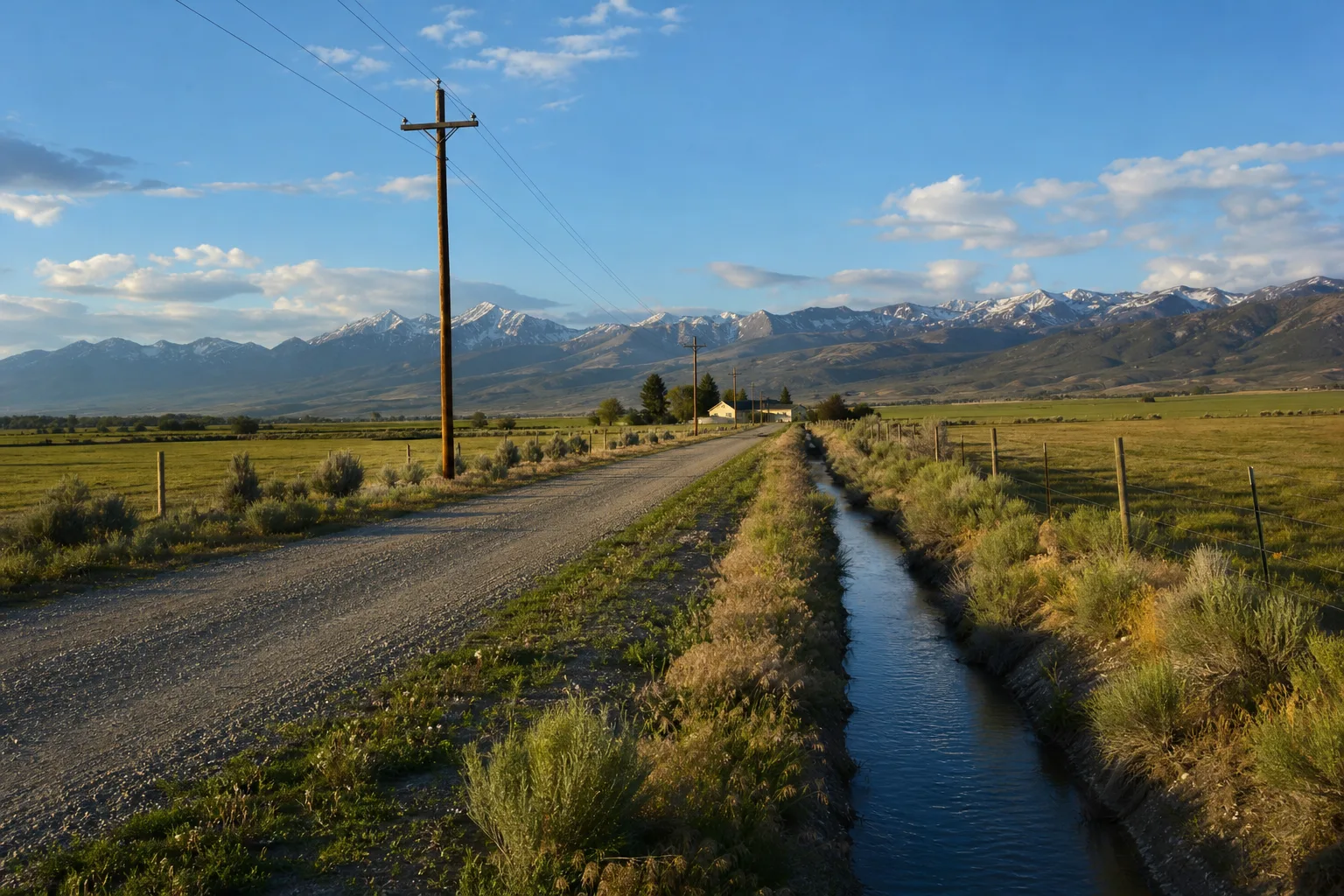
- Irrigation ditch and canal easements. Ditches, canals and pipelines that carry irrigation water across lots, common in older Utah neighborhoods and on acreage.
- Drainage easements. Swales and storm drain routes set aside on a plat.
How Do I Find Easements on My Property?
- Read the subdivision plat. Utah requires a plat to show every existing right-of-way and recorded easement in the subdivision for underground facilities, water conveyance facilities and other utilities, plus any unrecorded water conveyance the owner knows about (Utah Code 10-20-803 for cities, 17-79-703 for counties). Plats are kept by the county recorder; older plats may show less, so keep going.
- Search the county recorder. Easements granted by deed or separate agreement are usually recorded against the parcel. A recorded document gives notice to everyone from the moment it's recorded (Utah Code 57-3-102).
- Read the title commitment. Recorded easements usually appear as exceptions in Schedule B: things the title policy won't cover. Ask the title officer for copies of each one.
- Walk the land. Easements created by long use or by necessity often aren't recorded anywhere. A worn two-track road, a ditch or a neighbor's gate in your fence is worth asking about.
A survey shows where an easement sits; see Utah property lines and encroachments for which survey to order.
How Are Easements Created in Utah?
- Express easement: written in a deed or agreement that shows the intent to create one and states its location and purpose with reasonable clarity.
- Implied from prior use: one owner held both parcels (unity of title), a use was apparent, obvious and visible before the land was split, the use was continuous, and it's reasonably necessary to the parcel it serves.
- Easement by necessity: covered under landlocked land below.
- Prescriptive easement: created by long use without permission, covered next.
Claiming an easement by implication, necessity or prescription isn't enough on its own. The Ombudsman notes it takes either a written agreement with the owner or a court ruling.
How Does a Prescriptive Easement Work in Utah?
A prescriptive easement in Utah requires use that is open and notorious, adverse to the owner (without permission) and continuous for at least 20 years. In Van Denburgh v. Sweeney Land Co., 2013 UT App 265, a claim to a path across ski-area land failed because use in common with the general public is generally regarded as permissive. It grants use, not ownership; claiming ownership is adverse possession, covered in our property line and adverse possession guide.
Two limits: nobody can gain rights by prescription against a public utility easement or a protected utility easement (Utah Code 54-3-27(6)), or against land a town, city, county, metropolitan water district or special district holds for a public use (78B-2-216).
Can a Private Road Become a Public Road in Utah?
Yes. Under Utah Code 72-5-104, a road is dedicated to the public when it has been continuously used as a public thoroughfare for 10 years. The Ombudsman's road-by-use summary adds that the party claiming dedication must prove it by clear and convincing evidence and that use with the owner's permission doesn't count.
An owner can interrupt the 10-year clock only by giving the highway authority at least 72 hours' written notice and then taking an overt act, such as closing a gate, reasonably calculated to stop public use for at least 24 hours. A gate or no-trespassing sign is evidence but not proof on its own (72-5-104(4)-(5)). Once the 10 years have run, a later gate doesn't undo the dedication.
What Are the Rules for Irrigation Ditch Easements in Utah?
A water user who has maintained a canal, ditch or pipeline for 20 years of continuous, open and notorious, adverse use can establish a prescriptive easement, and once the use is shown to be continuous, open and notorious, the law presumes it was adverse unless the landowner proves otherwise (Utah Code 57-13a-101, -102). The holder may record a notice describing it (57-13a-103).
If a ditch crosses your lot:
- Don't block it. Fencing across or obstructing a water facility someone has a right-of-way for is illegal without written permission and gates for the ditch owner, or without following the relocation process. Violators face a criminal penalty and civil damages (Utah Code 73-1-15).
- Moving or piping it takes a process. Unless a written easement forbids it, an owner may relocate or change an irrigation or storm water ditch on their land after a licensed engineer redesigns it, the ditch owner reviews and approves the plans and can inspect the work, and access for maintenance is kept. The landowner pays the costs, and the change can't significantly reduce the ditch's usefulness or increase the burden on its owner (73-1-15.5). Culinary and industrial water lines and federal projects are excluded.
Can You Build on an Easement?
Sometimes, depending on the easement's terms and what it's for. Each side has to avoid unreasonably interfering with the other. In Metropolitan Water District of Salt Lake & Sandy v. Sorf, 2023 UT App 146, the court refused to adopt a rule that any permanent structure inside a deeded easement area is unreasonable as a matter of law; it depends on the facts.
A utility can install, repair, replace and reach its lines anywhere in the easement. It must restore fences, lawn, shrubs, sprinklers, gravel, flat concrete and asphalt it damages, at its own cost. For anything else you build there that gets in the way, such as a shed, deck, retaining wall or pool, the risk of damage is yours (Utah Code 54-3-27(2)-(3)). Check the plat and your city's setback rules (see Utah zoning explained), and request Blue Stakes 811 before setting a post.
Can an Easement Be Removed or Moved?
Ways an easement can end, per the Ombudsman:
- Release: the holder agrees to give it up. The Ombudsman recommends a recorded quitclaim deed.
- Merger: the same person comes to own both the benefited and burdened land.
- Abandonment: long nonuse plus intent never to use it again. Nonuse alone usually isn't enough, and a deeded easement is harder to abandon.
- Adverse use by the owner: the servient owner's use that's inconsistent with the easement for 20 years may end it.
- An unrecorded easement and a new buyer: an unrecorded document is void against a later buyer who paid value in good faith and recorded first (57-3-103).
A water prescriptive easement has its own abandonment steps through the county recorder, with a published notice for at least 45 days (57-13a-104). A utility's protected easement doesn't end because the utility never used it (54-3-27(7)).
To move an easement without the holder's consent, the owner of the burdened land can file a lawsuit asking a court to approve the move under Utah's Uniform Easement Relocation Act. The move can't materially reduce the easement's usefulness, add burden or harm safety, and the owner pays the costs (Utah Code 57-13c-103, -106). The act can't be used for public utility, public-entity, conservation, water-conveyance or highway and transit easements, among others (57-13c-102); ditches go through the 73-1-15.5 process instead.
What Happens With Landlocked Land in Utah?
A landlocked parcel has no legal access to a road. Utah courts may find an easement by necessity when one owner held both parcels and, when the land was split, the cut-off parcel had no reasonable access and crossing the other parcel was reasonably necessary. A shorter or more convenient route isn't enough if reasonable access exists. In Abraham & Associates Trust v. Park, 2012 UT App 173, the court held that the easement runs over the land the landlocked parcel was split from, not across whichever neighbor's land is most convenient, and that a deed providing another legal route usually rules one out.
Shopping Utah land for sale? Ask how the parcel reaches a public road; "access by easement" should point to a recorded document you can read.
What Should Buyers Check for Easements?
- Compare the plat's easement strips with where the fence, shed, pool or driveway sits.
- Ask the seller about shared driveways, road maintenance agreements and ditches.
- On homes with acreage, walk the boundaries for roads and ditches.
- Finish all of this before the due diligence deadline in your Utah purchase contract.
More plain-English explainers are in the Utah real estate guide.
Frequently asked questions
What is an easement in Utah real estate?
An easement is a right to use part of someone else's land for a specific purpose, such as a driveway, utility line or irrigation ditch. The owner keeps title to the land but can't block the use. An appurtenant easement benefits a neighboring parcel and transfers with it when either property sells; an easement in gross is a personal right, such as hunting rights, that generally can't be transferred.
How long does it take to get a prescriptive easement in Utah?
Twenty years. The use must be open and notorious, adverse to the owner (without permission) and continuous for at least 20 years. Use in common with the general public is generally treated as permissive. Irrigation ditches, canals and pipelines have their own statute with the same 20-year period: once the water user shows continuous, open and notorious use, the law presumes it was adverse unless the landowner proves otherwise (Utah Code 57-13a-102).
Can I build a fence or shed on a utility easement?
Check the plat and the easement terms first. Under Utah Code 54-3-27, a utility can install, repair and reach its lines anywhere in a public utility easement. It must restore fences, lawn, shrubs, sprinklers, gravel, flat concrete and asphalt it damages, but if a shed, deck, wall or other improvement interferes with the easement, the owner bears the risk of loss. Request Blue Stakes 811 before digging.
Can an easement be removed in Utah?
Yes, in several ways: the holder can release it (a recorded quitclaim deed is recommended), it ends by merger when one person owns both parcels, and it can be abandoned through long nonuse plus intent never to use it again. A court can also approve moving a private easement under the Uniform Easement Relocation Act (Utah Code 57-13c) if the move doesn't materially reduce its usefulness; that act doesn't cover utility, water-conveyance or highway easements.
What is an easement by necessity in Utah?
It is an access right a court may recognize when land once owned by one person is split and one piece is left with no reasonable access to a road. The cut-off parcel can cross the land it was split from, if that crossing is reasonably necessary. A more convenient route isn't enough when reasonable access already exists, and the right doesn't extend to unrelated neighbors (Abraham & Associates Trust v. Park, 2012 UT App 173).
How do I find out if there is an easement on my property?
Look at the recorded subdivision plat, which must show existing recorded easements and rights-of-way for utilities and water conveyance (Utah Code 10-20-803 and 17-79-703), then search the county recorder for easement deeds on the parcel. When buying, the title commitment lists recorded easements as Schedule B exceptions. Walk the land too: easements created by long use often aren't recorded.
Kristopher Larson
Realtor® since 2011 · Licensed in Utah & Nevada · Real Broker, LLC
Kris has sold Utah real estate since 2011 and been part of more than 350 transactions. He writes this site's guides from MLS data and public records, and says where every number comes from.
Keep reading
More from the blog
New Construction vs. Resale Homes in Utah: What Our MLS Data Shows (November 2026)
Selling a Utah Home in Winter: List Now or Wait for Spring?
Do Vacation Rentals Sell for More in St. George? Our MLS Data (November 2026)