Selling a Utah Home in Winter: List Now or Wait for Spring?
December brings half as many new Utah listings as May, and homes take about a month longer to sell. Here is how to decide between listing in winter and waiting for spring, with a prep checklist for snow, short days and vacant homes.

List this winter if the move can't wait or the home shows well indoors; wait for late February to April if the yard, view or pool sells the home or exterior work is needed. Realtor.com data on FRED (2017–2025 averages) shows December with about half of May's new listings, but a 70-day median sale time in January against 41 in May.
Every December for nine straight years, from 2017 through 2025, fewer Utah homes came on the market than in any other month. Realtor.com's monthly housing data, published through the Federal Reserve Bank of St. Louis (FRED), shows an average of about 2,860 new listings statewide in December against about 5,900 in May.
That is the whole winter question in one number. A home listed between Thanksgiving and February competes with far fewer new listings, and it also meets fewer buyers and usually waits longer for an offer. Whether that trade works depends on where in Utah the home is and why the owner is selling.
How Slow Is the Utah Housing Market in Winter?
Slower, but with far fewer competing sellers. The figures below are nine-year averages for 2017 through 2025 from Realtor.com data on FRED. Individual years differ, and the 2021 market was far faster than normal, but the seasonal shape repeats every year.
| Statewide measure | December | January | May | June |
|---|---|---|---|---|
| New listings | 2,864 | 3,746 | 5,904 | 5,799 |
| Median days on market | 66 | 70 | 41 | 41 |
| Listings under contract (pending) | 5,602 | 5,321 | 7,220 | 7,349 |
Three things stand out.
- Sellers pull back more than buyers do. New listings in December run about half of May's. Pending listings in December run only about a quarter below June's. Buyers thin out in winter, but not as much as the competition does.
- Winter sales take longer. The statewide median was 70 days in January and 41 in May. January was slower than May in all nine years, by 21 to 38 days.
- The shelves are barest in late winter. Active listings statewide average their lowest count in February, roughly 29% below the September and October peak. A home that lists in January or February is on the market just as buyers start returning and before the spring listings arrive.
National research points the same direction. Realtor.com's 2026 analysis of the best time to sell, built on 2018 to 2025 data with 2020 left out, named the week of April 12 to 18. Homes listed that week have historically drawn 16.7% more views per listing than the average week, sold about nine days faster, and carried prices 6.6% above the start of the year. The same study notes that buyers in most years start looking earlier than sellers start listing.
For a current read, the median in Salt Lake City is 34 days on the market with 1,008 active listings. Those figures come from MLS data and are counted differently from Realtor.com's, so compare each source only with itself.
Should You List Now or Wait for Spring?
| Situation | Usually better | Why |
|---|---|---|
| Job transfer, new home already under contract, or carrying two payments | List now | Two or three months of mortgage, taxes, insurance and heat on an empty house can outweigh a spring price bump. |
| Home is clean, updated and shows well indoors | List now or in January | Few competing listings, and winter buyers tend to be serious. |
| The yard, view, pool or patio is the main selling point | Wait, or list now with dated summer photos | Snow hides what the buyer is paying for. |
| Roof, exterior paint or concrete work is needed | Wait | Much exterior work cannot be done well in freezing weather, and buyers discount what they cannot inspect. |
| Home in St. George or elsewhere in Washington County | Prepare in December, list in January or February | The local market speeds up earlier than the rest of the state. |
| Ski-area condo or cabin | Depends on the property | Ski access shows best in winter, but the data still favors summer for speed. |
| No deadline and the home needs a month of prep | Prep now, list late February to April | The work gets done in the slow season and the listing meets the spring buyers. |
Where in Utah Is Winter Not the Off-Season?
St. George
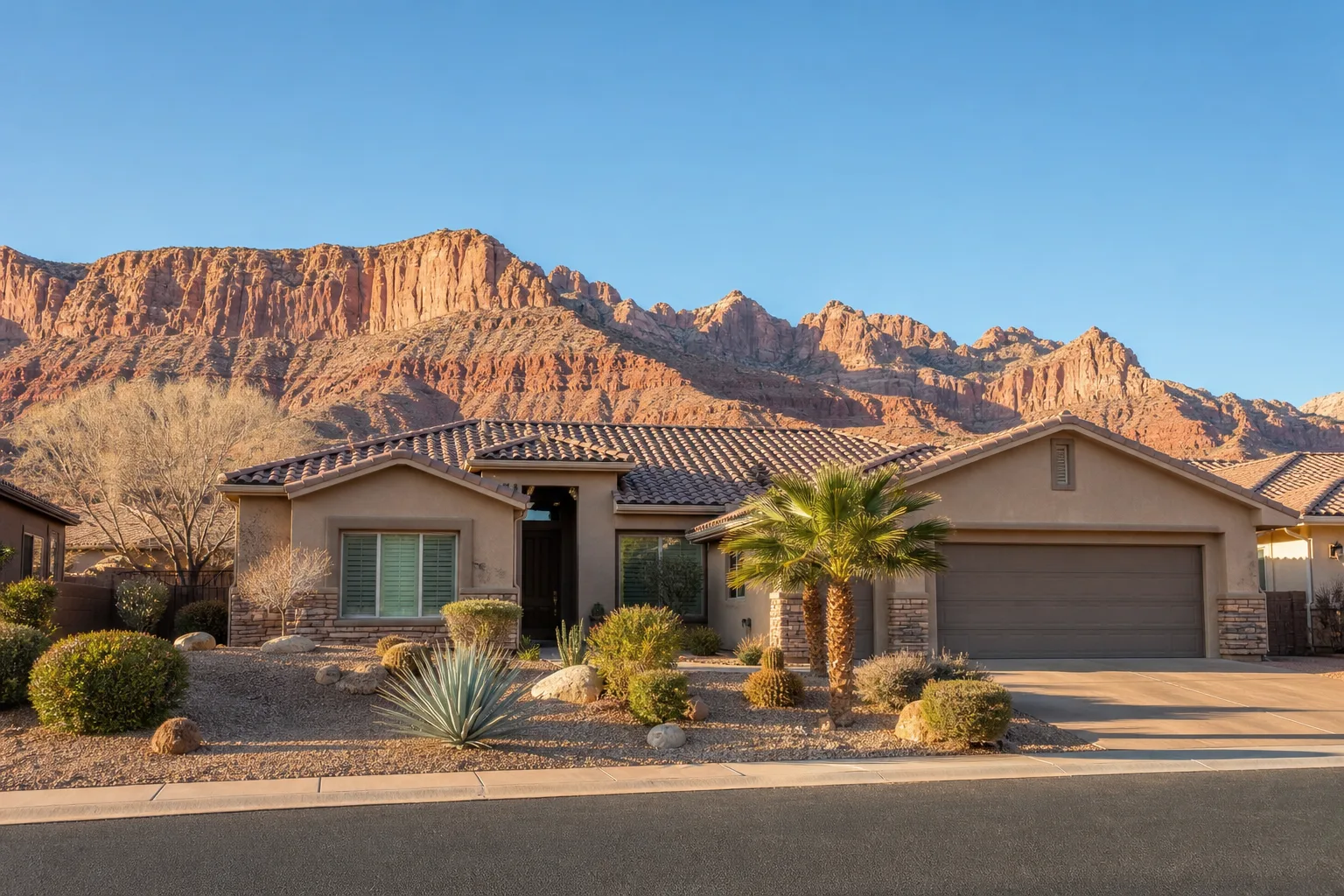
The St. George metro area, which is Washington County, runs on a different calendar. December is still its slowest month for new listings in the Realtor.com data, the lowest of the year in all nine years. Then the market turns fast. February has averaged more new listings than any other month, about 560 against 520 in May, and March has been the fastest month for sales, with a median of 43 days on market compared with 51 to 54 from May through August.
In other words, spring in St. George arrives in February, while northern Utah is still shoveling. Winter visitors and part-year residents are in town, the weather is the area's best advertisement, and a seller who waits for May has missed the peak. The practical plan is to do repairs and photos in December and list after the holidays. The median there is 41 days on the market right now, with 1,003 active listings. For what the season is like, see winter in St. George.
Park City and the Heber Valley
Ski season fills Park City with visitors, and a ski-in condo or a home near a lift is easier to appreciate with snow on the runs. The numbers are more cautious than the sales pitch. In the Heber micropolitan area, which the Census Bureau defines as Summit and Wasatch counties, new listings from 2017 through 2025 peaked in June, and median days on market were shortest in July at 66 and longest in December and January at 96 to 97. A winter listing there can work for a property whose value is the skiing, but a long marketing period should be expected and priced in.
Showing a Home in Snow, Dark and Haze
Snow and ice
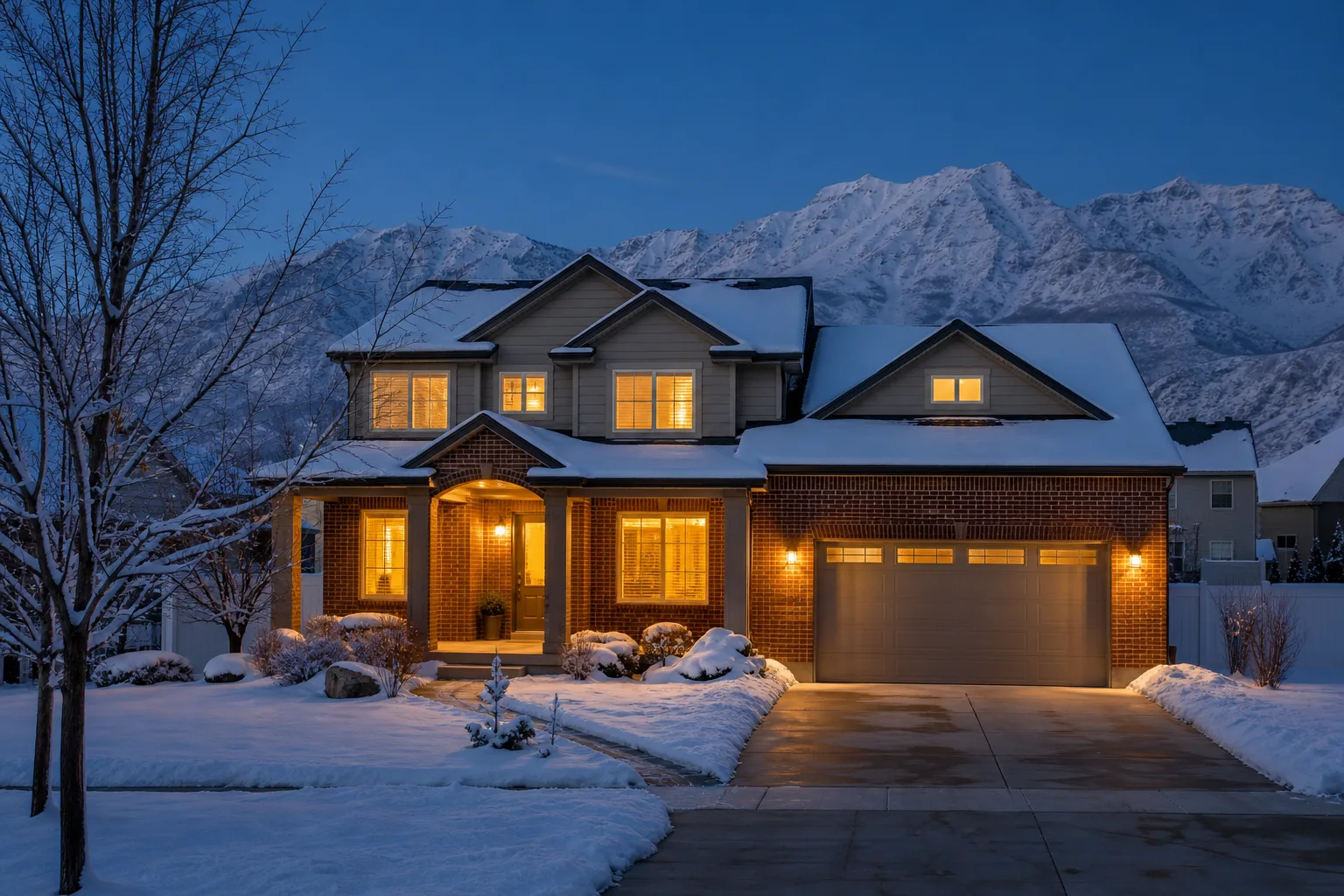
A buyer's first impression in January is the walk from the car to the door. Clear the driveway, the front walk, the steps and the path to the lockbox after every storm, and keep ice melt and a mat inside the door. In Salt Lake City the adjacent owner or occupant has to clear the public sidewalk within 24 hours after the snow stops, and other cities have their own rules. A fall on an icy step is also an injury claim waiting to happen. A seller who has already moved should hire a snow service for the listing period, not rely on a neighbor.
Daylight
Short days cut the showing window. U.S. Naval Observatory tables put Salt Lake City's sunset at about 5:00 p.m. through most of December, with sunrise at 7:48 a.m. on the solstice. That is roughly nine and a quarter hours of daylight, against about fifteen in late June. Most weekday buyers will arrive after dark. Put exterior lights on a timer, replace every dead bulb, open all blinds and push for weekend showings between late morning and mid-afternoon.
Inversions
The Utah Division of Air Quality says a typical winter brings five or six multi-day inversion episodes to the valleys, and an average of 18 days with fine-particle pollution above the federal standard. On those days a mountain view is a gray wall. Schedule photos for a clear day after a storm and change the furnace filter before listing. Buyers new to the state often ask about air quality, and this explanation of Utah's winter inversions is a fair answer.
Photos
Fresh snow on a clear morning photographs well. Dirty snow under a flat sky does not. If the yard matters, add a few summer photos, as long as they show the property as it is today and the caption says when they were taken. Photos of a tree that has since come down or a lawn that is now gravel invite a dispute.
Holiday decor
Keep it light: a wreath, white lights, a tree that does not block the room. Take it all down in the first week of January. Leftover decorations in February tell buyers how long the home has been listed.
Protecting a Vacant Listing
An empty house in a Utah January is one furnace failure away from a burst pipe. The American Red Cross advises leaving the heat on at no lower than 55 degrees when a home sits empty in cold weather, disconnecting and draining garden hoses, and closing the inside valves that feed outdoor hose bibs. Its guidance is in the Red Cross frozen pipes checklist.
Beyond that, have someone walk through after every cold snap, consider a low-temperature alarm, and call the insurance company before moving out to ask how the policy treats a vacant home. Keep the utilities on through closing. A fuller seasonal list for owners is in the Utah winter prep plan.
Records Winter Buyers Ask For
An inspector cannot see shingles under snow and often cannot run the air conditioner in freezing weather. Buyers fill the gap with paperwork. Have these ready before the first showing:
- Roof age, the installer's invoice and any transferable warranty
- The furnace's last service receipt and install date
- Twelve months of gas and electric bills
- Sprinkler winterization receipt
- Summer photos of the roof, yard and any patio or deck
What a seller knows about the home's condition belongs in writing either way. The Utah seller disclosures overview covers the forms.
Pricing With Fewer Comparable Sales
Fewer winter closings mean thinner evidence. The most recent comparable sales may have gone under contract in early fall, when more buyers were shopping. Three habits help: weigh pending sales and current competition more heavily than six-month-old closings, price at the market on day one because a winter listing has fewer buyers to test a high number against, and decide in advance what happens if there is no offer in 30 days. A free home valuation shows the recent sales and active listings a buyer's agent will be looking at.
As for who is buying: people relocating for a job that starts in January, households whose lease is ending, and some investors who want to close before Dec. 31 for their own tax reasons. They exist every year, and they are motivated. They are also a smaller group than the spring crowd, which is exactly what the days-on-market figures show. A seller should plan for serious buyers, not for a bidding war.
Who Pays Property Taxes When a Utah Home Sells in December?
Usually the buyer reimburses the seller for the rest of the year. Utah property taxes for the year are due Nov. 30, which changes the math on a closing in December. Utah's state-approved purchase contract prorates the current year's property taxes as of the settlement deadline unless the parties agree otherwise. In a summer sale the seller credits the buyer for the months already owned. Once the seller has paid the full year's bill, it runs the other way: the buyer reimburses the seller at closing for the days from closing through Dec. 31. Give the title company proof of payment so the credit shows up on the settlement statement. A sale that closes in January starts a new tax year, and the seller owes a credit for only a few days or weeks. Details on the deadline are in this article on paying Utah property taxes.
Winter Listing Checklist
- Service the furnace, change the filter and keep the receipt.
- Clean gutters and fix anything loose on the exterior before the first storm.
- Gather roof, furnace, utility and sprinkler records.
- Take exterior photos on a clear day; add dated summer photos if the yard matters.
- Arrange snow removal for the driveway, walks, steps and public sidewalk.
- Put exterior and entry lights on timers and replace dim bulbs with bright, matching ones.
- Set the thermostat to a comfortable temperature for showings, and never below 55 degrees in an empty house.
- Set out a mat, a boot tray and shoe covers at the entry.
- Keep holiday decor simple and remove it in early January.
- Agree on a list price, a 30-day review date and the earliest acceptable closing date.
The interior work is the same in any season, and this room-by-room list for getting a house ready to sell covers it. Current listings and market numbers for every Utah city are on Best Utah Real Estate.
Posted by Kristopher Larson
Frequently asked questions
Is winter a bad time to sell a house in Utah?
It is slower, not bad. Realtor.com data for 2017 through 2025 shows a statewide median of 70 days on market in January against 41 in May. December also has about half as many new listings as May, so a winter seller faces less competition. Owners with a deadline often do fine; owners with none usually gain by preparing in winter and listing between late February and April.
What is the slowest month to sell a home in Utah?
January has had the longest median time on market statewide, averaging 70 days from 2017 through 2025 in Realtor.com data, with December close behind at 66. December is also the month with the fewest new listings, the lowest of the year in all nine of those years.
When is the best time to sell a home in St. George?
Earlier than in northern Utah. In Realtor.com data for the St. George metro area from 2017 through 2025, February averaged the most new listings of any month and March had the shortest median time on market at 43 days. Sellers there generally do best by preparing in December and listing in January or February.
Who pays property taxes when a Utah home sells in December?
Utah property taxes for the year are due Nov. 30, so by December the seller has normally paid the full bill. Under the state-approved purchase contract, taxes are prorated at settlement, which means the buyer reimburses the seller for the days from closing through Dec. 31. The credit appears on the settlement statement.
Can summer photos be used in a winter listing?
Yes, if they show the property as it is today and are labeled with the season or date they were taken. Summer photos help buyers see a lawn, patio, garden or roof that is under snow. Photos that show features that have since changed should not be used.
What temperature should a vacant house be kept at in a Utah winter?
The American Red Cross advises leaving the heat on at no lower than 55 degrees when a home is empty in cold weather. Sellers should also drain and store hoses, close the inside valves to outdoor hose bibs, and have someone check the house after each cold snap. Utilities should stay on until closing.
Kristopher Larson
Realtor® since 2011 · Licensed in Utah & Nevada · Real Broker, LLC
Kris has sold Utah real estate since 2011 and been part of more than 350 transactions. He writes this site's guides from MLS data and public records, and says where every number comes from.
Keep reading
More from the blog
Do Vacation Rentals Sell for More in St. George? Our MLS Data (November 2026)
Cheapest Places to Live in Utah: Lowest Home Prices by Town (November 2026)

Utah Property Liens Explained: Types, Priority and How to Check