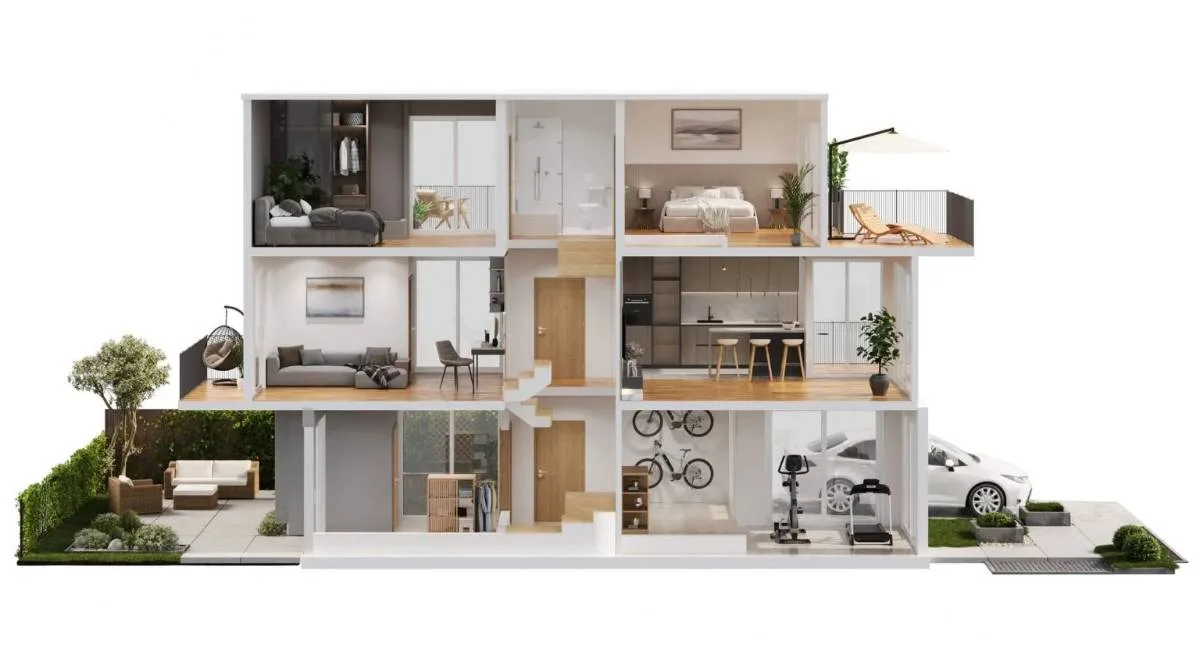
The New Way to Tour a Home: How 3D Dollhouse Views Are Changing Utah Real Estate
Thinking of buying or selling a home in Utah? Learn how 3D dollhouse views are giving buyers a complete picture of a property — inside and out — before they ever step through the front door.
If you’ve spent any time browsing real estate listings lately, you already know the frustration. The photos look great. The description ticks every box. But after scrolling through a dozen shots of staged living rooms and sun-drenched kitchens, you still can’t quite figure out how the house actually fits together. Does the master bedroom really connect to that hallway, or does it feel cramped once you’re standing in it? Is the open-plan kitchen as open as it looks, or is it just a wide-angle lens doing the heavy lifting?
This is a problem that Utah home buyers know well and one that a growing number of agents and developers are now solving with a tool called a 3D dollhouse view. If you haven’t come across one yet, you will soon. Here’s what it is, why it matters, and how it’s already reshaping the way homes are bought and sold across the state.
What Is a 3D Dollhouse View, Exactly?
Think about a traditional dollhouse — the kind where one side of the house is open so you can see all the rooms at once. A 3D dollhouse rendering works on the same principle. It’s a photorealistic, computer-generated image that shows a property as if one of its outer walls has been removed, giving you a complete sectional view of the entire building in a single image.
Unlike standard listing photos, which show you one room at a time, a dollhouse view reveals everything simultaneously: the floor plan, the relationship between rooms, the ceiling heights, the outdoor surroundings, and even the furniture layout and finishes. You can see how the ground floor connects to the upper level. You can see whether the backyard is accessible from the kitchen. You can understand, at a glance, how the whole property works as a single, livable space.
This type of visualization — also called a section view or cutaway render — has been used by architects and developers for years. What’s changed is that it’s now being applied directly to dollhouse real estate marketing, making it one of the most informative visuals a buyer can encounter in a listing.
Why This Matters for Utah Buyers
Utah’s real estate market has some specific characteristics that make this kind of visual tool especially useful. The state continues to attract buyers from out of state — from California, Texas, the Pacific Northwest — many of whom are making purchasing decisions remotely or with limited time for in-person viewings. For a buyer in San Diego trying to decide between three Salt Lake City properties they’ve only seen online, a dollhouse view can be the difference between a confident decision and an anxious leap of faith.
Utah also has a high proportion of multi-story homes, split-level properties, and new construction developments — all of which are notoriously difficult to communicate through standard photography. When a home has multiple levels, photographing each floor separately often makes it harder, not easier, to understand the layout. A dollhouse render solves this by collapsing all of that information into a single, easy-to-read image.
For new builds and pre-sale properties — a common offering in Utah’s fast-growing communities like Eagle Mountain, Herriman, and South Jordan — there are no photos to take yet. Dollhouse renderings give buyers a realistic, accurate preview of a home that hasn’t been built, which is increasingly what buyers expect before putting down a deposit.
What Sellers and Agents Get Out of It
The benefits aren’t only on the buyer’s side. Listings that include high-quality 3D visuals consistently attract more engagement than those relying on photos alone. A dollhouse view is a genuine scroll-stopper — its unusual, bird’s-eye sectional format stands out immediately in a feed full of standard listing images. That initial attention leads to longer time spent on the listing, which typically translates to more inquiries and stronger offers.
For agents working with sellers of larger or more complex properties — custom homes, multi-story builds, or properties with unusual layouts — a dollhouse rendering also reduces the number of unproductive showings. When buyers arrive at a property having already seen a comprehensive visual breakdown, they come prepared. They know what they’re looking at. They have better questions. And the ones who show up are far more likely to be serious.
Developers pre-selling homes in new communities get perhaps the biggest advantage. With a strong dollhouse rendering in place before construction begins, they can market confidently, hold reservations, and often sell units months before the keys are ready to hand over.
How It Compares to Other Listing Visuals
It’s worth understanding where a dollhouse view fits alongside the other tools available to real estate professionals today. Standard listing photography remains essential — it captures atmosphere, natural light, and the lived-in quality of a home in a way that CG imagery can’t always replicate. Virtual tours and 3D walkthroughs allow buyers to move through a property interactively, which is powerful for engagement.
What a dollhouse rendering does differently is provide comprehensiveness in a single frame. Where a virtual tour requires a buyer to navigate room by room — piecing the layout together as they go — a dollhouse view hands them the complete picture immediately. It’s particularly effective early in the decision-making process, when a buyer is trying to quickly assess whether a property is worth their time before committing to a deeper look.
The two approaches work well together. A strong dollhouse image in a listing header stops the scroll and communicates the layout. A virtual tour or video walkthrough then takes interested buyers deeper. Together, they give buyers more confidence and reduce the friction between first look and serious inquiry.
What to Look for in a Quality Dollhouse Rendering
Not all 3D visuals are created equal, and buyers are getting better at spotting the difference between a polished, accurate rendering and a rushed one. A high-quality dollhouse image should be photorealistic enough that materials — flooring, countertops, wall finishes — are clearly identifiable. Proportions should be accurate to the actual floor plan, not stylized or stretched for effect. Lighting should reflect how the home would actually feel at a given time of day.
If you’re a buyer reviewing a listing that includes a dollhouse view, use it actively. Check whether room sizes look proportional. Look at circulation — how do you get from the garage to the kitchen? From the master bedroom to the bathrooms? Does the layout make practical sense for the way you live? A good dollhouse rendering gives you enough information to start asking those questions before you ever schedule a showing.
The Bottom Line
Real estate has always been a visual business, but the tools have changed. Buyers today expect more than a gallery of attractive photos — they want to understand a property before they commit their time to viewing it, let alone their money to buying it. The 3D dollhouse view delivers that understanding better than almost any other single visual asset available.
For Utah’s market — with its mix of new construction, relocating buyers, and competitive pricing — that clarity is becoming a competitive advantage. Whether you’re a buyer trying to narrow down your options from across the country, or a seller looking to attract the most qualified buyers to your listing, the dollhouse view is one technology worth paying attention to.
Keep reading
More from the blog
Gas Line Installation: What Homeowners Need to Know First

Roof Timeline Guide for Buying an Older Utah Home
How to Choose Windows for a Utah Home With a Mountain View