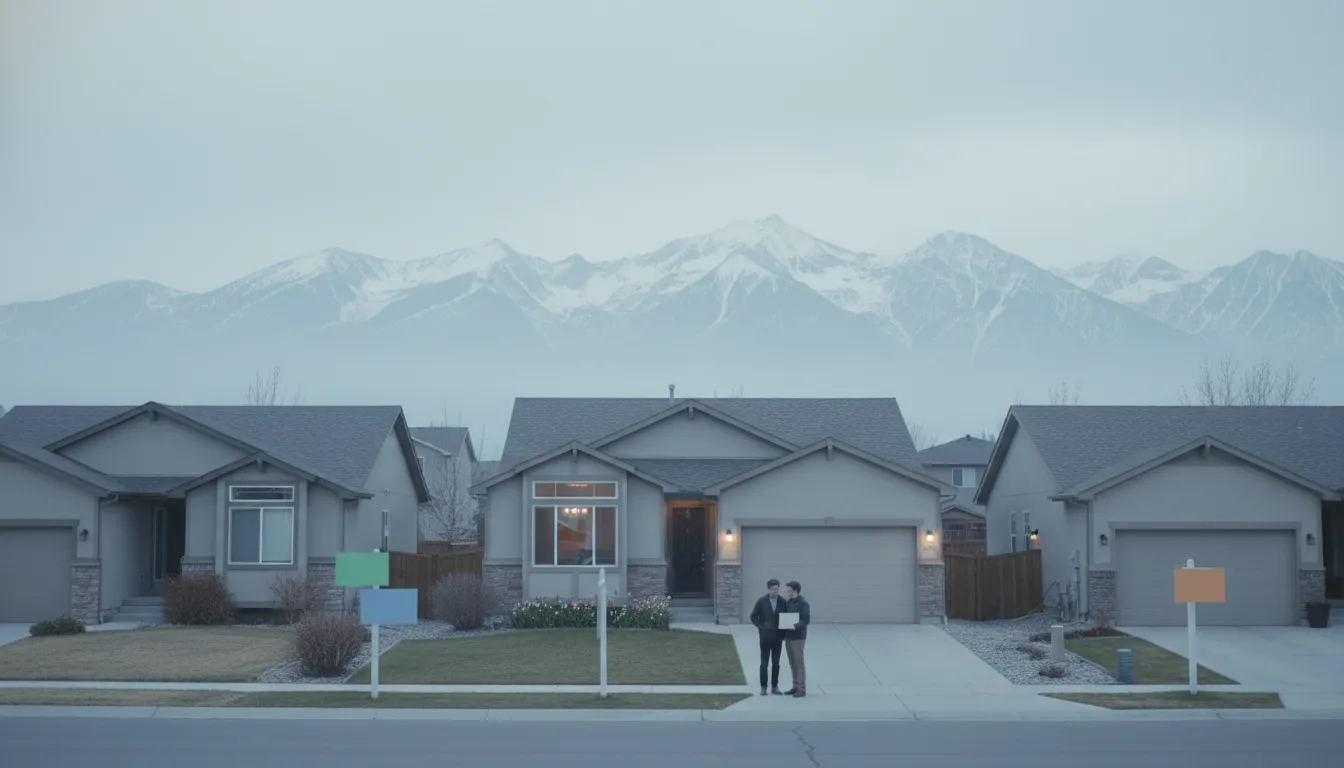
Utah Spring Housing Market Update: Why Buyers Are Gaining Leverage in 2026
Utah’s spring housing market is showing signs of strain. Inventory is rising, contract cancellations are elevated, rents are softening, and buyer demand is not keeping pace with the number of homes hitting the market. For anyone asking whether Utah is shifting toward a buyer’s market, the latest signals point in that direction.
Utah’s spring housing market is showing signs of strain. Inventory is rising, contract cancellations are elevated, rents are softening, and buyer demand is not keeping pace with the number of homes hitting the market. For anyone asking whether Utah is shifting toward a buyer’s market, the latest signals point in that direction.
This matters most in the Greater Salt Lake area and across the Wasatch Front, where seasonal momentum usually helps sellers. When spring slows down instead of accelerating, the second half of the year can become much tougher for listings that are overpriced, poorly presented, or slow to adjust.
For current market context and homes across the state, buyers and sellers can also browse Utah real estate listings.
What is happening in the Utah housing market right now?
The biggest theme is simple: supply is growing faster than demand.
Recent Utah housing data highlighted several pressure points at once:
- More listings are entering the market year over year.
- Active inventory is much higher than it was during the pandemic era and higher than pre-pandemic years such as 2018 and 2019.
- Pending sales are not keeping up with that additional inventory.
- Home purchase cancellations have increased, meaning more deals are falling apart before closing.
- Rent trends are weakening, especially where apartment supply has expanded quickly.
That combination tends to reduce seller leverage. When buyers have more choices and less urgency, pricing power fades.
Why the spring selling season matters so much in Utah
Spring is normally the most important time of year for home sales. More listings come online, more buyers shop actively, and sellers often count on that burst of activity to secure stronger prices and cleaner contract terms.
When spring underperforms, it can create a chain reaction:
- Listings stay on the market longer.
- Price cuts become more common.
- Buyer concessions increase.
- Homes that miss the early window face heavier competition in summer and fall.
That is why a weak spring market is more than a temporary slowdown. It can shape the entire selling season.
Why buyers are gaining leverage in Utah
1. Inventory is rising sharply
One of the clearest changes in Utah is the jump in active listings. Compared with the tight conditions seen during the pandemic, the number of homes available for sale is far higher. The market also appears to be carrying more inventory than in the last pre-pandemic years.
In practical terms, buyers now have:
- More neighborhoods to compare
- More price points to evaluate
- More negotiating room
- Less pressure to waive protections just to compete
2. Demand has not returned to pandemic levels
Utah’s hottest period required three things at once: very low inventory, strong demand, and a large number of homes going under contract quickly. Those conditions are not currently aligned.
Even if some homes still move fast, broad market demand appears subdued relative to the frenzy seen in 2021 and early 2022.
3. Mortgage rates and economic uncertainty are limiting buyers
High mortgage rates continue to affect affordability. On top of that, job security concerns and broader economic uncertainty are making many households delay major purchases. When fewer people feel confident enough to buy, demand softens even further.
For Utah sellers, this means the typical buyer pool may be smaller, more cautious, and more payment-sensitive than expected.
4. More contracts are being canceled
Nationally, home purchase cancellations in March were reported at a higher share than typical pre-pandemic norms. Even modest percentage increases matter because they can represent thousands of additional homes returning to the market.
When deals fall through more often, inventory can build faster than new listings alone would suggest.
5. Falling rents can weaken home price support
Another important signal is on the rental side. National median asking rent was reported at a four-year low, while in Salt Lake City a surplus of apartments has led to more incentives and discounts.
That matters because housing markets are connected. If renters have more options and lower effective costs, some may postpone buying. Softer rent growth can also reduce investor enthusiasm and place added pressure on home values in certain areas.
Is Utah headed for a housing crash?
The word “crash” gets used often, but it should be handled carefully. The available signals support a stronger conclusion that Utah is in a more buyer-friendly phase and that sellers face growing pressure if inventory keeps rising.
What is supported by the market data discussed here:
- The spring selling season has been weak.
- Inventory is elevated.
- Pending activity is soft relative to supply.
- Cancellations are up.
- Rents are under pressure in some markets.
What is not certain from this information alone:
- The exact size of any future price decline
- Whether every Utah submarket will behave the same way
- Whether statewide prices will drop quickly or grind lower gradually
Utah has already experienced meaningful price weakness before. The local market referenced in the Greater Salt Lake area saw a major correction after the 2022 peak, and prices had still not returned to that peak level. That history matters because it shows how quickly sentiment can change once supply rises and demand cools.
Readers looking for broader context may also find value in this Utah housing market analysis.
How the 2022 market peak still affects today’s expectations
Many sellers still compare today’s market to the unusually hot period of 2021 and early 2022. That can lead to unrealistic pricing. But that earlier environment depended on extreme scarcity and aggressive demand. Once inventory surged, prices in many places came under pressure.
The key lesson is that sellers should not price for a market that no longer exists.
Common seller misread:
- Assuming every decent home will attract bidding wars
- Expecting buyers to ignore condition issues
- Believing a spring listing automatically guarantees top dollar
In a market with rising active listings, those assumptions can backfire fast.
Best time for buyers in Utah this year
Seasonality still matters. If inventory continues building through late spring and early summer, buyers may see the strongest leverage later in the year.
Late spring through Memorial Day
This is often the first major checkpoint. If listings keep rising and demand stays soft, sellers may start adjusting expectations sooner than planned.
July through September
This can be a strong window for buyers who want more selection. By then, more inventory is often available, and buyers may have better odds of finding the right layout, neighborhood, or lot without intense competition.
September through November, and sometimes December
This period can offer some of the best pricing opportunities, especially for buyers willing to consider homes that need cosmetic work or for those less focused on perfect selection. Fewer active buyers in the market can increase negotiating power.
That does not mean every home becomes a bargain. Well-priced properties in desirable pockets can still move. But the balance of power typically improves for buyers as the year progresses if unsold inventory remains elevated.
What Utah sellers should do in a softer market
Sellers can still succeed, but the strategy has to match conditions.
Price from current reality, not old peak prices
Overpricing is especially risky when inventory is climbing. A home that misses its first wave of attention often ends up chasing the market down with price cuts.
Prepare for stronger competition
Buyers comparing several similar homes will notice the difference between a sharp listing and a neglected one. Clean presentation, maintenance, and realistic terms matter more when options are plentiful.
Expect negotiations
In a buyer-friendlier environment, concessions become more common. That can include repair requests, credits, or tougher price negotiations.
Move early if selling is a priority
If a homeowner already knows a sale is necessary this year, waiting for a stronger market may not pay off if inventory continues to build into summer and fall.
Additional seller guidance is available in this Utah home selling guide.
What Utah buyers should do while leverage improves
More leverage does not mean buyers should become careless. It means they can be more selective and strategic.
Use the extra inventory wisely
Compare not just price, but also:
- Days on market
- Recent price reductions
- Seller concessions
- Condition compared with competing homes
- Whether the home has come back to market after a failed contract
Stay payment-focused
Even if prices soften, mortgage rates still shape affordability. Buyers should evaluate the full monthly payment, not just the sale price.
Do not assume every low offer will work
Some sellers will negotiate aggressively. Others may still hold firm. The best opportunities are usually listings with longer market time, recent price cuts, or signs of seller urgency.
Know whether the goal is selection or price
Buyers looking for the best home choice may prefer mid-summer, while buyers focused on the lowest negotiable price may find better setups later in the year.
First-time buyers can pair this market shift with practical preparation steps in this first-time buyer resource.
Why apartment oversupply matters to the for-sale market
A large wave of apartment construction can affect the ownership market in several ways:
- More renters receive concessions like free weeks or discounted rent.
- Some would-be buyers delay purchasing because renting becomes temporarily more attractive.
- Investors may adjust return expectations if rent growth weakens.
- Overall housing demand becomes more fragmented.
In Salt Lake City, apartment surplus and rental incentives suggest this issue is not theoretical. It is already influencing local housing competition.
For national housing context, readers can also review market research from the National Association of Realtors research center.
Key signs to watch through the rest of 2026
Anyone trying to judge where Utah housing is headed should keep watching these indicators:
- Active listings: If inventory keeps climbing, seller pressure increases.
- New listings: A surge in seller activity without matching demand usually weakens pricing power.
- Pending sales: This shows whether buyers are actually stepping in.
- Contract cancellations: Rising fallout can add hidden inventory back to the market.
- Rent concessions: More incentives in the rental market can reduce urgency to buy.
- Mortgage rates and job confidence: These remain major demand drivers.
Common mistakes in a shifting Utah market
Sellers waiting too long to adjust
Some listings sit because the seller is anchored to an outdated price expectation. In a softening market, delay can be costly.
Buyers expecting pandemic-style discounts overnight
More leverage does not always mean dramatic price collapses. Some negotiations may involve credits or repairs instead of large headline price cuts.
Ignoring seasonal timing
Not every month offers the same balance of selection and negotiating strength. Buyers and sellers should align timing with their goal.
Judging the entire state by one neighborhood
Utah is not one uniform market. Salt Lake City, suburban Wasatch Front communities, and southern Utah can move differently. Still, the broader trend discussed here points toward softer conditions for sellers overall.
Bottom line
Utah’s spring selling season has weakened at a time when sellers typically need momentum most. Rising inventory, slower contract activity, more deal fallout, and softer rent conditions all point to a market where buyers are gaining leverage.
For sellers, the message is clear: price correctly, prepare thoroughly, and do not rely on old market assumptions.
For buyers, patience and timing may finally be paying off. More homes to choose from and less competition can create better opportunities, especially from mid-summer into fall if inventory continues to build.
Frequently asked questions
Is Utah a buyer’s market in 2026?
Utah appears to be moving in that direction, especially in areas where active listings have risen sharply and pending sales are not keeping up. Buyers have more leverage than they did during the pandemic-era market.
Why are Utah home sellers facing more pressure this year?
The main reasons are rising inventory, softer buyer demand, elevated contract cancellations, high mortgage rates, and economic uncertainty. In some areas, weaker rent trends are adding more pressure.
When is the best time to buy a house in Utah this year?
If inventory continues to rise, July through September may offer strong selection, while September through November may provide better pricing opportunities for buyers who are less focused on perfect inventory.
Are Utah home prices falling again?
The market signals discussed here suggest growing downward pressure, but the exact path of prices can vary by neighborhood and property type. What is clear is that sellers no longer have the same broad pricing power seen at the 2022 peak.
How do falling rents affect Utah home prices?
When rents soften and landlords offer more concessions, some renters delay buying. That can reduce demand for homes. Weaker rents can also change the math for investors, which may further cool parts of the housing market.
Should sellers wait until later in the year to list in Utah?
If inventory is already rising and spring demand is weak, waiting can increase competition and reduce leverage. Sellers who need to move this year may benefit from acting sooner rather than later, provided the home is priced realistically.
Keep reading
More from the blog

Your First Month in a New Utah Home: A Fall Settling-In Guide

Cold-Climate Heat Pumps: What Changed and What Still Matters

How to Choose a High-Quality Refurbished Office Chair