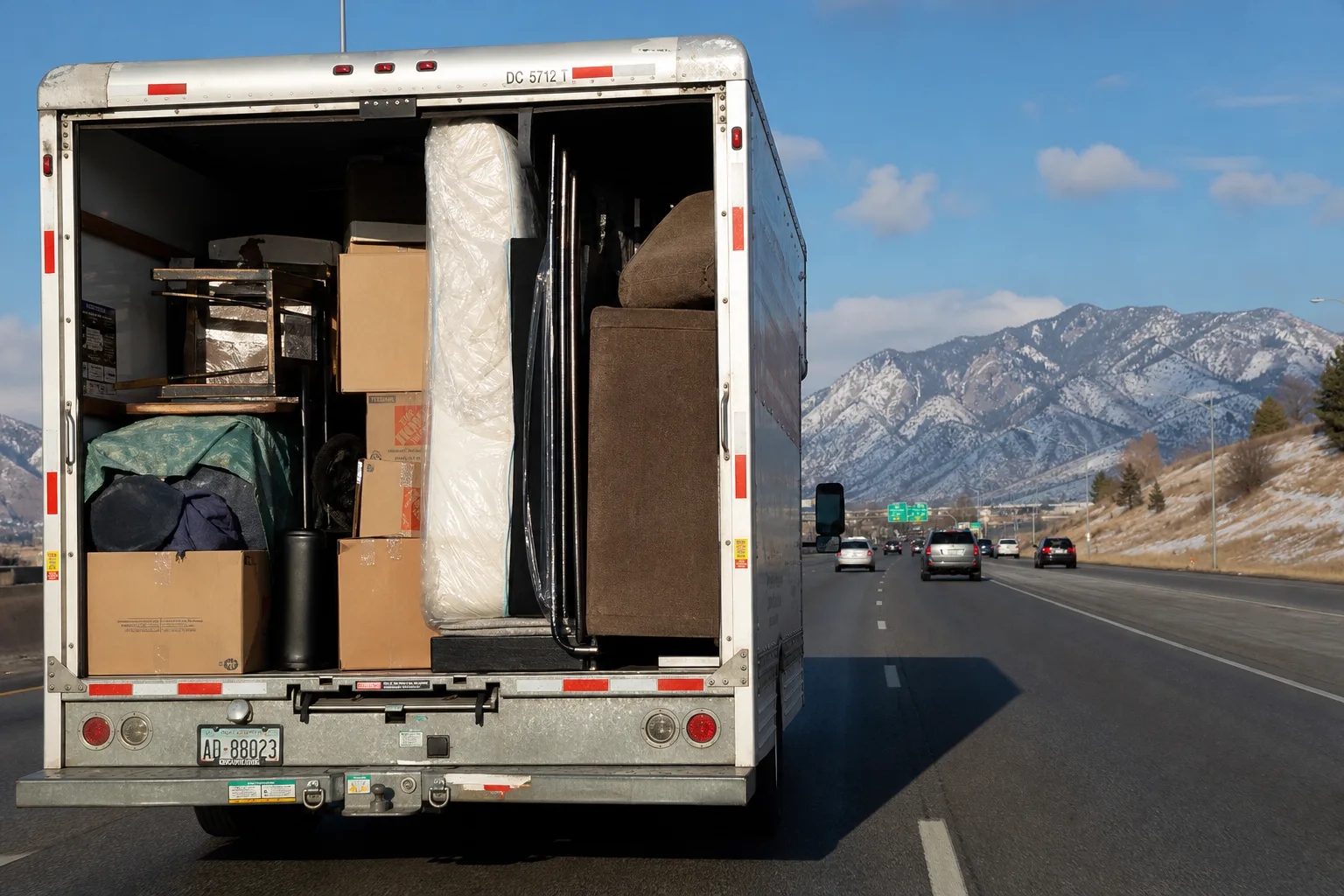
The Hidden Physics of Driving a House Full of Belongings Down the Highway
A loaded moving truck is heavier, taller and less stable than any car. Learn how weight, shifting furniture and moving-day fatigue create risk, and how to drive safely.
Moving day has its own special kind of chaos. Boxes everywhere, a couch that won't fit through the door, and a rental truck that looks way bigger in person than online. Somehow, everything you own needs to get from here to there in one piece.
Then comes the drive. You climb into a cab that sits higher than any car you've driven, with a long box trailing behind you packed with furniture, appliances, and boxes. It feels a little like piloting a small building down the highway.
That feeling isn't far off. A loaded moving truck behaves in ways most everyday drivers have never experienced. The weight, the height, and the cargo itself can all affect how the truck brakes, turns, and responds when something unexpected happens on the road.
Why a Moving Truck Handles Nothing Like a Car
The first big difference is weight. A loaded moving truck can weigh several times more than a typical car, which means it takes much longer to slow down and stop. Following distances that feel normal in a sedan can become dangerously short.
Height is the second challenge. Moving trucks sit tall, and a box full of furniture raises the center of gravity even more. That makes the truck lean noticeably in turns and leaves it more vulnerable to strong crosswinds on open highways and tall bridges.
Then there's sheer size. Plenty of moving van accidents start when drivers who aren't used to long vehicles misjudge turns, clip curbs, or forget about low clearances at drive-throughs and parking garages. That unfamiliar footprint catches nervous first-time renters off guard all the time.
The Surprising Danger of Furniture That Moves
A moving truck isn't loaded like a warehouse pallet. It's packed with odd shapes, from dressers and mattresses to washing machines and bookshelves. Fitting all of that together tightly takes real skill, and small gaps can leave room for things to slide.
When heavy items aren't strapped down, they can shift during braking or sharp turns. A refrigerator sliding toward one side of the box or a stack of boxes collapsing can change the truck's balance in a split second, catching the driver completely off guard.
Uneven loading creates problems too. Putting all the heaviest pieces on one side or at the very back can make the truck feel unstable. Loading heavy items low and toward the front, then securing everything with straps, helps keep the truck far more predictable.
Why Moving Day Creates the Perfect Conditions for Mistakes
Moving is exhausting. By the time the truck is loaded, many people have been lifting, packing, and stressing for hours or even days. Fatigue slows reaction time and dulls judgment, which is a genuinely risky combination behind the wheel of a large, heavy vehicle.
Tight schedules add pressure. Closing dates, lease deadlines, and those strict rental return times can push people to drive longer or faster than they really should. Rushing to beat the clock often leads to skipped rest breaks and riskier decisions on the road.
Unfamiliar roads make it even harder. Long-distance moves often involve highways, mountain passes, or city streets drivers have never seen before. Combine that with limited experience driving large trucks, and even simple maneuvers like merging or backing up can become surprisingly dangerous, fast.
If you're moving to a new home in Washington, Utah, or a quieter spot like Toquerville, it's worth driving the final route in a car first. Buyers settling near West Jordan should do the same.
How One Bad Turn Can Create a Chain Reaction
Speed is often the trigger. Taking a curve or exit ramp too fast in a top-heavy moving truck can cause dangerous leaning. If the cargo shifts at the same moment, the truck can tip, especially on tight ramps or uneven, crowned roads.
Abrupt steering makes things worse. A sudden swerve to avoid debris or a missed exit can send a heavily loaded truck swaying back and forth. Drivers unfamiliar with that kind of motion may overcorrect, which can lead to lane departures or full rollovers.
Nearby drivers are often caught in the aftermath. A swaying truck can sideswipe cars in adjacent lanes, and a rollover can block the road entirely. What began as one rushed turn can quickly involve multiple vehicles and serious injuries for people who were simply nearby.
Conclusion
Driving a moving truck means hauling your entire life down the highway, and that comes with real responsibility. These trucks are heavier, taller, and longer than most people are used to, and they demand a very different, much slower style of driving.
Shifting furniture, uneven loads, fatigue, and tight timelines can all stack the odds against a safe trip. Each factor might seem small on its own, but together they create conditions where mistakes happen more easily and carry heavier consequences for everyone nearby.
The good news is that most of these risks are manageable. Loading carefully, securing every heavy item, slowing down, and taking breaks can make a huge difference. Treating the truck with respect is the best way to make sure your belongings, and everyone else, arrive safely.
Frequently asked questions
Is driving a moving truck harder than driving a car?
How should I load a moving truck so it drives safely?
How much following distance does a moving truck need?
Why are moving trucks affected by crosswinds?
How can I avoid fatigue when driving a moving truck?
Keep reading
More from the blog

7 Top Salt Lake Property Managers To Shortlist in 2026

How to Determine Fair Market Value for Your Property

Why Utah County Homeowners Repaint More Often Than Expected