How Can I Determine a Fair Market Value for My Property?
Fair market value depends on comps, condition, location and market conditions. Learn how appraisals and online estimates fit in before you buy, sell or refinance.
Determining the fair market value of a property is an important step when buying, selling, refinancing, or making financial decisions involving real estate. Whether you own a residential home, investment property, or vacant land, understanding its current value can help you negotiate effectively and avoid costly mistakes.
However, determining property value involves more than reviewing online estimates or comparing asking prices. Location, property condition, recent sales, and market trends all influence what a buyer might reasonably pay. Understanding these factors, along with the role of professional appraisals, can help property owners make informed decisions.
What Is Fair Market Value in Real Estate?
Fair market value refers to the price a property would likely sell for in an open and competitive market when both the buyer and seller are knowledgeable, willing to complete the transaction, and acting without undue pressure.
This figure may differ from the property's listing price, assessed value, or the amount an owner originally paid. Market conditions can change considerably over time, affecting what buyers are prepared to offer.
For example, a property purchased several years ago may have increased in value because of neighborhood development, improved infrastructure, or stronger housing demand. Conversely, declining market activity or significant maintenance problems may reduce its current value.
Understanding these distinctions helps owners establish realistic expectations before entering negotiations.
Start With a Professional Real Estate Appraisal
One of the most reliable ways to determine a property's value is to obtain an independent appraisal from a qualified professional.
Appraisers evaluate several factors, including the property's location, size, condition, improvements, and comparable sales. They use established valuation methods to develop an opinion of value supported by market evidence.
Property owners seeking a real estate appraisal can explore professional valuation services offered by Tyke Appraisals. An independent appraisal may be particularly useful when preparing for a sale, refinancing a mortgage, or resolving a property-related financial dispute.
Although an appraisal provides a supported estimate, it does not guarantee the price a property will ultimately receive. Actual transaction prices depend on negotiations and market conditions.
Compare Recently Sold Properties
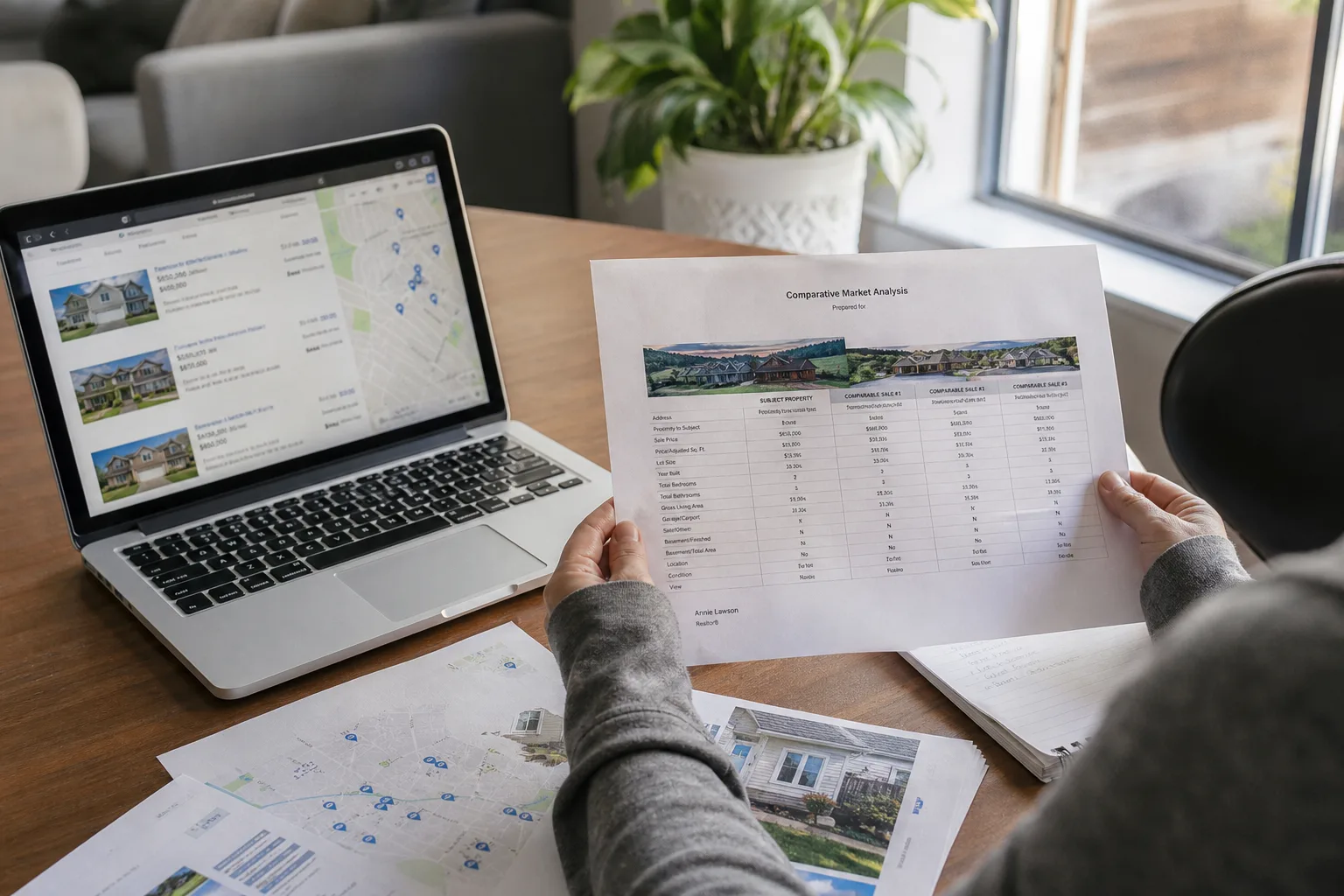
Comparable sales, often called comps, provide valuable information about what buyers have recently paid for similar properties.
The most useful comparisons generally involve properties in the same neighborhood with similar square footage, age, condition, and features. Recent completed sales usually offer stronger evidence of market value than properties that remain listed without buyers.
Look Beyond the Sale Price
A nearby home may have sold for considerably more because it included major renovations, additional bedrooms, or a larger lot.
Likewise, a property requiring extensive repairs may sell below the neighborhood average.
Adjusting for these differences helps produce a more accurate estimate. Real estate professionals and appraisers use comparable sales to assess how specific property characteristics influence buyer behavior.
Evaluate Your Property's Condition and Features
Physical condition plays an important role in determining fair market value. Buyers frequently consider the cost of future repairs when deciding how much to offer.
A well-maintained property with updated electrical systems, functional plumbing, and a sound roof may attract stronger offers than a comparable home requiring substantial improvements.
Improvements Do Not Always Equal Added Value
Renovations can improve marketability, but homeowners should not assume that every dollar spent increases property value by the same amount.
Kitchen upgrades, bathroom improvements, and energy-efficient features may appeal to buyers. However, the financial return depends on local preferences, renovation quality, and the property's overall price range.
An expensive improvement that exceeds neighborhood expectations may not produce a corresponding increase in market value. Even upkeep matters, as Utah County homeowners who repaint often learn.
Consider Location and Neighborhood Trends
Location remains one of the most influential factors in residential property valuation.
Proximity to employment centers, transportation, shopping, parks, and other amenities can affect demand. School district boundaries, neighborhood development, and access to essential services may also influence purchasing decisions.
Local market conditions matter because real estate values can vary substantially between nearby communities.
For example, housing demand in a growing Utah suburb such as Washington, Utah may differ from conditions in an established neighborhood or a smaller rural community like Toquerville.
Evaluating neighborhood-specific sales data provides a more meaningful estimate than relying exclusively on regional or statewide averages. See what $800,000 buys in St. George and Southern Utah for a town-by-town example.
Understand How Market Conditions Affect Value
Real estate markets respond to changes in interest rates, housing inventory, employment conditions, and consumer confidence.
When demand exceeds the supply of available homes, sellers may receive multiple offers and achieve higher prices. When inventory increases or borrowing becomes more expensive, buyers may negotiate more aggressively.
Identify Whether the Market Favors Buyers or Sellers
A seller's market generally involves limited inventory and relatively strong demand. A buyer's market typically offers purchasers more choices and greater negotiating flexibility.
Days on market, recent price reductions, and the relationship between listing and sale prices can help reveal current conditions.
Because markets change, valuations should rely on reasonably recent information rather than outdated sales figures.
Use Online Property Estimates Carefully
Online valuation platforms offer convenient starting points for researching property values. These tools often combine public records, previous transactions, and statistical models to estimate prices.
However, automated estimates may not accurately reflect renovations, structural problems, unusual layouts, or neighborhood-specific conditions.
Some systems also rely on incomplete property records or limited comparable sales.
For these reasons, online estimates should generally be treated as preliminary references rather than definitive valuations.
Combining digital research with professional market analysis can provide a more balanced understanding of a property's value.
Know the Difference Between Market Value and Assessed Value
Property owners sometimes confuse fair market value with the assessed value used for property taxation.
Tax assessors establish values according to applicable state and local assessment rules. These figures may reflect statutory adjustments, assessment cycles, or valuation methods that differ from those used in private real estate transactions.
In Utah, property tax assessments are administered through county-level systems, and property owners may have opportunities to challenge assessments through established procedures.
A professional appraisal may provide supporting evidence when disputing a valuation, although the relevant authority determines which evidence and procedures apply.
Understanding the distinction is important because a tax assessment does not necessarily establish the amount a buyer would pay.
When Should You Reevaluate Your Property's Value?
Property values are not static. Significant market changes, renovations, property damage, or nearby development can justify obtaining an updated valuation.
Homeowners may also need current valuations when refinancing, planning an estate, dividing assets during divorce, or considering investment decisions.
In legal or financial disputes, an independent appraisal can provide documented evidence of value. However, the applicable valuation date and legal requirements may influence which appraisal methods are appropriate.
Making an Informed Property Valuation Decision
Determining fair market value requires examining multiple factors rather than relying on a single estimate. Comparable sales, property condition, location, and market activity all contribute to understanding what a property may reasonably command.
Professional appraisals provide an additional level of analysis, particularly when accurate documentation is necessary for financial or legal purposes.
By combining reliable market information with qualified professional guidance, property owners can establish realistic expectations, make better financial decisions, and approach real estate transactions with greater confidence.
Frequently asked questions
What is the most accurate way to find my home's value?
Are online home value estimates accurate for Utah properties?
What is the difference between market value and assessed value?
How do comparable sales help determine property value?
When should I get my property revalued?
Keep reading
More from the blog
7 Top Salt Lake Property Managers To Shortlist in 2026

The Hidden Physics of Driving a Loaded Moving Truck
Why Utah County Homeowners Repaint More Often Than Expected