Ninja AutoBarista Pro vs. De'Longhi Rivelia: Which Bean-to-Cup Espresso Machine Should You Buy?
Ninja AutoBarista Pro vs. De'Longhi Rivelia: shot strength, brew time, milk systems, grind setup, noise and cleaning, and who each machine suits.
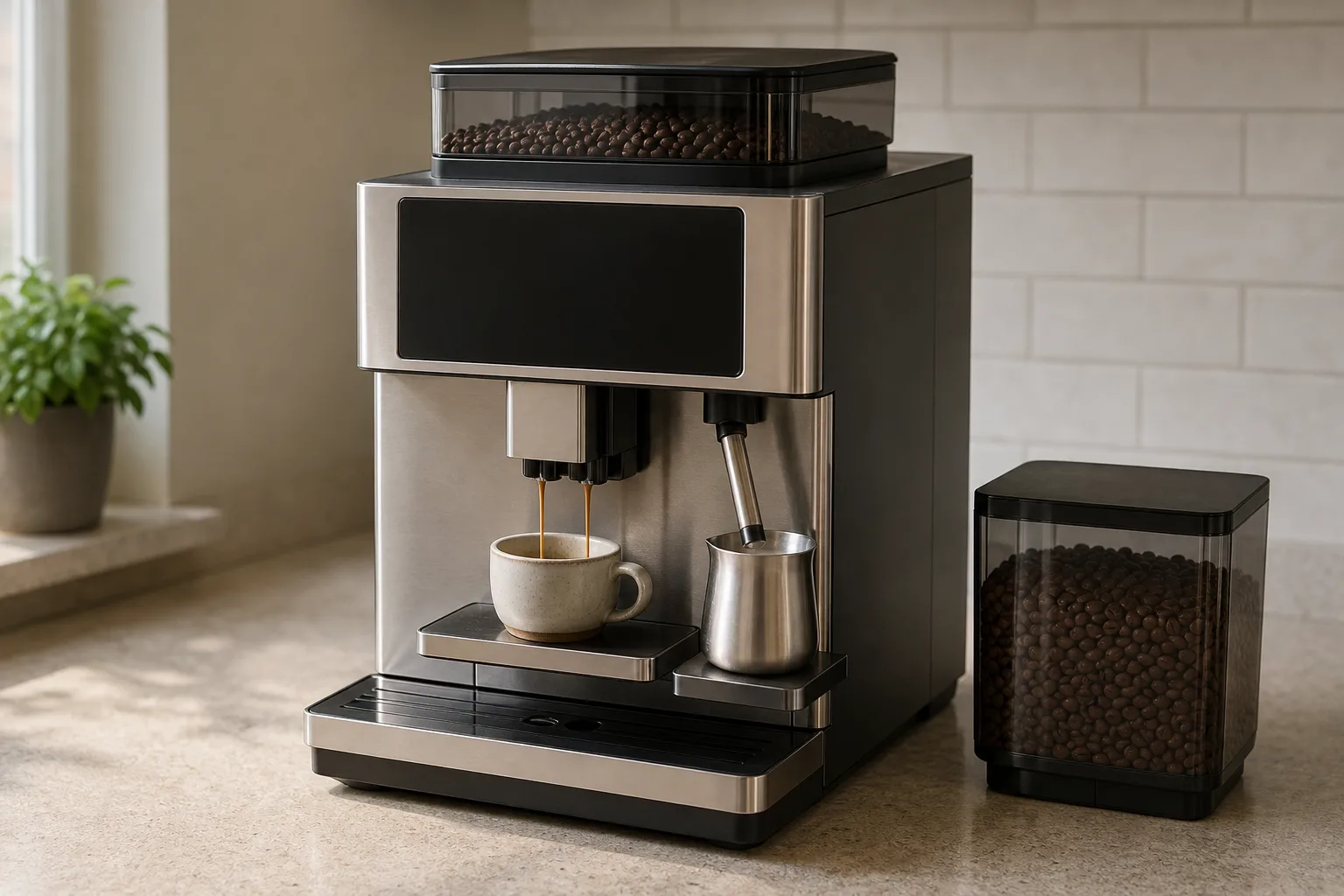
The Ninja AutoBarista Pro is Ninja's first fully automatic espresso machine: beans go in the top, a drink comes out the front, and nobody handles a portafilter. It also brews drip coffee and iced drinks, and it froths milk with a steam wand and a spinning whisk instead of the sealed carafe most bean-to-cup machines use. The De'Longhi Rivelia is the carafe kind: smaller drinks, made faster, with the milk poured into the cup by the machine.
This guide covers the AutoBarista Pro in depth, then sets it against the Rivelia on brew time, shot size, grind setup and milk.
Quick verdict
- Espresso, milk, drip and iced drinks from one machine: the Ninja AutoBarista Pro. Its double and triple shots are full-bodied, it sets its own grind, and its foam is fine-textured. The single shot is thin, every drink takes longer, and the milk jug is filled, poured and washed by hand.
- Fast drinks with milk frothed into the cup: the De'Longhi Rivelia. A small espresso is ready in less than half the time, and the cup tastes close to the Ninja's. Its grind has to be found by taste, which can take many cups with a fresh bag of beans.
- Skip both if: the goal is a short, dense café-style espresso. A semi-automatic machine and a grinder still do that better.
The two machines at a glance
| Feature | Ninja AutoBarista Pro | De'Longhi Rivelia |
|---|---|---|
| Drink presets | 13 | 18+ |
| Milk system | Steam wand and whisk in an open jug, five froth presets including cold foam | LatteCrema Hot carafe that froths into the cup; the cold-foam set is sold separately |
| Grinder | Stainless-steel burrs, 50 settings, set by the machine | 13-setting burr grinder, set by the owner with a guided setup |
| Bean hoppers | Two, swappable | Two, interchangeable, 8.8 oz each |
| Saved profiles | Two | Four |
| One espresso, button to cup | About 1 minute 45 seconds (single shot) | About 45 seconds (small) |
| Shop |  View on Amazon | 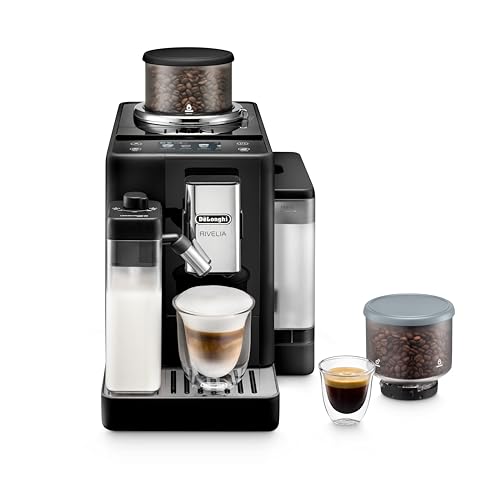 View on Amazon |
Features are as listed on Ninja's AutoBarista Pro page and De'Longhi's Rivelia page. De'Longhi's US store sells one Rivelia, in four colors, with the hot milk carafe in the box.
Bean-to-cup with a steam wand
Ninja AutoBarista Pro
Full-bodied double and triple shots, a grind the machine sets for itself and fine milk foam from a wand and whisk, in a heavy machine that needs side access and takes longer per drink.
- 13 drink presets
- Two swappable bean hoppers
- 50 grind settings, set automatically
Good for
- Households that drink espresso, milk drinks, drip and iced coffee
- Anyone who does not want to set a grinder by taste
- Keeping regular and decaf beans ready
Skip it if
- A short, dense espresso is the goal
- The counter has no open space on both sides
- Milk drinks have to be fully hands-off
AutoBarista Pro espresso: big doses, long shots
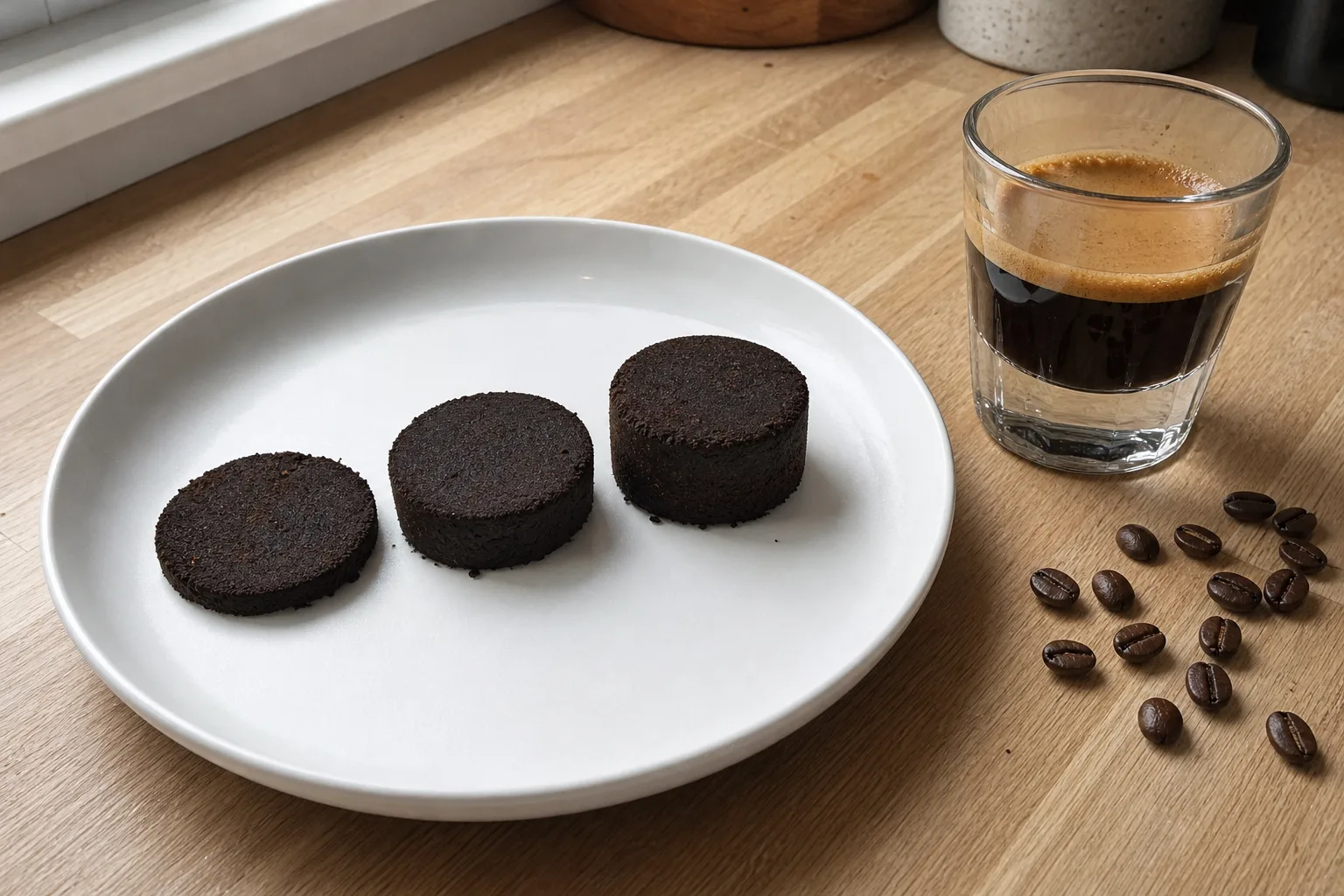
Bean-to-cup machines usually brew with 7 to 12 grams of coffee. The AutoBarista Pro uses much more, and the spent pucks come out thick and firm enough to lift out whole. That is the main reason the cup has more body than the category usually manages.
| Measure | Result from one set of measurements |
|---|---|
| Coffee dose | About 10 g single, 16 g double, 21 g triple |
| Shot strength (TDS) | 3.4% single, 7.2% double, about 8% triple |
| Coffee temperature in the cup | About 170°F |
| Milk temperature | About 140°F at medium, about 186°F at high |
| Noise | 70 to 72 dB grinding, 50 to 55 dB brewing |
The dose does not make the shot short. Manual-machine espresso usually lands around 10 to 12% dissolved solids and bean-to-cup machines around 6 to 8%, so the double and triple sit at the top of the automatic range and the single falls well below it. The single tastes watery, in milk drinks too. Start with the double.
At default settings the double runs past a 1:2 coffee-to-water ratio. Each step up on the five-bean strength button sends less water through the puck: at five beans a double came out at about 37 grams in about 30 seconds with good crema. Ninja's owner's guide lists the ratios behind that button, from 6:1 water to grounds at the mildest setting to 2:1 at the strongest, with 2.5:1 as the default. The other option is to stop the shot by hand at 36 to 40 grams with a scale under the cup.
A note on that guide: the edition quoted throughout this article is Ninja's owner's guide for the UK AE1000 series. Where it differs from the guide packed in the box, follow the one in the box.
Grind iQ and the two hoppers
Most bean-to-cup grinders leave the grind setting to the owner. The AutoBarista Pro sets it with a calibration cycle called Grind iQ: it pulls a shot, reads how fast the coffee flowed, changes the grind and tries again until the flow is in range. The UK guide puts the average at three brews. In practice it runs from a couple of minutes to as many as seven brews, and every calibration shot is thrown away. Expect to repeat it whenever a hopper gets a different coffee.
Manual control over the grind is narrow: two steps finer or coarser than the calibrated point.
Beans do not sit on the burrs. A small motor meters them down a few at a time while a built-in scale weighs the dose, so the grinding chamber is empty between drinks. Lift one hopper off, lock the other on, and the next drink uses the other coffee with nothing to purge. A chute on top takes pre-ground coffee; the UK guide caps it at six scoops per brew.
One-touch milk carafe
De'Longhi Rivelia
Makes a small espresso in less than half the AutoBarista Pro's time and froths milk into the cup from a carafe, but the grind has to be found by taste.
- 18+ drink recipes
- 13-setting burr grinder
- Two 8.8 oz bean hoppers
Good for
- Milk drinks with no jug to pour or wash by hand
- A quicker espresso
- Up to four people saving their own drinks
Skip it if
- Setting a grinder by taste sounds like a chore
- Cold foam has to work out of the box
Milk: a steam wand with a whisk
Milk goes into a jug under a wide steam wand with a temperature probe in its tip, and a magnetic whisk in the bottom of the jug spins while the wand steams. Froth runs from plain steamed milk to extra-thick, plus cold foam, with a dairy or plant-based setting.
The foam is fine and creamy. After frothing, the whisk keeps stirring the milk now and then while the espresso brews, so it does not separate before it is poured. A cappuccino made with 2% milk at the medium temperature setting came out at about 140°F. At the high setting milk measured about 186°F, hotter than milk should get, so leave the froth temperature at low or medium.
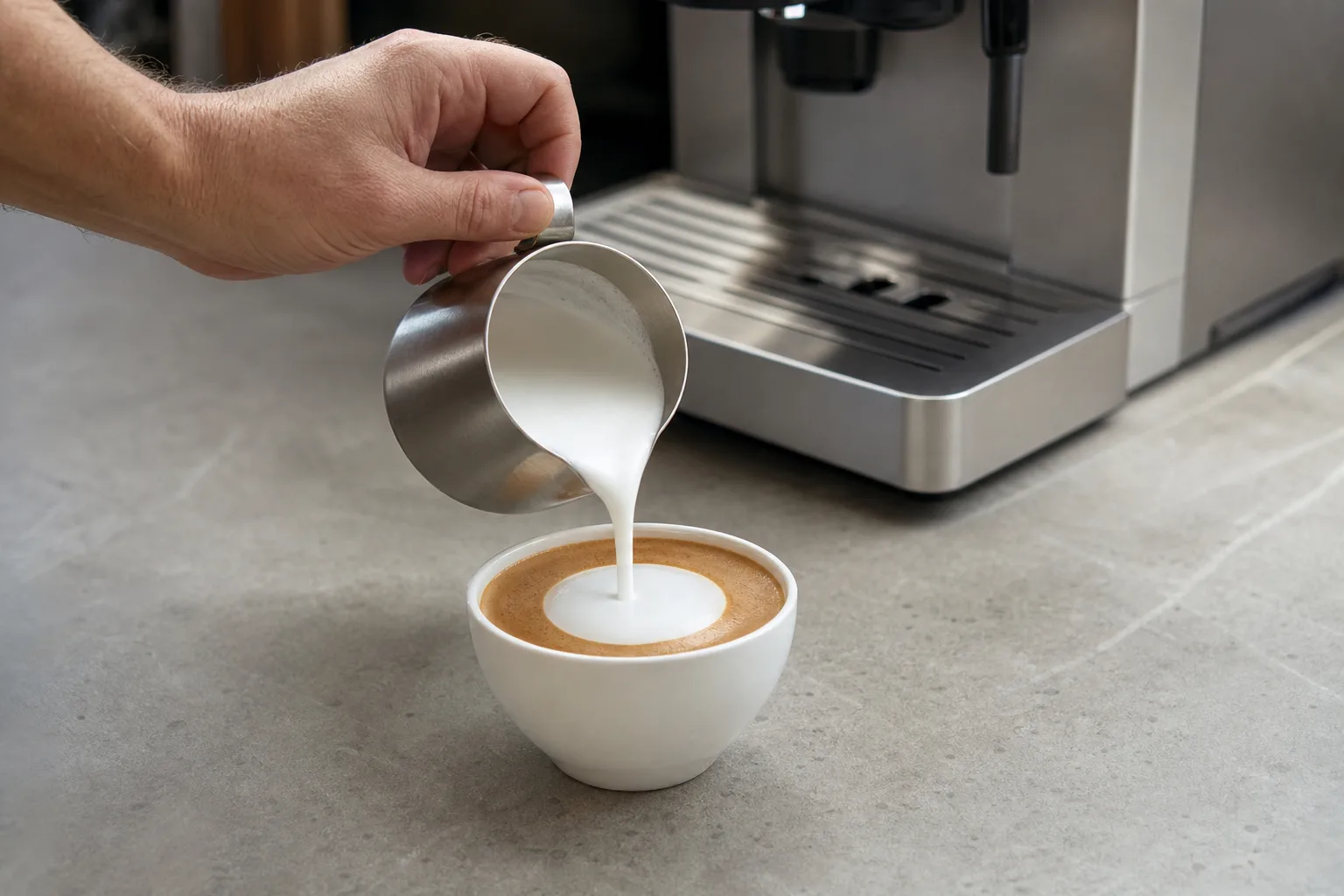
The default froth is thin for anyone who likes a stiff cap, so step up a level. The jug's spout is too blunt for latte art. And a milk drink is not one touch: someone fills the jug, pours the milk into the cup, wipes the wand and washes the jug. The wand purges itself when it is pushed back down. Pulled forward, it also steams by hand, with modest power.
Drip coffee and cold drinks
The AutoBarista Pro grinds coarser for drip-style coffee and offers sizes from 8 to 40 ounces, brewing the larger ones in several rounds. An 8-ounce cup tasted good; a 10-ounce cup at medium strength was weak and needed the strength turned up. A household that mostly drinks drip is better served by a dedicated drip coffee maker and a grinder.
The cold drinks are fast extractions, not a long steep: the cold brew setting runs unheated water through the grounds. The UK guide describes over ice, cold brew and cold pressed as concentrated brews meant to land in a cup already full of ice, and they need that ice.
Bean-to-cup with a steam wand
Ninja AutoBarista Pro
Full-bodied double and triple shots, a grind the machine sets for itself and fine milk foam from a wand and whisk, in a heavy machine that needs side access and takes longer per drink.
- 13 drink presets
- Two swappable bean hoppers
- 50 grind settings, set automatically
Good for
- Households that drink espresso, milk drinks, drip and iced coffee
- Anyone who does not want to set a grinder by taste
- Keeping regular and decaf beans ready
Skip it if
- A short, dense espresso is the goal
- The counter has no open space on both sides
- Milk drinks have to be fully hands-off
Size, noise, controls and cleaning
The machine is heavy and deep. Molded handles make it possible to move, and placement matters, because the water tank pulls out of the right side and the brew unit comes out of a door on the left.
The grinder is high-pitched. It runs a few seconds per drink, but it carries through an open kitchen early in the morning.
The touch panel is clear, and two profile buttons each remember a person's settings for every drink. The weak spot is the settings menu for froth temperature, water hardness and the grind offset, which scrolls across a five-character display.
The machine rinses itself at startup and shutdown and purges the steam wand after every milk drink, so the tank empties quickly and the drip tray fills fast. An orange float rises when the tray needs emptying; the tray is wide and full to the brim by then, so carry it level. Ninja lists the milk jug, whisk, water reservoir and cup tray as dishwasher-safe, and an interior fan dries the machine between uses. The UK guide sets this schedule:
- Every three days or when prompted: empty and wash the drip tray and puck bin.
- Weekly: brush out the burr grinder, more often with dark, oily or decaf beans.
- Monthly: rinse the brew unit under running water with no soap, let it air-dry, and run a clean cycle with a tablet.
- Every two months: grease the brew unit with the supplied silicone lubricant.
- When the light comes on: descale. The hardness test strip in the box sets how often that is.
The same guide warns against flavored or caramelized beans, which can jam the grinder.
How the De'Longhi Rivelia compares
With the same beans in both machines, the Rivelia is the quicker one by a wide margin. A small espresso is in the cup about 45 seconds after the button is pressed. The AutoBarista Pro takes about a minute and 45 seconds for a single shot at its strongest setting, and it was the slower machine on other drinks as well.
The Ninja's single shot is also a visibly larger pour than the Rivelia's small espresso. In the cup the two are close. The Rivelia's shot is smoother; the Ninja's has a little more bite without turning bitter or sour.
The bigger difference is the grind. The AutoBarista Pro calibrates itself. The Rivelia walks the owner through a guided setup that saves grind, dose and temperature for each bean, but the owner still judges the result. With one bag of beans that meant cups running from sour to bitter across grind settings 2.5 to 4.5 before 3 tasted right, and it starts over with the next bag.
Milk works the opposite way. The Rivelia's LatteCrema Hot carafe froths dairy or plant-based milk straight into the cup and has an auto-clean function, so a cappuccino really is one touch. Cold foam needs De'Longhi's separate LatteCrema Cool set, where the Ninja has a cold foam preset built in. Nothing here ranks the two foams against each other.
One-touch milk carafe
De'Longhi Rivelia
Makes a small espresso in less than half the AutoBarista Pro's time and froths milk into the cup from a carafe, but the grind has to be found by taste.
- 18+ drink recipes
- 13-setting burr grinder
- Two 8.8 oz bean hoppers
Good for
- Milk drinks with no jug to pour or wash by hand
- A quicker espresso
- Up to four people saving their own drinks
Skip it if
- Setting a grinder by taste sounds like a chore
- Cold foam has to work out of the box
AutoBarista Pro vs. the 10-drink AutoBarista
Ninja sells two versions. Its comparison chart gives the AutoBarista 10 one-touch drinks and four froth presets (steamed, thin, thick and cold foam) against the Pro's 13 drinks and five presets, which add extra-thick. It lists the two swappable hoppers for the Pro only. Both have Grind iQ with 50 grind settings, the Brew Two function for making two espresso drinks in a row, and two profiles. Every finding in this guide comes from the Pro.
The picks in detail
Ninja AutoBarista Pro
The Ninja AutoBarista Pro does three things bean-to-cup machines generally do not: it brews with doses of 16 to 21 grams, swaps between two coffees without purging, and froths milk in an open jug with a wand and whisk. The cost is size, slower drinks, a calibration cycle that uses up beans, and milk drinks that still need a pair of hands.
Bean-to-cup with a steam wand
Ninja AutoBarista Pro
Full-bodied double and triple shots, a grind the machine sets for itself and fine milk foam from a wand and whisk, in a heavy machine that needs side access and takes longer per drink.
- 13 drink presets
- Two swappable bean hoppers
- 50 grind settings, set automatically
Good for
- Households that drink espresso, milk drinks, drip and iced coffee
- Anyone who does not want to set a grinder by taste
- Keeping regular and decaf beans ready
Skip it if
- A short, dense espresso is the goal
- The counter has no open space on both sides
- Milk drinks have to be fully hands-off
De'Longhi Rivelia
The De'Longhi Rivelia is the pick for speed and for milk drinks with no jug to handle. What it asks in return is patience with the grinder: expect to spend cups of coffee finding the setting for each bag of beans.
One-touch milk carafe
De'Longhi Rivelia
Makes a small espresso in less than half the AutoBarista Pro's time and froths milk into the cup from a carafe, but the grind has to be found by taste.
- 18+ drink recipes
- 13-setting burr grinder
- Two 8.8 oz bean hoppers
Good for
- Milk drinks with no jug to pour or wash by hand
- A quicker espresso
- Up to four people saving their own drinks
Skip it if
- Setting a grinder by taste sounds like a chore
- Cold foam has to work out of the box
Who should buy which
- Buy the AutoBarista Pro for a household of mixed coffee drinkers who want the machine to handle the grind, and who have the counter space for it.
- Buy the Rivelia if most cups are milk drinks, speed matters in the morning, and adjusting a grinder is no bother.
- Still comparing carafe machines? See the De'Longhi and Philips super automatic comparison.
- Want to pull the shot by hand? Start with the beginner espresso machine guide.
- Change beans every week? Each change costs a calibration cycle on the Ninja and a round of tasting on the De'Longhi.
Posted by Kristopher Larson
Frequently asked questions
Does the Ninja AutoBarista Pro make real espresso?
It makes a fuller cup than most bean-to-cup machines, but not a short café-style shot. In one set of measurements, doses were about 16 g for a double and 21 g for a triple, with strength readings of about 7 to 8% dissolved solids, the top of the usual range for automatic machines. Shots run long at default settings, and the single shot is thin. The strongest setting on the strength button shortens the shot.
What is the difference between the Ninja AutoBarista and the AutoBarista Pro?
Ninja's comparison chart gives the AutoBarista 10 one-touch drinks and four froth presets, and the AutoBarista Pro 13 drinks and five froth presets, adding extra-thick froth. The two swappable bean hoppers are listed for the Pro only. Both have Grind iQ, the Brew Two function and two user profiles.
How long does Grind iQ calibration take on the AutoBarista Pro?
Ninja's UK owner's guide for the series says the average calibration takes three brews and about five minutes. With some coffees it takes five to seven brews. Each calibration shot is discarded, and the cycle has to be run again when a hopper is filled with a different coffee, so it uses a noticeable amount of beans.
Is the Ninja AutoBarista Pro or the De'Longhi Rivelia faster?
The Rivelia. With the same beans, a small espresso was in the cup about 45 seconds after the button was pressed, against about a minute and 45 seconds for a single shot on the AutoBarista Pro. The Rivelia also froths milk straight into the cup from its carafe, while the Ninja's milk jug is poured by hand. The Ninja sets its own grind; the Rivelia's grind is adjusted by taste.
How often does the Ninja AutoBarista Pro need cleaning?
The machine rinses itself at startup and shutdown and purges the steam wand after milk. Ninja's UK owner's guide for the series (follow the guide in the box where it differs) calls for emptying and washing the drip tray and puck bin every three days or when prompted, brushing the grinder weekly, rinsing the brew unit and running a cleaning tablet monthly, and greasing the brew unit every two months. Descaling is prompted by a light, based on the water hardness set at first use.
Does the Ninja AutoBarista Pro froth milk automatically?
It froths automatically, but it does not pour. Milk goes into a jug under the steam wand, a whisk and steam make the foam to the selected thickness, and the whisk keeps the milk mixed while the espresso brews. The jug then has to be poured into the cup by hand and washed. Milk came out at about 140°F on the medium temperature setting; the high setting measured about 186°F, which is hotter than milk should get.
Keep reading
More from the blog
Headlamps for Power Outages and Trails: Petzl NAO RL vs. Fenix HM65R-T V2.0 vs. Nitecore UT27 MCT vs. Milwaukee 2115
Best At-Home Cold Plunge: Ice Barrel vs. The Cold Pod vs. a Stock Tank and Chiller
LED Video Lights for Real Estate Video: Zhiyun MOLUS X100 vs. X200 vs. Godox ML100Bi vs. SmallRig RC 100B