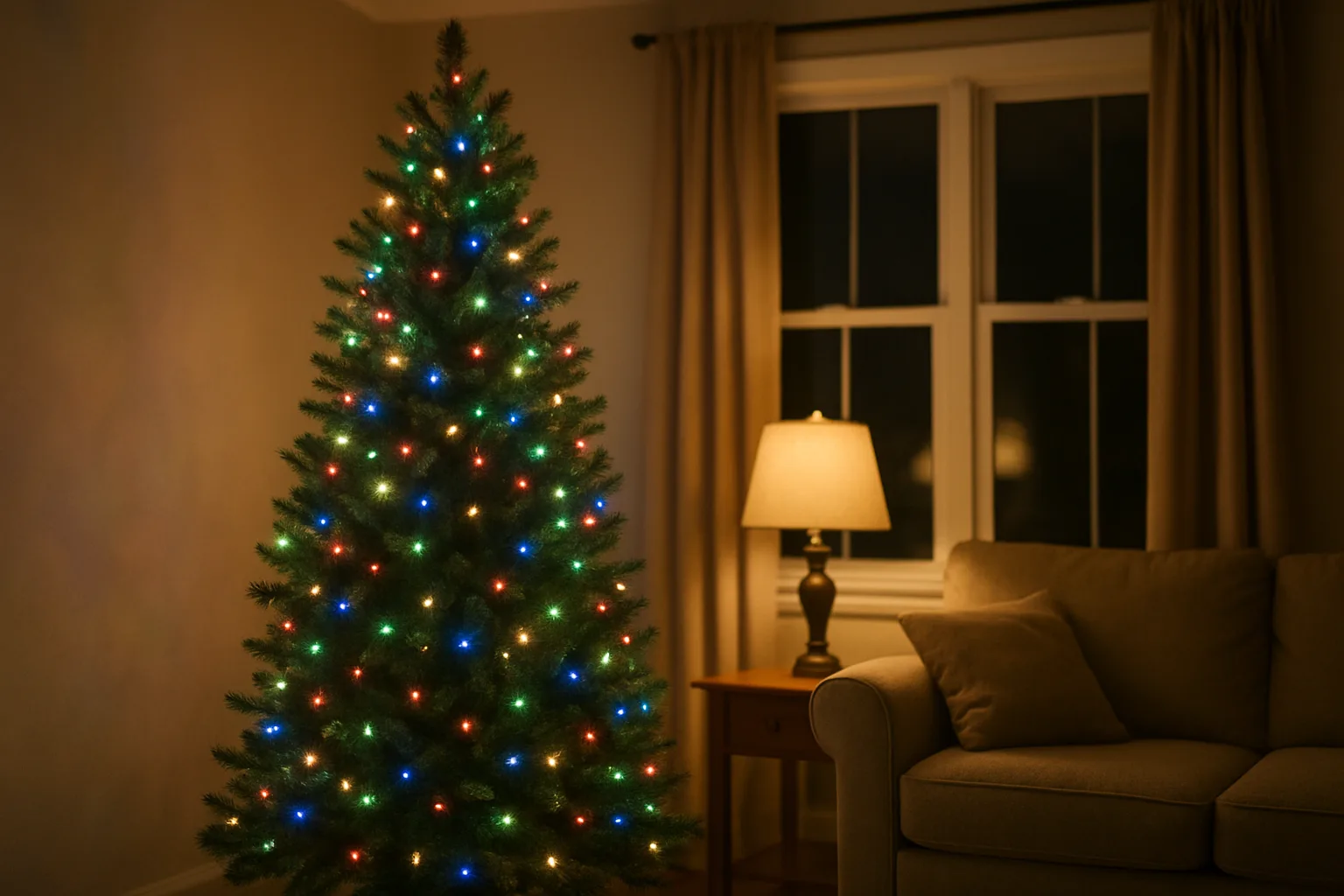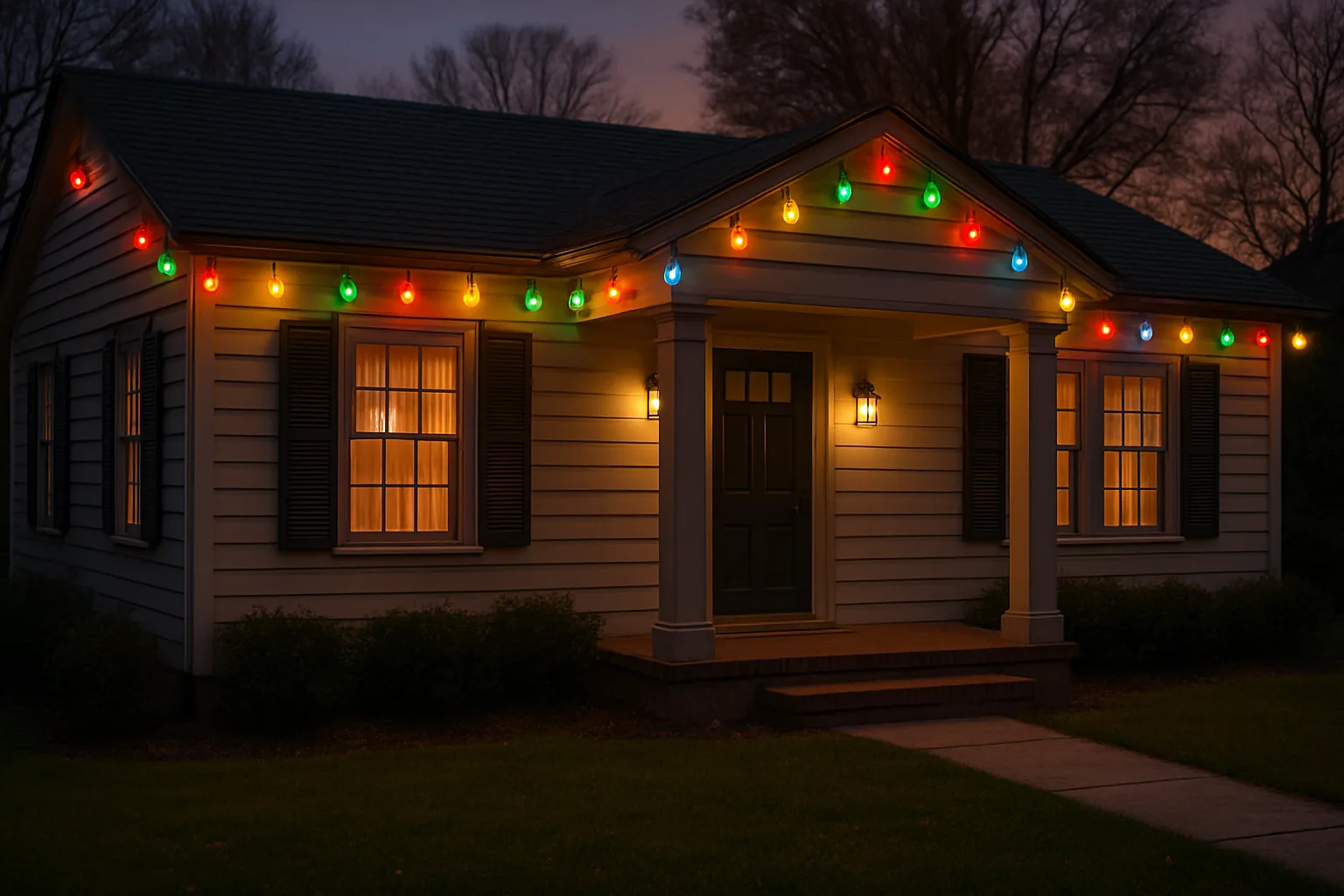
LED vs. Incandescent Christmas Lights: Why LEDs Look Harsh and Which Sets Look Warm
Why most LED Christmas lights look harsh, how warm-white-core sets fix it, what causes flicker, and which LED and incandescent sets to buy.
LED Christmas lights won on efficiency years ago. They use a fraction of the power, stay cool and outlast incandescent strands. Plenty of people still find them disappointing, though. Multicolor LED sets often look icy and harsh, with blues and greens that drown out everything else. Plug in an old incandescent set next to them and the difference is obvious from across the street.
That difference has a clear technical cause, and a fix that a handful of makers have finally put into production. This guide explains why most LED strands look the way they do, how to spot the ones that look like incandescent, what flicker has to do with it, and which sets to buy.
As an Amazon Associate, Best Utah Real Estate earns from qualifying purchases.
Quick verdict
- Multicolor LED minis that look like incandescent: look for a warm white LED under a colored cap, such as Novelty Lights RetroGlo multicolor minis, or the Vintaglo sets sold direct by Merry Co. Avoid sets where each bulb is a colored diode.
- Warm white LED minis: a set built on good warm white diodes, such as the RetroGlo clear minis (2700K, indoor). Cheap white LEDs cast poor-quality light even when the color temperature looks right.
- Big C7 and C9 bulbs with a vintage look: LED filament bulbs in glass, such as Holiday Lighting Outlet C9 filament bulbs in sun warm white, or Tru-Tone's bulbs sold direct.
- The real thing, especially twinkling: incandescent minis are still sold, such as the Vickerman 100-count random-twinkle set. Incandescent twinkle remains hard for LEDs to copy.
Why most LED Christmas lights look harsh
An incandescent bulb makes white light: a hot tungsten filament glowing across the whole visible spectrum. To make a colored bulb, manufacturers tinted the glass, which filters out the wavelengths they didn't want. That filtering was never perfect. A green incandescent bulb lets through a cluster of greenish wavelengths, not one pure color, and that blend is why old sets look rich rather than electronic. Filtering also throws away light, and it throws away the most at the blue end, because filaments produce little blue to begin with. So incandescent blues and greens are naturally darker and never overpower the reds and yellows.
A colored LED works the opposite way. The diode emits a narrow band of light, essentially a single spectral color, as intense as that color can look. Most multicolor LED sets use a red diode, a green diode and a blue diode under matching colored caps. The cap barely changes anything; it can dim the light slightly, but it can't add the wavelengths the diode never made. The result is the saturated, piercing palette that reads more like a gaming PC than a living room, with blue and green dominating.
White LEDs are made differently. A blue or near-UV diode is coated with phosphors that convert its light into a broad mix that reads as white. Good white LEDs are now nearly indistinguishable from incandescent light. That is the key to the fix.
The fix: warm white diodes under colored caps
Put a warm white LED where the filament used to be, and color it with a filter the way incandescent bulbs always were. Side-by-side comparisons of sets built this way against real incandescent minis in the same red, yellow, green and blue mix found them nearly indistinguishable from a normal viewing distance. The green came out slightly less saturated and the yellow had a faint green tinge. That tinge comes from the white LED's spiky spectrum, which filters a little differently from a filament's smooth one. The overall glow such a set casts on a room is also a touch less warm than incandescent. Those are small differences, noticed mostly up close or in a dark room.
Specialty makers led the way. Tru-Tone builds C7 and C9 bulbs that look like the old glass ones, with an LED filament inside and lines in ceramic-style, transparent jewel-tone and clear finishes. Merry Co's Vintaglo minis put warm white LEDs under colored caps. Reviews of Vintaglo sets found a few blue caps with weak, uneven coloring, and a strand that lost a section. The color appears to be a surface coating rather than tinted plastic, so its long-term fade resistance is still an open question. Both companies sell mainly through their own sites (Tru-Tone and Merry Co) and have sold out early in the season, which is why mass-market alternatives matter.
What store-shelf "vintage" sets get right and wrong
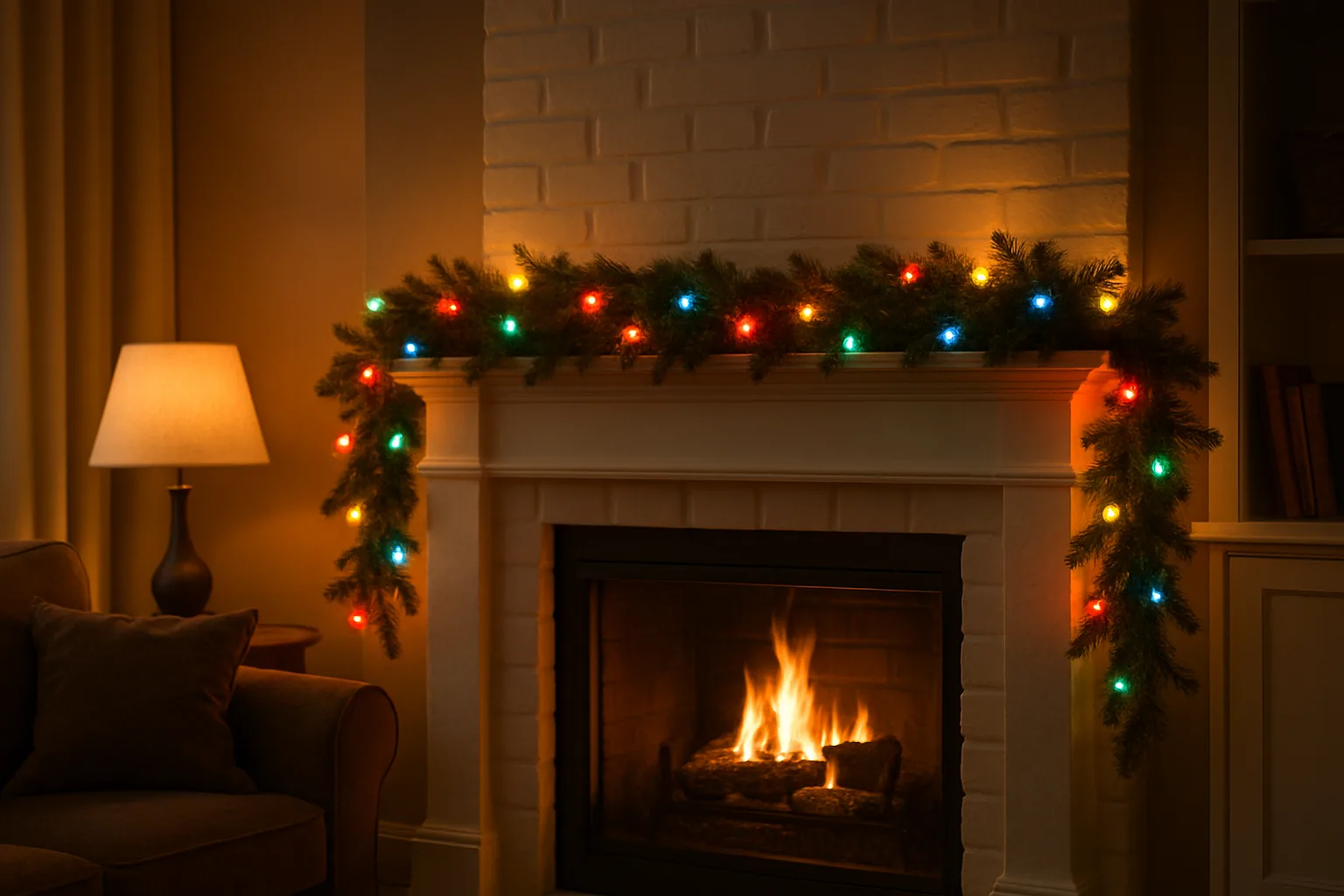
Retailers have noticed the demand, and shelves now carry plenty of sets labeled vintage, classic or traditional glow. Comparisons of these store sets found a mixed picture:
- Some "vintage" sets are the same old diodes in nicer caps. Deep-colored glass caps over color-matched diodes look promising unlit, then light up with the same harsh palette. Packaging that promised a "classic incandescent glow" covered sets that looked no different from standard LEDs.
- Yellow is often the only color done right. Many multicolor sets now make yellow with a white LED under a yellow cap, because yellow diodes are dull. Red, green and blue in the same set are still pure diodes.
- Glass "traditional glow" minis came close. One store-brand glass set was a genuine improvement, held back by a green closer to jade than emerald. Its white version was too pink and rendered colors poorly.
- Coating quality varies. One big-box copy of transparent jewel-tone C bulbs had a blue so faded on its indoor store display that it nearly read as cool white, while specialty jewel-tone bulbs looked fine after two seasons outdoors.
The practical rule: judge a set lit, not by the box. If a store has a lit display, look at the blue and green bulbs. If they look like laser points, the set uses colored diodes. If the colors look like stained glass with a light behind it, it's built the better way. One retailer's split between "vivid" (colored diode) and "vintage" multicolor is a useful shorthand, as long as the vintage version actually delivers.
Flicker: the other giveaway
Most plug-in LED strands run straight off household AC, so they switch on and off with the current. A set that is full-wave rectified flashes 120 times a second, which most people never notice unless their eyes sweep quickly across the lights. A half-wave rectified set flashes 60 times a second, and that is much easier to see as a strobing trail of dots. Even well-regarded vintage-look bulbs flash at 120 Hz. Listings rarely say which kind a set is, so anyone sensitive to flicker should look at a lit set in person, or sweep a phone camera across it and watch for bulbs that blink out in the frame.
Color combinations matter as much as the bulbs
Color mix changes how a display reads from the curb. Red, yellow, green and blue is the classic four-color combination, and each color stays distinct even at a distance. The common five-color mix of red, orange, pink, green and blue has three warm colors that blur into a muddy orange-red, leaving scattered pops of blue and green. A five-color mix can still work if the extra color is distinct: true yellow instead of orange, and a real magenta or purple instead of pink.
Brighter isn't better
LEDs make it easy to overdo it. A Christmas light is something people look straight at, so it should be fairly dim. Bare incandescent minis never were very bright. Many modern displays are bright enough to strain the eyes, and very bright LED "neon" figures turn into unreadable blobs outdoors at night. If a set looks glaring, a dimmer or fewer strands will usually look better than more.
Energy and practicality: still LED's strengths
A 100-light LED mini set draws roughly 5 watts, compared with around 40 for incandescent minis. That's why dozens of LED sets can run end to end where incandescent sets top out at a few (check each set's label for its own limit). LED sets also outlast incandescent strands, which often start losing bulbs by their second year. Incandescent is the choice only when the look matters more than the power bill.
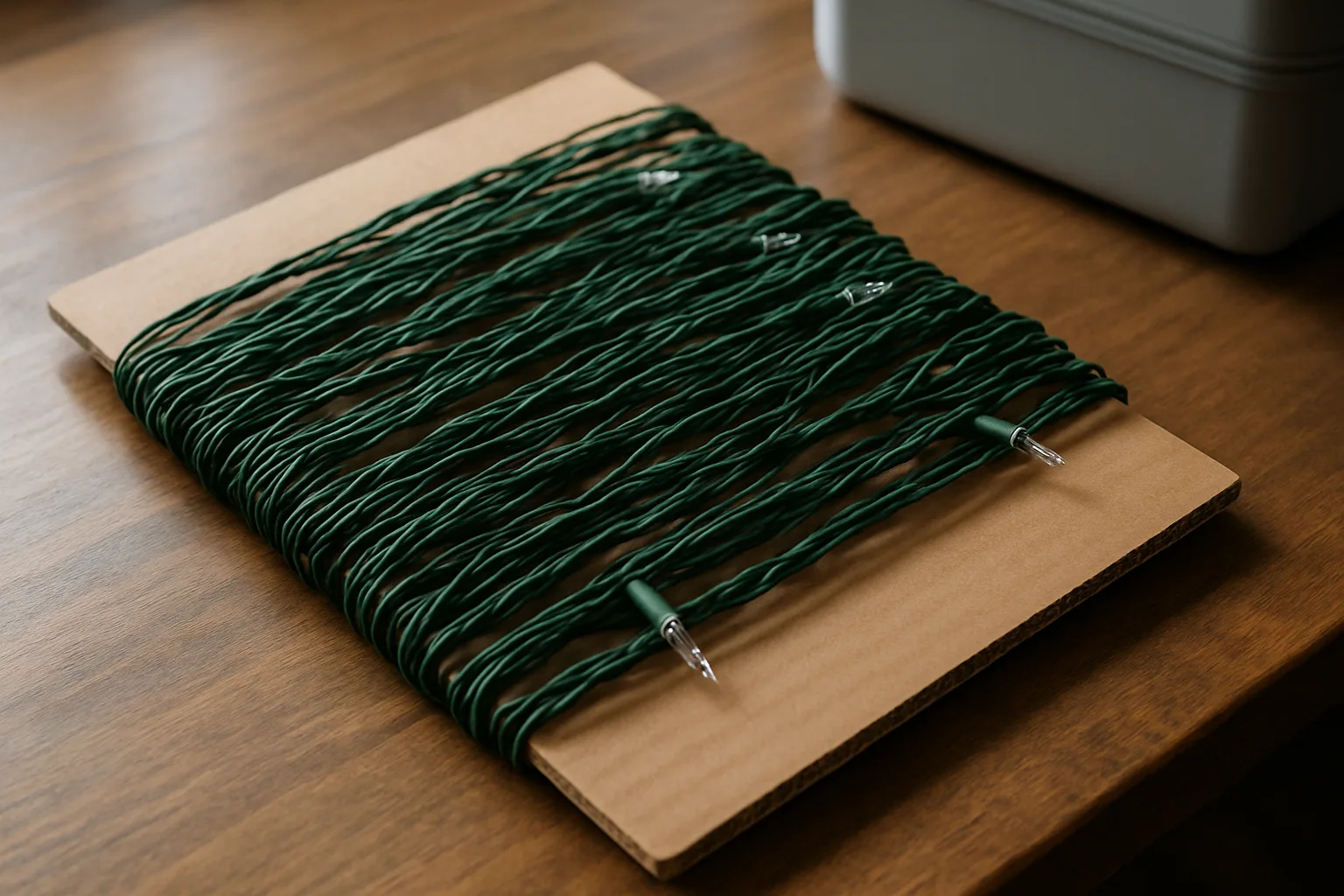
Storage helps any set last longer. Wrapping lights around an arm and stuffing them in a bag tangles and breaks them. A better method: cut a slit near each end of a rectangle of stiff cardboard, push the female end into one slit, wrap the strand around the board, and tuck the male end into the other slit. Always start with the female end. The board then works as a spool next season, letting the plug end feed out first for connecting to power. Plastic light reels do the same job.
The picks in detail
Novelty Lights RetroGlo minis
Every RetroGlo mini is built on a 2700K warm white LED core, with color added by the bulb shell rather than by a colored diode. That's the construction that makes LED minis look like incandescent. The multicolor 100-light set runs 50 ft with 6-inch spacing on green wire, and the bulbs are interchangeable. Check the listing photos to confirm the color mix suits your taste; the line also comes in ceramic-look and clear versions.
 RetroGlo Multicolor Mini LightsCheck today’s price on AmazonBuy on Amazon →
Holiday Lighting Outlet C9 LED filament bulbs
For rooflines and porches, LED filament bulbs in a C9 shape are the closest mass-market match to clear vintage bulbs. These show a visible glowing filament in sun warm white and use the E17 base that fits standard C9 stringers, so they can replace bulbs in an existing socket set. For choosing bulb size and spacing on a roofline, see the guide to C3 vs. C6 vs. C7 vs. C9 Christmas lights.
 Holiday Lighting Outlet C9 Filament BulbsCheck today’s price on AmazonBuy on Amazon →
Vickerman 100-count random-twinkle incandescent minis
Real incandescent multicolor minis on green wire with 4-inch spacing, with a share of the bulbs twinkling at random. Twinkling incandescent sets still have a look LED sets struggle to copy. Expect the higher power draw and shorter end-to-end limit that come with incandescent.
 Vickerman Random-Twinkle MinisCheck today’s price on AmazonBuy on Amazon →
Simple Living Solutions light storage reels
A three-pack of reels with a bag, for anyone who'd rather not cut cardboard. Start with the female end, just as with a cardboard board.
 Light Storage ReelsCheck today’s price on AmazonBuy on Amazon →
Who should buy which
- Grew up with incandescent and hates modern LED color: warm-white-core multicolor minis such as RetroGlo or Vintaglo, in a red, yellow, green and blue mix.
- Wants clean warm white: a quality 2700K warm white set, not the cheapest white strand on the shelf.
- Decorating a roofline in vintage style: C9 LED filament bulbs, or Tru-Tone's glass bulbs bought direct.
- Wants twinkle or the exact old glow: incandescent minis, used sparingly.
For timing the install, see when to hang Christmas lights. The same warm-light thinking applies indoors year-round, covered in how to make a room feel cozy.
Posted by Kristopher Larson
Frequently asked questions
Why do LED Christmas lights look different from incandescent lights?
Most multicolor LED sets use colored diodes, and each one emits a single narrow color at full intensity, so blues and greens look piercing. Incandescent bulbs start with white light from a filament and filter it through tinted glass, which gives softer, blended colors and naturally dimmer blues.
Are there LED Christmas lights that look like incandescent?
Yes. Look for sets that put a warm white LED under a colored cap or shell instead of using colored diodes. Merry Co's Vintaglo and Novelty Lights' RetroGlo minis are built this way, and Tru-Tone makes glass C7 and C9 bulbs with LED filaments. Judge any set lit: if the blue and green look like laser points, it uses colored diodes.
Do LED Christmas lights flicker?
Most plug-in LED strands flicker because they run directly off AC power. Full-wave rectified sets flash 120 times a second, which few people notice unless they move their eyes quickly. Half-wave rectified sets flash 60 times a second, which is much more visible. Sweeping a phone camera across a lit set is a quick way to check.
How much power do LED Christmas lights save?
A 100-light LED mini set draws roughly 5 watts, compared with about 40 watts for 100 incandescent minis. The low draw is also why many LED sets can be connected end to end in large numbers, while incandescent sets are usually limited to a few. Check each set's label for its own limit.
What is the best color combination for multicolor Christmas lights?
Combinations with clearly distinct colors read best, especially from a distance. Red, yellow, green and blue is the classic choice. Mixes with red, orange and pink tend to blur into orange-red. A five-color set works when the extra colors are true yellow and magenta or purple rather than orange and pink.
What is the best way to store Christmas lights so they don't tangle?
Wrap each strand around a flat piece of stiff cardboard with a slit cut near each end. Push the female end into one slit first, wrap the strand around the board, and tuck the male end into the other slit. Stored this way, the lights stack flat and unwind like a spool, with the plug end coming off first. Plastic storage reels work the same way.
Keep reading
More from the blog

Costway Christmas Inflatables Reviewed: Snow Globe, Nativity, Santa on a Dinosaur and More

Best Christmas Tree Stand for a Real Tree: Steel vs. Plastic vs. Ratchet (Cinco, Jack-Post, Krinner)

C3 vs. C6 vs. C7 vs. C9 Christmas Lights: Which Bulb Size for Rooflines, Trees and Bushes