Drill vs. Impact Driver: When to Use Each, and DeWalt vs. Milwaukee vs. Makita vs. Bosch Combo Kits
How a drill and an impact driver differ, which to grab for common jobs, what torque and voltage mean, and DeWalt, Milwaukee, Makita and Bosch kit picks.
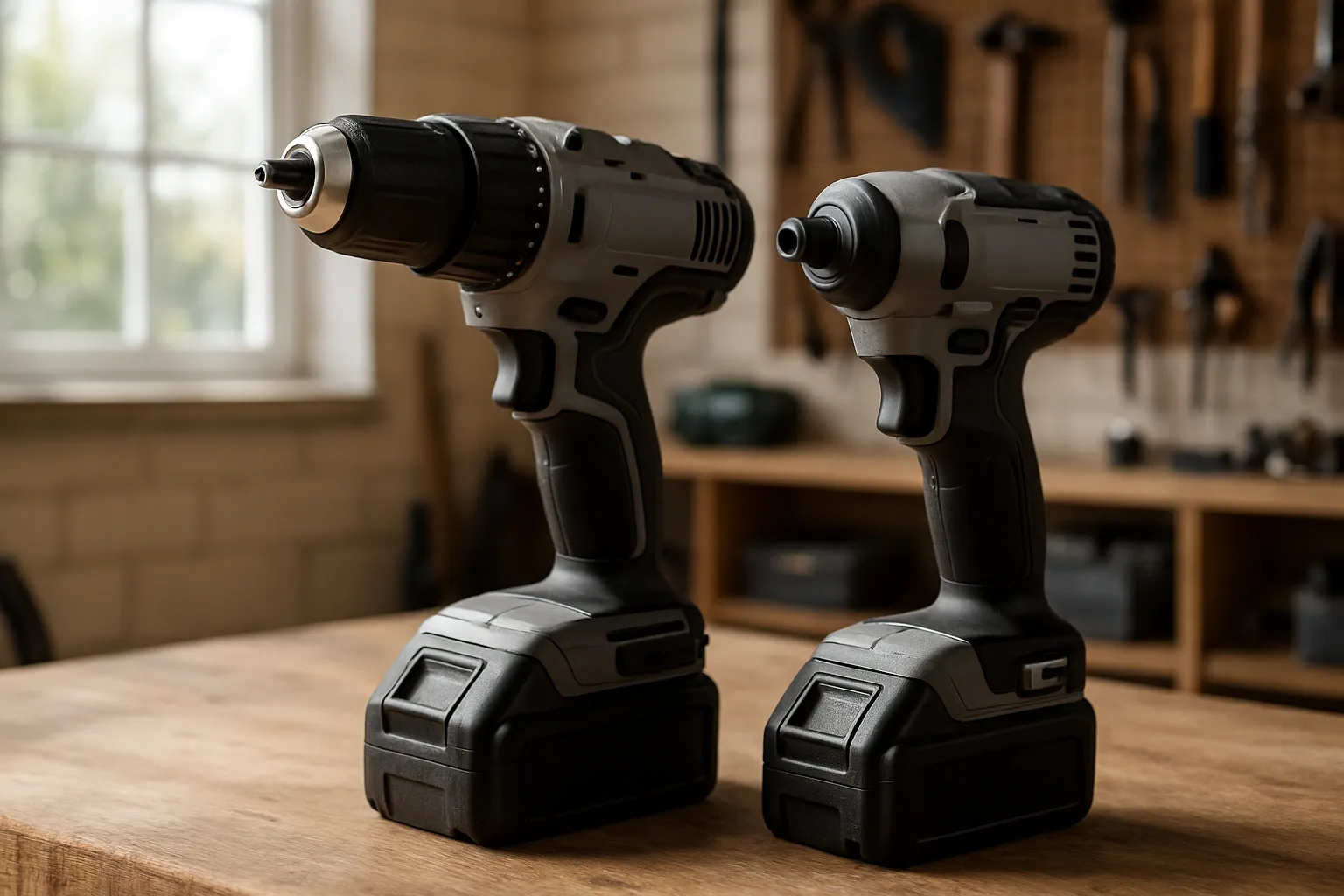
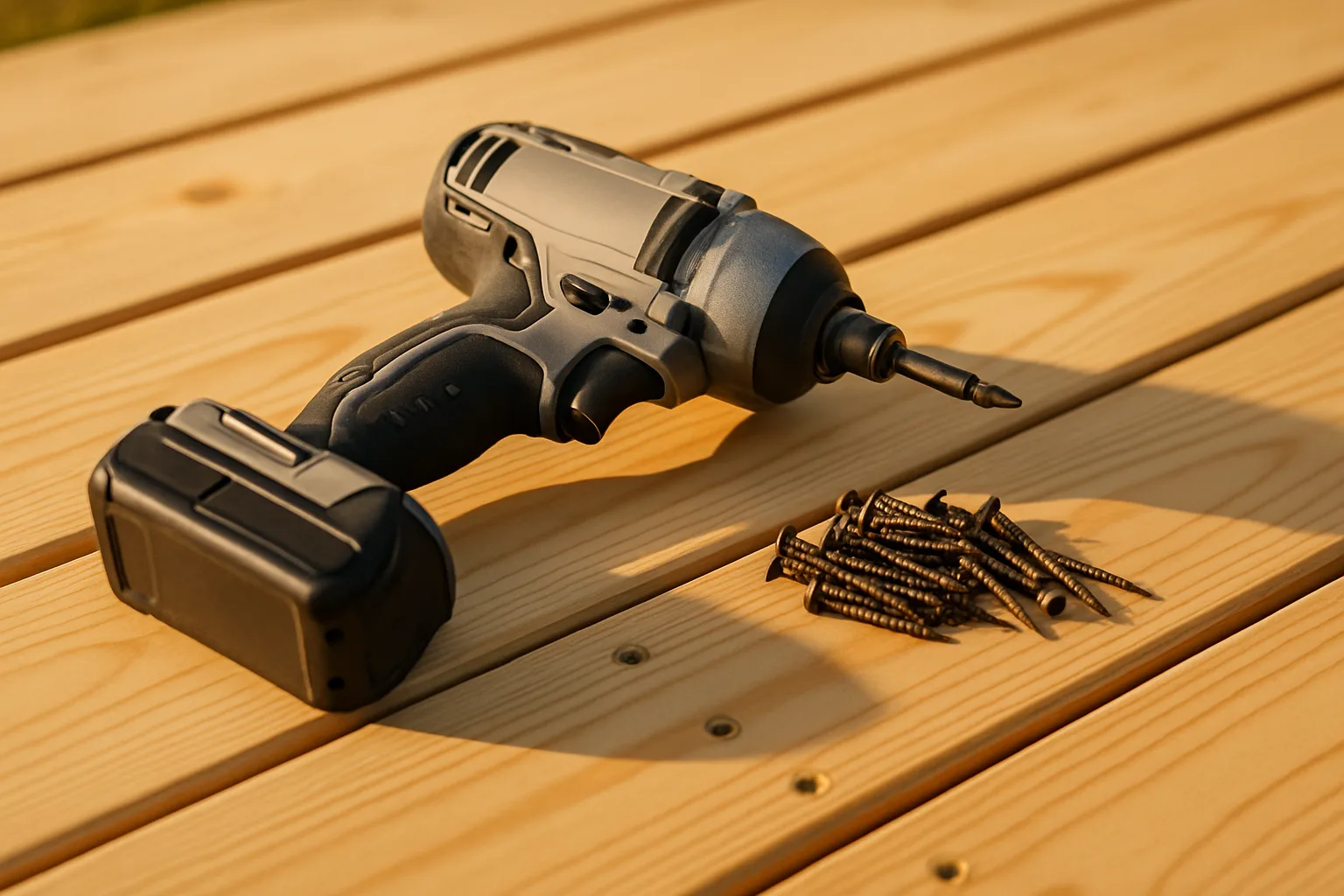
Cordless drills and impact drivers look almost identical on a store shelf, often share a box, and run on the same battery. They do different jobs. A drill is built for boring clean holes and driving screws with control. An impact driver is built for sinking long screws and lag bolts fast without twisting the user's wrist. Knowing the difference decides whether a homeowner needs one tool or both, and which combo kit is worth buying.
This guide explains how each tool works, which one to grab for common household jobs, what the torque and voltage numbers mean, and how the DeWalt, Milwaukee, Makita and Bosch starter kits compare.
As an Amazon Associate, Best Utah Real Estate earns from qualifying purchases.
Quick verdict
- One tool only: a drill/driver. It drills holes, drives screws, mixes small batches of thinset and accepts round-shank bits. An impact driver cannot do all of that.
- Best value two-tool kit for most homes: DeWalt 20V MAX DCK240C2. A proven drill and impact driver on one of the widest battery platforms.
- More power in a compact kit: Milwaukee M18 2691-22, with a 500 in-lb drill and a 1,500 in-lb impact driver.
- Brushless motors and bigger batteries: Makita 18V LXT XT281S, which ships with two 3.0Ah batteries.
- Light, small and enough for apartments: Bosch 12V Max CLPK22-120, for furniture assembly, shelves and picture hanging.
Drill vs. impact driver: the core difference
| Drill/driver | Impact driver | |
|---|---|---|
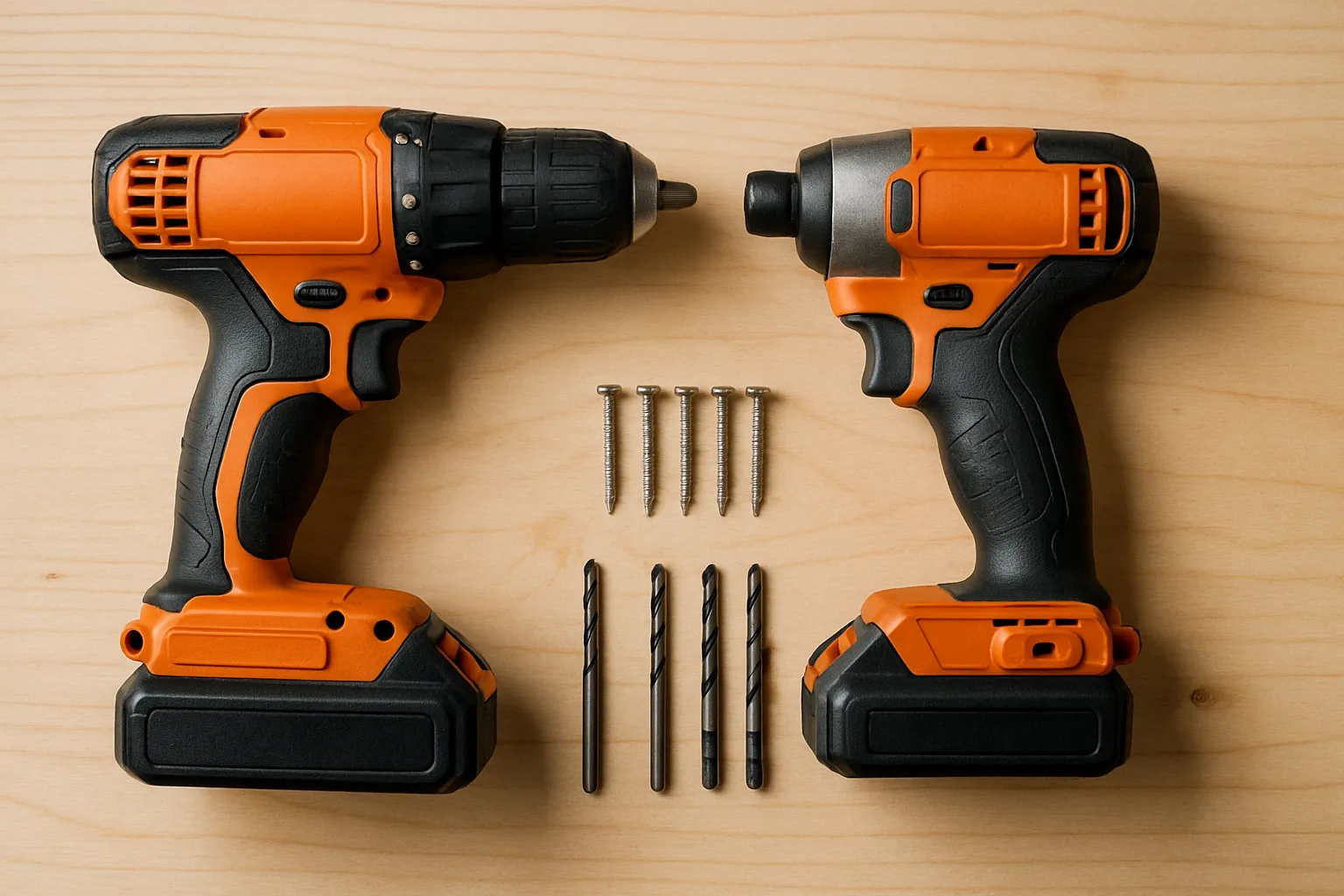
| Chuck | Three-jaw keyless, usually 1/2 in (3/8 in on 12V models) | 1/4-in quick-release hex collet |
| How it turns | Smooth, steady rotation | Rotation plus rapid hammer blows once resistance builds |
| Clutch | Adjustable clutch to stop at a set torque | No clutch on most models; speed settings instead |
| Typical torque | About 250 to 500 in-lb on homeowner kits | About 900 to 1,800 in-lb |
| Best at | Clean holes in wood, metal and plastic; countersinking; small screws; delicate materials | Long deck and structural screws, lag bolts, driving into dense or engineered lumber such as LVL |
| Noise | Quiet | Loud when impacting; hearing protection helps |
Torque ranges reflect the kits covered here; heavy-duty models go higher on both sides.
Why the impact mechanism matters
A drill pushes torque straight back into the user's hand. When a 3-inch screw bites hard into a stud, the drill either stalls or twists the wrist. An impact driver switches to a hammer-and-anvil action when resistance builds, delivering thousands of short rotational blows per minute. Those blows drive the fastener without much reaction torque, so the tool stays steady, the bit is less likely to cam out of the screw head, and the battery lasts longer on big fasteners.
Why a drill still matters
The clutch is the drill's advantage. Set to a low number, it slips once a screw is snug, which protects soft materials such as cabinet hardware, drywall, plastic electrical boxes and particleboard furniture from stripped holes and sunk heads. Drills also turn smoothly, so twist bits and spade bits cut clean, round holes, and the three-jaw chuck accepts round-shank bits, hole saws and mixing paddles that an impact driver cannot hold.
Which tool for which job
- Hanging shelves, curtain rods and TV mounts: drill for pilot holes, then either tool for the screws. Use the impact driver for lag screws into studs.
- Assembling flat-pack furniture: a drill on a low clutch setting, or a 12V impact driver on its lowest speed. Finish by hand on cam-lock and particleboard screws.
- Building a deck, fence or shed: impact driver for screws and lags; drill for pilot holes near board ends.
- Drilling into brick, block or concrete: a hammer drill with masonry bits. A standard drill/driver struggles, and an impact driver is the wrong tool even though it "hammers."
- Removing a stubborn screw: impact driver. The blows break the screw loose with less stripping.
- Drywall: a drill with a dimpler bit or a dedicated drywall screw gun, so heads sit just below the paper without tearing it.
Reading the specs
Voltage and platform
12-volt kits are lighter and smaller, enough for most indoor work. 18V and 20V MAX tools are the same class (20V MAX is the battery's peak voltage; 18V is its nominal voltage) and handle decks, framing and hole saws. The bigger decision is the battery platform: once a household owns two batteries and a charger, every later tool from that brand can be bought "bare" for less. Many platforms also cover outdoor equipment, as the comparison of cordless leaf blowers shows.
Brushless vs. brushed motors
Brushless motors adjust their power electronically, run cooler and get more work from each charge. Entry kits like the DeWalt DCK240C2 and Milwaukee 2691-22 use brushed motors, which are perfectly adequate for household use. The Makita XT281S kit uses brushless tools.
Battery capacity
Amp-hours (Ah) describe runtime, not power. The 1.5Ah packs in most starter kits keep the tools light; 3.0Ah or larger packs, like those in the Makita kit, last longer on deck and fence projects.
The kits in detail
DeWalt 20V MAX DCK240C2
 DeWalt 20V MAX DCK240C2 Drill and Impact Driver KitCheck today’s price on AmazonBuy on Amazon →
The kit pairs the DCD771 two-speed drill/driver, with a 1/2-inch ratcheting chuck, and the compact DCF885 impact driver, rated around 1,400 in-lb, plus two batteries, a charger and a bag. DeWalt's 20V MAX line is one of the largest cordless platforms, so expanding later is easy. Both tools are brushed models, and the small included batteries favor light weight over long runtime.
Milwaukee M18 2691-22
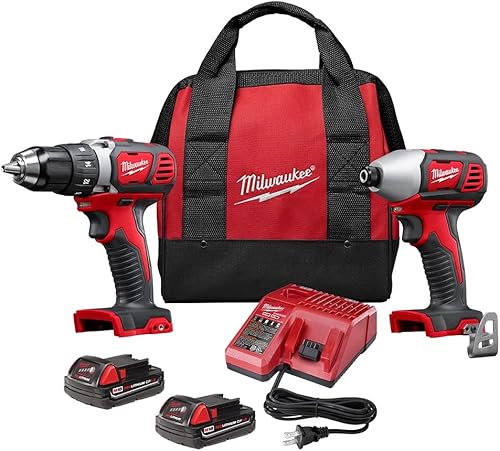 Milwaukee M18 2691-22 Combo KitCheck today’s price on AmazonBuy on Amazon →
Milwaukee lists the drill/driver in the 2691-22 kit at 500 in-lb and 0 to 1,800 RPM, and the 1/4-inch hex impact driver at 1,500 in-lb, 2,750 RPM and 3,450 impacts per minute, with two 1.5Ah compact batteries and a multi-voltage charger. The M18 platform is especially deep in trade tools, which matters to homeowners who expect to add a circular saw, reciprocating saw or work light.
Makita 18V LXT XT281S
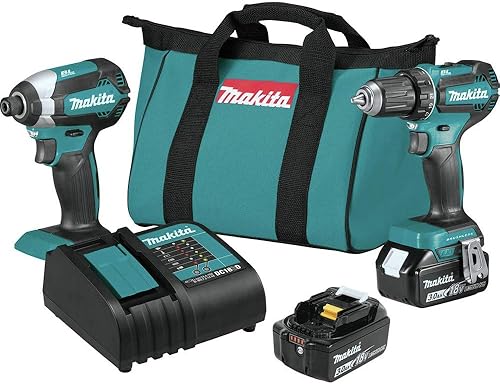 Makita XT281S 18V LXT Combo KitCheck today’s price on AmazonBuy on Amazon →
Makita's XT281S combines a compact brushless 1/2-inch drill/driver rated at 440 in-lb with a brushless impact driver rated at 1,500 in-lb, two 3.0Ah batteries and a rapid charger. It is the most capable kit here for long project days, and Makita's LXT line covers a wide range of tools on the same slide-style battery.
Bosch 12V Max CLPK22-120
Bosch's 12V kit pairs the PS31 3/8-inch drill/driver (about 265 in-lb, up to 1,300 RPM) with the PS41 impact driver (about 930 in-lb, up to 2,600 RPM). Each tool weighs roughly two pounds, which makes it easy to use overhead or inside cabinets. It is not built for decks or big lag screws, but it handles almost everything inside a typical house.
Bits and habits that prevent stripped screws
- Use impact-rated bits in an impact driver. Standard bits can shatter under the hammer blows, and that applies to hex-shank drill bits used in an impact driver too.
- Push straight in line with the screw. With a drill, steady forward pressure keeps a Phillips bit seated in the screw's tapered recess; once it starts slipping, both the bit tip and the screw head get chewed up. An impact driver's blows help keep the bit engaged, which is a big reason it strips fewer heads on long screws.
- Match the bit to the screw. Phillips, square (Robertson) and star (Torx) drives must fit snugly. Star and square drives resist cam-out far better than Phillips for structural screws.
- Start slow, then speed up. Both tools have variable-speed triggers; a slow start keeps the bit seated.
- Drill pilot holes in hardwood and near board ends to prevent splits.
- Keep batteries cool and dry, charge them on the supplied charger, and stop using any pack that is swollen or damaged.
Who should buy which
- First-time homeowners: the DeWalt DCK240C2, for its price, its platform and the fact that it covers both jobs.
- DIYers planning decks, fences and garage builds: the Makita XT281S or the Milwaukee 2691-22, then add a circular saw on the same battery.
- Renters and small homes: the Bosch 12V kit.
- Anyone already owning one brand's batteries: stay on that platform and buy the missing tool bare.
A drill and impact driver also handle most of the projects that come with a new house, from installing a garage door opener to the shelving and hooks in the home organizing and decorating guide.
Posted by Kristopher Larson
Frequently asked questions
Can an impact driver be used as a drill?
Only for light work. With hex-shank drill bits, an impact driver can bore small holes in wood, but it has no clutch, cuts less cleanly and cannot hold round-shank bits, hole saws or mixing paddles. A drill/driver is the better first tool for most homeowners.
Do I need both a drill and an impact driver?
For occasional picture hanging and furniture assembly, a drill alone is enough. Homeowners building decks, fences, sheds or shelving benefit from both, because the drill handles pilot holes and the impact driver sinks long screws without wrist strain. Two-tool kits usually cost little more than a single tool with batteries.
Is 20V MAX more powerful than 18V?
No. They describe the same class of lithium-ion battery. 20V MAX refers to the pack's peak voltage with no load, while 18V is its nominal voltage under use. Compare torque, motor type and battery capacity instead of the voltage label.
Why does an impact driver make so much noise?
When resistance builds, an internal hammer strikes an anvil thousands of times per minute to drive the fastener. Those blows are loud, and hearing protection is a good idea for long sessions. A drill stays quiet because it only rotates.
What is the clutch on a drill for?
The numbered clutch ring sets how much torque the drill delivers before it slips. Low settings stop small screws from stripping soft materials like particleboard, plastic and drywall. The drill symbol bypasses the clutch for full power when boring holes.
Can a regular drill go into concrete or brick?
A standard drill/driver struggles with masonry. A hammer drill, which adds a forward hammering action, and carbide-tipped masonry bits are the right combination. An impact driver is not a substitute, since its blows are rotational rather than forward.
Keep reading
More from the blog

Best Christmas Tree Stand for a Real Tree: Steel vs. Plastic vs. Ratchet (Cinco, Jack-Post, Krinner)

Costway Christmas Inflatables Reviewed: Snow Globe, Nativity, Santa on a Dinosaur and More

C3 vs. C6 vs. C7 vs. C9 Christmas Lights: Which Bulb Size for Rooflines, Trees and Bushes