Civilian MREs vs. Emergency Ration Bars: APack, Datrex and S.O.S. Compared
A self-heating APack Ready Meal case compared with Datrex and S.O.S. ration bars: taste, heaters, pack contents and shelf life as each maker states it.
A civilian MRE is a cooked meal in a pouch with sides, a utensil and, in most kits, a flameless heater. The food needs no stove, pot or added water, which makes it the easiest hot meal to serve when the power is out. An emergency ration bar is the opposite idea: a dense block of baked calories that rides in a car trunk or go-bag for years.
This guide compares a self-heating civilian MRE case sold on Amazon with two ration bar packs, with pack contents and shelf life taken from each maker, plus notes on three other civilian MRE brands. Military-issue MREs are marked as government property, not for resale, and a resold case comes with no storage history, so none appear here.
Quick verdict
- Hot meals for a home outage: the APack Ready Meal Self-Heating Variety Pack. Twelve compact kits in six menus, each with its own heater, and a spaghetti entree that tastes better than canned.
- Ration bar for a go-bag: the Datrex 2400 Calorie Emergency Food Ration. Twelve individually wrapped 200-calorie bars with a plain, inoffensive flavor.
- Most calories in one brick: the S.O.S. Rations Emergency 3600 Calorie Food Bar. Nine dense bars that hold together well, with a sweet molasses taste that gets tiring after a day.
MREs are for the house. Ration bars are a backstop for the car and the bag.
The three side by side
| Emergency food | Shop | What is in the pack (maker) | Calories | Heating | Shelf life (maker) |
|---|---|---|---|---|---|
| APack Ready Meal Self-Heating Variety Pack |  View on Amazon | 12 meal kits, 6 varieties | Varies by menu; the maker plans two kits per person per day | Flameless heater in every kit | Listing: 5 years from production date. Maker's chart: 40 months at 70°F, 36 at 80°F |
| Datrex 2400 Calorie Emergency Food Ration |  See options | 12 individually wrapped bars | 200 per bar, 2,400 per pack | None needed | 5 years from manufacture |
| S.O.S. Rations Emergency 3600 Calorie Food Bar |  View on Amazon | 9 bars in one vacuum pack | 400 per bar, 3,600 per pack | None needed | 5 years |
Self-heating home case
APack Ready Meal Self-Heating Variety Pack
Twelve compact kits in six menus, each with a heater, with a spaghetti entree that beats canned and standout sunflower butter.
- 12 meals, 6 varieties
- Flameless heater in every kit
- Store at 80°F or below
Good for
- Home outage kits for two people
- Households that want a hot meal with no stove
Skip it if
- Anyone expecting a drink mix in the bag
- Eaters who dislike soft rice
How they actually compare
APack: small bag, real meal
The APack Ready Meals bag is smaller than a military MRE and tears open by hand. The spaghetti with Italian-style sauce and meat is the pleasant surprise: it tastes like pasta made with a decent jarred sauce, well above canned spaghetti, and a shake of the pepper packet improves it. The pork with sauce and rice is sweet and tangy with a little heat, but the rice is mushy and the pork falls apart into the sauce.
The sides carry more of the meal than expected. The sunflower butter is good enough to eat on its own, and spread on the snack bread with grape jelly it is the high point of the kit. Knead the pouch first, as the maker instructs, or it comes out runny. The banana apple smoothie is thick and a little tart, more of a calorie boost than a treat.
Two things to know before opening a case. One of the six menus has no entree at all: the sunflower butter and jelly kit is bread, sunflower butter, jelly and a smoothie, and it is easy to mistake for a bag that was packed wrong. And the kits include no drink mix or beverage powder, so plan water or something else to drink with each meal.
Heaters: fast, hot and worth respecting
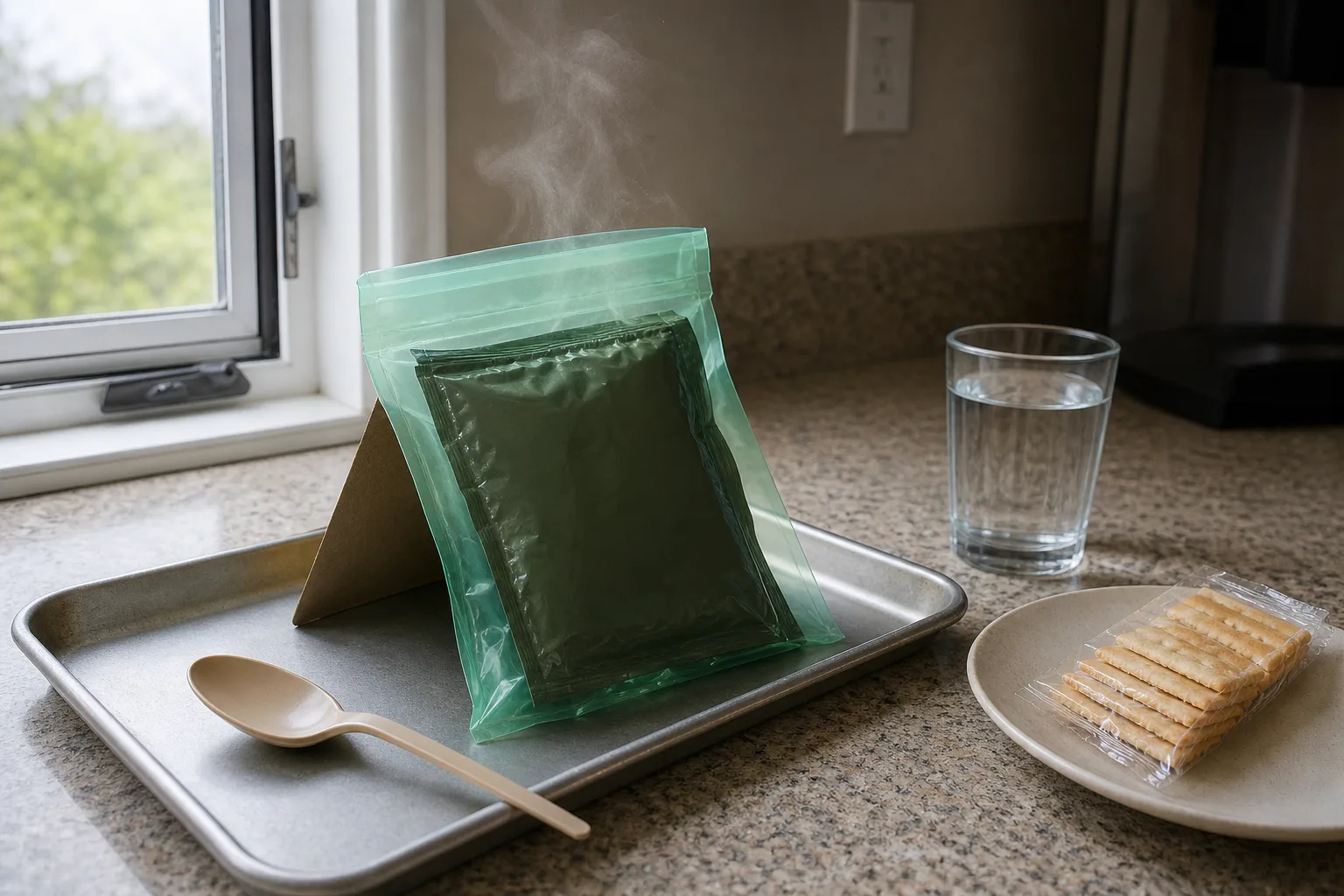
A flameless heater is a pad that reacts with water; APack's is powdered food-grade iron and magnesium with salt. Water goes in to the fill line, the unopened entree pouch sits against the pad, and the bag starts to steam almost at once. The APack heater bag is a little stubborn to tear open, then gets too hot to hold. The maker's instructions say to slide it into the paperboard sleeve and rest it on an incline so the water stays in.
APack's maker says its heater warms the meal in about 12 minutes and prints these cautions: keep hands clear of the opening, use it in a well-ventilated area on a heat-safe surface, keep it away from open flame and out of reach of children, and do not use it on airplanes or in confined spaces. The heater does not produce carbon monoxide but may set off a CO detector, and the leftover water is not for drinking. The entrees are fully cooked, so they can also be eaten cold.
Ration bars: plain is better
Ration bars are baked, shortbread-like blocks, and the plainest one is the easiest to keep eating. The Datrex bar is sold as coconut but tastes closer to an unsalted cracker or a plain graham cracker, with no lingering aftertaste. It is crumbly and a little drying, so open it over a bowl and pack water. The pack opens with a pull tab, and the individual wrappers keep leftovers clean.
The S.O.S. bar holds together better and feels like a dense sugar cookie. Its flavor leans toward brown sugar and molasses with a grainy texture, which is fine on day one and hard going by day two. The pack has no easy tear tab, so keep scissors or a knife in the kit. Crumbling either bar into hot water makes them easier to get down.
Neither bar is satisfying. Getting through even half an S.O.S. pack in a day takes effort. Treat ration bars as a one- or two-day bridge, not a food supply.
Other civilian MRE brands
XMRE's Blue Line is a scaled-down meal that the maker lists at 800 to 1,200 calories, with an entree, two to three sides and a drink mix. A ginger soy chicken menu shows the trade: the entree is a small pouch of tender, gingery chicken breast that fills the two tortillas as soft tacos and not much more, and it could use hot sauce. The rest of the kit makes up for it. The spiced apple pieces taste like apple pie filling, the oatmeal cookie is crisp, and the lemon-lime drink mix is tangy and easy to drink. XMRE sells Blue Line cases with and without heaters.
Two other brands pack bigger meals. Meal Kit Supply builds three-course meals of about 1,100 calories from military ration components, with chili that has real ground beef, moist pound cake and breakfast menus. MRE Star's meals average 1,200 calories and run spicy, with large cookies and a dried fruit mix.
Storage decides shelf life
MRE shelf life depends on temperature. The APack listing states a five-year shelf life from the production date. The maker's own inspection-date chart ties the number to storage: 60 months at 50°F, 48 at 60°F, 40 at 70°F, 36 at 80°F, 18 at 90°F and 6 at 100°F. The maker prints a production date code on each case and pack, not an expiration date, and says to store cases dry at 80°F or below. XMRE's guarantee follows the same pattern: five years at 70°F and six months at 100°F from the pack date.
Age shows in the sides first: bread dries out and cookies pick up an off taste. An entree from a case of unknown age and storage can spoil outright, which is the reason to buy a case with a readable date code and skip secondhand ones.
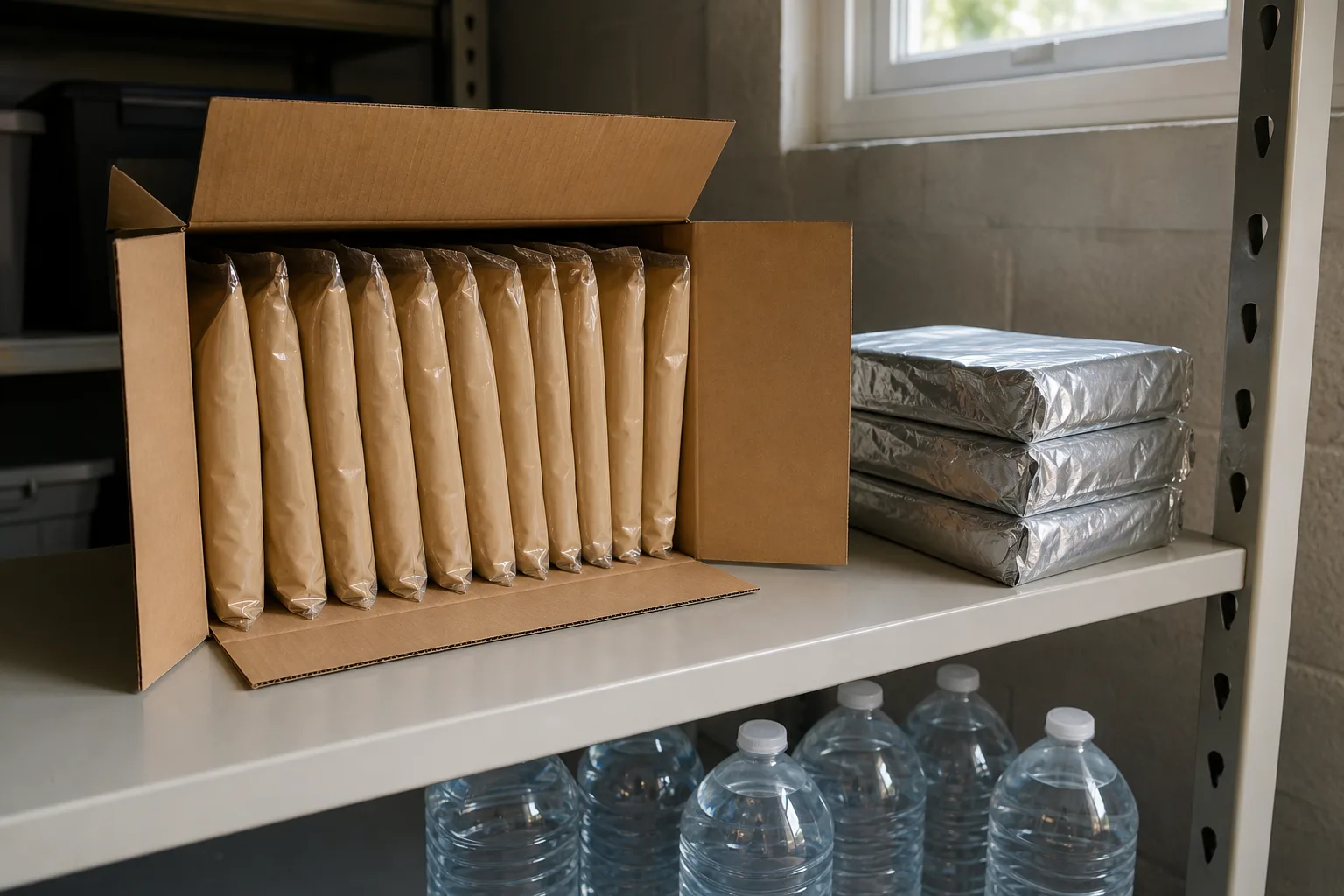
Ration bars are built for rougher storage. Datrex and S.O.S. both rate their bars for five years, and S.O.S. says its rations tolerate temperatures from -20°F to 149°F, which is why bars, not MREs, belong in a vehicle.
How to choose
- Feeding a household through a multi-day outage: a case of MREs. APack's maker figures two meals per person per day, so one case feeds two people for 72 hours.
- Picky eaters: the APack spaghetti is mild and familiar. Open the sunflower butter and jelly kit for anyone who will not eat the rice menus.
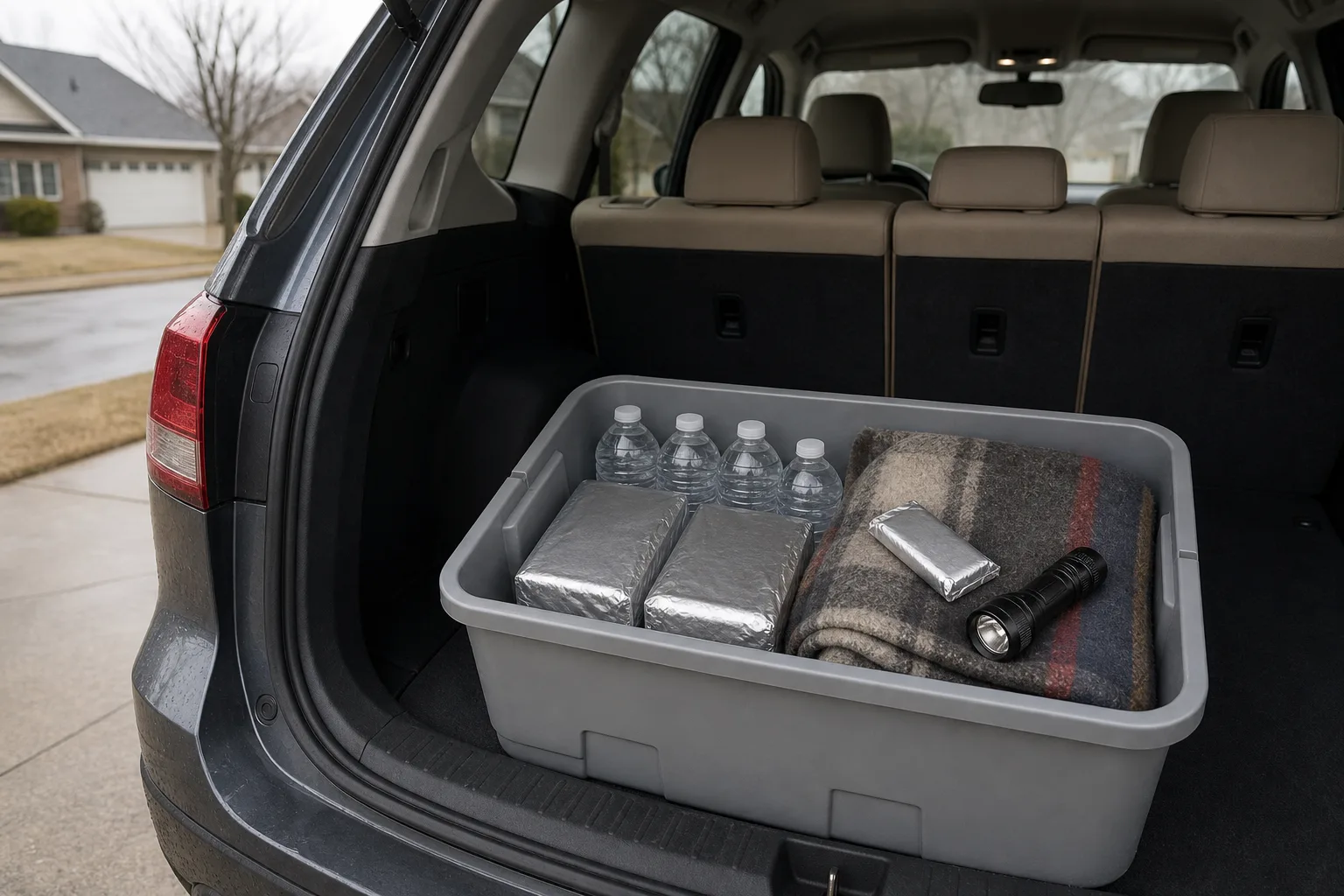
- Cars and go-bags: ration bars. Datrex for the plainer taste and separate wrappers, S.O.S. for more calories in one pack.
Water still matters. MREs need none for the food, but the heaters do, and the APack kits have nothing to drink. Ready.gov recommends keeping several days of non-perishable food and choosing foods the family will eat. If tap water may be unsafe, a portable emergency water filter is a sensible backup. Lighter, longer-lasting pouches that need boiling water are covered in the guide to freeze-dried emergency meals.
Most calories per pack
S.O.S. Rations Emergency 3600 Calorie Food Bar
Nine dense 400-calorie bars that hold together well, with a sweet molasses flavor.
- 9 bars of 400 calories
- 3,600 calories per pack
- 5-year shelf life
Good for
- Vehicle kits in hot or cold climates
- Stocking several kits at once
Skip it if
- People who tire of sweet flavors
- Opening without a knife or scissors
The picks in detail
APack Ready Meal Self-Heating Variety Pack
The APack Ready Meal Self-Heating Variety Pack is distributed by AmeriQual Group of Evansville, Indiana. The maker lists 12 meals in six varieties per case: two pasta menus, pork with rice, noodles with chicken, sweet and sour chicken with rice, and sunflower butter and jelly. Each kit has a self-heating unit, side dishes, a seasoning packet, a utensil and a napkin, and the maker notes that kit contents can differ from the listed items.
Self-heating home case
APack Ready Meal Self-Heating Variety Pack
Twelve compact kits in six menus, each with a heater, with a spaghetti entree that beats canned and standout sunflower butter.
- 12 meals, 6 varieties
- Flameless heater in every kit
- Store at 80°F or below
Good for
- Home outage kits for two people
- Households that want a hot meal with no stove
Skip it if
- Anyone expecting a drink mix in the bag
- Eaters who dislike soft rice
Datrex 2400 Calorie Emergency Food Ration
The Datrex 2400 Calorie Emergency Food Ration is a vacuum-sealed pack of twelve individually wrapped 200-calorie bars. Datrex says they contain no preservatives, are free of peanut products and last five years from manufacture. The bars can be eaten dry or mixed with water. The pack does not reseal, which matters less with single wrappers.
Individually wrapped bars
Datrex 2400 Calorie Emergency Food Ration
A plain, easy-to-eat ration bar in twelve separate wrappers that suits a go-bag or glove box.
- 12 bars of 200 calories
- 2,400 calories per pack
- 5-year shelf life
Good for
- Go-bags and car kits
- People who dislike sweet bars
Skip it if
- Anyone wanting a filling meal
- Eating without water nearby
S.O.S. Rations Emergency 3600 Calorie Food Bar
The S.O.S. Rations Emergency 3600 Calorie Food Bar packs nine 400-calorie bars into one brick. SOS Food Lab says it is a nut-free facility and packages its rations for a five-year shelf life. One pack covers one person for three days at the maker's minimum of 1,200 calories a day.
Most calories per pack
S.O.S. Rations Emergency 3600 Calorie Food Bar
Nine dense 400-calorie bars that hold together well, with a sweet molasses flavor.
- 9 bars of 400 calories
- 3,600 calories per pack
- 5-year shelf life
Good for
- Vehicle kits in hot or cold climates
- Stocking several kits at once
Skip it if
- People who tire of sweet flavors
- Opening without a knife or scissors
Who should buy which
- Two people planning for a three-day outage: one APack case stored in a cool basement or closet, plus bottled water.
- Every car in the driveway: a Datrex 2400 pack, water and a flashlight.
- A shelf of grab-and-go kits: S.O.S. 3600 packs, one per person.
The home emergency checklist covers water, light, power, radios and first aid.
Posted by Kristopher Larson
Frequently asked questions
What is the difference between a civilian MRE and a military MRE?
Civilian MREs are made for sale to the public, in the same kind of sealed pouches and often with similar components. Military-issue MREs are marked as U.S. government property that is not for commercial resale. A civilian case also comes with a pack date the buyer can read, which a resold military case may not.
How long do MREs last?
It depends on storage temperature. The APack Ready Meal listing states five years from the production date, and the maker's inspection chart shows 60 months at 50°F, 40 months at 70°F, 36 months at 80°F and 18 months at 90°F. XMRE guarantees its meals for five years at 70°F and six months at 100°F from the pack date. Store cases cool and dry.
How many calories are in a civilian MRE?
It varies by brand and menu. XMRE lists its Blue Line meals at 800 to 1,200 calories, Meal Kit Supply lists about 1,100 and MRE Star an average of 1,200. The maker of APack Ready Meals plans on two kits per person per day. The nutrition panel on each bag gives the exact figure for that menu.
Do MREs need water?
Not for the food. The entrees and sides are fully cooked and can be eaten straight from the pouch, hot or cold. Water is needed to activate the flameless heater and for any drink mix, so keep drinking water with the case.
Are flameless MRE heaters safe to use indoors?
Follow the directions printed on the heater. The maker of APack Ready Meals says to use its heater in a well-ventilated area on a heat-safe surface, away from open flame and out of reach of children, and not in confined spaces. It says the heater does not produce carbon monoxide but may activate a CO detector. The bag gets very hot and gives off steam.
Can ration bars be stored in a car?
That is what they are designed for. S.O.S. says its rations tolerate temperatures from -20°F to 149°F, and both S.O.S. and Datrex rate their bars for five years. MREs are a poor fit for a vehicle because heat shortens their shelf life quickly. The bars are not filling, so treat a pack as a one- or two-day bridge.
Keep reading
More from the blog
Mr. Heater Portable Buddy vs. Big Buddy for a Winter Power Outage: What Each Heats and What the Manuals Require
Best Under-Sink Reverse Osmosis System: Waterdrop vs. APEC vs. iSpring vs. Frizzlife
How to Make Beer at Home: Beer Making Kits, Fermenters and Machines