Best Vibration Plate for Home: Lifepro Waver vs. Rumblex 4D vs. MERACH vs. Zoomsnail
Lifepro Waver vs. Rumblex 4D, MERACH CV30 and Zoomsnail vibration plates: motion types, noise, speeds, timers, safe use and what the research shows.
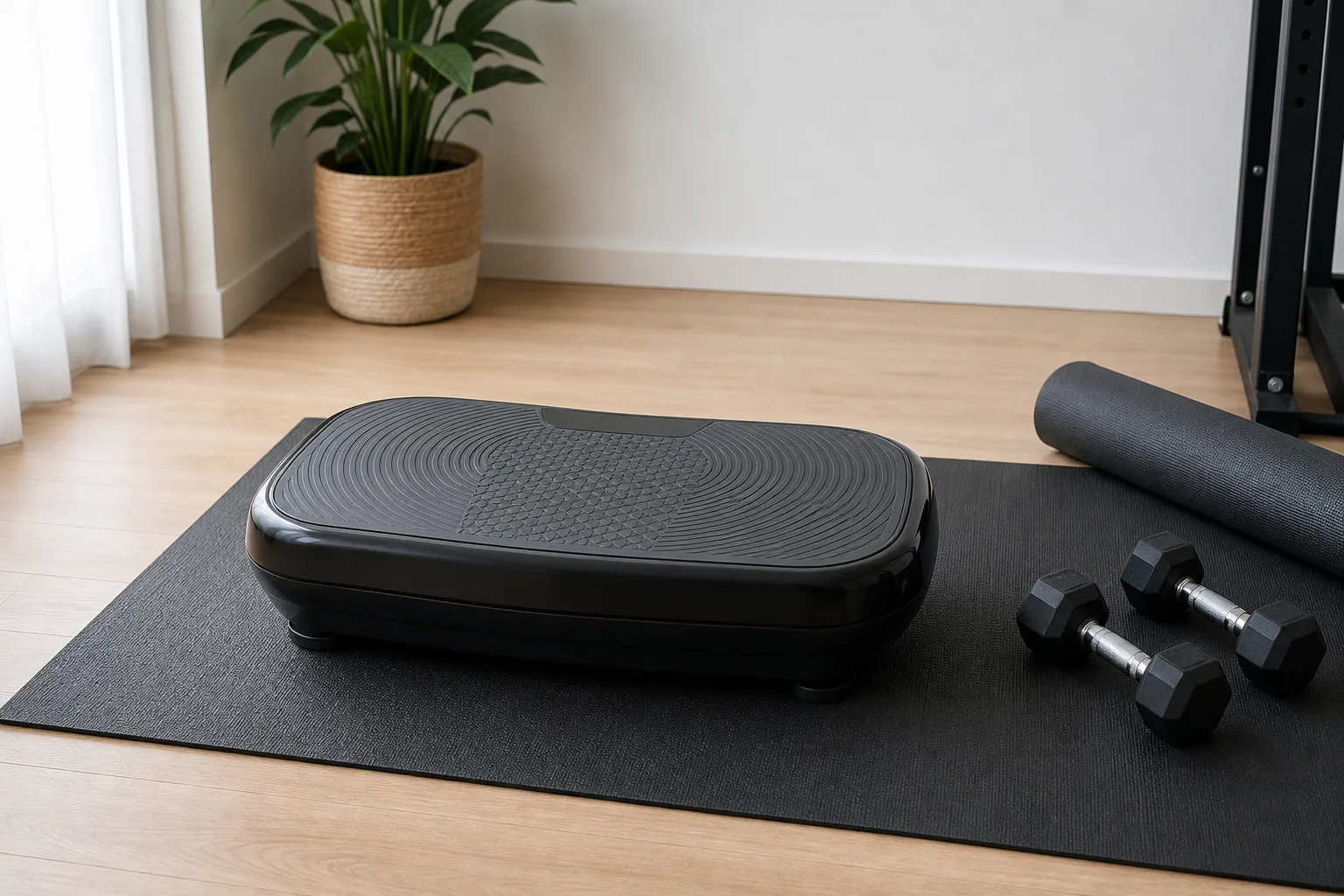
A vibration plate is a low platform with a motor inside that shakes, tilts or pulses under your feet while you stand, squat or hold a pose. The movement makes your leg and core muscles work constantly to keep you balanced, which is why a squat held on a running plate feels very different from the same squat on the floor. Home plates range from slim, quiet pads that slide under a sofa to heavy multi-motor platforms that can rattle a second-story floor.
The differences that matter day to day are the type of motion, how the plate feels at the speeds people actually use, how loud it gets, how easy the remote is, and whether it fits the space you have. This guide covers those points, what the research does and doesn't show, and the four plates worth buying.
Quick verdict
- Best overall: the Lifepro Waver Vibration Plate. A wide, comfortable oscillating deck, 99 speeds, 10 preset programs and a 15-minute timer, at a weight one person can slide under a bed.
- Best for experienced users who want more motion types: the Lifepro Rumblex 4D Vibration Plate. Three motors (oscillating, pulsating and side-to-side), a curved deck that challenges balance, and a mat underneath. It's heavy and its sessions stop at 10 minutes.
- Best for push-ups and upper-body work: the Zoomsnail Vibration Plate. Clip-on push-up grips, a soft pad, a 400 lb rating and a remote that moves through its 200 speeds in quick steps.
- Best simple, compact plate: the MERACH CV30 Curved Vibration Plate. Ten speeds, a slim curved pad and very little to learn. Good for standing on while watching TV; too low and small for step-ups.
The vibration plates side by side
| Vibration plate | Shop | Motion | Speeds | Session timer | Size and weight | Rated load | Best for |
|---|---|---|---|---|---|---|---|
| Lifepro Waver Vibration Plate |  View on Amazon | Oscillating (see-saw), 4–12 Hz | 99, plus 10 presets | 1–15 min | About 27.6 x 15.7 in, 28 lb | 330 lb | Beginners to intermediate, everyday use |
| Lifepro Rumblex 4D Vibration Plate |  View on Amazon | Oscillating, pulsating and lateral motors, 7 modes, 4–40 Hz | 60, plus 3 presets | 1–10 min | About 29.4 x 17.7 in, 39 lb | 500 lb | Intermediate to advanced, balance work |
| Zoomsnail Vibration Plate |  View on Amazon | Five movement modes | 200 | Not listed | 22 x 14 in, about 17 lb | 400 lb | Push-ups, planks, banded arm work |
| MERACH CV30 Curved Vibration Plate | 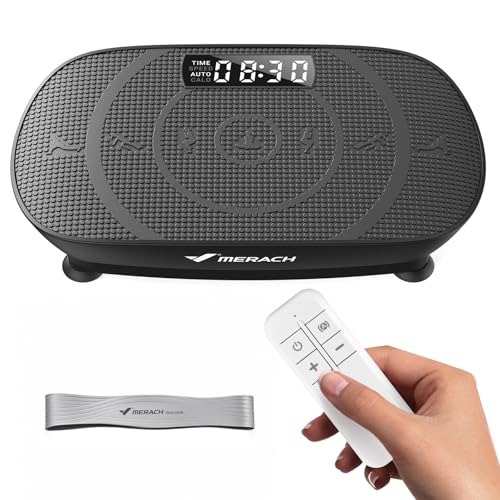 View on Amazon | Single motor, curved pad | 10 | 10-minute sessions | 20.5 x 11.3 in, about 13 lb | Not listed | Standing sessions, small rooms |
Best overall
Lifepro Waver Vibration Plate
20% offBlack Friday Dealoff list price · as of 9:20 pm MT · details
A wide, comfortable oscillating plate with 99 speeds, 10 programs and a 15-minute timer that suits most people starting out.
- 99 speeds
- 10 presets
- 330 lb rated
Good for
- Beginners to intermediate users
- Longer single sessions up to 15 minutes
Skip it if
- You want pulsation or side-to-side motion
- You need a rating above 330 lb
Oscillating, linear and "4D": what the motion types mean
Most home plates are oscillating (also called pivotal or teeter): the deck rocks around a center line like a see-saw, so one foot rises while the other drops. The farther apart your feet are, the bigger the movement. That's why plates like the Waver print "walking", "jogging" and "running" zones on the deck. Feet together near the middle is gentle; feet near the edges is a lot more motion. The Waver's manual lists 4–12 Hz and up to 8 mm of travel.
Linear or vertical plates (on the Rumblex, the "pulsating" motor) move the whole deck up and down in a much smaller, faster buzz. Lateral motion shifts side to side. "3D" and "4D" are marketing names for plates that combine these motors in different modes. The Rumblex's pulsation feels distinctly different from oscillation, a strong buzz that lingers through the body. Frequency matters for the research section below: the protocols with the best evidence for bone ran at about 30 Hz, well above what an oscillating plate like the Waver reaches.
What separates a good plate from an annoying one
Most of the work happens at low speeds
Strength-style routines on a plate (squats, lunges, wall-sit holds, push-up holds, balance work) mostly use the bottom of the speed range. Level 1 to 2 is common, and 10 to 15 is plenty for many workouts. The top speeds on a 99- or 200-level plate are rarely needed, and many people find them unpleasant: chattering teeth, an unsettled stomach, itchy legs or a buzzing that seems to run up into the head. Two plates at the same number can also feel very different. One Waver lookalike feels far more aggressive at speed 1 than the Waver does, and gets much louder by speed 50. Start low and go up slowly; Lifepro's own guides build from easy to intense over several weeks.
Where you stand changes everything
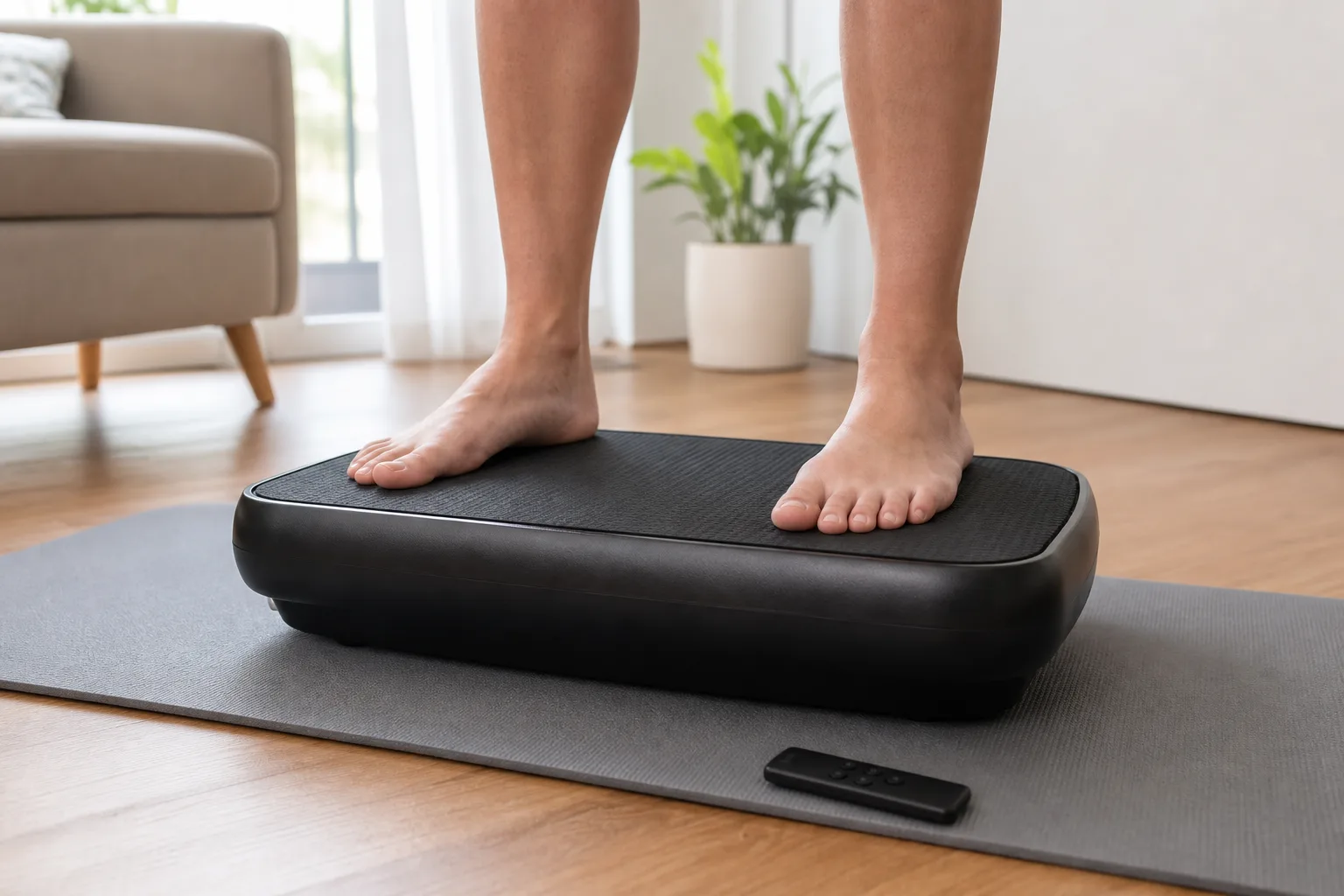
For balance exercises, stand closer to the center so the movement is smaller and easier to control. Wider stances add intensity. The power surprises first-timers, and people do fall off. Keep the remote in your hand or a chair or counter within reach for squats and wall-sit style holds, and put a towel or exercise mat on top of the plate when your hands, elbows or seat are on it. The Waver manual also says to keep your weight evenly spread rather than standing on one side, and not to use it in socks or slippers alone.
Noise and floors
At high speeds an oscillating plate can shake an upstairs room, and the motor hum is easy to hear over music or a call. Put a vibration mat under the plate on wood or tile; the Rumblex includes one, and it also lets the heavy plate slide across a hardwood floor. Resistance bands that hook on with metal clips add a clatter of their own. The Lifepro bands loop through the plate instead, which is quieter but a little more fiddly to attach.
The remote and the timer
A plate with 200 levels is only pleasant if the remote moves through them quickly. Some remotes crawl one level at a time while you hold a button; better ones jump in larger steps or have shortcut buttons. The timer matters too. The Waver runs up to 15 minutes per session, while the Rumblex and the MERACH stop at 10, which means a reset in the middle of a longer routine. Lifepro's manuals advise no more than 20 minutes a day.
Pad texture, handles and weight limits
Some plates have hard, ridged edges that are uncomfortable barefoot. Handled bands with metal carabiners attach more easily than plastic ones, and thicker foam handles are easier to grip. Rated loads among popular plates run from about 300 lb to 500 lb; check the listing for the exact model before buying. Weight also decides where the plate can live: a 13 lb pad goes under a sofa, while a 39 lb Rumblex is a two-hand lift.
Best for experienced users
Lifepro Rumblex 4D Vibration Plate
20% offBlack Friday Dealoff list price · as of 9:20 pm MT · details
Three motors, seven modes and a curved, wide deck give experienced users far more variety than a single-motor plate.
- 3 motors, 7 modes
- 60 speeds
- Mat included
Good for
- Intermediate to advanced users
- Balance and lunge work
- Trying pulsation and side-to-side modes
Skip it if
- You'll carry it between rooms
- You want sessions longer than 10 minutes
What the research says (and doesn't)
Whole-body vibration is well studied, but the results are modest and specific. A meta-analysis of randomized trials in postmenopausal women found small improvements in lumbar spine bone density, with the strongest evidence for high frequency (about 30 Hz), low magnitude (about 0.3 g) and a large cumulative dose (about 7,000 minutes). Those are research settings, not a description of any home plate. For muscle, a network meta-analysis of trials in older adults linked vibration training to better physical performance, but found resistance training the most effective way to build strength. The fair reading: a plate can be a useful add-on to exercise, not a replacement for lifting, and none of this supports claims about weight loss, cellulite or "toning".
Some people simply don't tolerate it: dizziness and motion-sickness feelings are among the reported side effects. Lifepro's manual lists people who should not use its plates, including anyone who is pregnant or recently gave birth, has a pacemaker, defibrillator or other electronic implant, has a blood clot disorder, severe osteoporosis or a recent fracture or surgery, or has had a retinal detachment. It asks people with joint replacements, stents, pins or plates, diabetes, heart or blood-pressure conditions, epilepsy or back problems to check with a doctor first. If anything on that list applies, talk to your doctor before buying.
The picks in detail
Lifepro Waver Vibration Plate: best overall
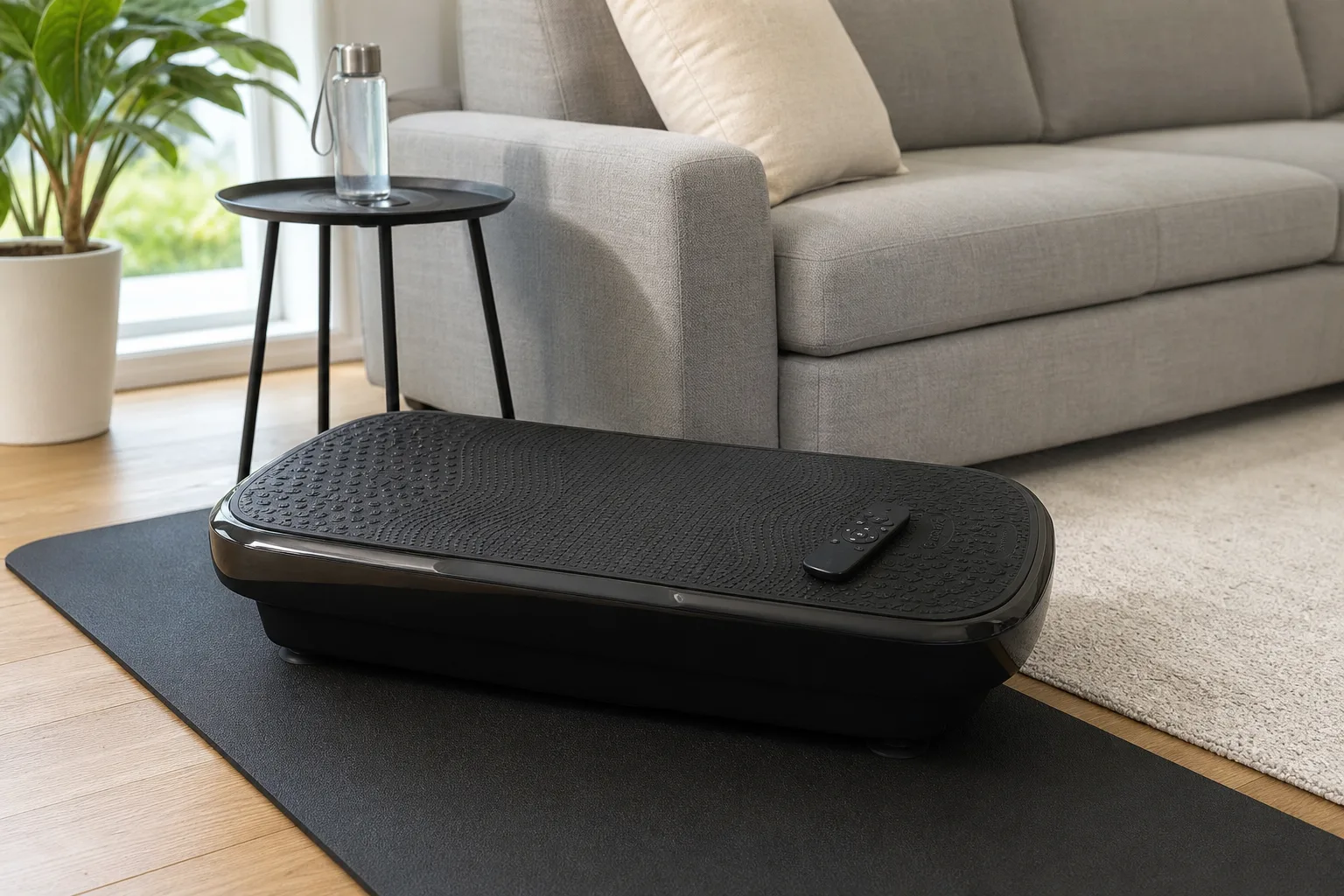
The Lifepro Waver Vibration Plate is the easy default. Its deck is wide and comfortable, with the walking, jogging and running zones marked so you can pick an intensity with your feet as well as the remote. It's a single oscillating motor with 99 speeds, 10 preset programs that vary the speed and shake the body in different ways, and a manual mode up to 15 minutes. It suits beginners and intermediate users, and it's smoother and quieter than its lookalikes at the same setting. At about 28 lb it slides under a bed. The kit includes two handled resistance bands and four mini loop bands, and Lifepro backs it with a lifetime warranty. The trade-off: at high speed it still shakes a wood floor, so plan on a mat.
Best overall
Lifepro Waver Vibration Plate
20% offBlack Friday Dealoff list price · as of 9:20 pm MT · details
A wide, comfortable oscillating plate with 99 speeds, 10 programs and a 15-minute timer that suits most people starting out.
- 99 speeds
- 10 presets
- 330 lb rated
Good for
- Beginners to intermediate users
- Longer single sessions up to 15 minutes
Skip it if
- You want pulsation or side-to-side motion
- You need a rating above 330 lb
Lifepro Rumblex 4D Vibration Plate: best for experienced users
The Lifepro Rumblex 4D Vibration Plate is a step up in power and variety. Three motors (oscillating, pulsating and lateral) combine into seven training modes, with 60 speed levels that are color-coded green, yellow and red on the display. Even topping out at 60, it feels strong, and the pulsation mode leaves a sensation that lingers more than on other plates. The deck is wider and curved, which makes balance work and lunges harder; keep lunges toward the middle. It comes with a mat that quiets it and lets you slide it across hard floors, plus handled bands, mini bands and built-in Bluetooth speakers. The downsides are real: at about 39 lb it's a struggle to carry, sessions end at 10 minutes, and it's more machine than a beginner needs.
Best for experienced users
Lifepro Rumblex 4D Vibration Plate
20% offBlack Friday Dealoff list price · as of 9:20 pm MT · details
Three motors, seven modes and a curved, wide deck give experienced users far more variety than a single-motor plate.
- 3 motors, 7 modes
- 60 speeds
- Mat included
Good for
- Intermediate to advanced users
- Balance and lunge work
- Trying pulsation and side-to-side modes
Skip it if
- You'll carry it between rooms
- You want sessions longer than 10 minutes
Zoomsnail Vibration Plate: best for push-ups and upper-body work
The Zoomsnail Vibration Plate stands out for its push-up grips, which lift up and lock into different spots on the plate, so push-up holds and planks don't mean pressing your palms onto the vibrating pad. The pad itself is soft. Its 200 speeds sound like overkill, but the remote moves in steps of 10, so in practice it adjusts as quickly as a 20-level plate. The remote also controls the built-in Bluetooth speaker, and the handled bands attach with carabiners. At 22 x 14 inches and about 17 lb, it's lighter than either Lifepro, with a 400 lb rating.
Best for upper-body work
Zoomsnail Vibration Plate
29% off recent price · as of 9:20 pm MT · details
Clip-in push-up grips, a soft pad and a quick-stepping remote make it the most practical plate for planks and push-up holds.
- 200 speeds
- Push-up grips
- 400 lb rated
Good for
- Push-ups, planks and banded arm work
- Users up to 400 lb
Skip it if
- You want the widest deck
- You need to know the exact motion type before buying
MERACH CV30 Curved Vibration Plate: best simple, compact plate
The MERACH CV30 Curved Vibration Plate is the basic, popular choice for people who want to stand on a plate and not think about it. Turn it on, pick one of 10 speeds and go; widening your stance adds intensity, just as on the bigger plates. It's slim (20.5 x 11.3 inches) and about 13 lb, so it tucks under a couch. The limits come from the same shape: the deck is much smaller and lower than the Waver's, so it's not useful as a step for step-ups, and there's less room to work. The pad curves down at the sides, which some people find less stable, with a foot more likely to slip if you aren't paying attention.
Best compact plate
MERACH CV30 Curved Vibration Plate
30% offBlack Friday Dealoff list price · as of 9:20 pm MT · details
A slim, lightweight 10-speed pad for simple standing sessions that stores under a sofa.
- 10 speeds
- About 13 lb
- 20.5 x 11.3 in
Good for
- Standing while watching TV
- Small rooms and easy storage
Skip it if
- You want step-ups, planks or banded workouts
- Curved edges feel unsteady to you
Other plates worth knowing
Waver lookalikes copy its shape and add extras like jump ropes, but tend to feel harsher at low speeds and run louder. Plates with very high speed counts usually add "walk, jog, run" shortcut buttons; without them, ramping up or down takes a while.
A plate pairs well with other small-space gear. See the walking pad guide for under-desk steps, the massage gun comparison for recovery, or the garage home gym guide for flooring and layout.
Best for upper-body work
Zoomsnail Vibration Plate
29% off recent price · as of 9:20 pm MT · details
Clip-in push-up grips, a soft pad and a quick-stepping remote make it the most practical plate for planks and push-up holds.
- 200 speeds
- Push-up grips
- 400 lb rated
Good for
- Push-ups, planks and banded arm work
- Users up to 400 lb
Skip it if
- You want the widest deck
- You need to know the exact motion type before buying
Who should buy which
- New to vibration plates and want one that does everything reasonably well? The Lifepro Waver.
- Already comfortable on a plate and want more modes and a harder balance challenge? The Lifepro Rumblex 4D, if you can live with its weight.
- Plan to do push-ups, planks or arm work on it? The Zoomsnail, for its grips.
- Just want to stand on something simple in front of the TV, with no space to spare? The MERACH CV30.
Posted by Kristopher Larson
Deal badges come from Amazon. Product prices and availability are accurate as of the date/time indicated and are subject to change.
Frequently asked questions
Do vibration plates actually work?
For some things, modestly. Trials link whole-body vibration to better physical performance and, in postmenopausal women using specific research settings, small gains in spine bone density. Resistance training is still the more effective way to build strength, so a plate works best as an add-on to exercise. It is not a proven way to lose weight or reduce cellulite.
How long should you stand on a vibration plate?
Sessions of 10 to 15 minutes are typical, and most plates shut off on their own after 10 or 15 minutes. Lifepro's manuals advise no more than 20 minutes a day. Start at low speeds and short holds, and build up over several weeks.
Is an oscillating or a vertical vibration plate better?
Oscillating plates rock like a see-saw and let you control intensity with your stance, which makes them easy for beginners and the most common at home. Vertical or pulsating plates move straight up and down in a smaller, faster buzz. Multi-motor plates such as the Lifepro Rumblex 4D offer both, plus side-to-side motion, for people who want variety.
What exercises can you do on a vibration plate?
Standing with knees slightly bent, squats, wall-sit style holds, lunges, calf raises, balance work, and push-up or plank holds with your hands on the plate. Many plates include resistance bands for rows and curls. Keep the speed low for strength moves and put a towel or mat on the plate for any hands-down exercise.
Who should not use a vibration plate?
Lifepro's manual says not to use its plates if you are pregnant or recently gave birth, have a pacemaker or other electronic implant, have a blood clot disorder, severe osteoporosis, a recent fracture or surgery, or a retinal detachment. People with joint replacements, stents or other implants, diabetes, heart or blood-pressure conditions, epilepsy or back problems should check with a doctor first.
Are vibration plates loud?
They hum at low speeds and can get loud at high ones, enough to rattle an upstairs floor. A rubber vibration mat underneath helps, and bands that loop on rather than clip on avoid extra clatter. Lookalike plates tend to be noisier at the same setting.
Keep reading
More from the blog
Mr. Heater Portable Buddy vs. Big Buddy for a Winter Power Outage: What Each Heats and What the Manuals Require
Best Under-Sink Reverse Osmosis System: Waterdrop vs. APEC vs. iSpring vs. Frizzlife
How to Make Beer at Home: Beer Making Kits, Fermenters and Machines