
Best Pillow for Your Sleep Position: Loft and Fill for Side, Back and Stomach Sleepers
How tall and firm a pillow should be for side, back and stomach sleepers, how memory foam, latex, down and polyester compare, and picks for each sleeper.
A pillow has one job: hold the head so the neck stays roughly in line with the rest of the spine for the whole night. The right height for that depends almost entirely on sleep position and body frame. A broad-shouldered side sleeper needs a much taller, firmer pillow than a slim stomach sleeper, and a pillow that suits one can leave the other waking up with a stiff neck. Fill type then decides how long that height holds up, how warm the pillow sleeps and whether it can be adjusted.
This guide covers how to match loft and firmness to sleep position, what each common fill does well and badly, when to replace a pillow, and which widely sold pillows fit each kind of sleeper.
As an Amazon Associate, Best Utah Real Estate earns from qualifying purchases.
Quick verdict: the best pillow for each sleep position
- Side sleepers: a tall, adjustable shredded-foam pillow such as the Coop Home Goods Original Adjustable Pillow, which can be built up or thinned out until the neck lines up.
- Back sleepers: a medium-loft contoured foam pillow such as the Tempur-Pedic TEMPUR-Ergo Neck Pillow, Medium Profile, which supports the curve of the neck.
- Stomach sleepers: the thinnest comfortable option, such as an adjustable pillow with most of the fill removed, or no pillow at all under the head.
- Hot sleepers: latex, which stays springy and breathes better than solid memory foam, such as the Saatva Latex Pillow (Standard Loft).
- Combination sleepers: a moldable, adjustable fill such as the Layla Kapok Pillow.
- Guest rooms and tight budgets: a soft down-alternative pair such as the Beckham Hotel Collection Bed Pillows (Set of 2).
Loft and firmness by sleep position
Loft is the pillow's height when a head is resting on it, not its height on the shelf. A useful check is simple: lying in the usual position, the ears should sit roughly level with the shoulders, and the chin should be neither tucked toward the chest nor tipped back. The ranges below are common industry starting points rather than medical rules; shoulder width, mattress softness and personal preference all move the target.
| Sleep position | Typical loft | Firmness | Shape and fill that tend to work | Common mistake |
|---|---|---|---|---|
| Side | About 4 to 6 inches, taller for broad shoulders | Medium-firm to firm | Adjustable shredded foam, solid latex, firm contoured foam | A soft pillow that compresses until the head tilts down |
| Back | About 3 to 5 inches | Medium | Contoured or cervical foam, medium latex, medium down alternative | A pillow so tall it pushes the chin toward the chest |
| Stomach | Under about 3 inches | Soft | Thin down or down alternative, low-profile foam, adjustable fill mostly removed | Any standard-height pillow, which bends the neck backward |
| Combination | Medium, adjustable | Medium | Shredded foam, kapok blends, down | A rigid contour pillow that only works in one position |
The mattress matters too. A soft mattress lets the shoulder sink in, so a side sleeper on a plush bed often needs a little less loft than on a firm one. Shoppers changing both at once can find guidance on firmness by position in this mattress buying guide.
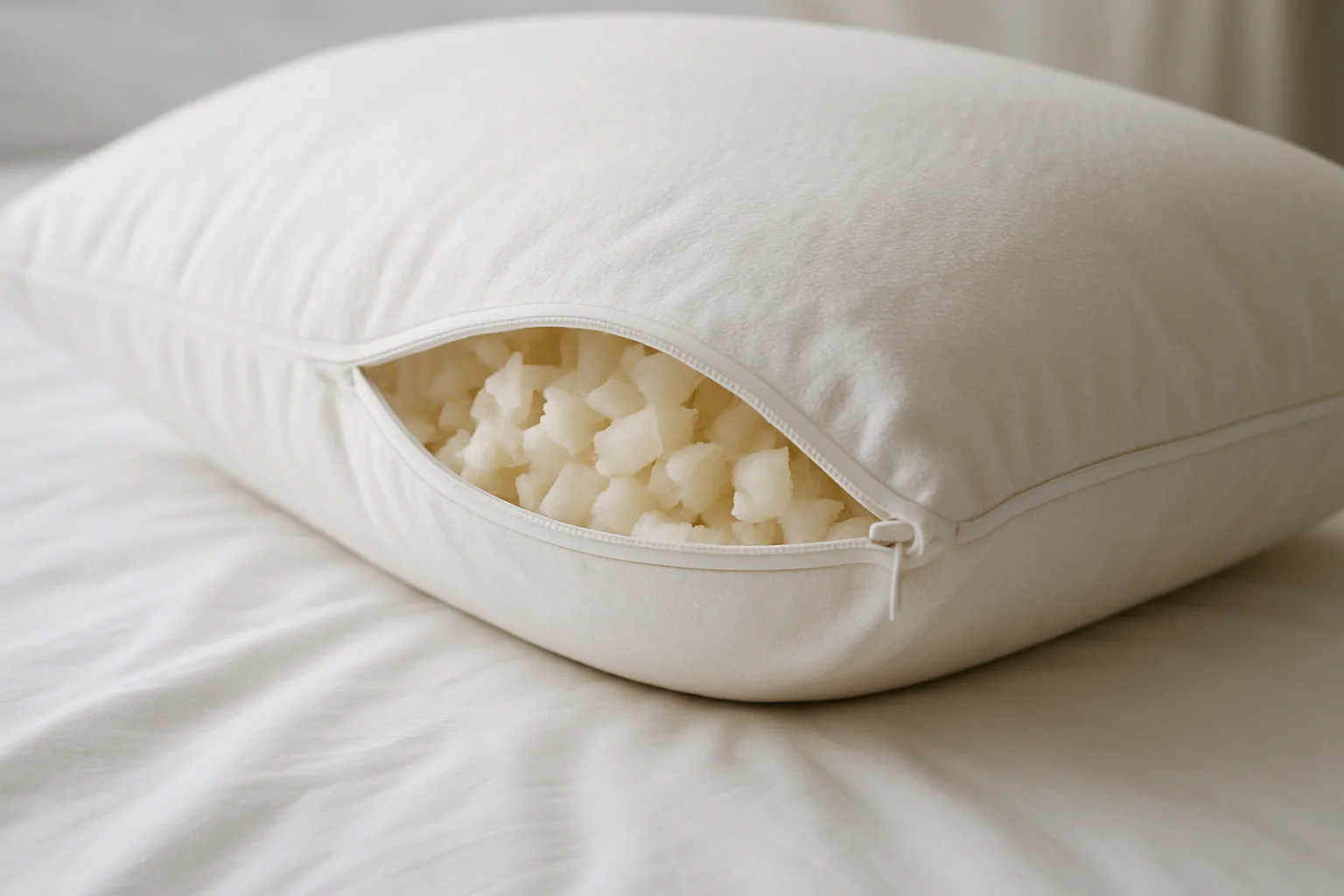
Pillow fills compared
Shredded memory foam
Small pieces of foam inside a zippered cover make the most adjustable pillow type: remove fill to lower it, add fill to raise it, and punch it into shape at night. It suits side and combination sleepers best. Shredded foam can smell slightly when new and runs a bit warmer than latex, and some versions feel lumpy until they are fluffed. Look for CertiPUR-US certification on the foam, a program that screens flexible polyurethane foam for certain harmful chemicals and heavy metals and sets emissions and durability criteria (CertiPUR-US program details).
The Coop Original Adjustable Pillow is the best-known example: a cross-cut memory foam and microfiber blend with extra fill included, a removable machine-washable cover, and CertiPUR-US and GREENGUARD Gold certifications listed. It ships full, and many side sleepers end up removing some fill to find the right height.
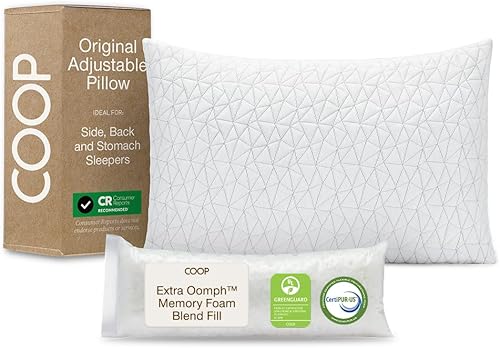 Coop Original Adjustable PillowCheck today’s price on AmazonBuy on Amazon →
Solid and contoured memory foam
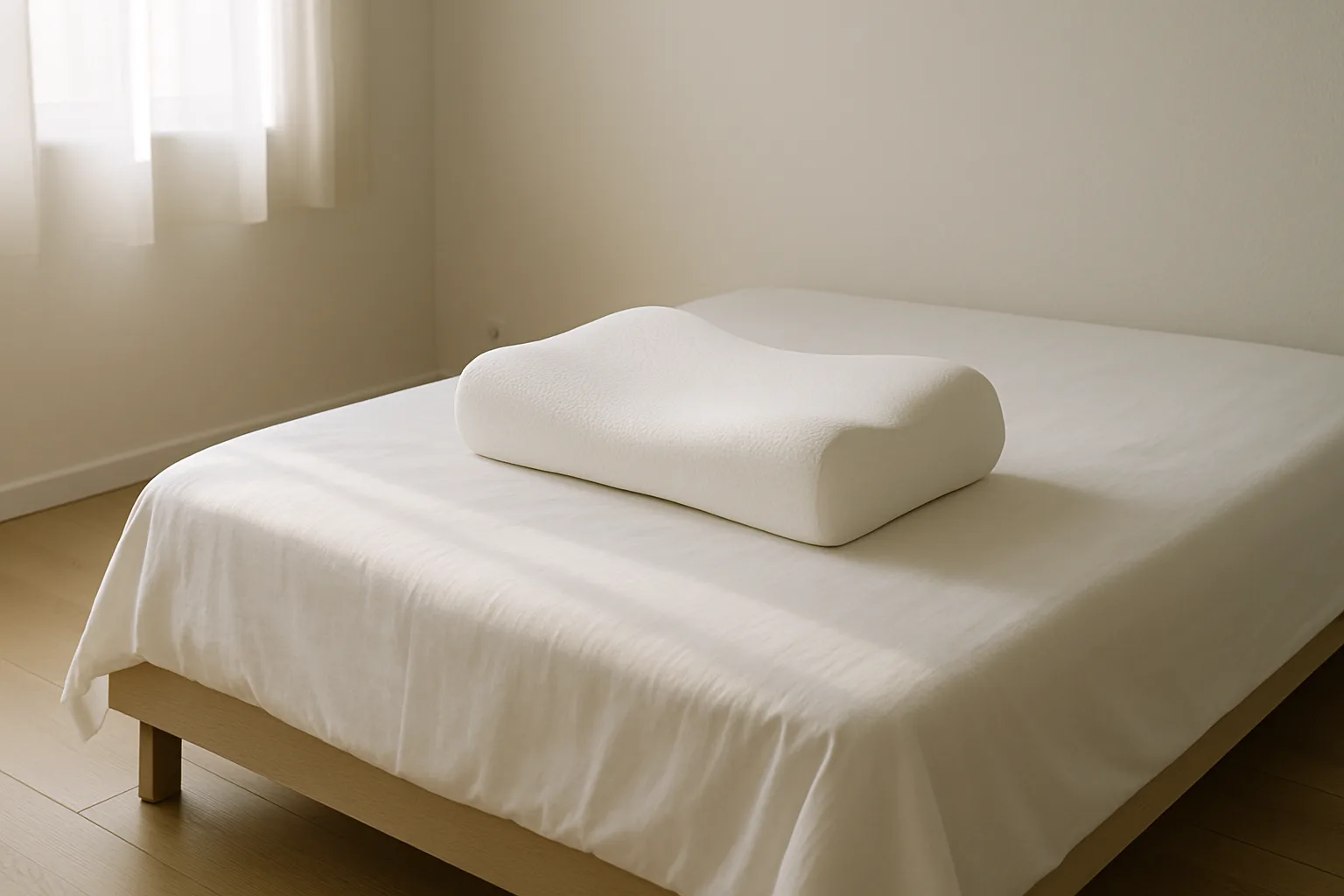
A single molded block gives the most consistent support and holds its shape for years. Contoured "cervical" designs, with a raised edge under the neck and a dip for the head, are aimed at back and side sleepers. They take a few nights to get used to and do not suit people who move around a lot. Solid foam is the warmest common fill.
The TEMPUR-Ergo Neck Pillow comes in small, medium and large profiles; the medium is listed at about 4 inches tall and is designed for side and back sleepers. It has a removable, washable knit cover and a five-year limited warranty, according to the listing. Profile size is the key choice: smaller frames generally fit the small profile, and broad shoulders the large.
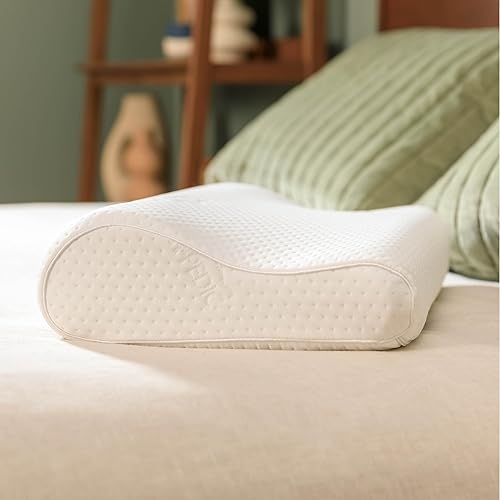 TEMPUR-Ergo Neck Pillow, MediumCheck today’s price on AmazonBuy on Amazon →
Latex
Latex pushes back more quickly than memory foam, so the head rests on top of the pillow instead of sinking slowly into it. It is generally cooler and very durable. Solid latex pillows have a fixed height; shredded latex pillows can usually be adjusted. Latex is not a good choice for anyone with a latex allergy.
The Saatva Latex Pillow uses a shredded latex core inside an organic cotton cover, and it is sold in more than one loft; the Standard Loft is listed at roughly 4 to 5 inches, which suits many back sleepers and side sleepers with average shoulders.
 Saatva Latex PillowCheck today’s price on AmazonBuy on Amazon →
Down and feather
Down clusters make the softest, most compressible pillows and are easy to scrunch into any shape, which is why they are often recommended for stomach sleepers and people who like to sink in. Feathers add firmness but can poke through the shell. Down pillows need daily fluffing, compress more under a side sleeper's head, and are not ideal for people with feather allergies. Higher fill power means larger clusters that loft better.
Down alternative (polyester fiber)
Polyester fiberfill mimics down at a much lower price, is usually fully machine washable and works for allergy-prone households. It flattens faster than any other fill, so it is the type most likely to need replacement every year or two. The Beckham Hotel Collection pair is a widely sold, budget example with a soft, hotel-style feel that suits back and stomach sleepers better than side sleepers.
Kapok and other natural fills
Kapok is a light, silky plant fiber, often blended with shredded foam. The Layla Kapok Pillow mixes kapok with shredded memory foam and ships overstuffed so fill can be removed. Buckwheat hulls are another natural option: very firm, highly adjustable, cool, but heavy and slightly noisy when moving.
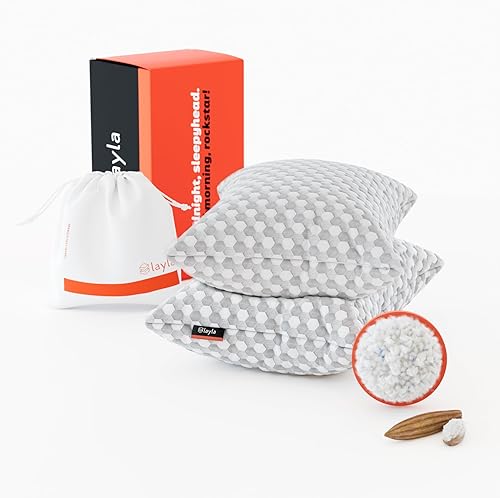 Layla Kapok PillowCheck today’s price on AmazonBuy on Amazon →
How to tell when a pillow needs replacing
- The fold test: fold a fiber or down pillow in half. If it stays folded instead of springing back, the fill has broken down.
- Lumps and thin spots that fluffing no longer fixes.
- Waking with neck stiffness or reaching for a second pillow to make up lost height.
- Stains, yellowing or odors that remain after washing.
- Typical lifespans: polyester and down alternative pillows often last one to two years; good down, solid memory foam and latex commonly last several years longer.
Care and allergies
Pillows collect sweat, skin oils and dust mites. A zippered pillow protector under the pillowcase keeps the pillow itself much cleaner and is easier to wash. For dust mite allergies, pediatric allergy guidance recommends allergy-proof covers on every pillow, washing bedding weekly in water of at least 130 degrees Fahrenheit, and keeping bedroom humidity below about 50 percent (Nationwide Children's Hospital dust mite guidance). Always follow the label: many foam and latex pillows have washable covers but cores that should never go in a machine, while most polyester pillows can be washed whole and tumbled dry on low with a couple of dryer balls.
A pillow is one part of a bed that sleeps well. Breathable bedding helps a warm sleeper as much as pillow fill does; this rundown on choosing a cooling comforter covers that side, and investing in a better sleep space looks at the room as a whole.
Bottom line
Start with sleep position and shoulder width, not brand. Side sleepers need height and firmness, back sleepers a medium, supportive pillow that cradles the neck, and stomach sleepers something very thin. When in doubt, an adjustable pillow lets the loft be tuned at home, which removes most of the guesswork. Then pick the fill by priorities: latex for cool, lasting support, foam for shape, down for softness, and polyester for budget and easy washing.
Posted by Kristopher Larson
Frequently asked questions
What pillow height is best for side sleepers?
Side sleepers usually need the tallest pillow, often about 4 to 6 inches of loft once compressed, with broad-shouldered sleepers at the top of that range. The goal is to keep the head level so the ears line up with the shoulders. A medium-firm to firm fill, or an adjustable pillow, helps the height hold through the night.
What kind of pillow is best for stomach sleepers?
A thin, soft pillow under about 3 inches, or no pillow under the head at all. Taller pillows bend the neck backward when lying face down. Soft down, down alternative or an adjustable pillow with most of its fill removed are the usual choices.
Is memory foam or latex better for a pillow?
Memory foam contours slowly and gives a cradled, sinking feel; it also tends to sleep warmer. Latex is springier and generally cooler, and it is very durable. People who change positions often or sleep hot usually prefer latex, while those who want steady, molded neck support often prefer memory foam. People with a latex allergy should avoid latex.
How often should pillows be replaced?
Polyester and down alternative pillows often need replacing every one to two years, while good down, solid memory foam and latex pillows usually last longer. Signs it is time include a fiber pillow that stays folded in half, lumps that won't fluff out, lingering stains or odors, and waking with a stiff neck.
Can pillows be washed in a washing machine?
It depends on the fill. Most polyester and many down pillows can be machine washed and dried on low, while solid memory foam and latex cores should not go in the machine; only their removable covers should. Shredded foam pillows usually have a washable cover. Always check the care label.
What pillow is best for dust mite allergies?
Any pillow paired with a zippered allergy-proof cover helps, because the cover blocks mites from the fill. Washable synthetic pillows are a practical choice. Washing bedding weekly in water of at least 130 degrees Fahrenheit and keeping bedroom humidity below about 50 percent also reduces dust mites.
Keep reading
More from the blog

Best Christmas Tree Stand for a Real Tree: Steel vs. Plastic vs. Ratchet (Cinco, Jack-Post, Krinner)

Costway Christmas Inflatables Reviewed: Snow Globe, Nativity, Santa on a Dinosaur and More

C3 vs. C6 vs. C7 vs. C9 Christmas Lights: Which Bulb Size for Rooflines, Trees and Bushes