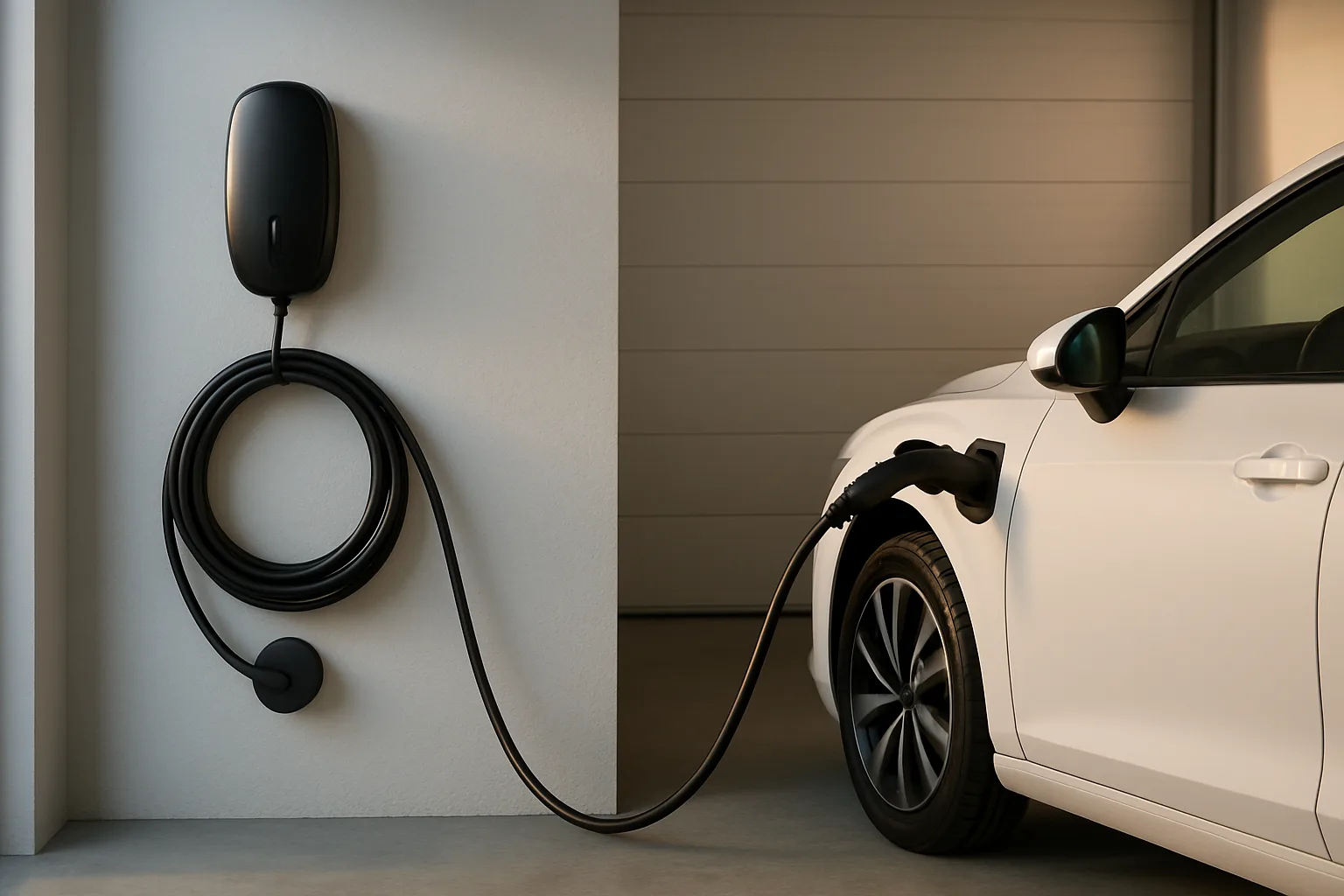
Best Home EV Chargers for the Garage: 32 vs. 40 vs. 48 Amp, Plug-In vs. Hardwired
Best home EV chargers compared: ChargePoint Home Flex, Emporia Pro, Grizzl-E, EVDANCE and Schneider. Amps, circuits, NACS vs J1772 and safe installs.
A Level 2 charger in the garage makes owning an electric car simple: park, plug in, and wake up to a full battery. Choosing one takes more thought than it seems. The amp rating has to fit what your electrical panel can spare, plug-in models carry a risk few listings mention, and the connector question has changed now that most new EVs are moving to the Tesla-style NACS port.
This guide compares five well-built home chargers from ChargePoint, Emporia, Grizzl-E, EVDANCE and Schneider Electric, then covers amperage, plug-in vs. hardwired installs, connectors, cable length, smart features and safety listings.
Quick verdict
- Best for a small electrical panel: the Emporia Pro 48A EV Charger, with load management, power sharing and solar-only charging in the box.
- Best cable and connector: the ChargePoint Home Flex 50A, the most flexible cold-weather cable here, swappable between J1772 and NACS.
- Toughest box for an outdoor wall: the Grizzl-E Ultimate 48A, cast aluminum with an IP67 enclosure.
- Best on a lower-amp circuit: the EVDANCE 40A Level 2 EV Charger, adjustable down to 6 amps, with a status screen on the unit.
The chargers side by side
| Charger | Shop | Max power | Adjustable | Install | Cable | Load management | Safety listing |
|---|---|---|---|---|---|---|---|
| ChargePoint Home Flex 50A |  View on Amazon | 50 A / 12 kW | 16 to 50 A | Hardwired, NEMA 14-50 or 6-50 plug | 23 ft | No | UL, Energy Star |
| Emporia Pro 48A EV Charger |  See options | 48 A / 11.5 kW | 12 to 48 A | Hardwired, or 14-50 plug at 40 A max | 25 ft | Yes, plus power sharing and solar | UL |
| Grizzl-E Ultimate 48A |  View on Amazon | 48 A / 11.5 kW | 16 to 48 A | Hardwired for 48 A | 25 ft | No | UL (by CSA), Energy Star |
| EVDANCE 40A Level 2 EV Charger |  View on Amazon | 40 A | 6 to 40 A | NEMA 14-50 plug | 25 ft | No | ETL |
| Schneider Charge 48A | 48 A / 11.5 kW | In app | Hardwired | 25 ft | Yes, UL 3141 | UL, Energy Star |
All five come with either a J1772 or a NACS connector.
Best cable and connector
ChargePoint Home Flex 50A
The most flexible cold-weather cable here, a custom rubber-gripped connector and a backlit holster, with a NEMA 6-50 plug option.
- 50A
- 14-50, 6-50 or hardwired
- 3-year warranty
Good for
- Cold garages
- Choosing between plug-in and hardwired
Skip it if
- Two chargers on one account
- Load management or power sharing
32 vs. 40 vs. 48 amps: what your panel needs
A Level 2 charger runs on 240 volts. A 32-amp charger delivers about 7.7 kW, a 40-amp charger about 9.6 kW and a 48-amp charger about 11.5 kW. Most current EVs have a 48-amp onboard charger, so 11.5 kW is the most they accept at home, and 48 amps has become the standard for new chargers.
More amps need a bigger circuit. A 48-amp charger needs its own dedicated 60-amp circuit, and many homes with a 100-amp or 150-amp main panel can't spare that much and still run the air conditioner and range. Instead of a service upgrade that can cost thousands, there are two cheaper paths:
- Turn the charger down. Every charger here can run below its maximum. Have a licensed electrician size the circuit and breaker for a 32-amp or 40-amp setting.
- Use load management. Sensors in the panel watch the whole house. When the AC kicks on or someone starts cooking, the charger drops its output, sometimes to around 16 amps, then climbs back once the house load falls.
When an electrician pulls a permit, a load calculation goes in with it. Under the newest edition of the National Electrical Code, a charger's load management only counts in that calculation if it is certified to UL 3141; otherwise the inspector counts the full 48 amps. Not every state has adopted that edition, but a local inspector can require it anyway, so ask for the certificate before buying. A home energy monitor shows your real peak load before the electrician arrives.
Plug-in vs. hardwired
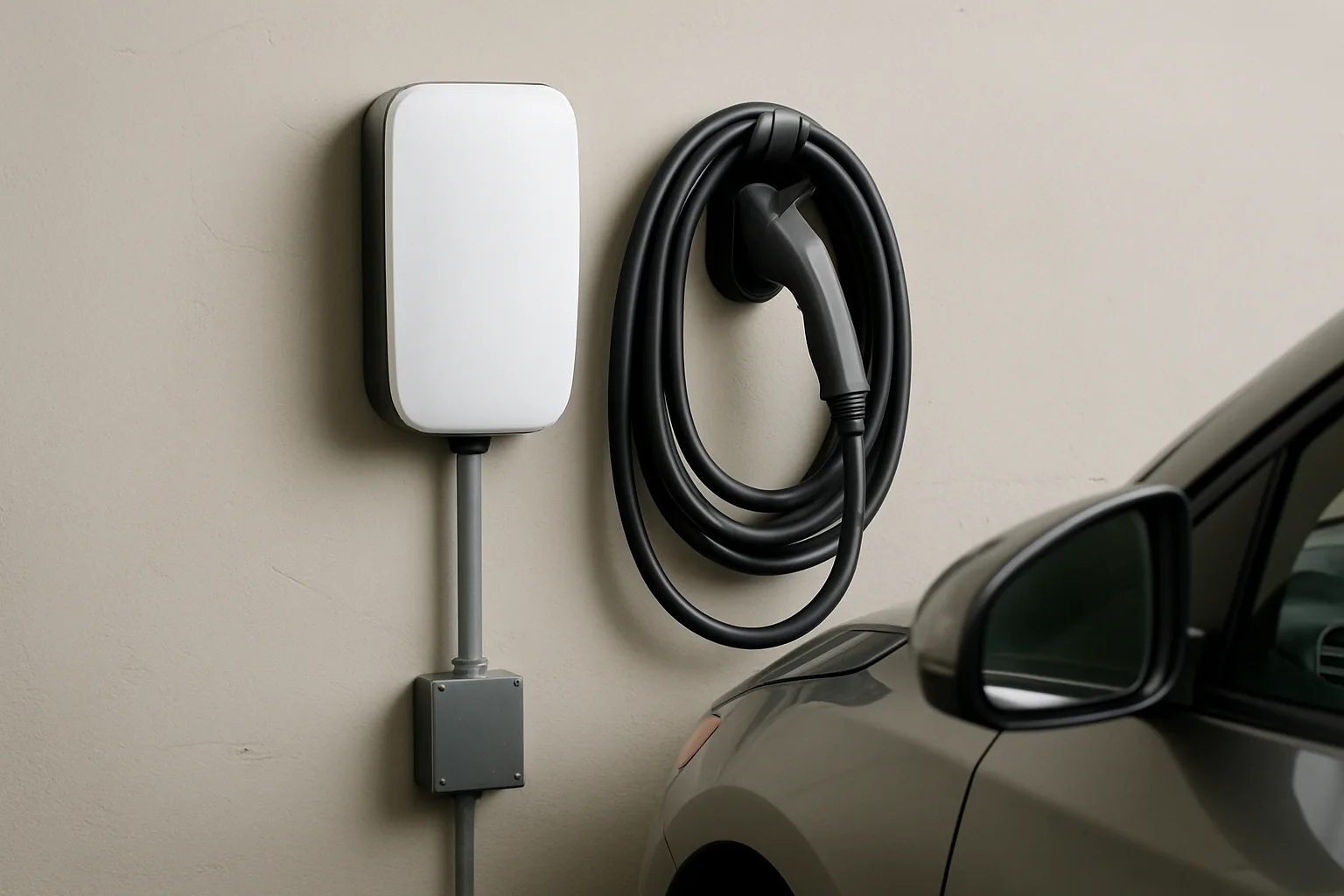
Plug-in chargers use a NEMA 14-50 plug on a 50-amp circuit, which caps them at 40 amps, and they move with you. Hardwired chargers unlock the full 48 amps and take the outlet out of the picture.
That outlet is the weak point. Most plug-in chargers have no temperature sensor in the plug, and EV charging is a heavy load that runs for hours. Standard-grade 14-50 outlets have melted under that load and started house fires. If you go plug-in, insist on an industrial-grade outlet. For a charger that stays on one wall, hardwiring is the safer choice.
Best for a small panel
Emporia Pro 48A EV Charger
Load management with no extra hardware, power sharing across chargers and solar-only charging, with a light cable that stays easy to handle in the cold.
- 48A
- NEMA 4
- 3-year warranty
Good for
- Homes without spare panel capacity
- Solar owners
Skip it if
- You want a sturdy holster (add a third-party one)
NACS vs. J1772 and adapters
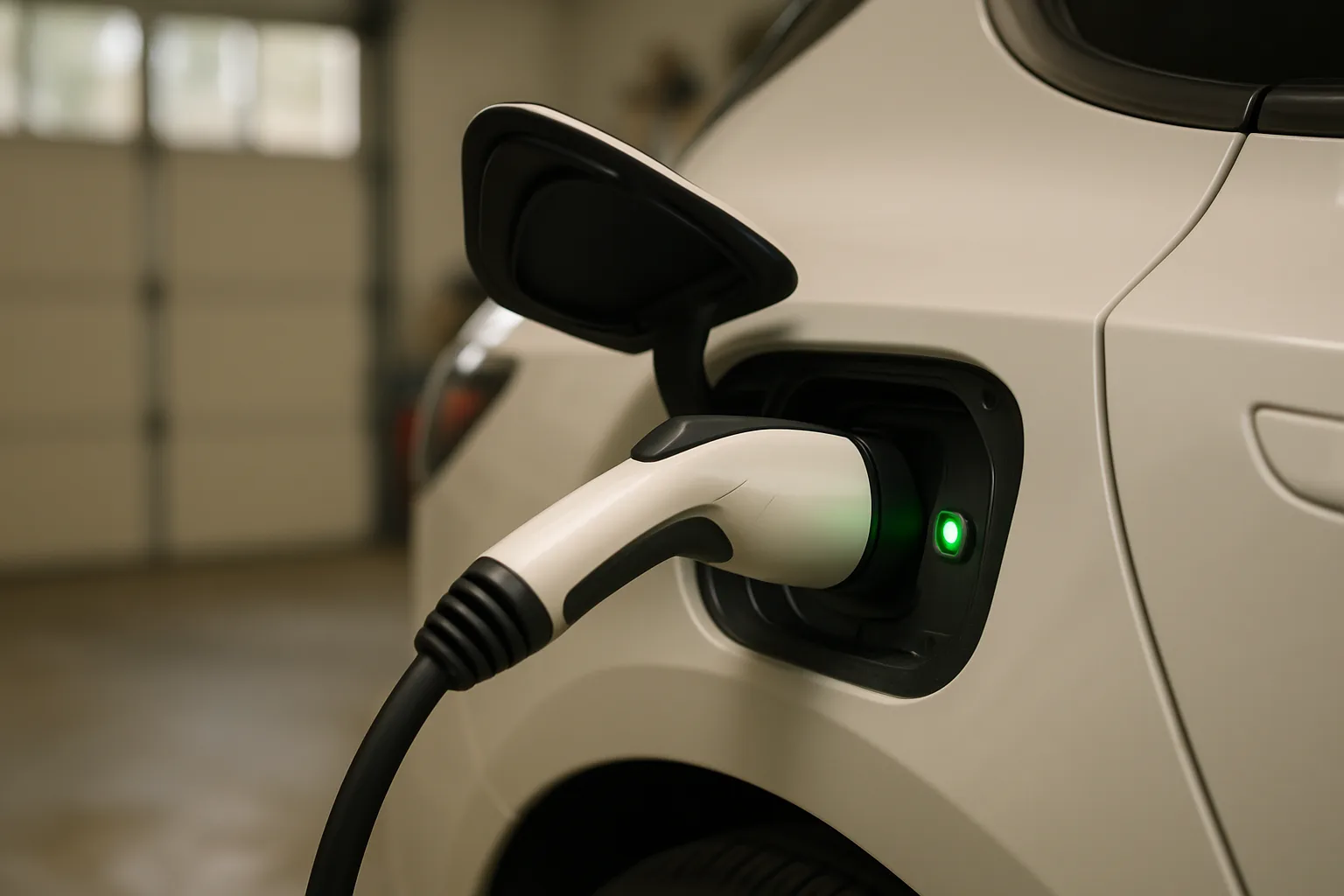
Tesla's connector, now called NACS (SAE J3400), is becoming the North American standard, but plenty of J1772 cars are still on the road. Buy the connector that matches the car you charge most. A NACS-to-J1772 adapter works, but it has to come off every time the connector goes back in its holster. The ChargePoint Home Flex lets you buy a replacement cable with the other connector, and the Tesla Universal Wall Connector has a J1772 adapter built into the handle, the only charger with one. It is hardwired only, and its side holster needs clear wall space.
Cable length and where to mount it
Cables here run 23 to 25 feet. Measure from the mounting spot to the charge port along the path the cable will really take. Screw the bracket into a stud: the unit and cable are heavy, and a tug can pull a charger anchored only in drywall off the wall.
Side-holster chargers won't fit between two garage doors because the door track blocks the holster. A remote holster lets you mount the charger where the power comes in and put the connector right beside the charge port. With no holster, keep the cap on the connector so dust stays off the pins. In a cold garage or outdoors, a thin cable that stays flexible in the cold is far easier to use every day.
Best for outdoor walls
Grizzl-E Ultimate 48A
A cast aluminum box built to last, with an IP67 enclosure, a thin cable and Wi-Fi, and an extendable three-year warranty.
- 48A
- IP67
- Energy Star
Good for
- Outdoor mounting
- A rugged, simple charger
Skip it if
- Load management or power sharing
- A rich app
Smart features worth having
- Off-peak scheduling. On a time-of-use plan, peak power can cost two to three times more. Some cars only offer a "ready by" departure time, so a charger schedule that says "charge now, but never between 4 and 9 p.m." is more useful than it sounds.
- Cost tracking. An app that knows your rate shows what each session cost, charging losses included.
- Load management and power sharing. One protects a small panel; the other lets two chargers split one circuit.
- Solar charging. Some chargers can use only surplus solar power.
- Settings that survive a power cut. A charger should restart on its own and keep any lowered amp limit.
The picks in detail
ChargePoint Home Flex 50A
The Home Flex has the best cable-and-connector pairing here. The heavy, rubber-gripped connector is custom made, and the cable stays soft after a cold soak at -15°F. The swiveling holster has a backlit LED for dark garages, and the plastic front cover comes off to wrap or paint. It is the only pick offered with a NEMA 6-50 plug as well as 14-50 or hardwired, with a NEMA 3 enclosure and a three-year warranty. The drawbacks: the app pairs only one charger per account, and there is no load management or power sharing.
Best cable and connector
ChargePoint Home Flex 50A
The most flexible cold-weather cable here, a custom rubber-gripped connector and a backlit holster, with a NEMA 6-50 plug option.
- 50A
- 14-50, 6-50 or hardwired
- 3-year warranty
Good for
- Cold garages
- Choosing between plug-in and hardwired
Skip it if
- Two chargers on one account
- Load management or power sharing
Emporia Pro 48A EV Charger
The Emporia Pro packs the most intelligence here. Load management works with no extra hardware, it can share one circuit across chargers, and it can charge only from surplus solar. It comes in white or black, and its thin, light cable stays easy to handle in the cold. The enclosure is NEMA 4, the warranty three years, and the app ties into Emporia's energy monitors. The weak spot is a thin, flimsy holster; a third-party holster fixes it. Without the smart features, the simpler Emporia Classic is a well-made alternative.
Best for a small panel
Emporia Pro 48A EV Charger
Load management with no extra hardware, power sharing across chargers and solar-only charging, with a light cable that stays easy to handle in the cold.
- 48A
- NEMA 4
- 3-year warranty
Good for
- Homes without spare panel capacity
- Solar owners
Skip it if
- You want a sturdy holster (add a third-party one)
Grizzl-E Ultimate 48A
The Ultimate 48 is a plain cast aluminum box built to last. Its IP67 enclosure makes it the best fit for an outdoor wall, the cable is thin and easy to manage, and a remote connector holster is available. It is Wi-Fi connected and Energy Star rated, with a three-year warranty that can be extended. The app is basic, there is no load management or power sharing, and its J1772 connector isn't one of the better ones. For a 40-amp plug-in, the Grizzl-E Classic is a simpler option, J1772 only.
Best for outdoor walls
Grizzl-E Ultimate 48A
A cast aluminum box built to last, with an IP67 enclosure, a thin cable and Wi-Fi, and an extendable three-year warranty.
- 48A
- IP67
- Energy Star
Good for
- Outdoor mounting
- A rugged, simple charger
Skip it if
- Load management or power sharing
- A rich app
EVDANCE 40A Level 2 EV Charger
The EVDANCE suits a home where the charger must run below its maximum. Output goes from 6 to 40 amps in the app and can change mid-session, and it keeps a lowered setting after being unplugged or losing power instead of jumping back to 40 amps. The screen shows temperature, voltage, kilowatts, amps, time and kilowatt-hours, and the app can stop and restart a session remotely. It lists protection against current spikes, voltage spikes and overheating, and the NACS version has a button that opens a Tesla's charge port. Setup quirks: the pairing PIN is on a sticker inside the box, Wi-Fi is 2.4 GHz, the drywall anchors hold loosely and the bottom security screw is hard to reach.
Best on a lower-amp circuit
EVDANCE 40A Level 2 EV Charger
Adjustable from 6 to 40 amps in the app, keeps a lowered setting after unplugging or a power loss, and shows live readings on its own screen.
- 6–40 A adjustable
- On-unit status screen
- NEMA 14-50 plug
Good for
- An existing 14-50 outlet on a lower-amp circuit
- Capping the charging current
Skip it if
- You want a 48-amp hardwired charger
- Your Wi-Fi is 5 GHz only
Schneider Charge 48A
The Schneider Charge 48A, from the company behind Square D breakers, includes its panel sensors in the box and was the first load-managed charger certified to UL 3141. It holds a full 48 amps for hours even with its case near 120°F, its cable stays flexible around -10°F, and it pauses about 20 seconds before restarting after an outage, which is easier on the electronics when power flickers. The app tracks session costs and sets off-peak schedules. It has no holster, no power sharing, no solar mode and no way to lock out other users.
Installation and safety
Have a licensed electrician install any 240-volt charger, pull a permit where required, and get it inspected. Many home charging problems trace back to poor workmanship, and manufacturers such as Schneider advise against installing it yourself.
- Buy a listed charger. Look for a UL, ETL or CSA listing. Many no-name chargers online aren't actually certified, whatever the listing claims.
- Plan the circuit first. The load calculation decides between a lower amp setting, load management or a service upgrade.
- Protect the panel. A big new load is a good time to add whole-house surge protection.
Check models against the ENERGY STAR EV charger listings and plan with the Department of Energy's home charging guide.
Best on a lower-amp circuit
EVDANCE 40A Level 2 EV Charger
Adjustable from 6 to 40 amps in the app, keeps a lowered setting after unplugging or a power loss, and shows live readings on its own screen.
- 6–40 A adjustable
- On-unit status screen
- NEMA 14-50 plug
Good for
- An existing 14-50 outlet on a lower-amp circuit
- Capping the charging current
Skip it if
- You want a 48-amp hardwired charger
- Your Wi-Fi is 5 GHz only
Who should buy which
- A 100- or 150-amp panel: the Emporia Pro, or the Schneider Charge where the inspector wants UL 3141.
- A cold garage, or a connector switch later: the ChargePoint Home Flex.
- An outdoor wall or rough shop: the Grizzl-E Ultimate 48.
- An existing 14-50 outlet or a lower-amp circuit: the EVDANCE 40A.
- One NACS car and one J1772 car: a Tesla Universal Wall Connector, or any pick here plus an adapter.
Heating the garage too? See the garage heater buying guide and have the electrician plan both loads at once.
Posted by Kristopher Larson
Frequently asked questions
What is the best home EV charger for a garage?
It depends on your panel. With room for a dedicated 60-amp circuit, a 48-amp charger such as the Grizzl-E Ultimate 48A or ChargePoint Home Flex gives most EVs their full home charging speed. With a 100- or 150-amp panel, a charger with built-in load management, such as the Emporia Pro or Schneider Charge, avoids a costly service upgrade.
Do I need a 32, 40 or 48 amp Level 2 charger?
A 32-amp charger delivers about 7.7 kW, a 40-amp charger about 9.6 kW and a 48-amp charger about 11.5 kW. Most current EVs accept 11.5 kW at most, so 48 amps covers them. Most households can live with 40 amps, and a lower setting needs a smaller circuit.
What size circuit does a 48 amp EV charger need?
A 48-amp charger needs its own dedicated 60-amp circuit, usually hardwired. For lower settings, have a licensed electrician size the circuit and breaker, and do a load calculation to confirm your panel can carry it.
Is a plug-in or hardwired EV charger better?
Hardwired is safer for a permanent install and unlocks the full 48 amps. Plug-in chargers on a NEMA 14-50 outlet are capped at 40 amps, and most have no temperature sensor in the plug, so standard-grade outlets can overheat under hours of continuous charging. If you go plug-in, use an industrial-grade outlet installed by an electrician.
Should I buy a NACS or J1772 home charger?
Match the car you charge most. NACS is becoming the North American standard, but many J1772 cars are still on the road. An adapter handles the other type, though it has to come off before holstering. The ChargePoint Home Flex can switch cables later, and the Tesla Universal Wall Connector has a J1772 adapter built in.
What is UL 3141 and why does it matter for EV chargers?
UL 3141 is the newer certification standard for load management systems like the ones built into some EV chargers. Under the newest National Electrical Code, an inspector can leave a load-managed charger out of your home's load calculation only if its load management is certified to UL 3141. Without it, the charger's full rating counts, which can force a service upgrade.
Keep reading
More from the blog
Ring Drone Cam and Rover Cam: Release Dates, Prices and What Homeowners Should Know

Best Cold Brew Coffee Maker: OXO vs. Takeya vs. County Line Kitchen

Best Portable Bluetooth Speaker: JBL Flip 7 vs. Bose SoundLink Flex vs. Soundcore