What Size Area Rug Do I Need? Living Room, Bedroom and Dining Room Size Chart
Area rug size chart for living rooms, queen and king beds, dining tables, entries and hallways, plus how to measure and which rug pads protect floors.
The most common area rug mistake is buying one that is too small. A 5-by-8 floating in the middle of a living room, with every piece of furniture standing on bare floor around it, makes the room look smaller and the furniture look scattered. A rug sized to the furniture does the opposite: it ties the seating together, defines the space and makes the room feel finished. The right size is not a matter of taste so much as a few measurements.
This guide gives standard rug sizes, the placement rules designers use for living rooms, bedrooms, dining rooms, entries and hallways, how to measure before buying, and the rug pads that keep a rug flat, safe and kind to the floor underneath.
As an Amazon Associate, Best Utah Real Estate earns from qualifying purchases.
Quick answer: what size rug for each room
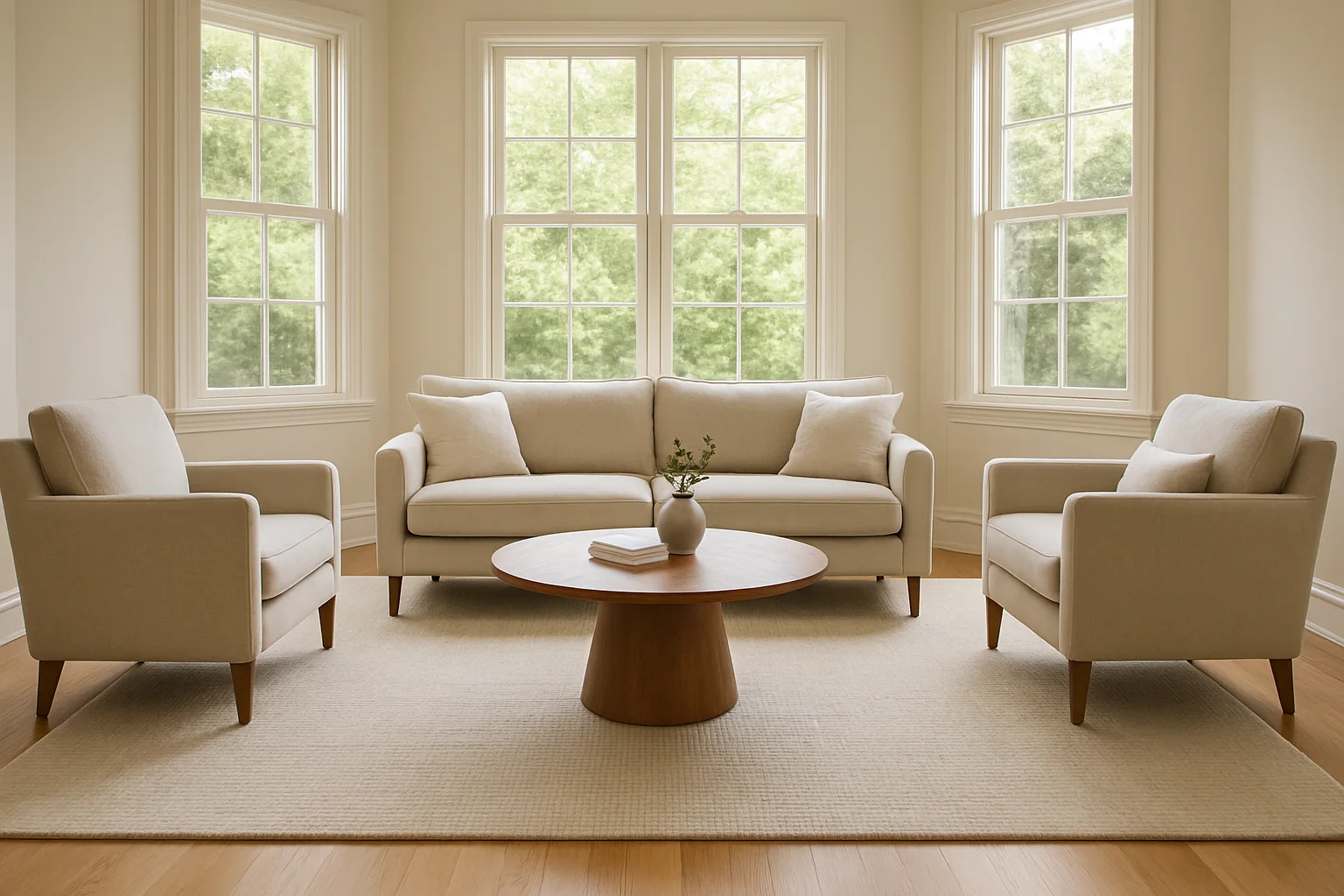
- Living room: usually 8x10 or 9x12, big enough for at least the front legs of the sofa and chairs to sit on the rug.
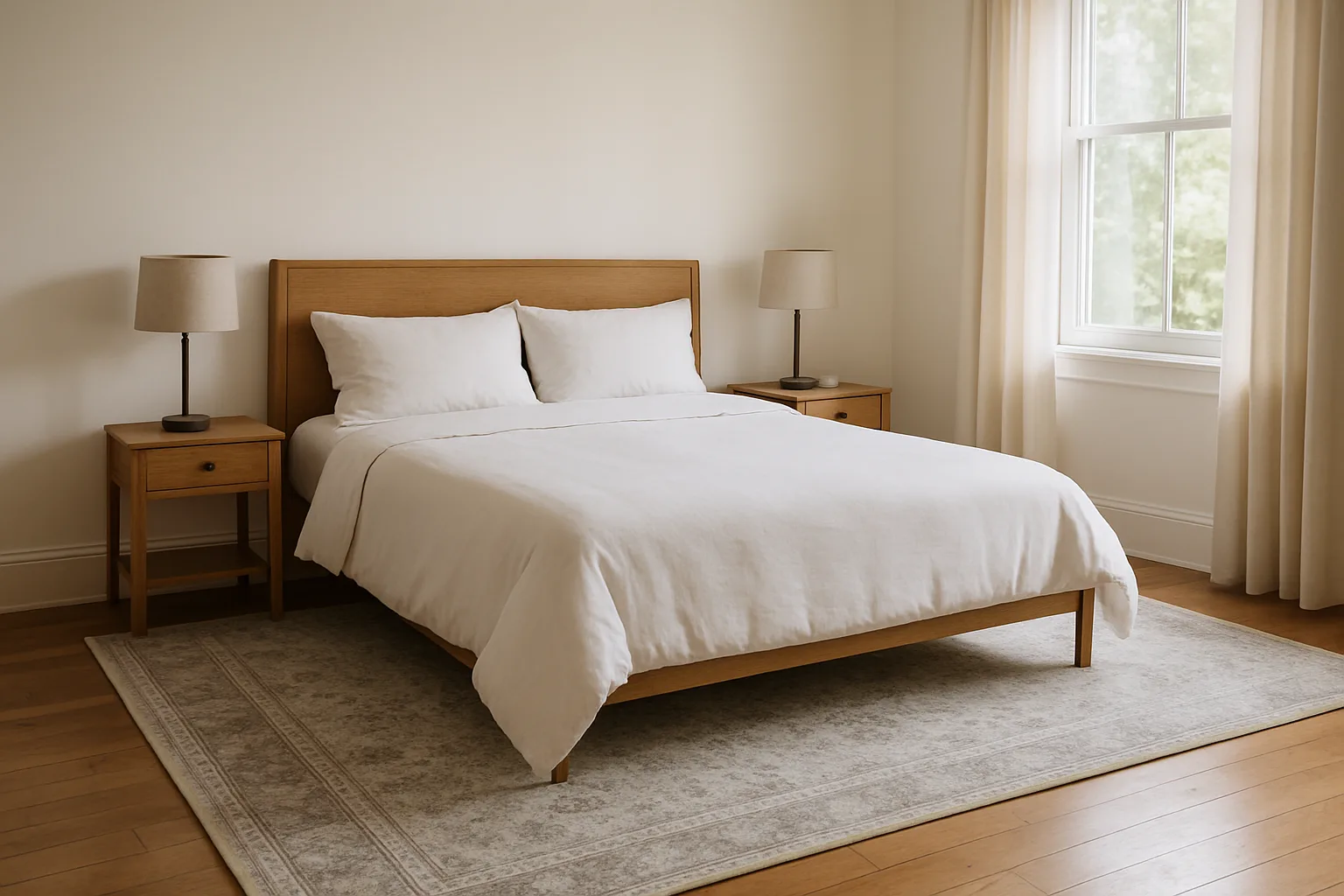
- Queen bed: 8x10, placed sideways under the lower two-thirds of the bed. King bed: 9x12. Twin or full: 5x8 or 6x9.
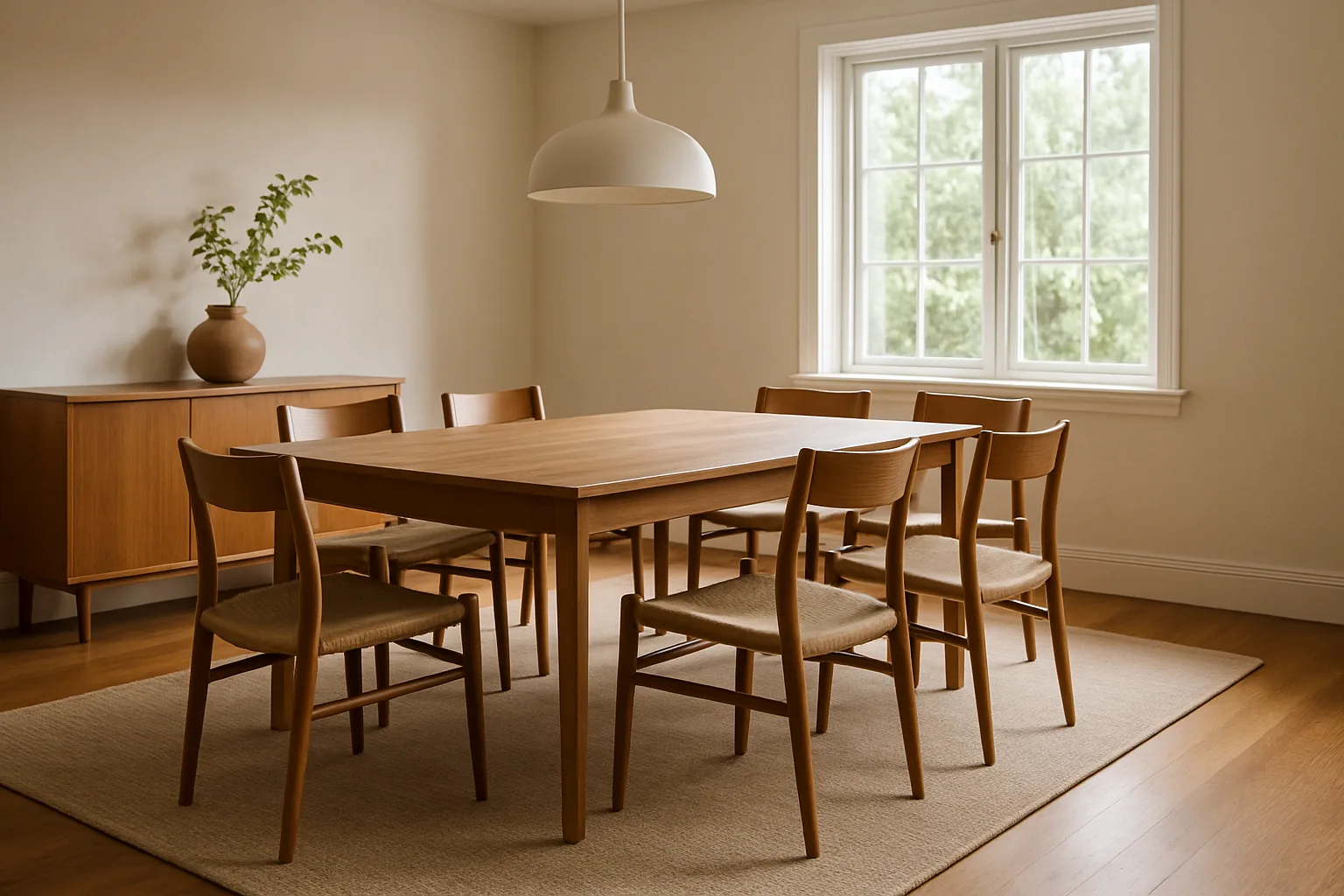
- Dining room: at least 24 inches wider than the table on every side so chairs stay on the rug when pulled out; an 8x10 fits many six-seat tables.
- Entry: a 3x5 or 4x6, or a round rug, with clear space for the door to swing.
- Hallway or kitchen: a runner that leaves a few inches of floor showing on each side and roughly 6 inches at cabinets and walls.
- Every rug on a hard floor: a felt-and-rubber pad such as the RUGPADUSA Dual Surface Felt + Rubber Rug Pad, trimmed about an inch smaller than the rug on all sides.
Rug size chart by room
| Room or furniture | Common rug size | Placement rule | Floor border to leave |
|---|---|---|---|
| Small living room or apartment | 5x8 or 6x9 | Front legs of sofa and chairs on the rug | About 8 to 12 inches |
| Average living room | 8x10 | Front legs on, or all furniture on in a smaller seating group | About 12 to 18 inches |
| Large or open living area | 9x12 or 10x14 | All legs on, or one rug per seating zone | About 18 inches |
| Twin or full bed | 5x8 or 6x9 | Under the lower part of the bed, extending past the sides | Enough to step onto rug from bed |
| Queen bed (60 x 80 in.) | 8x10 | Turned sideways under the lower two-thirds of the bed | Nightstands can sit on the floor |
| King bed (76 x 80 in.) | 9x12 | Under the lower two-thirds, at least 18 to 24 inches past each side | Nightstands can sit on the floor |
| Dining table | Table size plus 24 inches each side | All chair legs stay on the rug when pulled out | Whatever is left |
| Hallway | 2.5x8, 2.5x10 or longer runner | Centered, width short of the walls | A few inches each side |
Living rooms: three layouts that work
A living room rug should be sized to the seating group, not to the room. There are three reliable layouts:
- All legs on. Every piece of seating sits fully on the rug. It looks the most luxurious and works best in large rooms or open floor plans, where the rug defines a "room within a room." It usually takes a 9x12 or larger.
- Front legs on. The front legs of the sofa and chairs rest on the rug and the back legs sit on the floor. This is the most flexible layout and the one most rooms end up with, typically with an 8x10.
- Floating (small rooms only). The rug sits under the coffee table with furniture around it. This only works with a smaller rug in a tight space, and even then, the rug should be at least as long as the sofa.
Two quick checks: the rug should be at least a few inches wider than the sofa at each end, and in most rooms a border of bare floor between the rug edge and the walls keeps the room from looking wall-to-wall carpeted. Open-plan homes can use two or three rugs to separate the living, dining and reading areas, ideally in related colors or textures so the space still reads as one.
Dining rooms: plan for pulled-out chairs
A dining rug fails when a chair's back legs drop off the edge every time someone sits down. The fix is to add about 24 inches to each side of the table, which is roughly the distance a chair slides out. For a 42-by-72-inch table, that means a rug at least about 90 by 120 inches, so an 8x10 works; a longer table needs a 9x12. Round tables suit round rugs measured the same way.
Dining rugs see spills and constant chair movement, so a flat weave or low pile is easier to clean and lets chairs slide. High-pile and shag rugs make chairs wobble and trap crumbs.
Bedrooms: rugs where feet land
The point of a bedroom rug is a soft landing on both sides of the bed. The usual approach is to slide the rug under the lower two-thirds of the bed, stopping short of the nightstands, so it extends past both sides and the foot. That means an 8x10 turned sideways for a queen and a 9x12 for a king. Smaller alternatives are a pair of runners along each side of the bed, or a single smaller rug at the foot. Layering a bedroom rug with throws, pillows and warm lighting is covered in this guide to making a room feel cozy.
Entries, kitchens and hallways
- Entries: choose a size that clears the door swing; a door that catches the rug edge flips it every time. Low pile or flat weave handles dirt and is easy to shake out.
- Kitchens: runners in front of the sink and range, with about 6 inches of floor showing at the base cabinets. Washable or low-pile synthetics make the most sense; a comparison of machine-washable rugs and traditional rugs covers that trade-off.
- Hallways: a runner a little narrower than the hall, with even margins on both sides and a gap at each end.
Measure before buying
- Measure the furniture group, not just the room: the width of the sofa, the depth from the front of the sofa to the far side of the coffee table and chairs, and the table plus chair clearance in the dining room.
- Mark the outline on the floor with painter's tape or lay out flattened boxes or bedsheets. Walking around the taped shape for a day says more than any chart.
- Check doors and vents. Measure the clearance under doors that will swing over the rug, and avoid covering floor vents.
- Round up, not down. If a room falls between two sizes, the larger one almost always looks better.
A laser distance measure makes measuring long rooms and open plans much easier for one person, for example the Bosch GLM165-25G Blaze Green-Beam Laser Measure.
Materials and pile height
- Wool: durable, resilient and naturally soil-resistant; it may shed for the first few weeks.
- Polypropylene and polyester: inexpensive, stain-resistant and suited to kids, pets and outdoor use, though synthetic fibers can crush in high-traffic paths.
- Cotton: soft flat weaves that work well in smaller sizes; many small cotton rugs can be washed.
- Jute and sisal: textured and natural-looking but rough underfoot and easily stained by water.
- Pile: low pile or flat weave for dining rooms, entries, under doors and high-traffic areas; plush or high pile for bedrooms and low-traffic spaces.
Rug pads: grip, cushion and floor protection
A pad keeps a rug from sliding and bunching, adds cushion, and reduces wear on both the rug and the floor. It should be trimmed about an inch smaller than the rug on each side so the rug edges taper down to the floor instead of resting on a visible pad.
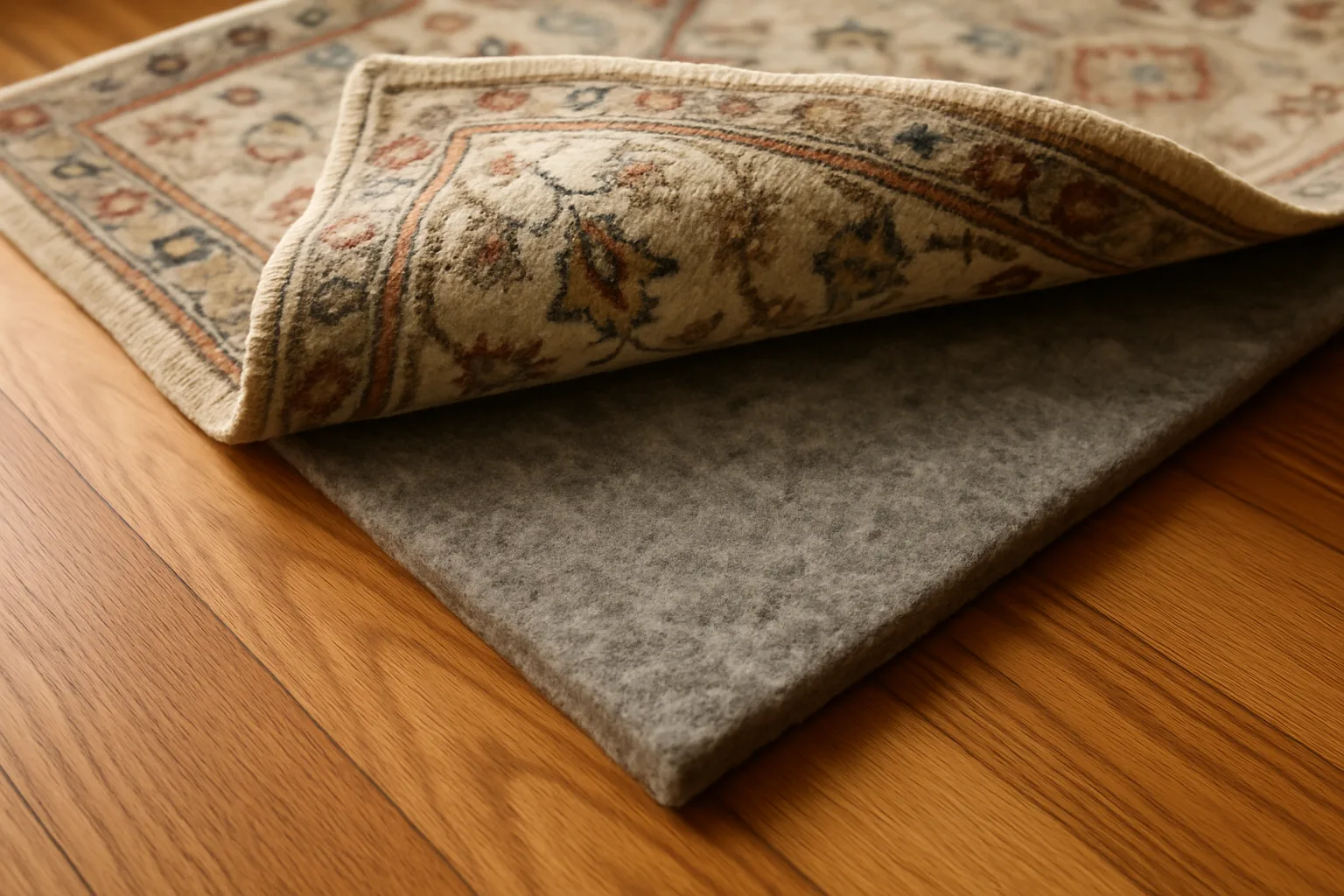
Felt and natural rubber pads are the standard choice for hardwood, tile and most finished floors: felt for cushion, rubber on the bottom for grip. The RUGPADUSA Dual Surface pad is made of recycled felt bonded to natural rubber and comes in 1/8-, 1/4-, 3/8- and 1/2-inch thicknesses; a quarter inch suits most rooms without creating a lip that catches doors.
 RUGPADUSA Dual Surface Rug PadCheck today’s price on AmazonBuy on Amazon →
The Mohawk Home Dual Surface Rug Pad is a similar felt and latex rubber design that is made in the USA, sold in several thicknesses, and can be used felt side up on hard floors or down on carpet.
 Mohawk Home Dual Surface Rug PadCheck today’s price on AmazonBuy on Amazon →
For a budget option, the Gorilla Grip Felt Rug Pad with Rubber Backing follows the same felt-and-rubber approach in a quarter-inch thickness.
Thin PVC grid pads are cheap and grippy but add almost no cushion, and some flooring guidance warns that PVC and certain rubber backings can react with floor finishes and vinyl plank over time, leaving stains or discoloration. Before buying any pad for vinyl, laminate or a newly refinished floor, check the flooring manufacturer's care instructions. Lifting rugs occasionally to check the floor is a good habit either way.
Safety: keep rugs flat
Rugs that slide, curl at the corners or bunch up are a trip hazard, especially for older adults. The National Institute on Aging recommends avoiding throw rugs and small loose rugs and making sure carpets are fixed firmly to the floor (NIA room-by-room fall prevention tips). A properly sized pad, flattening curled edges, and choosing low-profile rugs in walkways all help.
Bottom line
Size the rug to the furniture, then round up. In a living room, get at least the front legs on; in a dining room, add two feet on every side of the table; in a bedroom, put the rug where feet land. Mark it out with tape before buying, pick a fiber that matches the room's traffic, and finish with a felt-and-rubber pad cut an inch short of the edges. A well-sized rug is one of the easier ways to freshen a room; this rundown of what makes a house look dated covers other quick updates.
Posted by Kristopher Larson
Frequently asked questions
What size rug do I need for a living room?
Most living rooms need an 8x10 or 9x12 so at least the front legs of the sofa and chairs rest on the rug. Small rooms and apartments can use a 5x8 or 6x9, and large open rooms often need a 10x14 or separate rugs for each seating area. The rug should be at least as wide as the sofa, ideally a few inches wider at each end.
What size rug goes under a queen bed?
An 8x10 rug turned sideways under the lower two-thirds of a queen bed is the standard choice. It extends past both sides and the foot of the bed so feet land on the rug, while the nightstands can stay on the floor. A king bed usually takes a 9x12.
How big should a rug be under a dining table?
Add about 24 inches to every side of the table so chairs stay on the rug when pulled out. A 42-by-72-inch table needs a rug of roughly 90 by 120 inches, so an 8x10 works; longer tables usually need a 9x12. Flat weaves and low pile are easiest to clean and let chairs slide.
Should furniture legs be on or off the rug?
Either all legs on or at least the front legs on works well. Having every piece fully on the rug suits large rooms and open plans; front legs on is the most common and flexible layout. Avoid a rug so small that no furniture touches it, which makes the room look disconnected.
What size rug pad should I buy?
Buy a pad for the same nominal size as the rug, then trim it to about an inch smaller than the rug on each side so the rug edges taper to the floor. A quarter-inch felt-and-rubber pad suits most rooms; thinner pads work under doors and in entries.
Are rubber or PVC rug pads safe for vinyl plank and hardwood floors?
Felt pads with a natural rubber backing are the usual choice for finished hardwood. Some flooring guidance warns that PVC and certain rubber backings can react with vinyl plank or floor finishes over time and cause discoloration, so check the flooring manufacturer's care instructions before choosing a pad and lift rugs occasionally to check the floor.
Keep reading
More from the blog

Best Christmas Tree Stand for a Real Tree: Steel vs. Plastic vs. Ratchet (Cinco, Jack-Post, Krinner)

Costway Christmas Inflatables Reviewed: Snow Globe, Nativity, Santa on a Dinosaur and More

C3 vs. C6 vs. C7 vs. C9 Christmas Lights: Which Bulb Size for Rooflines, Trees and Bushes