
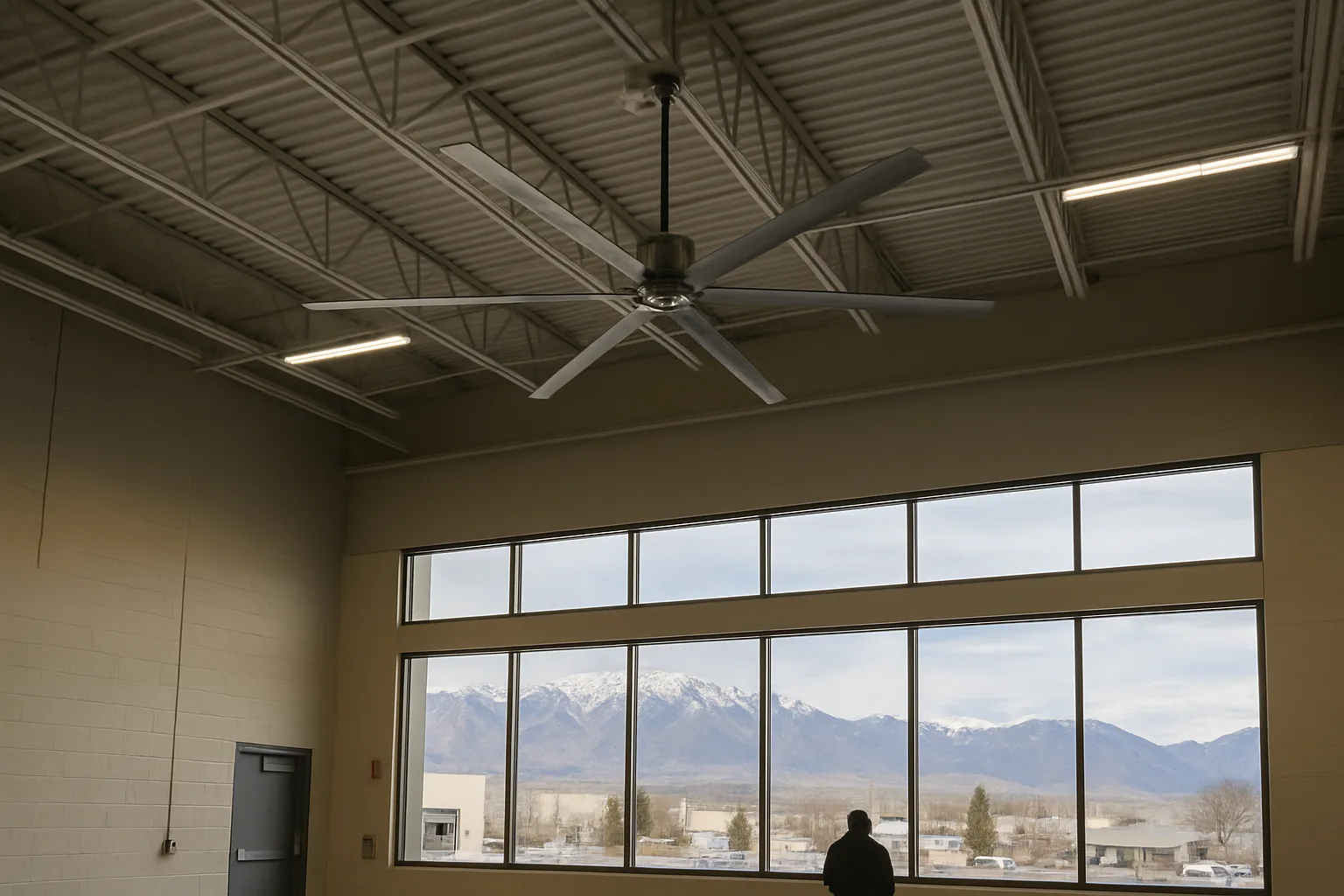
Features That Make Large Commercial Fans Ideal for High-Ceiling Buildings
High-ceiling commercial buildings need more than standard fans to stay comfortable. This guide breaks down how HVLS commercial ceiling fans deliver broad airflow, energy savings, and quiet performance in large interior spaces.
High-ceiling commercial buildings can develop uneven temperatures because warm air rises and large floor areas restrict circulation. Small fans may affect limited zones, which can leave workspaces uncomfortable. Large commercial fans solve this problem through broad airflow that reaches substantial areas at a controlled speed.
High-volume, low-speed technology gives high-quality commercial ceiling fan systems the capacity to circulate large amounts of air with fewer units. Their wide blades create steady air movement across open interiors without harsh drafts near occupied areas. Now, this article explains the key features that make large commercial fans suitable for high-ceiling buildings and demanding commercial spaces.
Broad Airflow Reaches Large Interior Areas
Large fan diameters help distribute air across gyms, retail stores, event halls, warehouses, and educational facilities. The blades move a column of air downward before it travels outward across the occupied zone. One properly sized unit can influence a wider area than several small fans placed around the room.
This broad coverage matters where tall ceilings create large volumes of air above occupants. Consistent circulation can reduce stagnant zones and help temperatures feel more uniform across the floor. Facility owners may need fewer units, which can simplify electrical requirements and reduce equipment across the property.
Low-Speed Operation Supports Comfortable Airflow
HVLS fans rotate at lower speeds while large blades move substantial volumes of air. This design creates a gentle breeze without excessive air velocity near desks, tables, displays, or workstations. Comfortable airflow suits commercial spaces where customers and employees remain present for long periods.
A commercial ceiling fan can support temperature control alongside the building's HVAC system. During warm periods, air movement can improve perceived comfort without forcing climate equipment to carry the full load. During colder periods, fan operation can return warm air near the roof toward occupied areas below. This kind of climate coordination pairs well with other exterior improvements that add lasting value to a home when a commercial or mixed-use property is being upgraded for efficiency.
Efficient Motors Help Control Energy Use
Extensive coverage can reduce the need for numerous smaller units across an expansive commercial property. Modern direct-drive motors limit mechanical complexity and can provide efficient operation with lower maintenance demands. These features suit facilities that want dependable air circulation without excessive electrical consumption.
Professional selection of high-quality commercial ceiling fan systems should account for room dimensions, ceiling height, occupancy patterns, and existing HVAC equipment. A system matched to site conditions can deliver useful airflow at suitable fan speeds. Proper controls can also reduce fan speed when full airflow is unnecessary.
Quiet Performance Fits Occupied Buildings
Fan noise can affect customer comfort, staff concentration, classes, meetings, and conversations inside commercial buildings. Large HVLS fans provide substantial airflow at low rotational speeds, which can limit harsh sound from smaller high-speed models. Quiet operation suits offices, libraries, restaurants, retail spaces, and educational facilities.
Visual design also matters when a fan becomes a feature beneath a high ceiling. Commercial models may offer streamlined profiles and finish options that coordinate with architectural details. A suitable system can provide functional airflow without making the room feel dominated by mechanical equipment.
Large commercial fans suit high-ceiling buildings because broad airflow can improve comfort across expansive interior areas. Efficient motors, low-speed operation, and suitable controls can support practical long-term energy management. Proper size and safe placement help the system perform as intended. Professional system selection can connect fan performance with the building's HVAC needs and daily occupancy demands. Utah's fast-growing commercial corridors are a good example of where these systems get planned into new builds, much like the considerations covered in commercial restroom accessories that improve function and access.
Large commercial fans suit high-ceiling buildings because their design combines broad coverage, low-speed airflow, efficient operation, and quiet performance. Strong results depend on correct size, safe placement, suitable motor technology, and coordination with climate equipment. Professional system selection can help a commercial facility improve comfort while supporting long-term energy management.
Frequently asked questions
How high should a ceiling be for a large commercial fan to work well?
Can large commercial fans actually lower HVAC and energy costs?
How many large commercial fans does a warehouse or gym typically need?
Are large commercial ceiling fans noisy in offices or retail spaces?
What should a building owner check before installing a large commercial fan?
Do large commercial fans work alongside existing HVAC systems or replace them?
Keep reading
More from the blog

How the Right Tools Help Organize and Decorate Your Home

How Far in Advance to Book Movers: A Timeline Guide
Gas Line Installation: What Homeowners Need to Know First