Buying a Bear Lake Cabin or Second Home: What to Check Before Making an Offer
Low water, busy summers and two sets of rental rules shape every Bear Lake cabin purchase. A step-by-step checklist for Garden City and Rich County buyers in 2026.
By Memorial Day weekend in 2026, Bear Lake had already reached its peak for the year, sitting roughly 7 feet below normal after a winter with almost no snowpack, and park managers expected it to drop another 4 to 5 feet by October. For anyone shopping for a cabin on the Utah side of the lake, that one fact sums up the market: the water, the crowds and the rules all move with the seasons, and a property that looks perfect in July has to make sense in January and in a dry year too.
Most Utah buyers focus on Garden City, the main town on the west shore, and on Laketown near the south end. Garden City had about 600 year-round residents at the 2020 census, but its population swells every summer. What follows is a working checklist for a second-home purchase there, in the order most buyers will run into each issue.
Step 1: Understand How the Lake Level Works
Bear Lake is a natural lake, but it has been managed as a reservoir for more than a century. PacifiCorp diverts Bear River water into the lake and releases it downstream, and under a 1995 settlement agreement it stores water between elevations of 5,902 and 5,923.65 feet for irrigation, power and other uses. A 2000 operations agreement among PacifiCorp, Utah, Idaho and Wyoming says the lake is run primarily as a storage reservoir for irrigation contracts and flood control. The Utah Division of Water Resources has a clear summary on its Bear River page.
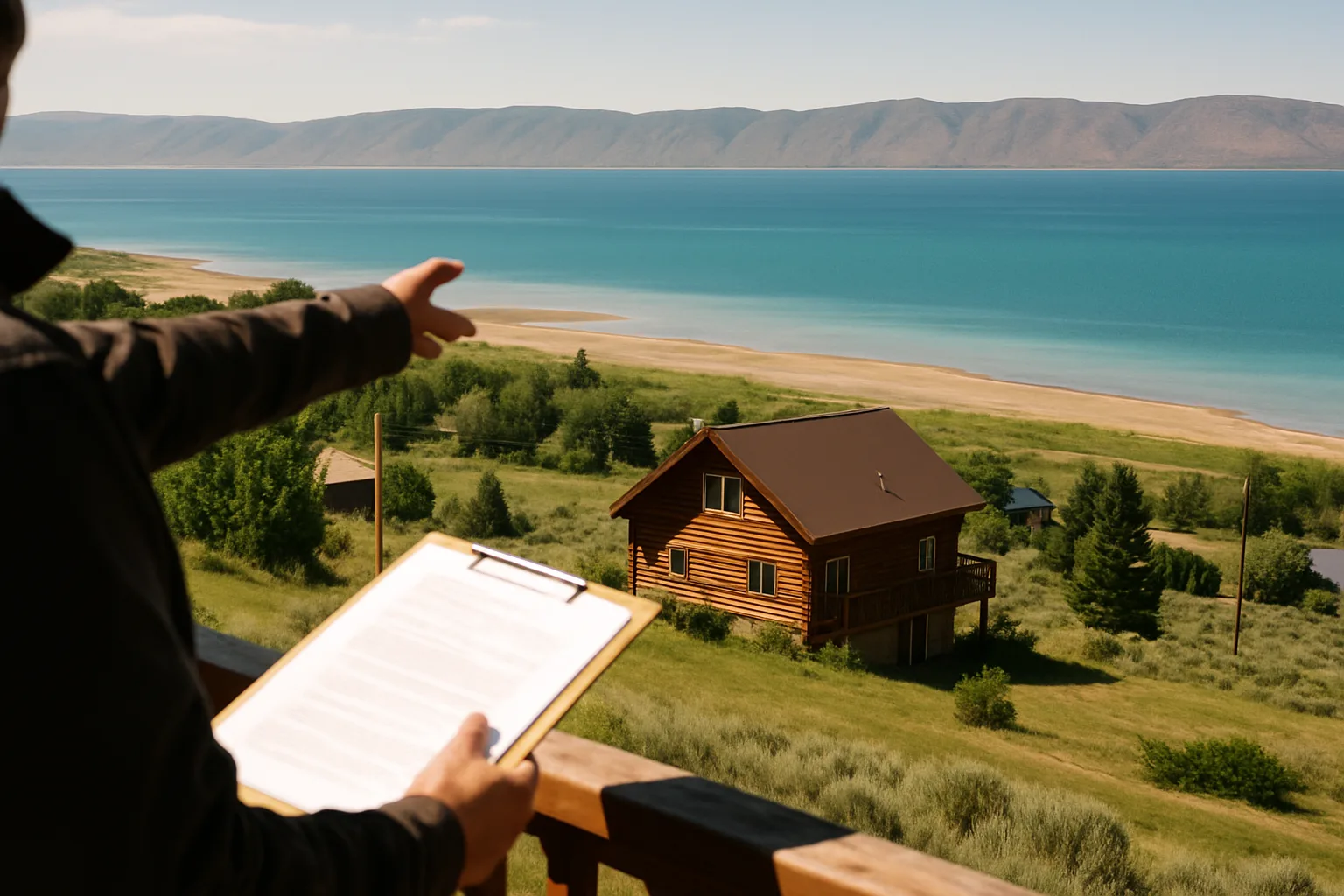
The practical result is that the shoreline moves. In low years, beaches widen, docks sit farther from the water and some launch areas become uncertain. In May 2026, Utah State Parks expected docks to stay usable all summer at the State Marina, First Point, Rainbow Cove and Cisco Beach, while the status at Rendezvous Beach and North Eden depended on how far the water fell. Buyers paying a premium for "lakefront" should ask what the frontage looks like at low water, not just in a photo taken in a wet June.
Why the water looks the way it does
The lake's well-known turquoise color comes from fine particles of calcium carbonate suspended in the water. The Utah Geological Survey's Bear Lake booklet covers this and other questions about the lake's geology, hydrology and regulations, and notes that sediment cores reach back about 250,000 years, making it one of the oldest lakes in North America.
Step 2: Plan Around Summer Crowds and Boat Access
Peak season at Bear Lake is short and busy. Crowds build toward the Fourth of July, and on summer Saturdays the launch lines at the state marina can stack up as everyone tries to pull boats out at the same time in the evening. Visitation was higher than usual in 2026, which park managers attributed to lower water at other reservoirs that made a big lake more attractive.
Relief is coming. The Legislature approved $60 million in 2022 for a second marina just north of the existing one at Bear Lake State Park, designed to sit about five feet deeper so it can operate in low-water years. By August 2026 the basin was more than 80% excavated, and the project is expected to more than double the number of boat slips and more than triple parking, with completion targeted for May 2028 and a partial opening possible in fall 2027. The current marina has a seven-lane launch ramp and 361 long-term slips rented from May through October. Buyers planning to keep a boat on the lake should ask about slip availability early rather than assuming one will be open.
Step 3: Read the Short-Term Rental Rules Before Running the Numbers
Many cabin buyers expect rental income to cover part of the cost. Whether that works depends on exactly which jurisdiction and subdivision the property is in.
Inside Garden City
Garden City requires a short-term rental license, and the town accepts new license applications only from January 1 through April 30 each year. Rentals go through a building inspection and a fire inspection, and owners must collect the Rich County transient room tax. Town code also addresses occupancy and off-street parking. A buyer closing in May who plans to rent that summer may have to wait until the next application window, so timing matters. Listings in the town's vacation rental category are a starting point, but an existing license should never be assumed to transfer without confirming with the town office.
Unincorporated Rich County
Outside town limits, Rich County adopted a new short-term rental ordinance in 2026 that replaced its earlier rules. Key points include:
- A short-term rental is any rental of fewer than 30 consecutive days.
- Owners need both a short-term rental business license and a conditional use permit from planning and zoning.
- Maximum occupancy is capped at two people per 100 square feet of sleeping area, and each sleeping area needs at least 100 square feet.
- Properties need at least one on-site parking space for every six occupants, and guests may not park on public streets.
- Applications must name a local contact living within one hour of the property, plus a 24-hour phone number for any management company.
- The license fee is $25 per person of approved occupancy, with a $15-per-person renewal fee due by December 31.
- If the property has no direct vehicle access to a public road, the owner must provide a notarized access easement.
HOAs and the Idaho shore
Subdivision covenants can add their own limits on nightly rentals on top of the town or county rules, so a property's CC&Rs deserve as close a read as the ordinance. The north half of the lake is in Idaho, where state law works very differently. Idaho Code 67-6539 bars cities and counties from banning short-term rentals, and a 2026 amendment bars them from requiring a license, fee or permit to operate one, although noise, parking and nuisance rules still apply. That makes the two sides of the same lake very different investment settings, and buyers comparing them should treat them as separate markets.
Step 4: Confirm Water and Sewer Before Writing an Offer
Utility service is one of the most important differences between a cabin in town and one on a hillside lot. The Bear Lake Special Service District maintains sewer service for communities in and around Garden City and for homes along the south shore. The district has proposed sewer rate and fee changes, with a public hearing scheduled for October 15, 2026, so carrying-cost estimates should use current rates.
Where sewer is not available, the Bear River Health Department handles septic permits, and a buildable lot generally needs a passing septic feasibility review before a permit is issued. For properties without a public or community water system, a private well requires an approved water right from the Utah Division of Water Rights before drilling. Approval can take several months, and some areas are restricted or closed to new rights. Buyers of vacant land should verify all three, sewer or septic, water source and legal access, before closing. Even in established neighborhoods such as Sweetwater Park, buyers should ask which provider supplies water and sewer and what the current connection and monthly fees are.
Step 5: Test Winter Access
The fastest route from the Wasatch Front and Cache Valley is US-89 through Logan Canyon, about 40 miles from Logan to Garden City. In winter, that canyon closes from time to time for avalanches and blowing snow. In January 2024, UDOT closed the highway between Logan and Garden City after an avalanche, and closures in earlier winters have lasted from a few hours to overnight.
For a cabin that will be used in winter, buyers should check:
- Whether the road to the property is public or private, and who plows it.
- Whether water lines are winterized or heat-taped, and who checks the property during cold snaps.
- Whether the roof and deck are built for the snow loads at that elevation.
- Whether the HOA restricts winter parking or requires snow removal by a set time.
Step 6: Price the Purchase as a Second Home
Second-home loans and insurance policies usually differ from primary-residence terms, and lenders and insurers may treat a property differently once it is rented. The current median list price in Garden City is $660,000, and lake-view homes and cabins carry a premium; buyers can compare Garden City homes with views against off-view properties to see how wide that gap is at the moment. Annual costs should include property taxes at the non-primary residential rate, HOA dues, utilities, snow removal, rental licensing and the room tax if the property is rented.
A Short Pre-Offer Checklist
- Confirm whether the property is in Garden City, unincorporated Rich County or Idaho, and which rental rules apply.
- Read the HOA covenants for rental, parking and building restrictions.
- Verify sewer or septic, the water source and any water right.
- Ask what the shoreline looks like at low water if lake access is part of the price.
- Drive the route in winter, or at least review recent closure history.
- Build a budget that assumes some summers are drier and busier than others.
Current Bear Lake listings, along with Garden City and Laketown market pages, can be found at Best Utah Real Estate. A cabin purchase at the lake goes most smoothly when the paperwork questions are answered before the offer, not after the inspection.
Frequently asked questions
Can I rent out a Bear Lake cabin in Garden City as a short-term rental?
Garden City requires a short-term rental license, and the town accepts new applications only from January 1 through April 30 each year. Rentals must pass building and fire inspections, and owners collect the Rich County transient room tax. HOA covenants may add their own limits, so both should be checked before an offer.
What are Rich County's short-term rental rules outside Garden City?
An ordinance adopted in 2026 requires a short-term rental business license and a conditional use permit for rentals under 30 consecutive days in unincorporated Rich County. Occupancy is capped at two people per 100 square feet of sleeping area, with one on-site parking space for every six occupants. Owners must also name a local contact who lives within one hour of the property.
Why does Bear Lake's water level change so much?
Bear Lake is operated primarily as a storage reservoir. PacifiCorp stores Bear River water in the lake and releases it for downstream irrigation, power and flood control, within a range of elevations set by agreement. In 2026, the lake peaked about 7 feet below normal by late May and was expected to fall another 4 to 5 feet by October.
When will the new Bear Lake marina open?
The second marina at Bear Lake State Park is expected to be complete by May 2028, with a partial opening possible in fall 2027. It is designed to sit about five feet deeper than the existing marina, more than double the number of slips and more than triple parking.
Do Bear Lake cabins use septic systems or sewer?
It depends on location. The Bear Lake Special Service District maintains sewer for communities in and around Garden City and for homes along the south shore. Where sewer is not available, the Bear River Health Department permits septic systems, and private wells require an approved water right from the Utah Division of Water Rights.
How much do homes in Garden City, Utah cost?
The current median list price in Garden City is $660,000. Lake-view homes and cabins generally list above that figure, and second homes in Utah are taxed without the primary residential exemption, so carrying costs run higher than for a full-time residence.
Keep reading
More from the blog

Utah's 2026 Housing Laws: What Passed, What Failed and What Changes for Buyers
2034 Winter Olympics in Utah: Which Cities and Projects to Watch Before Buying (2026)
Multi-Tier Outdoor Layouts That Boost Backyard Property Value