
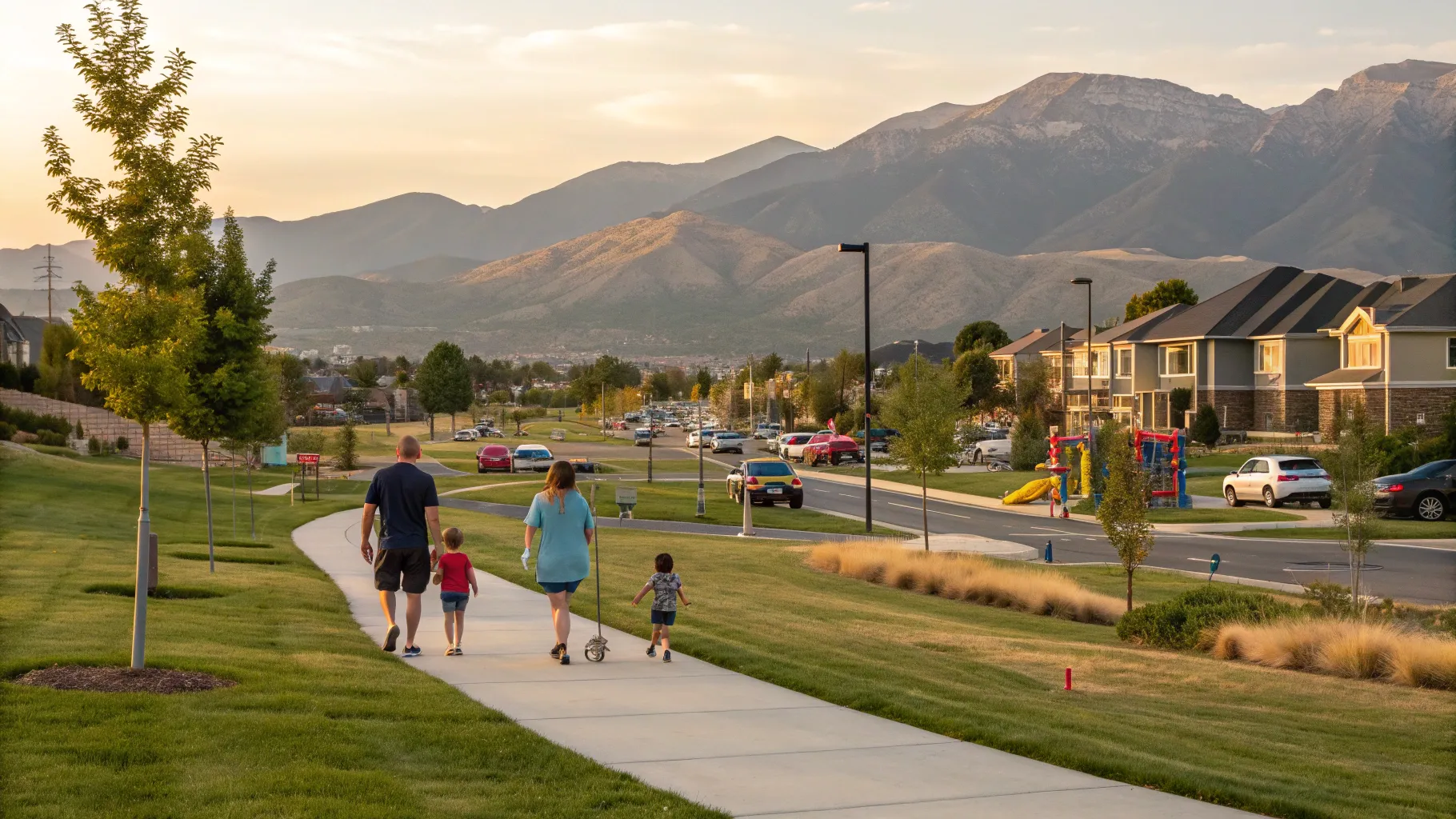
Best Utah Valley Suburbs for Families & Commuters — 2026 Guide
Data-driven guide to the 7 best Utah Valley suburbs for 2026 — schools, parks, commute, crime rates and median income for Mapleton, Provo/Orem, Lehi & more.
Utah Valley continues to attract families, professionals, and investors with a compelling mix of outdoor recreation, strong schools, and booming job centers. For those considering a move in 2026, a clear view of neighborhoods, public services, commute patterns, and lifestyle fit is essential. This guide evaluates the top suburbs across Utah Valley using practical, data-driven criteria: population, parks and recreation, shopping and services, public high schools, crime rate (per 1,000 residents), median household income, and the specific reasons each community stands out along with notable drawbacks.
How this guide evaluates each suburb
Each suburb is profiled with consistent metrics to make comparisons straightforward. Population gives scale and character. Parks and trails describe the outdoor resources that shape daily life in Utah. Shopping hubs and grocery access indicate convenience and retail variety. Public high schools are called out because they often influence buying decisions for families. Crime rate figures come from local crime reporting sources and are expressed as the chance in 1,000 of being a victim of crime in a typical year. Median household income is included to illustrate the economic profile of the area; it reflects the combined gross income of everyone living in a household and is generally a better measure of typical household finances than an average. Finally, a succinct why and list of drawbacks help match each suburb to potential buyers based on lifestyle and priorities.
Overview of the seven suburbs covered
- Mapleton
- Salem, Elk Ridge, and Woodland Hills (grouped)
- Provo and Orem (combined)
- Pleasant Grove and American Fork (grouped)
- Spanish Fork
- Saratoga Springs and Eagle Mountain (grouped)
- Lehi and Highland (grouped, top pick)
Mapleton: rural charm with mountain access
Population: 12,340. Median household income: $127,860. Crime rate: 13.75 per 1,000 residents.
Mapleton sits on the eastern edge of Utah Valley at the base of Maple Mountain, offering a distinctly rural, open-space feel while remaining within easy driving distance of Provo and other valley amenities. The community draws buyers who seek larger lots, equestrian or semi-rural living, and direct access to trails and mountain recreation.
Parks and recreation
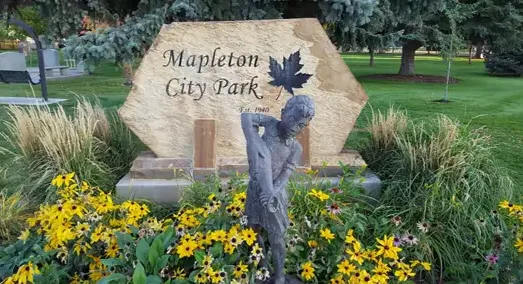
Mapleton City Park anchors community events, but the standout recreation asset is Ira Allen Park (sports complex near 1600 South). Ira Allen features multiple baseball fields, a large soccer field, pickleball courts, and playgrounds. This complex doubles as an activity hub for family sports, youth leagues, and weekend recreation. Nearby canyons including Hobble Creek and Spanish Fork Canyon provide scenic drives, trailheads, and alpine recreation within a short drive.
Shopping and services
Mapleton has very limited in-town shopping; typical local retail is a fuel station with convenience items and a small strip with a deli-style offering. For routine grocery shopping, Mapleton residents generally drive 10 minutes or less to Spanish Fork’s Canyon Creek retail hub, which includes large-format retailers such as Costco, Target, Hobby Lobby, and full-service grocery options. For daily errands and supplies, Spanish Fork and nearby Provo are the primary service centers.
Schools
Maple Mountain High School serves Mapleton and the east bench of Spanish Fork. It is a relatively new high school with strong academic and athletic programs. Access to private and charter school options is available throughout the valley, but public high school assignments typically make Maple Mountain the main choice for neighborhood families.
Why choose Mapleton
Mapleton is appealing for buyers who prioritize a rural atmosphere—larger yards, open space, and mountain proximity—while still wanting access to urban amenities within a short drive. The blend of quiet neighborhoods and family-friendly parks makes it especially attractive to households planning to raise children outdoors.
Potential drawbacks
Higher home prices for large lots and newer custom homes can place Mapleton among the more expensive choices in southern Utah Valley. Limited in-town retail increases dependency on neighboring cities for groceries and shopping. Developing higher-density housing in the south end may ease affordability pressures over time, but the existing character is primarily low-density and higher-priced.
Salem, Elk Ridge, and Woodland Hills: scenic bench communities
Combined profile: Salem population 11,283; Elk Ridge population 4,925; Woodland Hills population 1,613. Median household incomes: Salem $107,000; Elk Ridge $138,000; Woodland Hills $137,000. Crime rates: Salem 8 per 1,000; Elk Ridge 10.38 per 1,000; Woodland Hills 9.5 per 1,000.
These three cities form a contiguous group on the south-eastern bench of Utah Valley and share cultural and recreational ties. They are often grouped because students attend the same high school and residents enjoy the same set of scenic views and proximity to Mount Nebo and the Mount Nebo Scenic Loop.
Parks and recreation
Salem offers a major recreation investment in the Mount Loafer Salem Recreation Complex (Mount Loafer Sport Complex), which includes multiple baseball diamonds, soccer fields, football fields, pickleball courts, and a disc golf course. Elk Ridge has single-field parks like Schuller Park that provide valley views. Woodland Hills offers Luritson Field and wooded neighborhoods with expansive, panoramic overlooks of Utah Lake and the valley—locations that are prized for sunsets and quiet evenings.
Shopping and services
Salem hosts a moderate-sized grocery option with convenience retail, but for larger chains, Payson or Spanish Fork are the practical shopping destinations (about 10 to 12 minutes away). Larger retailers and home improvement options are concentrated in those neighboring cities.
Schools
Salem Hills High School serves the Salem area and is notable for a scenic football stadium setting and community engagement. Elk Ridge and Woodland Hills students generally feed into the same high school system, which centralizes extracurricular and athletic delivery.
Why choose these bench communities
These communities attract buyers seeking scenic views, open space, and an absence of dense urban traffic. Many homes are on larger lots with custom construction, and the bench locations provide a feeling of separation from the bustling valley floor. For buyers who prioritize views and outdoor access—especially access to the Mount Nebo Scenic Loop—this group of towns is an excellent match.
Potential drawbacks
Longer commutes to job centers in Provo, Orem, and the northern valley can add 10 to 15 minutes compared to central valley suburbs. Housing tends to skew toward larger, more expensive homes, pushing up cost of living and property taxes. Limited local shopping means periodic longer trips for major retail shopping.
Provo and Orem: central valley, universities, and urban amenities
Population: Provo approximately 115,096; Orem combined community brings the two-city area to roughly 200,000 people when including Vineyard and surrounding neighborhoods. Median household incomes: Orem $84,000; Provo $65,000. Crime rates: Orem 29.98 per 1,000; Provo 20.35 per 1,000.
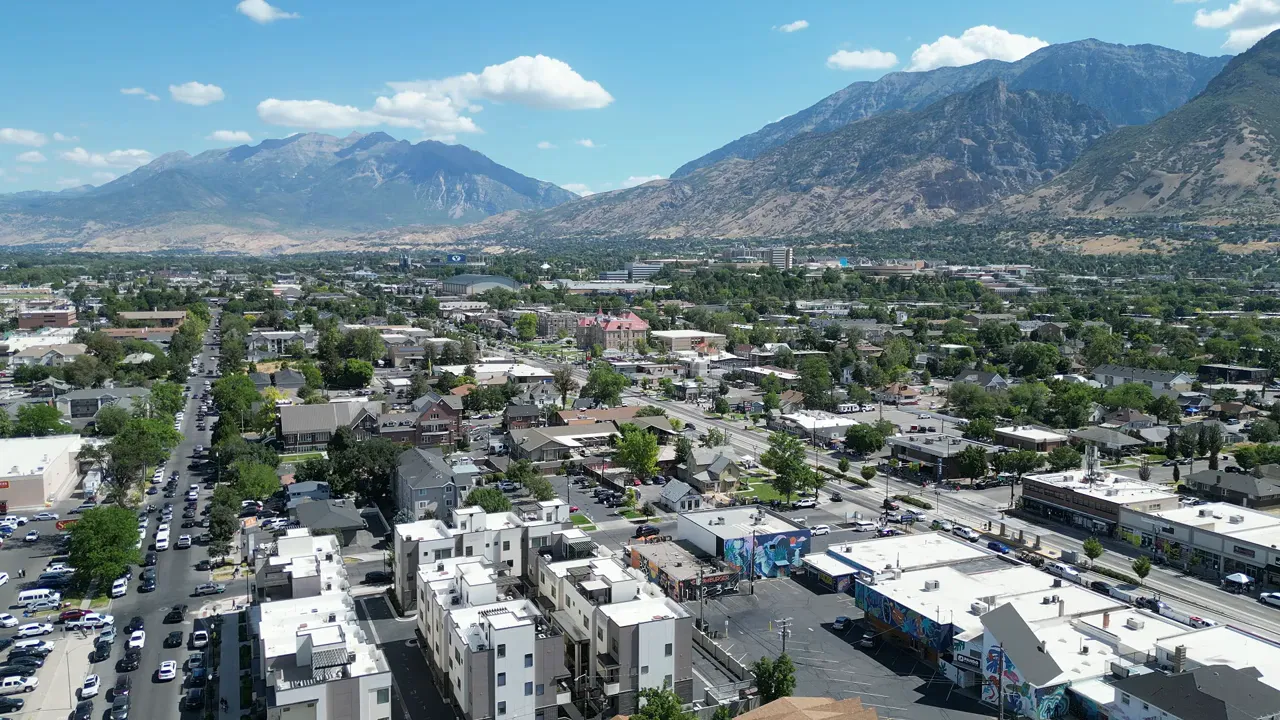
Provo and Orem form the cultural and economic heart of Utah Valley. Two major universities—Brigham Young University in Provo and Utah Valley University in Orem—create strong educational and cultural presence, driving housing demand, retail development, and entertainment options. The urban core has a dense mixture of student housing, single-family neighborhoods, and established older housing stock.
Parks and recreation
Both cities rank highly for parks and trails. Provo’s park system receives frequent recognition, featuring Rock Canyon access, Bridal Veil Falls (with ongoing trail improvements), and numerous neighborhood parks with trails, amphitheaters, and community pools. Orem also provides canyon mouth parks, community pools, and neighborhood-scale green spaces. The Provo River and Provo Canyon are major outdoor amenities for hiking, climbing, and river recreation.
Shopping and services
Provo and Orem offer some of the broadest retail selections in Utah Valley. University Parkway, State Street, and Center Street host a mix of local shops, national chains, and grocery outlets including Costco, Harmons, and WinCo. Downtown Provo’s Center Street has been revitalized with boutique dining and entertainment offerings, while regional shopping centers handle big-box needs and daily services.
Schools
Provo operates two public high schools and several middle and elementary schools; Orem has multiple high schools including Mountain View High School, Orem High School, and Timpanogos High School. A large number of charter and private school options are present because of the student population and institutional activity.
Why choose Provo and Orem
Provo and Orem are ideal for people seeking centralized access to universities, cultural options, extensive shopping, and transportation nodes such as the Provo Municipal Airport. Rental and housing options are broader—ranging from affordable older housing and apartments to new infill developments—making it feasible for a range of buyers, young professionals, and families.
Potential drawbacks
Higher crime rates compared to smaller towns in the valley are concentrated in denser neighborhoods and near student housing. Traffic and congestion increase around the universities and commercial corridors, and the housing stock includes more older homes, which can require renovation. New construction clusters are concentrated on the west side of Provo and in Vineyard, so buyers seeking new subdivisions should focus there.
Pleasant Grove and American Fork: value and access to northern job centers
Population: Pleasant Grove 38,000; American Fork 41,000. Median household incomes: Pleasant Grove $96,000; American Fork $95,000. Crime rates: Pleasant Grove 19.58 per 1,000; American Fork 34.4 per 1,000.
Pleasant Grove and American Fork sit directly north of Provo and are well-positioned for commuters heading to Lehi’s Silicon Slopes and employment centers in the northern valley. These cities offer a mix of mature neighborhoods, family-focused parks, and growing commercial corridors.
Parks and recreation
Pleasant Grove’s Discovery Park is a notable large park offering broad amenities and pickleball courts; it sits adjacent to the Murdock Canal Trail which provides long-distance recreation and commuting options for cyclists and runners. American Fork offers Rotary Park, an active recreation center and pool, and Greenwood Park which features a popular skate park and family-friendly facilities.
Shopping and services
The Meadow Shopping Center near the I-15 interchange is the dominant retail cluster for the two cities, hosting big-box retailers, Home Depot, Costco, and multiple grocery choices. The corridor along State Street through both cities also presents abundant local retail and dining options.
Schools
Pleasant Grove High School and American Fork High School serve their respective communities. Portions of some neighborhoods may feed into additional schools depending on district boundary changes, so prospective buyers should verify assignments based on specific addresses.
Why choose these cities
Pleasant Grove and American Fork are attractive to families and professionals who want relatively affordable housing, good parks, and a short commute to jobs in Lehi and the Silicon Slopes. Location between Provo and Lehi makes them appealing to a wide cross-section of buyers.
Potential drawbacks
Crime statistics in American Fork are higher than nearby smaller towns. Rapid development and new mixed-use projects have increased traffic and construction in certain corridors. Still, the convenience and access to job hubs often outweigh these issues for many buyers.
Spanish Fork: affordability and family focus
Population: 47,000. Median household income: $98,497. Crime rate: 16.54 per 1,000.
Spanish Fork sits about 10 minutes south of Provo and offers a strong value proposition for homebuyers seeking affordability, family-friendly policies, and access to local recreation. Historic Main Street, newer retail clusters, and significant park investments create a balanced suburban environment with suburban amenities and small-town character.
Parks and recreation
Canyon View Park in the mouth of Spanish Fork Canyon is a community favorite with a pond and extensive picnic areas. Adventure Heights All-Abilities Park is a modern, inclusive playground designed for universal family access, while Spanish Fork Sports Park assembles ball fields, tennis courts, pickleball courts, and trail access in a central hub. The Spanish Fork River Trail runs through parks connecting neighborhoods for walking and cycling.
Shopping and services
The Canyon Creek commercial district is Spanish Fork’s main shopping cluster—Costco, Lowe’s, Hobby Lobby, Target, and Walmart are all concentrated in that area. Main Street retains historic retailers and local dining options, providing a balance of modern retail and community-oriented storefronts.
Schools
Spanish Fork High School and Maple Mountain High School (east bench) serve local students with newer school facilities and athletic programs embedded in the community.
Why choose Spanish Fork
Spanish Fork appeals to buyers seeking more square footage and lower entry prices compared to the northern valley suburbs, combined with family-focused amenities and easy access to outdoor recreation including Spanish Fork Canyon and nearby golf courses.
Potential drawbacks
Commuting distances to Salt Lake City are greater than for northern communities, which may be a factor for those commuting northward frequently. As with many growing suburbs, traffic congestion increases during peak commute hours near interstate interchanges.
Saratoga Springs and Eagle Mountain: new construction and growth
Population: Saratoga Springs 57,000; Eagle Mountain 64,000. Median household incomes: Saratoga Springs $123,000; Eagle Mountain $105,000. Crime rates: Saratoga Springs 16.2 per 1,000; Eagle Mountain 14.42 per 1,000.
These two rapidly growing western-valley communities expanded dramatically in recent decades and now accommodate tens of thousands of residents. They are attractive for buyers who want newer housing stock, planned neighborhoods, and proximity to the lakeshore and Traverse Mountain job centers.
Parks and recreation
Saratoga Springs’ Neptune Park and the local hot springs are notable draws. Eagle Mountain hosts large community parks including Silver Lake Park and Cori Ride Memorial Park, along with a well-utilized bike park near the Ranches neighborhood. The Ranches area includes walkable parks and community amenities suited to families.
Shopping and services
City Center districts and newly developed shopping corridors house grocery options such as Ridley’s and chain retail stores. Saratoga Springs’ retail corridor along the lake side provides Walmart, Costco, and other big-box shopping for residents of both cities. The Traverse Mountain retail area and Lehi’s shopping centers are close enough to supply additional options and support commuting workers.
Schools
Westlake High School serves Saratoga Springs, while Cedar Valley High School is a major school for Eagle Mountain’s City Center neighborhoods. School capacity and new school construction have kept pace with growth in many neighborhoods.
Why choose these cities
Buyers often select these communities for brand-new subdivisions, larger inventories of recently built single-family homes, and value compared to older northern suburbs. Proximity to Lehi and the Traverse Mountain employment cluster is a major benefit for tech professionals, and the youthful demographic supports active recreation and family programming.
Potential drawbacks
Rapid construction leads to ongoing development noise and frequent traffic changes. The desert landscape on the west side of the valley may be less visually appealing to buyers who prefer mountain-facing neighborhoods. Commute times to Salt Lake are reasonable but can be impacted by peak congestion at the Point of the Mountain corridor.
Lehi and Highland: the top pick for job access and family amenities
Lehi population approximately 97,000; Highland population about 21,000. Median household incomes: Lehi $122,000; Highland $178,000. These cities are considered prime choices for buyers prioritizing job access, newer homes, and strong family amenities. Crime rate statistics reflect relatively moderate levels compared to larger urban centers, and both cities feature expansive park systems and high-quality schools.
Parks and recreation
Lehi and Highland share a strong park network including North Park, Lehi Family Park, Wines Park, and the Dry Creek Trail. Highland Glen Park is particularly known for its community-friendly spaces and long-standing neighborhood appeal. Many parks accommodate soccer, baseball, and multi-sport fields, and the community amphitheaters and trails promote year-round outdoor living.

Shopping and services
Shoppers rely on the American Fork Meadow shopping corridor and the Shops at Riverwoods and Traverse Mountain retail destinations for grocery needs, big-box retail, and specialty stores. Lehi’s Main Street historic district provides an additional layer of dining and boutique shopping, while the newer retail nodes supply convenience for growing subdivisions.
Schools
Lehi High School and the new Sky Ridge High School serve the area with upgraded facilities and modern programming. Highland families often benefit from higher-performing public schools and access to private and charter alternatives in the northern valley.
Why Lehi and Highland are top picks
Lehi’s proximity to the Silicon Slopes and high-tech employers makes it highly attractive for professionals seeking short commutes to major employers. Highland offers a suburban lifestyle with higher household income levels and large-lot neighborhoods. The combined region offers a robust mix of new construction, strong school options, parks, and transit corridors to both Provo and Salt Lake.
Potential drawbacks
Higher demand drives higher home prices and competition for desirable lots. Rapid growth can strain road infrastructure and create construction impacts. Buyers should anticipate a premium for location and amenities.
Bonus: Santaquin — affordability on the far south end
Population: 18,000. Median household income: $95,000. Crime rate: 13.17 per 1,000.
Santaquin offers a distinctly affordability-focused value proposition. Homebuyers can often find nearly-identical floor plans priced $40,000 to $60,000 lower than comparable homes in northern valley suburbs. Community parks and newly developed retail clusters have improved local life, yet Santaquin’s location near the southern edge of Utah County means longer drives to many valley job centers.
Parks and recreation
Santaquin provides Centennial Park, City Center Park, Orchard Hills Park, and the Prospector View Park and Trailhead which includes bike skills areas and trail access. The Harvest View Sports Complex supports youth athletics and community tournaments.
Shopping and services
Local shopping has expanded and now includes grocery and hardware options near the highway exit, but the most extensive retail remains in Payson and Spanish Fork, both within a 20-minute drive depending on traffic.
Schools
Students typically attend Payson High School and other district schools in nearby Payson, requiring some commuting time for school activities and events.
Why choose Santaquin
Affordability and larger homes for lower prices make Santaquin ideal for buyers prioritizing square footage and budget. For families seeking lower monthly housing costs and willing to trade commute time for more house, Santaquin is a practical choice.
Potential drawbacks
Longer travel times to major job centers in Provo and Lehi add daily commute time for many workers. The southernmost location also increases travel time to Salt Lake City, often exceeding one hour in normal traffic.
Comparing the suburbs: quick-reference table (by lifestyle)
Each suburban cluster in Utah Valley suits different buyer priorities. The following summary pairs each community with the buyer profile most likely to prefer it.
- Mapleton: Buyers seeking rural lots, mountain access, and quiet family living.
- Salem / Elk Ridge / Woodland Hills: Buyers who want scenic bench views and larger acreage close to Mount Nebo.
- Provo / Orem: Students, young professionals, and those seeking strong retail centers, universities, and shorter local commutes.
- Pleasant Grove / American Fork: Balanced families wanting access to northern job centers with good parks and nearby retail.
- Spanish Fork: Value-conscious families and buyers wanting more space for the money and easy access to canyon recreation.
- Saratoga Springs / Eagle Mountain: Buyers focused on new construction, family-friendly parks, and proximity to Traverse Mountain employers.
- Lehi / Highland: Professionals prioritizing job access to Silicon Slopes, new communities, and top-tier amenities.
- Santaquin (bonus): Buyers emphasizing affordability and larger living spaces for the budget.
Market outlook for Utah Valley in 2026
Utah Valley’s real estate market is shaped by strong employment growth—particularly in technology and professional services—significant university populations, and consistent migration from neighboring states. Inventory levels of new construction remain elevated in certain corridors (Lehi, Saratoga Springs, Eagle Mountain, Vineyard), while many central neighborhoods in Provo, Orem, and older northern suburbs have limited resale inventory. Demand remains strong for family-friendly neighborhoods with good schools and nearby recreation.
For investors, neighborhoods closer to Lehi’s Silicon Slopes and the Traverse Mountain employment centers show stable rental demand and appreciation potential as job growth continues. For owner-occupiers, the classic trade-off persists: newer construction and proximity to job centers tend to command price premiums, while more distant suburbs and southern valley towns offer higher square footage for the same price point.
Buyer strategies by audience
Families seeking top schools and parks
Prioritize suburbs with proven school performance and active park systems. Lehi, Highland, Pleasant Grove, and Mapleton provide strong options. Confirm school boundary changes with the district prior to making offers, and evaluate proximity to parks and recreation as a non-price amenity that improves resale and day-to-day quality of life.
Young professionals and singles
Central Provo and Orem are prime choices due to short commutes, transit options, proximity to universities and nightlife, and availability of smaller homes or condos. For tech professionals, Lehi provides fast access to the Silicon Slopes and numerous new developments designed for commuters.
Investors
Target neighborhoods with employment growth and limited new supply near job centers for long-term rental stability. Lehi and parts of American Fork and Saratoga Springs provide a strong combination of job growth and rental demand. Analyze rental yield and projected appreciation—areas with significant new construction may require careful underwriting due to potential supply pressure.
Buyers prioritizing affordability
Spanish Fork and Santaquin present more affordable entry points, offering larger homes for the budget-conscious buyer. Explore the trade-offs related to commute time and access to services when choosing a southern valley location.
Practical tips for buying in Utah Valley
- Confirm school boundaries and long-term district plans before choosing a neighborhood, as new subdivisions may shift attendance zones.
- Evaluate commute patterns at the times when a commute will actually occur—morning and evening peak periods—since travel times can vary greatly by corridor.
- Prioritize water and irrigation conditions in bench communities and homes with larger lots; assess water availability and landscape maintenance costs.
- Consider resale appeal: homes near parks, quality schools, and well-connected retail nodes tend to retain value better during market shifts.
- For buyers in search of new construction, require builder disclosures about completion timelines and warranty coverage. Rapidly growing cities may experience infrastructure lag; confirm city plans for roads and utilities.
- For buyers trading commute time for square footage, balance the monthly savings against increased time costs and fuel expenses over the long term.
Relocation checklist for Utah Valley
- Decide on primary priorities: commute time, schools, lot size, new vs resale homes, and budget.
- Visit target neighborhoods at different times of day to observe traffic, noise, and park activity.
- Request recent comparable sales and days-on-market data from local listings to understand current pricing dynamics.
- Factor in HOA rules and fees where applicable, especially in planned subdivisions and bench communities that may have strict architectural guidelines.
- Prepare for seasonal weather considerations—winter mountain passes and occasional lake-effect events may affect travel and home maintenance.
- Obtain a local home inspection and inquire about potential water rights or irrigation easements on larger properties.
Checklist for investors
- Assess the local rental market by reviewing vacancy rates and recent rental comps.
- Focus on areas near employment hubs for consistent rental demand.
- Understand zoning and any short-term rental regulations; some communities impose limitations on vacation rentals or require registration and fees.
- Model cash flow conservatively, including anticipated property management fees and maintenance items particular to Utah’s climate.
Local resources and authoritative data
For demographic and official statistics, consult government and national sources. Useful resources include the U.S. Census Bureau at https://www.census.gov and state-level resources at https://utah.gov for planning and community development reports. For property search and listings, the primary site for local property searches is provided here: https://bestutahrealestate.com
Commonly asked questions
Which Utah Valley suburb is best for commuting to Silicon Slopes and tech jobs?
Lehi and Highland are the most direct choices due to immediate proximity to the Traverse Mountain and Lehi job centers. Saratoga Springs and Eagle Mountain also provide good access, though commuting routes may cross the Point of the Mountain corridor and be subject to peak congestion.
What suburb offers the best value for larger single-family homes?
Spanish Fork and Santaquin typically provide more square footage for the dollar compared to northern suburbs. These locations are attractive to buyers seeking larger lots or bigger homes at lower price points, though commuting times will generally be longer for jobs in northern valley employment centers.
Are there good schools across the valley?
Yes. School quality varies by district and neighborhood; Highland and parts of Lehi rank highly in household income and school performance, while Provo and Orem offer solid options influenced by university resources. Families should always verify attendance boundaries and school performance metrics before finalizing a purchase.
Is new construction widely available in Utah Valley?
New construction is most plentiful in Lehi, Saratoga Springs, Eagle Mountain, and Vineyard. Provo, Orem, and older northern suburbs have smaller pockets of infill and lot builds. Buyers looking for brand-new homes should focus on rapidly growing communities where subdivision development is active.
How much should buyers budget for property taxes and utilities in bench and rural areas?
Property taxes vary with assessed value but can be higher in affluent or high-demand communities. Utility costs may be higher for larger lots or properties requiring pressurized irrigation or well maintenance; buyers should estimate annual utilities and ask for recent bills during the offer process. Local city websites provide fee schedules and property tax estimators.
What are common pitfalls when relocating to Utah Valley?
Common pitfalls include underestimating commute impacts, failing to confirm school boundaries, buying without considering HOA constraints, and not accounting for seasonal maintenance needs. Prospective buyers should perform a neighborhood walk-through at different hours and consult local planning and zoning information for upcoming development that may impact quality of life.
Neighborhood match guide: which suburb fits each lifestyle?
Choosing the right Utah Valley suburb depends heavily on lifestyle priorities. The following guide distills neighborhood selection into common buyer archetypes and recommended communities.
- Outdoor-Focused Families: Mapleton, Salem, Woodland Hills. These communities provide mountain access, open space, and larger lots for outdoor activity.
- Commuters to Salt Lake/Silicon Slopes: Lehi, Highland, American Fork. Close proximity to Traverse Mountain and freeway access eases daily travel to jobs.
- University-Affiliated Residents and Students: Provo and Orem. Dense cultural amenities, short walkability to campuses, and rental options provide flexibility.
- New Home Buyers Seeking Modern Subdivisions: Saratoga Springs, Eagle Mountain, Vineyard. These areas have significant new construction and planned community amenities.
- Budget-Conscious Buyers Seeking Space: Spanish Fork, Santaquin. Lower price points and larger home volumes support families wanting more house for the money.
Final thoughts and next steps
Utah Valley’s housing landscape provides diverse options across a compact geographic range. From high-tech job centers and newer subdivisions to historic Main Streets and mountain bench communities, the valley offers choices for nearly every buyer profile. The top suburbs profiled here reflect the range of lifestyle priorities—from highest job-access convenience in Lehi to rural openness in Mapleton to affordability in Spanish Fork and Santaquin. Prospective buyers should identify core priorities, verify school boundaries and commute realities, and seek recent market comparables to make confident offers in 2026.
For additional details about neighborhoods, listings, or tailored relocation assistance, the primary local property resource is available at . For demographic and planning data, refer to official sources like the U.S. Census Bureau at https://www.census.gov and the State of Utah at https://utah.gov.
Resources for deeper research
- U.S. Census Bureau: https://www.census.gov
- State of Utah official portal: https://utah.gov
- Local property listings and relocation resources:
Choosing the right Utah Valley suburb means balancing jobs, schools, commute times, home size, and community character. Whether the priority is being close to Silicon Slopes, finding a large lot near the mountain, or maximizing living space on a budget, the valley’s range of suburbs provides a match for most buyer goals in 2026 and beyond.
Frequently asked questions
How do property prices in Lehi compare to southern towns like Santaquin?
Lehi and Highland generally command higher prices due to proximity to employment centers and newer amenities; median household incomes in these areas are higher, reflecting that premium. Santaquin offers lower prices and more square footage for similar floor plans, making it attractive for buyers prioritizing affordability.
Which suburbs are best for retirement or quieter living?
Mapleton, Highland, and portions of the bench communities such as Woodland Hills provide quieter residential settings and scenic views that suit downsizers or retirees who prefer peaceful neighborhoods with access to outdoor recreation.
Are there reliable public transit options in Utah Valley?
Public transit coverage is strongest along major corridors and near university centers, but personal vehicle transportation remains the primary mode for most residents. Park-and-ride facilities and regional bus lines serve commuters to Salt Lake and local employment centers; however, transit service may be limited in rural bench and southern communities.
How should buyers evaluate new subdivisions?
Buyers should verify builder reputation, completion timelines, warranty coverage, and homeowners association rules. Local city planning documents can show upcoming infrastructure projects, schools, and road improvements that will affect livability and future values.
What steps should out-of-state buyers take before relocating?
Out-of-state buyers should spend time visiting neighborhoods at different times, arrange virtual tours if necessary, require home inspections and disclosures, and plan contingency financing for potential appraisal gaps due to fast-moving offers. Understanding commute times and lifestyle trade-offs prior to arrival is critical.
Keep reading
More from the blog

Gas Line Installation: What Homeowners Need to Know First
Roof Timeline Guide for Buying an Older Utah Home
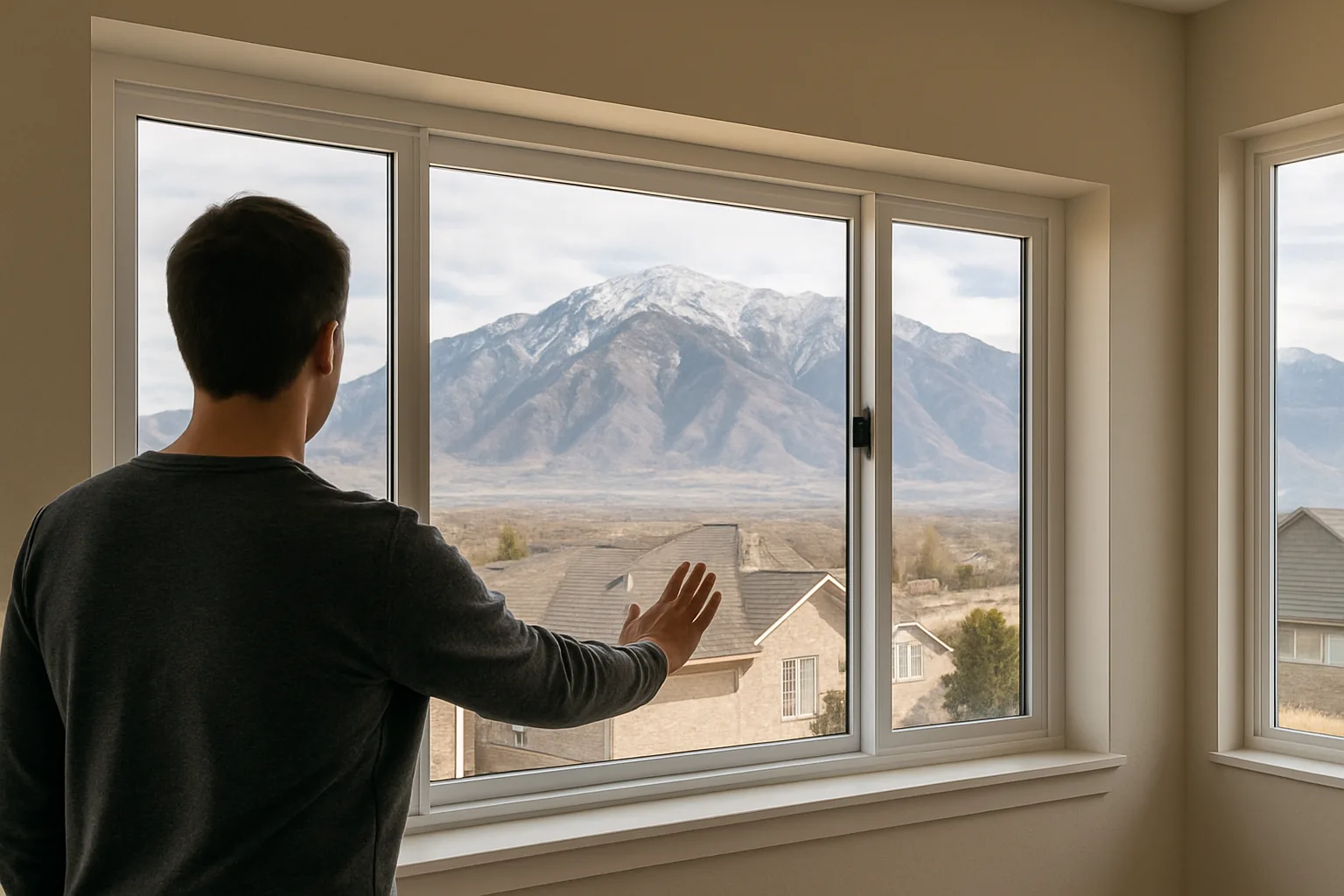
How to Choose Windows for a Utah Home With a Mountain View