
Where to Live in Utah (2026): The Wasatch Front Corridor Map and a Practical Neighborhood Decision Framework
Choosing a place to live in Utah is not just a “which city is best?” question. Most relocating plans go wrong because people treat Salt Lake City and Utah County like a single, interchangeable option.
Choosing a place to live in Utah is not just a “which city is best?” question. Most relocating plans go wrong because people treat Salt Lake City and Utah County like a single, interchangeable option. In reality, the Wasatch Front functions more like a long corridor with distinct lifestyle zones.
This guide breaks down how to think about the Wasatch Front, compares the main areas that people consider (downtown Salt Lake City, the east side, the South Valley, Utah County, and the Northern Corridor), and provides a 4-question framework to narrow the search to the neighborhoods that actually fit.
Why “Salt Lake City” and “Utah County” Get Confused
A common relocation mistake is assuming there is one Salt Lake City experience or that “Salt Lake County vs. Utah County” is the whole decision. In practice, the Wasatch Front is a chain of communities that are geographically connected, but culturally and economically distinct.
So the right first question is not “Is this area in Salt Lake City proper?” It is where along the north-to-south corridor the move will place daily life: commute time, outdoor access, school environment, neighborhood culture, and long-term financial planning.
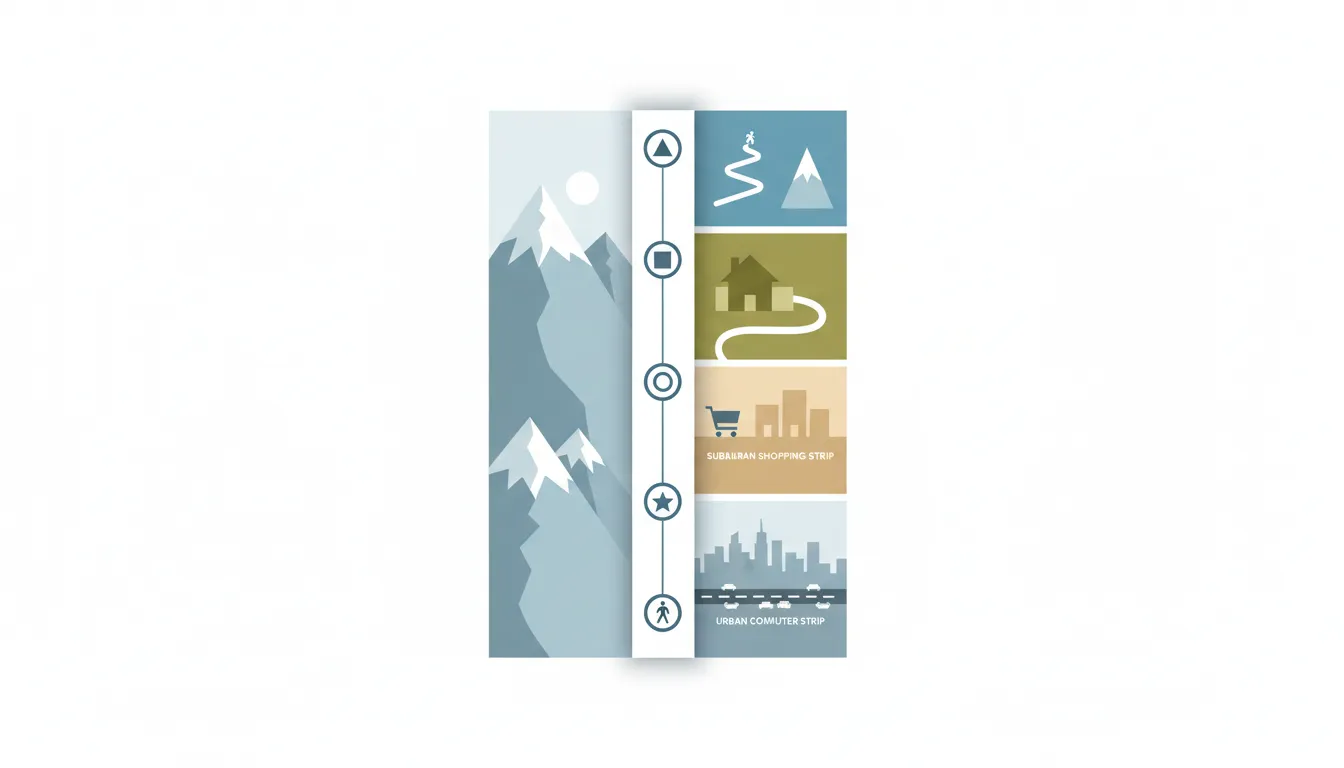
The Mental Model: The Wasatch Front Is a 100-Mile Corridor, Not One City
To understand Utah geography for moving decisions, picture this:
- Wasatch Mountains: a north-to-south mountain spine.
- Wasatch Front: a fairly narrow strip pressed against the west side of the mountains.
- Corridor direction: roughly from Ogden in the north, through Salt Lake City in the middle, to Provo and nearby communities in the south.
Think of home shopping as selecting a position on a line instead of aiming for a “bullseye” like “close to downtown.” That shift changes everything because commutes and lifestyles depend heavily on corridor placement.
Major Wasatch Front Zones: Who They Fit and Who They Do Not
The most useful way to evaluate neighborhoods in Utah is to match a zone to what the household actually prioritizes. Below are the main zones discussed for moving or buying, with practical “right for” and “not right for” guidance.
1) Downtown Salt Lake City: Urban Energy at a Premium
Downtown Salt Lake City is the walkable, urban core. It is positioned around major destinations and includes access to events, transit, and a growing apartment and condo market.
Who it is right for:
- Young professionals working in the city who want walkability
- People trying to minimize driving or relocate from more urban regions
- Households without young children who do not need school district choice to drive the decision
Who it is not right for:
- Families prioritizing schools and yards
- Buyers wanting the most square footage for the money, since the urban location carries a noticeable per-square-foot premium
- People commuting daily to the south end of the valley who cannot tolerate long drive times
Market feel (buying context): Downtown condo pricing has been discussed in a mid-to-high range depending on building type and finishes, with some higher-end product above that level. The key takeaway is that downtown is usually about location and lifestyle, not maximizing space.
2) The East Side of Salt Lake City (East Bench, Sugar House, Mill Creek, and nearby pockets): Neighborhood Character and Supply Constraints
The east side is the area many people fall in love with after visiting. It includes recognized inner neighborhoods and corridors known for local shops, dining, and an established neighborhood vibe.
Sugar House in particular is highlighted as an identifiable inner neighborhood with a main-street feel, a mix of older housing and later infill, and a strong neighborhood identity.
Who it is right for:
- Buyers who want neighborhood walkability and cultural amenities
- Professionals working downtown or near the University of Utah
- Relocators who want to avoid suburban sprawl and are willing to pay more per square foot for daily life that feels more interesting
Who it is not right for:
- Buyers with tighter budgets who need more space
- Families who want newer construction with larger lots and open floor plans
- People working in the south-end tech corridors who do not want a “brutal commute” day after day
Buying reality to expect: This portion of the market is described as supply constrained, which tends to mean better-priced homes can move quickly. Being prepared to act, including pre-approval and clear budget boundaries, is emphasized.
3) South Valley (Draper, South Jordan, Harriman, Riverton, Bluffdale): Newer Suburbs, Family Infrastructure, and Silicon Slopes Access
South Valley is positioned south and west of Salt Lake City proper, in a broad, flatter zone that includes multiple fast-growing suburban communities. Many homes here are newer, lot sizes are typically larger than the east side, and communities often include planned amenities.
Draper is noted for its position near the mouth of Corner Canyon and for being a recognizable name in Utah real estate, including desirable newer construction and trail access. The trade-off mentioned is price.
South Jordan is often described as a family favorite, including strong school district reputation in the area, newer subdivisions, and an entertainment-style commercial core (Daybreak) plus transit options that can provide an alternative to I-15 for some commutes.
Harriman and Riverton are positioned as value plays for newer construction and square footage, with the trade-off being distance west and commute time variability.
Bluffdale is discussed as a place associated with larger properties, including horse property style living for some households, plus a mix of residential and industrial or logistics-related development.
Who South Valley is right for:
- Families with school-aged children
- Tech workers who want a short commute into the Silicon Slopes employment corridor
- Buyers coming from other states who want suburban quality of life with ample space
- People who prefer newer construction and master-planned community structure
Who it is not right for:
- Buyers prioritizing urban walkability and cultural density
- People working in downtown Salt Lake City full-time who cannot tolerate the I-15 commute
- Those who want historic architecture and tight neighborhood character
4) Utah County (Lehi area through Provo and beyond): More Home for the Money and a Strong Cultural Centered Experience
Utah County sits just south of Salt Lake County and includes Lehi, American Fork, Pleasant Grove, Orem, Provo, and nearby communities. It is described as having a large population and rapid growth.
A central point is that Utah County is described as having a strongly religiously shaped, culturally homogenous environment, with Provo as a key anchor. This can strongly affect daily community fit.
What Utah County offers that many do not expect:
- Education and university energy through Utah Valley University and Brigham Young University in Provo, which can create a more energetic feel
- Tech employment presence discussed around Lehi and the northern tip communities (with a Silicon Slopes northern anchor context)
- More favorable housing values compared with Salt Lake County, often translating to more square footage and newer construction for less money
- Outdoor access tied to Utah Lake and Provo Canyon and nearby recreation
Who Utah County is right for:
- Families looking for a very family-centric environment
- Tech workers aligned with Silicon Slopes opportunities in the region
- Buyers who want the most home for their budget
- People who prioritize outdoor access and are less focused on urban amenities
Who Utah County is not right for:
- People seeking a more diverse, pluralistic social environment
- Buyers who expect to commute frequently to downtown Salt Lake City
- Those who want walkable urban neighborhoods with tight cultural variety
5) Northern Corridor (Bountiful, North Salt Lake, Centerville, Farmington, Layton, Ogden area): Value and Outdoor Proximity
The Northern Corridor is often overlooked by relocating households that search only within Salt Lake City. However, it includes established communities, commuter transit access, and strong proximity to northern Utah ski and outdoor destinations.
Bountiful is described as established, with mountain-foothill positioning and views. Farmington is discussed for mixed-use development and an outdoor lifestyle center plus commuter rail access. Ogden is characterized as having an art scene that has been growing, with strong outdoor access to ski areas in the surrounding region and affordability compared with many other corridor options.
Who the Northern Corridor is right for:
- Buyers who want more home for their money
- People working downtown who want a commute without constantly dealing with South Valley traffic patterns
- Outdoor enthusiasts who want proximity to northern ski resorts
- Households that prefer established community character over new-construction suburb energy
The 4-Question Decision Framework That Narrows the Search Fast
Most search tools and listing sites encourage filtering by price first. For Utah, that often creates the wrong outcome because a household ends up optimizing for what can be found rather than what actually fits. Instead, use this order of questions to narrow from many options to a few worth visiting.
Question 1: Where is the job location?
For corridor living, commute direction and timing can change quality of life dramatically. The framework recommends:
- Identify the workplace on a map first.
- Create a practical radius (about 15 to 20 miles as a starting point).
- Start neighborhood selection inside that area.
Edge case to avoid: Choosing a beautiful location because it has views or neighborhood charm, while placing the daily commute across the corridor in the most traffic-constrained direction.
Question 2: What is the lifestyle priority?
Pick the closest match to what will matter most in daily life, not what sounds ideal.
- Urban energy and walkability: often points toward downtown Salt Lake City, Sugar House, the 9th and 9th area, or the University of Utah area. Expect higher per-square-foot pricing.
- Outdoor recreation access: often points to the east side for proximity to the Wasatch canyons, including options like Mill Creek Canyon and Cottonwood Canyon. Draper’s Corner Canyon is also noted as a strong alternative for certain outdoor activities such as trail running and mountain biking.
- Family infrastructure: often points toward the South area of Salt Lake County and also northern corridor options like Farmington and Layton for family-friendly amenities and school-centered choices.
- Value (most home for the dollar): often points further from the urban core, including communities in the southern end of the valley, Ogden/Layton, and areas north of Layton in the broader Ogden metro.
Question 3: What is the cultural fit preference?
Utah has a dominant religious identity and that shapes community life across the Wasatch Front, but the strength of that influence varies by area.
General fit guidance:
- If a culturally LDS community feels comfortable, most corridor locations may feel viable, with Utah County noted as potentially the strongest cultural comfort match.
- If coming from a more pluralistic, diverse coastal or urban environment, the experience can vary widely. Salt Lake City proper, especially the east side and the University of Utah area, is described as having more diverse and pluralistic social culture than many suburbs and most of Utah County.
Practical advice: Cultural fit affects day-to-day social experience more than most people expect. Clear preferences help avoid the “surprise adjustment period” after moving.
Question 4: What is the five-year financial plan?
This question treats the move as both lifestyle and asset planning. The framework emphasizes that different corridor areas can have different long-term trajectories based on infrastructure investment, transit access, and employment growth alignment.
How the plan typically maps:
- If buying primarily for financial investment and planning to sell or leverage equity in five to seven years, areas described as having historically stronger liquidity and resilience include the east side of Salt Lake City and the east side of the Salt Lake Valley and Draper (with Sandy mentioned as well).
- If buying as a long-term family home and prioritizing stability over maximum appreciation upside, South Jordan and Farmington are described as offering strong fundamentals in this framework.
- If considering more speculative growth areas, the framework cautions that value can depend on continued infrastructure build-out and commute risk if remote work patterns shift.
Common Mistakes to Avoid When Choosing a Neighborhood
- Starting with price filters only: this often selects the wrong zone and locks in the wrong commute and lifestyle match.
- Ignoring commute direction: corridor traffic patterns can erase “close to downtown” assumptions.
- Overpaying for a “wrong fit” location: premium neighborhoods may still be the right choice, but not if daily life priorities point elsewhere.
- Missing cultural fit: religious and cultural environment differences can be more impactful than expected.
- Delaying the decision process: supply constraints can require decisive, pre-approved action, especially in well-liked areas.
Quick Start Checklist: From “Overwhelmed Search” to 2 or 3 Neighborhood Targets
- Pin the job on a map and start the neighborhood hunt inside a workable radius (around 15 to 20 miles as a starting point).
- Choose one lifestyle priority: urban walkability, outdoor access, family infrastructure, or value.
- Decide on cultural fit preferences based on what will feel familiar and supportive day to day.
- Set a five-year financial goal: investment liquidity vs long-term family stability.
- Visit only neighborhoods that match the filter so time and money focus on the right options.
Related Utah Real Estate Guides That Help With the Next Steps
Once a relocation zone is chosen, the next step is usually getting the home search and transaction process organized. These resources can support that stage:
- 4 Reasons You Need a Buyer’s Agent
- 5 Things to Know About a Neighborhood Before Moving in
- Home Buying 101: Spotting the Right Market Conditions to Buy
FAQ
Is Utah County really that different from Salt Lake County?
Yes. Utah County is described as having a strongly religion-centered cultural environment centered around Provo, and its day-to-day social fit can differ from many parts of Salt Lake County. It also tends to offer more home for the money, which can change how trade-offs feel for families and budget-focused buyers.
Where should someone focus first if commuting matters most?
Start by locating the workplace on a map and begin neighborhood selection within a practical commute radius (about 15 to 20 miles as a starting point). In a corridor city, commute time and direction can affect quality of life faster than many other factors.
Which area is best for outdoor recreation: east side or west side?
The framework emphasizes the east side for outdoor access tied to Wasatch canyons. Draper’s Corner Canyon is also described as a strong option for certain outdoor activities. The key idea is that your position along the corridor should match the recreation category that matters most.
Is downtown Salt Lake City worth the premium?
It can be, but it is typically best for households prioritizing walkability, urban energy, and proximity to major destinations, especially for people who do not rely on school district choice as the top driver. The premium is described as a per-square-foot cost for urban location and lifestyle.
What’s the fastest way to narrow down neighborhoods in Utah?
Use the 4-question order: job location, lifestyle priority, cultural fit, then five-year financial plan. This approach avoids the common error of filtering by price first and then discovering the commute or lifestyle match is wrong.
Bottom Line: Utah Is a Corridor Lifestyle Decision
The Wasatch Front works like a corridor, not a single city. Where a household lands along that north-to-south line shapes everything: the commute, outdoor access, school and family infrastructure, neighborhood culture, and how future financial goals may align with market dynamics.
If the goal is to reduce overwhelm, the most effective approach is to filter by work, then daily lifestyle, then cultural fit, and finish with five-year planning.
For home search support and up-to-date Utah listings, a useful starting point is .
Frequently asked questions
Is Salt Lake City the best place to live if the job is downtown?
Not necessarily. Downtown Salt Lake City is positioned for people who prioritize urban energy and walkability, and who are comfortable paying a premium. If schools, yards, and family infrastructure are top priorities, the South Valley may fit better. If outdoor access is the main lifestyle driver, the east side tends to align more closely with that daily reality.
Why do people argue about Utah County?
The arguments often come down to cultural fit and lifestyle priorities. Utah County is described as religiously homogenous, with Provo as the cultural center. At the same time, northern Utah County includes university energy and tech employment anchors, making it both appealing and surprising depending on the buyer’s expectations.
Is Sugar House overpriced?
The guidance is that Sugar House can be “yes and no.” Homes may be smaller than farther south options, but buyers are paying for walkability, character, neighborhood identity, and proximity to east side amenities. The best match is when those lifestyle trade-offs are valued enough to offset higher per-square-foot pricing.
What neighborhood is best for outdoor access without skiing?
Outdoor access is not limited to ski culture. The guide emphasizes that for outdoor recreation access, the east side of the corridor aligns well with proximity to the Wasatch Canyons, including options like big and little Cottonwood Canyon and Millcreek Canyon. Draper’s Corner Canyon is also framed as a strong option for trail running and mountain biking.
How should a buyer handle commute risk in Utah?
Commute risk is one of the biggest drivers of quality of life in corridor cities. The framework recommends identifying the workplace first and searching within a 15 to 20 mile radius. It also emphasizes commute testing in rush hour conditions, especially in farther-west areas where traffic can add significant time.
Which zone is best for maximizing value (most home for the money)?
The guide frames value as aligning with areas farther from the urban core. Examples include Eagle Mountain, Saratoga Springs, Harriman, and the Ogden metro area including Ogden and Layton and northward.
Should financial goals change where someone buys along the Wasatch Front?
Yes. The guide treats neighborhood choice as an asset allocation decision. Infrastructure and employment growth corridors are described as supporting longer-term appreciation potential, while more speculative growth depends on build-out and commute realities. If the goal is selling or leveraging equity in five to seven years, the guide points to the east side of Salt Lake City and the east side of the Salt Lake Valley and Draper as historically liquid and resilient. For long-term stability as the priority, South Jordan and Farmington are framed as strong options.
Keep reading
More from the blog

Utah Property Taxes: How Your Assessed Value Really Gets Set
Why Identical Houses Get Different Property Tax Bills

Your First Month in a New Utah Home: A Fall Settling-In Guide