Which Instant Pot Should You Buy? Duo vs. Duo Plus vs. Pro vs. Pro Plus vs. Duo Crisp
Instant Pot Duo, Duo Plus, Pro, Pro Plus and Duo Crisp compared on searing, steam release, air fryer lids, canning and size, and who each one suits.
Instant Pot's multicookers look almost alike on a product page, from the plain Duo to the Wi-Fi Pro Plus and the Crisp models with a second, air-frying lid. All of them pressure cook stews, beans, grains and tough cuts in a fraction of the stovetop time. What separates them is the inner pot, how hot the sauté runs, how steam is released, whether there's an air fryer lid to store, and size.
This guide sorts the lineup by those differences and matches each model to the household it suits.
Quick verdict
- Best overall: the Instant Pot Pro 6 Quart: excellent all-round cooking, strong searing in a handled stainless pot, and a simple steam switch.
- Best basic starter: the Instant Pot Duo 6 Quart: all the pressure cooking, none of the extras.
- Best for nervous beginners: the Instant Pot Duo Plus 6 Quart, with a push-button steam release away from the vent.
- Best with an air fryer lid: the Instant Pot Duo Crisp 8 Quart: a reliable two-lid combo.
- Only pick with a canning program and Wi-Fi: the Instant Pot Pro Plus 6 Quart.
The multicookers side by side
| Multicooker | Shop | Cooking functions | Inner pot | Steam release | Lids | Best for |
|---|---|---|---|---|---|---|
| Instant Pot Pro 6 Quart |  View on Amazon | 10 | Stainless steel with grip handles | Release switch with a diffusing cover | 1 pressure lid | Daily cooks, strong searing |
| Instant Pot Duo 6 Quart |  View on Amazon | 7 | Stainless steel | Valve on the lid | 1 pressure lid | First-time owners, one to six people |
| Instant Pot Duo Plus 6 Quart |  View on Amazon | 9 | Stainless steel | WhisperQuiet, one-touch button | 1 pressure lid | Beginners wary of steam |
| Instant Pot Duo Crisp 8 Quart |  See options | 11 | Stainless steel | On the pressure lid | Pressure lid plus air fryer lid | Pressure cook, then crisp |
| Instant Pot Pro Plus 6 Quart | 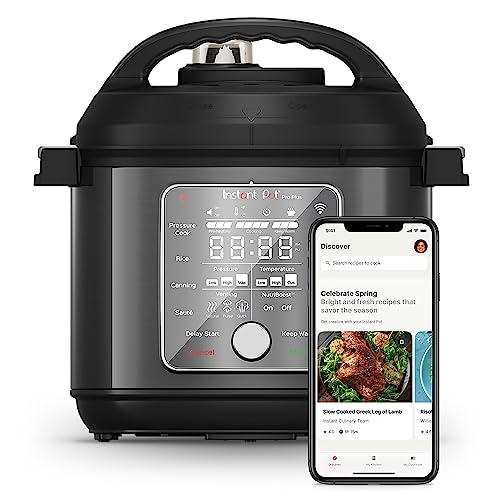 See options | 10, including canning | Stainless with an aluminum core, stovetop and oven safe to 350°F | WhisperQuiet button or the app | 1 pressure lid | App control, canning program |
Best overall
Instant Pot Pro 6 Quart
41% offBlack Friday Dealoff list price · as of 9:20 pm MT · details
Excellent all-round cooking, strong searing in a stainless pot with handles and a simple steam release switch.
- 6 quart
- 10 functions
- Stainless pot with handles
Good for
- Cooks who use it most days
- Searing and browning
Skip it if
- Anyone who wants a basic model
- Very large batches
How the multicookers actually differ
Pressure cooking is the reason to buy one
Every model here pressure cooks, and that is where these machines shine. Pressure-cooked beef stew and baked beans come out a little better than the same dishes made in slow-cook mode, in far less time. The ideal range inside the pot is roughly 236 to 245°F. Most multicookers take about 25 minutes to get a pot of water there; the quickest take about 20 and then hold the temperature steadily. Steady heat matters beyond pressure cooking, too: the models whose temperature swings the most are also the slowest in slow-cook mode, where the best finish a beef stew in about seven hours and baked beans in about four.
It also handles risotto with no stirring, unsoaked dried beans, tough cuts that fall off the bone, and pot-in-pot meals: curry in the bottom, rice in a bowl on a rack above.
Slow cooking is the weak spot
An Instant Pot is a weaker slow cooker than a dedicated one. If slow cooking is the only plan, buy a regular slow cooker. Most slow-cooker recipes convert to pressure cooking easily, with faster, less watery results. For long oven braises, a heavy Dutch oven is still the tool of choice.
The Pro has a specific quirk here. Its slow cook setting is built to keep an already-hot pot hot, not to heat from cold, and its temperature wanders: from a cold start, slow cook high sits around 150°F after an hour and can climb past 200°F by hour 12, while low starts near 130°F. Instant Pot doesn't publish temperature ranges for the Pro's slow cook settings, so "high" and "low" are hard to plan around. Older Duo models hold a much steadier temperature on slow cook high, close to 194°F, which is ideal for cooking dried beans gently without soaking. On the Pro, the sous vide setting is the better tool for that job: set to 190°F, it holds a steady temperature in the mid-190s for 10 hours, fine for beans though not precise enough for meat.
Sauté and sear: stainless beats nonstick
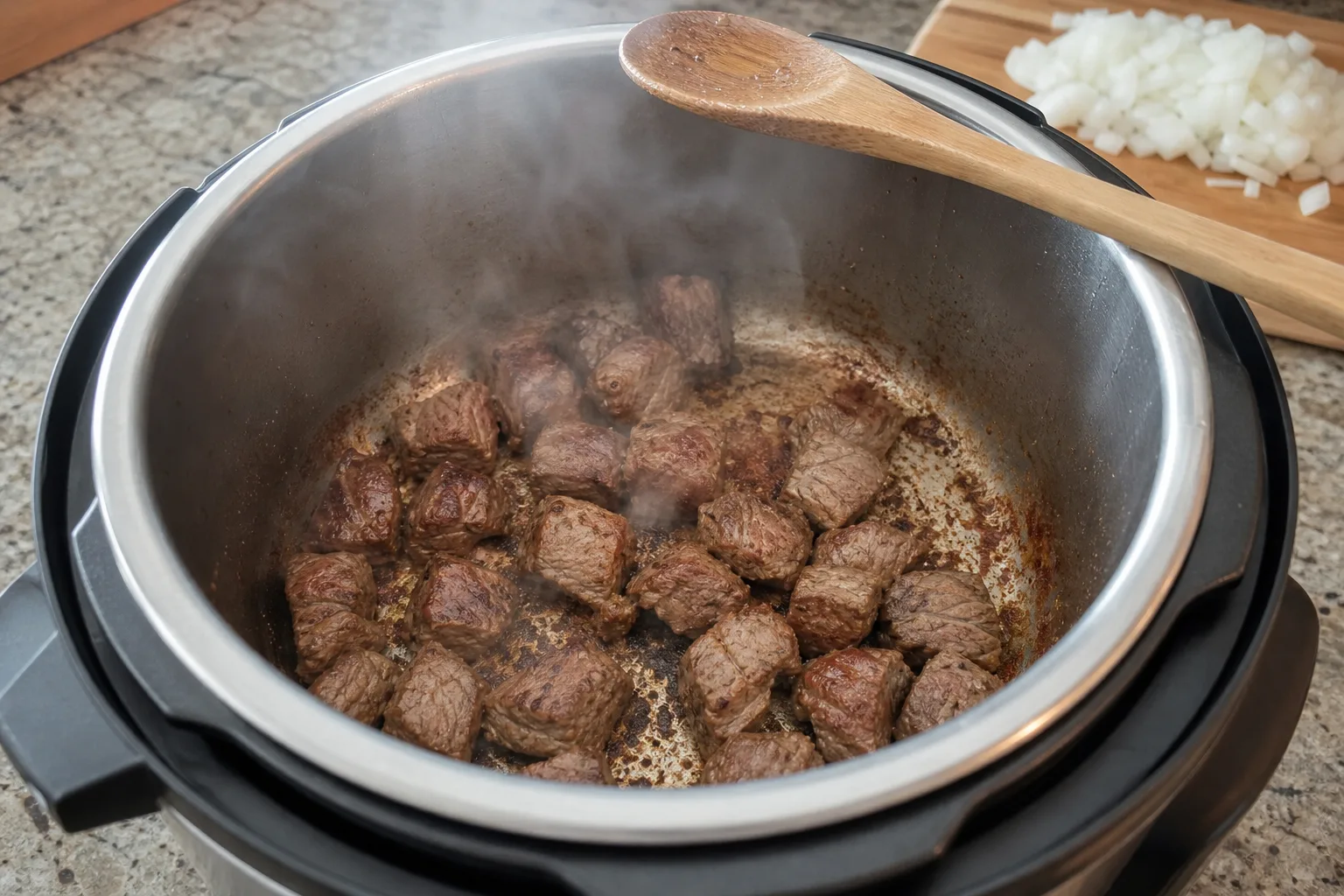
Sear performance varies widely. The better multicookers brown beef well and leave a layer of fond on the bottom of the pot, while weaker ones can barely soften onions. The good searers run hotter and use unlined stainless pots; nonstick limits fond, costing flavor, though it cleans easier. That is why multicookers with nonstick pots, such as Crock-Pot's Express Crock XL, brown less than the stainless Instant Pots. Among the Instant Pots, the Pro models sear hotter than the Duo models and add adjustable sauté heat, which works more like a stovetop burner.
Steam release is a bigger deal than it sounds
Quick release means letting a jet of very hot steam out of the lid. On many multicookers, the valve has to be held open, which puts a hand, a spoon or a pair of tongs close to the steam. A one-touch switch that latches open is far better: flip it, step away. The Instant Pot Pro 6 Quart uses a switch with a diffusing cover. The Duo Plus and Pro Plus go a step further with a button set apart from the vent, so a hand is nowhere near the steam. Older Duo versions vent from the same spot the release is turned. Fear of steam is a fair reason to pick a model; a cooker that feels safe is the one that gets used. Instant Pot's own guidance is to skip quick release for foamy or starchy foods like beans, grains, pasta and thick stews.
Lids, pots and controls
- A lid that comes off. A lid that lifts off completely is easier to clean and leaves room to stir while sautéing. A lid that only tips up on a hinge gets in the way.
- Pot handles. The handles on the Pro inner pots make lifting a full, hot pot much easier, especially for anyone with weak grip or sore hands, and they stop the pot from spinning while you stir.
- A flat-bottomed, marked pot. The Pro insert has a flat bottom and fill measurements on the side. Older Duo pots are slightly higher in the center, so small amounts of rice or quinoa can cook unevenly.
- Condensation. Older Duo models can fill the small condensation cup within a few hours of a long cook and drip onto the counter; the Pro doesn't.
- Auto-sealing lid. The Pro lid switches itself to Seal when it locks in place. When slow cooking or using sous vide, set it back to Vent, or pressure and heat can build more than expected. A regular pot lid avoids the issue for anything that isn't pressure cooking.
- Clear controls. Text-labeled buttons and a display that shows preheating, cooking and when the lid can open beat cryptic icons and flashing lights. Every Instant Pot stays locked while there's pressure inside.
- Presets don't matter much. A preset is only a stored cooking time; it can't know whether eggs came from the fridge or the counter. Instant Pots remember the last time used on each program.
How to choose
Size: 3, 6 or 8 quarts
The 6-quart size is the right starting point for most households. It handles four to six portions and still cooks small amounts for one or two, while a 3-quart can't stretch up to a big batch. The 8-quart makes sense for large families, big roasts, bulk cooking for the freezer or processing a garden harvest into sauce. Bigger models are heavier, so without a permanent spot on the counter, check the weight and measure the cabinet first.
Air fryer lid or not
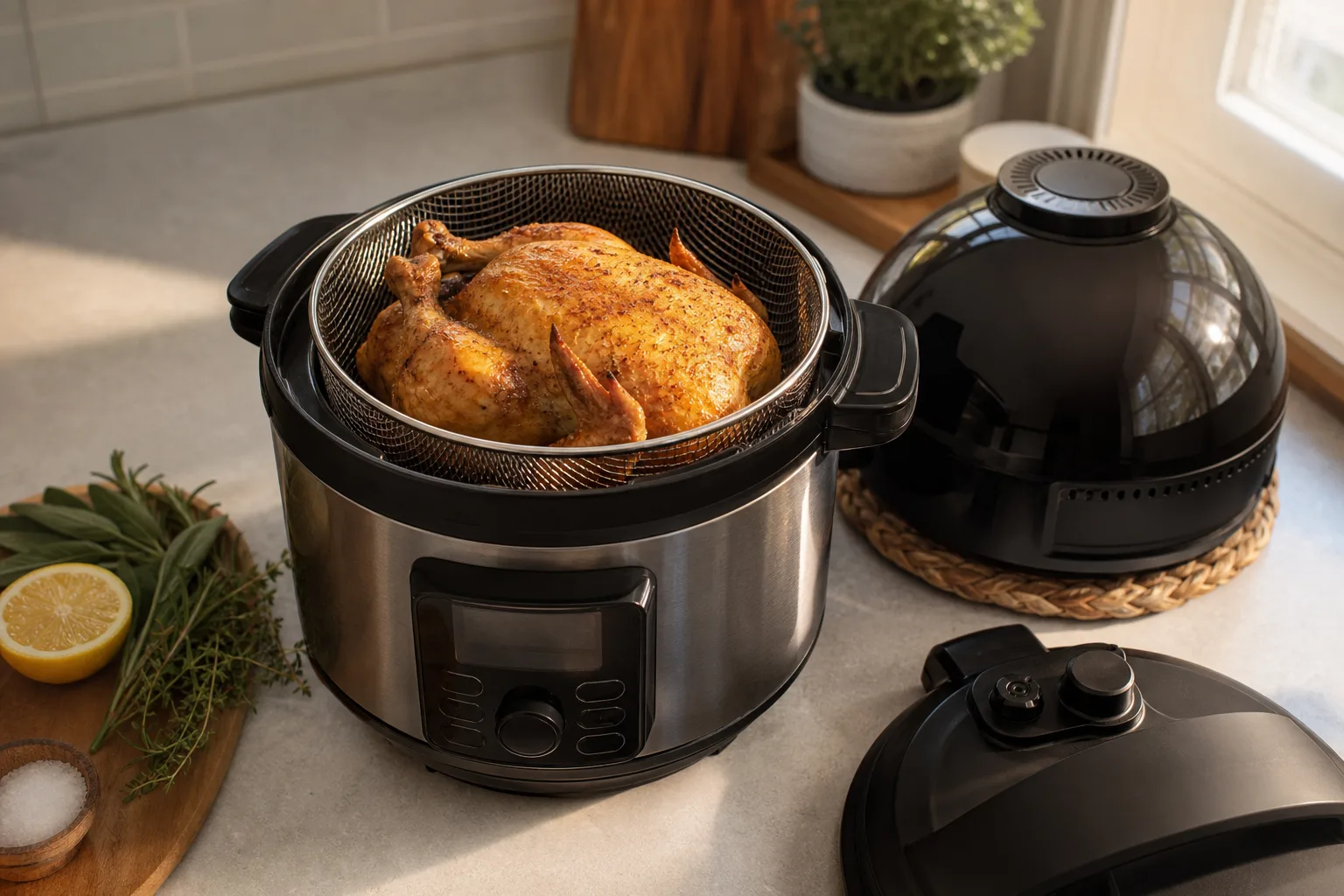
The Crisp models add a second lid with a fan and heater. That lid is good for combination cooking: pressure cook a whole chicken until tender, then crisp the skin; brown the cheese on a casserole or baked pasta; or dehydrate a small batch of fruit, such as a single container of strawberries. It's no substitute for a full dehydrator, and Crisp models are bulkier, heavier and need storage for both lids. Anyone who already owns an air fryer can buy a standard Instant Pot and finish dishes in the air fryer drawer instead; see the air fryer guide for that route.
Basic or Pro
Start basic unless the cooker will clearly be used daily; the Duo and Duo Plus cover everyday cooking. The Pro models add a bigger display, hotter and slightly faster cooking, the handled pot and adjustable sauté, extras that pay off for cooks who barely use the stove.
Other features worth checking
- Steaming. Some models steam without pressure, like a regular steamer, while others pressure-steam, which changes timing and can overcook fish or vegetables. Check the manual for the exact model.
- Spare sealing rings. The silicone ring wears out; once it is slack or brittle, the pot may not come to pressure. Keep a spare, and consider a spare inner pot for back-to-back meals.
- Read the manual first. The box has little instruction; full manuals for each model are on the maker's site.
Best basic starter
Instant Pot Duo 6 Quart
The simplest way into pressure cooking, with a stainless pot, seven functions and the size that suits most households.
- 6 quart
- 7 functions
- Stainless pot
Good for
- First-time owners
- One to six people
Skip it if
- Hard searing
- Anyone nervous about steam
The picks in detail
Instant Pot Pro 6 Quart: best overall
The Instant Pot Pro 6 Quart gets everything that matters right: excellent pressure-cooked results, better-than-average slow cooking, a stainless pot that builds fond, grip handles for lifting, clear controls and a steam release switch you set and walk away from. High and low pressure cook just like the Duo, and the interface is a little more complex but intuitive. The catch is slow cooking from cold, where its temperature drifts; the sous vide setting is the steadier option for low, slow jobs like beans. It has 10 functions and 28 programs, and the 6-quart size suits most households. Large families and batch cooks can look for the 8-quart version of the same Pro.
Best overall
Instant Pot Pro 6 Quart
41% offBlack Friday Dealoff list price · as of 9:20 pm MT · details
Excellent all-round cooking, strong searing in a stainless pot with handles and a simple steam release switch.
- 6 quart
- 10 functions
- Stainless pot with handles
Good for
- Cooks who use it most days
- Searing and browning
Skip it if
- Anyone who wants a basic model
- Very large batches
Instant Pot Duo 6 Quart: best basic starter
The Instant Pot Duo 6 Quart is the plain version that made the brand famous: seven functions, a stainless steel pot and the same pressure cooking that is the real point of any Instant Pot. It's the sensible way to see if a multicooker becomes a habit before moving up to a model with more features. It sears less hard than the Pro. Older Duo versions vent from the same spot the release is turned, so check the lid design and keep hands clear when venting.
Best basic starter
Instant Pot Duo 6 Quart
The simplest way into pressure cooking, with a stainless pot, seven functions and the size that suits most households.
- 6 quart
- 7 functions
- Stainless pot
Good for
- First-time owners
- One to six people
Skip it if
- Hard searing
- Anyone nervous about steam
Instant Pot Duo Plus 6 Quart: best for nervous beginners
The Instant Pot Duo Plus 6 Quart sits at the top of the entry range. Its WhisperQuiet steam release is a one-touch button placed away from where the steam comes out, and its angled display is easy to read and shows preheating, cooking and when it is safe to open the lid. It is the easiest Instant Pot to learn on, with nine functions including sous vide.
Best for nervous beginners
Instant Pot Duo Plus 6 Quart
A quiet push-button steam release away from the vent and a clear display that shows when the lid is safe to open.
- 6 quart
- 9 functions
- WhisperQuiet release
Good for
- New users wary of steam
- Everyday family cooking
Skip it if
- Air frying
- Pro-level searing
Instant Pot Duo Crisp 8 Quart: best with an air fryer lid
The Instant Pot Duo Crisp 8 Quart comes with a pressure lid and an air fryer lid, and it has a long track record as a reliable workhorse with simple, intuitive controls. Its 11 functions include air fry, roast, bake and dehydrate. For most buyers who want the two-in-one, it's the one to start with. Instant Pot also made a Pro Crisp that runs hotter for searing and air frying and has a handled inner pot, but it is often hard to find new.
Best air fryer combo
Instant Pot Duo Crisp 8 Quart
A reliable two-lid combo with simple controls that pressure cooks, then crisps, roasts or dehydrates in the same pot.
- 8 quart
- 11 functions
- Two lids
Good for
- Crispy chicken skin and browned casseroles
- Small-batch dehydrating
Skip it if
- Tight storage
- Anyone who already owns an air fryer
Instant Pot Pro Plus 6 Quart: canning program and Wi-Fi
The Instant Pot Pro Plus 6 Quart is the only model in the lineup with a canning program, and it adds Wi-Fi control through the Instant Connect app, a WhisperQuiet release button and a stainless pot with an aluminum core that can go on the stovetop or in the oven up to 350°F. Before buying it for canning, know that the National Center for Home Food Preservation does not support using USDA canning processes in electric multicookers, including ones with canning buttons. Read Instant Pot's directions and current food-safety guidance carefully. For everyone else, the app is optional, and the Pro covers the same cooking without it.
Most connected
Instant Pot Pro Plus 6 Quart
The only Instant Pot here with a canning program, plus app control and a stovetop- and oven-safe pot.
- 6 quart
- 10 functions
- Wi-Fi
Good for
- App control from a phone
- A pot that moves to the stove or oven
Skip it if
- Buyers who don't want tech in the kitchen
- Canning low-acid foods without checking food-safety guidance
Who should buy which
- New to pressure cooking: the Instant Pot Duo 6 Quart, or the Duo Plus if steam is a worry.
- Cooks most days and wants the best searing: the Instant Pot Pro 6 Quart, or the 8-quart Pro for big batches.
- Wants crispy finishes from one appliance: the Instant Pot Duo Crisp 8 Quart.
- Wants app control or the canning program: the Instant Pot Pro Plus 6 Quart.
- Mainly makes rice? A dedicated rice cooker may be the better fit.
Posted by Kristopher Larson
Deal badges come from Amazon. Product prices and availability are accurate as of the date/time indicated and are subject to change.
Frequently asked questions
What size Instant Pot should I buy?
A 6-quart suits most households. It cooks four to six portions and still handles small meals for one or two. Choose an 8-quart for large families, big roasts or freezer batch cooking, and a 3-quart only if space is tight and you never cook big batches.
What is the difference between the Instant Pot Duo and the Instant Pot Pro?
The Pro runs hotter for searing, comes to pressure a little faster, and adds a larger display, adjustable sauté heat and an inner pot with handles. The Duo is simpler, and it pressure cooks just as well for everyday meals.
Is an Instant Pot with an air fryer lid worth it?
It is worth it if you want to pressure cook and then crisp in one pot, such as tender chicken with crisp skin or a casserole with browned cheese. If you already own an air fryer, a standard Instant Pot plus the air fryer does the same job and takes less storage space.
Is an Instant Pot a good slow cooker?
It works, but a dedicated slow cooker usually does a better job, and results vary by model. The Pro's slow cook setting is meant to keep a hot pot hot and drifts in temperature from a cold start; its sous vide setting holds a steadier low temperature. Pressure cooking is where these machines excel, and most slow-cooker recipes convert to it easily.
Can you can food in an Instant Pot?
The Pro Plus is the only Instant Pot in this guide with a canning program. The National Center for Home Food Preservation does not support using USDA canning processes in electric multicookers, including models with canning buttons, so check current food-safety guidance before canning in one.
How often should you replace the Instant Pot sealing ring?
Replace it when it becomes stretched, loose or brittle, or when the pot struggles to come to pressure. Many owners keep a spare ring on hand, and some keep separate rings for savory and sweet dishes because the silicone holds odors.
Keep reading
More from the blog
Mr. Heater Portable Buddy vs. Big Buddy for a Winter Power Outage: What Each Heats and What the Manuals Require
Best Under-Sink Reverse Osmosis System: Waterdrop vs. APEC vs. iSpring vs. Frizzlife

How to Make Beer at Home: Beer Making Kits, Fermenters and Machines