
Ecovacs Goat O1000 RTK: The Future of Autonomous Lawn Mowing
Ecovacs Goat O1000 RTK specs, how RTK positioning works, step-by-step antenna placement, and when an antenna-free LiDAR mower like the O1000 LiDAR PRO is the better buy.
The ECOVACS Goat O1000 RTK is a wire-free robot mower for lawns up to about a quarter acre. It finds its position with RTK satellite correction, which means one extra piece of hardware most buyers have never set up before: a reference antenna on a pole somewhere in the yard. Where that antenna goes decides how well the mower works. This guide covers the O1000's specs, how RTK works, a step-by-step antenna setup, and when an antenna-free mower is the better buy.
As an Amazon Associate, Best Utah Real Estate earns from qualifying purchases.
Quick Verdict
- Buy the ECOVACS Goat O1000 RTK if the lawn is open, up to about a quarter acre, and there is a spot with clear sky where the antenna can stand.
- Pick the Goat O1000 LiDAR PRO if the yard is full of tall trees or tucked between houses. It maps with LiDAR and needs no antenna at all.
- Pick the Segway Navimow i105N for a smaller lot (about 1/8 acre) that still wants RTK straight lines at a lower price tier.
- Pick the Mammotion LUBA mini 2 AWD 1500H for a hilly yard. Its all-wheel drive is rated for 80% slopes, far beyond the O1000's 45%.
Goat O1000 RTK Specs at a Glance
ECOVACS lists these figures on its official O1000 RTK page:
- Lawn size: up to 1/4 acre (about 10,900 sq ft), at roughly 1,500 to 1,900 sq ft per hour depending on mode.
- Cutting width: 8.66 inches. Cutting height 1.2 to 3.2 inches, set by hand on the mower rather than in the app.
- Navigation: RTK satellite positioning, a camera and a 3D time-of-flight sensor for obstacles.
- Slope: up to 45% (24°) inside the mowing area. ECOVACS lists a much lower 17% limit along the virtual boundary, so steep edges are a weak spot.
- Narrowest passage: about 2.3 feet, enough for most side yards.
- Battery: 18V, 4,000 mAh, about 65 minutes of mowing per charge and about 100 minutes to recharge.
- Weather: IPX6 rating for the mower, dock and antenna. Noise is listed at 57 dBA.
 ECOVACS Goat O1000 RTKCheck today’s price on AmazonBuy on Amazon →
What RTK Does and Why the Antenna Matters
Plain GPS on a phone is only accurate to several feet, which is useless for mowing a straight line next to a flower bed. RTK (real-time kinematic) fixes that with a second receiver that stays still. The reference antenna knows exactly where it is, measures the error in the satellite signals, and sends a correction to the mower. With that correction the mower can place itself within a couple of centimeters, so it can run neat parallel stripes and trace the edges of a map drawn in the app.
The weak point is the sky. Both the antenna and the mower need to see enough satellites at once. Large trees, a tall house wall or a covered patio can block the view, and when the signal drops the mower has to lean on its camera and sensors or stop and wait. That is why the antenna setup matters more than anything else in the box.
RTK Antenna Setup, Step by Step
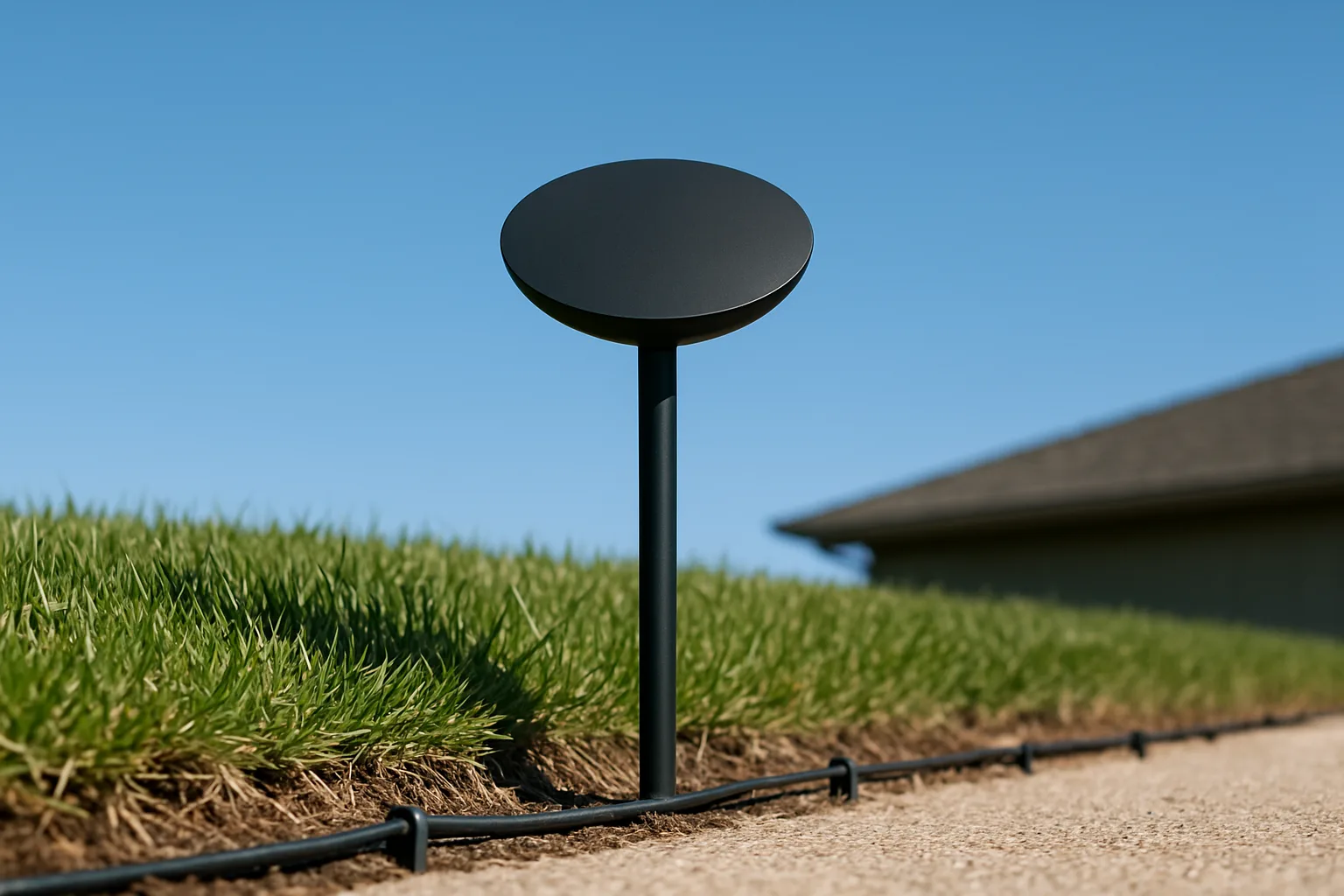
The O1000 RTK ships with the antenna, two mounting poles, a ground base with a stake, and cable clips and pegs. ECOVACS lists the antenna's power cable at about 10 meters (33 feet), and a 10-meter extension cable is sold separately, so measure the distance to the outlet before choosing a spot.
- Pick the most open spot available. ECOVACS support says the antenna must sit in an open, unobstructed area, because houses and trees block the signal. Its RTK placement FAQ also says nothing should cover the antenna from above.
- Keep it away from walls and big trees. ECOVACS help pages recommend more than 2 meters (about 6.6 feet) of clearance from walls and large trees. More is better.
- Stand it upright on firm ground. The pole must be vertical, not tilted. Soft or wet soil can let it lean over time, which throws off the position.
- Consider going higher. A roof or wall mount is allowed if the same open-sky rules are met, and ECOVACS sells a wall mount. Higher placement often clears a fence line or a neighbor's tree. Use a safe ladder setup for any high install.
- Route and pin the cable. Run the cable along a fence or bed edge and pin it with the included pegs so the mower and foot traffic never catch it.
- Check the signal light. After powering on, wait about a minute. A steady RTK indicator means the position signal is stable.
- Map only after the antenna is final. Moving the antenna later can shift the map, so settle the location before running the first mapping pass.
Common antenna mistakes
- Tucking it behind a shrub or under an eave to hide it. It needs open sky above, not a hiding place.
- Mounting it right against the house wall, where the building blocks half the sky.
- Staking it in loose mulch, where it slowly tips.
- Leaving slack cable across the lawn.
Dock Placement and Mapping
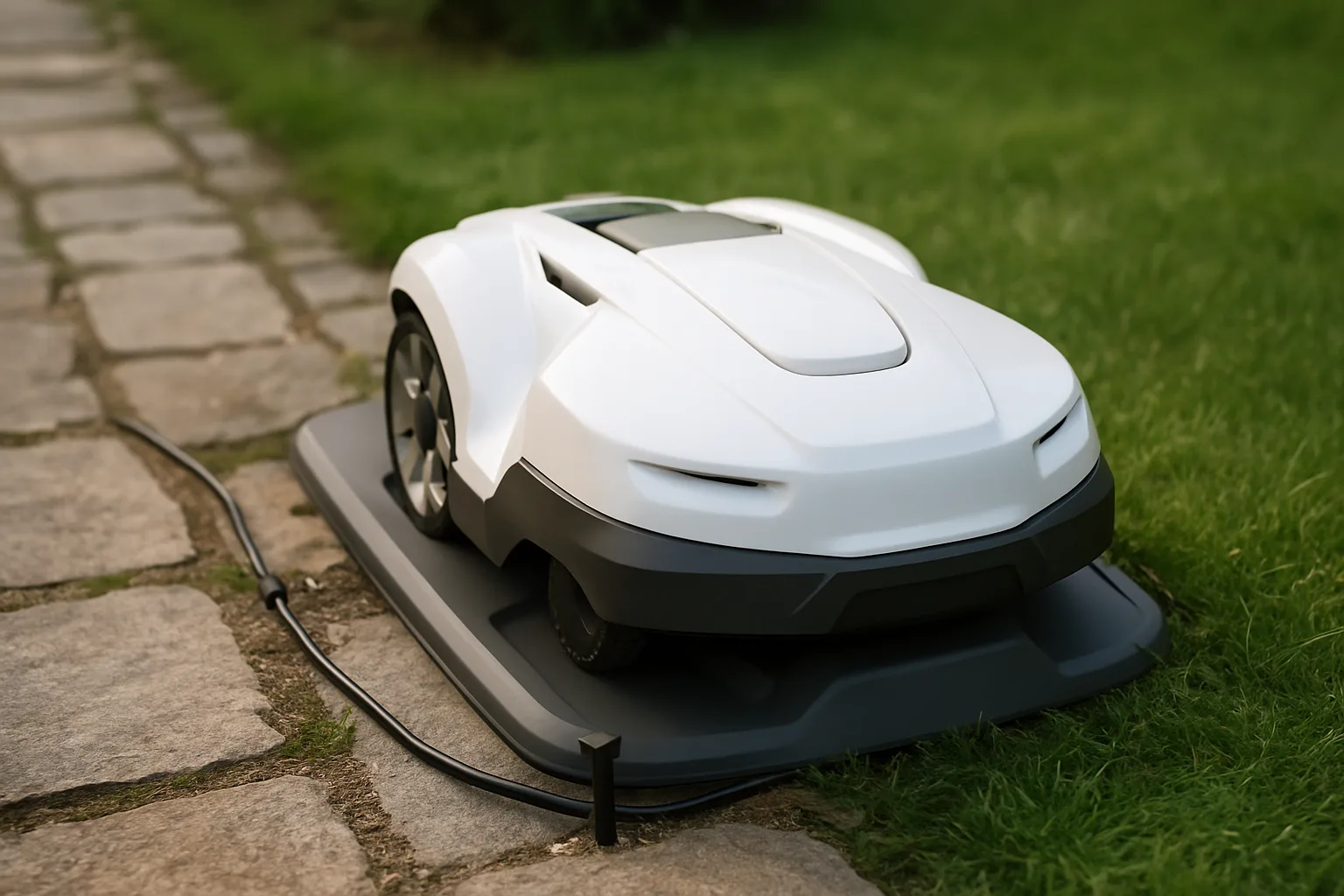
The charging dock should sit on flat, firm ground at the lawn edge, with its 5-meter power cable within reach of an outdoor outlet and good Wi-Fi coverage for app control. The O1000 maps the lawn on its own: it drives the yard, finds the edges with its camera, and builds a map that can be split into zones, merged, or fenced off with no-go areas in the app. Each zone can get its own cutting speed, obstacle height setting and mowing direction.
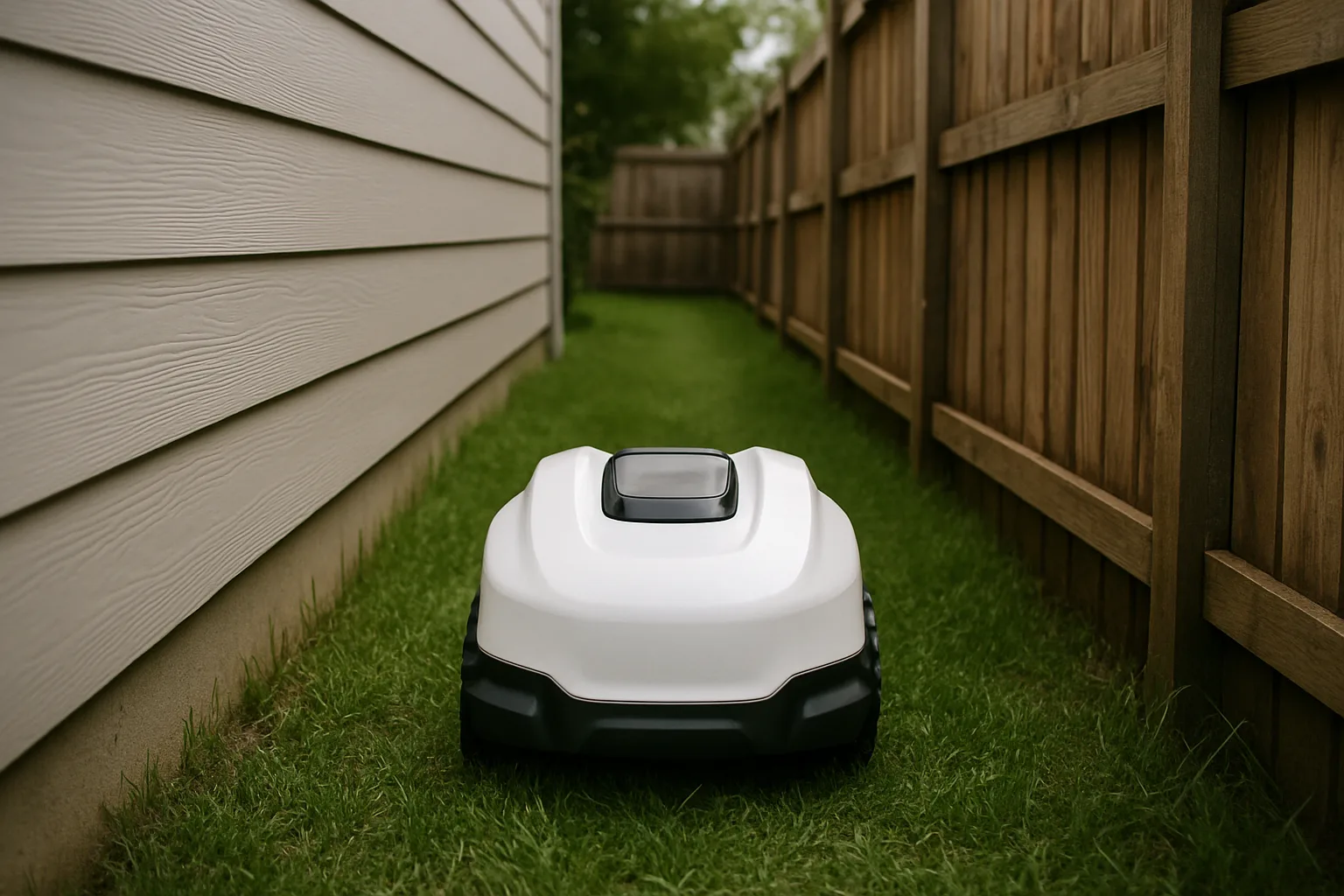
Tight spots are where mapping usually needs help. Narrow strips beside an air conditioner, gaps between a fence and a shed, and corners under dense trees can confuse auto mapping. The app lets the owner drive the mower by hand to trace those boundaries. Very long grass also slows things down, so mowing the lawn short once before the robot takes over helps the first runs go smoothly.
How the O1000 RTK Compares
| Model | Shop | Navigation | Lawn size | Slope | Antenna to install? |
|---|---|---|---|---|---|
| ECOVACS Goat O1000 RTK | Buy on Amazon
| RTK + camera + 3D ToF | 1/4 acre | 45% (24°) | Yes |
| ECOVACS Goat O1000 LiDAR PRO |  Buy on Amazon Buy on Amazon
| 360° dual LiDAR + AI vision | 1/4 acre | See listing | No |
| Segway Navimow i105N |  Buy on Amazon Buy on Amazon
| RTK + vision | 1/8 acre | See listing | Yes |
| Mammotion LUBA mini 2 AWD 1500H |  Buy on Amazon Buy on Amazon
| 360° LiDAR + dual-camera vision | 0.37 acre | 80% | No |
ECOVACS Goat O1000 LiDAR PRO
This sibling covers the same quarter-acre lawn but drops RTK entirely. A 360-degree dual-LiDAR system maps the yard and, according to ECOVACS, holds about 2 cm positioning under trees and near fences, the exact places where satellite mowers lose signal. It also adds a built-in edge trimmer for driveways and bed borders. For a shaded yard, it avoids the whole antenna question.
ECOVACS Goat O1000 LiDAR PROCheck today’s price on AmazonBuy on Amazon →
Segway Navimow i105N
The i105N is a common entry point for RTK mowing. It pairs RTK with a 140-degree camera, maps with AI assistance, manages up to 12 zones and is rated for about 1/8 acre. It also ships with a GNSS antenna kit, so the same placement rules above apply. It suits small suburban lots with reasonably open sky.
Segway Navimow i105NCheck today’s price on AmazonBuy on Amazon →
Mammotion LUBA mini 2 AWD 1500H
For sloped yards, the LUBA mini 2 AWD is a different class of machine. It combines 360-degree LiDAR with two cameras, uses all-wheel drive rated for 80% slopes, steps over curbs and roots up to about 45 mm, and handles up to 0.37 acre across 20 zones. It sits in a higher price tier than the O1000.
Living With It: Maintenance and Limits
- Blades: the small pivoting blades on the cutting disc dull over time and are cheap to swap with a screwdriver. Check them every few weeks in peak season.
- Cleaning: brush clippings off the underside and wipe the camera window so obstacle detection stays reliable.
- Mow often: like most robots, it takes a little off at a time. Frequent short sessions leave fine clippings that settle back into the turf.
- Edges: the edge-mowing mode gets close along hard borders, but steep banks and soft bed edges may still need a string trimmer now and then.
- Winter: in cold climates, charge the battery, clean the mower and store it indoors. Leave the antenna in place only if the manual allows it for the off-season.
Who Should Buy the Goat O1000 RTK
Good fit: open or lightly treed lawns up to a quarter acre, a homeowner willing to plan the antenna location, and a yard where straight stripes and app-drawn zones matter.
Look elsewhere: heavy tree cover or a lawn boxed in by tall houses (an antenna-free model like the eufy E18 and E15 or the O1000 LiDAR PRO fits better), steep hills, or properties well over a quarter acre. For big acreage, the Yarbo review covers a heavy-duty RTK platform with a much larger base station. Owners who want leaf pickup as well should read the Mammotion Yuka sweeper guide, and anyone still weighing a robot against a push mower can compare the battery lawn mower picks.
Bottom Line
The Goat O1000 RTK is a capable quarter-acre mower whose results depend on one decision: where the antenna stands. Give it open sky, firm ground and clearance from walls and trees, and it can mow precise stripes on its own schedule. If the yard can't offer that, an antenna-free LiDAR or vision mower is the simpler choice.
Posted by Kristopher Larson
Frequently asked questions
Where should the Ecovacs Goat O1000 RTK antenna go?
In the most open spot available, with clear sky above and nothing covering it. ECOVACS recommends more than about 2 meters (6.6 feet) of clearance from walls and large trees, an upright pole and firm ground. A roof or wall mount is allowed if the same open-sky conditions are met.
How long is the RTK antenna cable on the Goat O1000?
ECOVACS lists the RTK station's power cable at about 10 meters (33 feet). A 10-meter extension is sold separately, so measure from the outlet to the planned antenna spot before installing.
How do you know the Goat O1000 RTK signal is working?
After the antenna is powered on, wait about a minute. A steady RTK indicator light means the position signal is stable. If it keeps flashing, the antenna likely needs a more open location.
Does the Goat O1000 RTK need a boundary wire?
No. It maps the lawn on its own using RTK positioning plus a camera, and the boundaries, zones and no-go areas are edited in the ECOVACS app. The trade-off is the antenna, which takes the place of the buried wire.
How big a lawn and how steep a slope can the Goat O1000 RTK handle?
ECOVACS rates it for lawns up to a quarter acre and slopes up to 45% (24°) inside the work area, with a lower 17% limit along the boundary. It can fit through passages about 2.3 feet wide.
What if the yard has lots of trees for an RTK mower?
Heavy tree cover and tall walls block satellite signals, which can make RTK mowers pause or drift. In that case an antenna-free model that navigates with LiDAR or cameras, such as the Goat O1000 LiDAR PRO, is usually the easier choice.
Keep reading
More from the blog

Costway Christmas Inflatables Reviewed: Snow Globe, Nativity, Santa on a Dinosaur and More

Best Christmas Tree Stand for a Real Tree: Steel vs. Plastic vs. Ratchet (Cinco, Jack-Post, Krinner)

C3 vs. C6 vs. C7 vs. C9 Christmas Lights: Which Bulb Size for Rooflines, Trees and Bushes