Best Garage Door Insulation Kit: Foam vs. Fiberglass vs. Reflective Foil
Garage door insulation kits compared: foam board, fiberglass and reflective foil, with real temperature drops, R-value limits, weight and install tips.
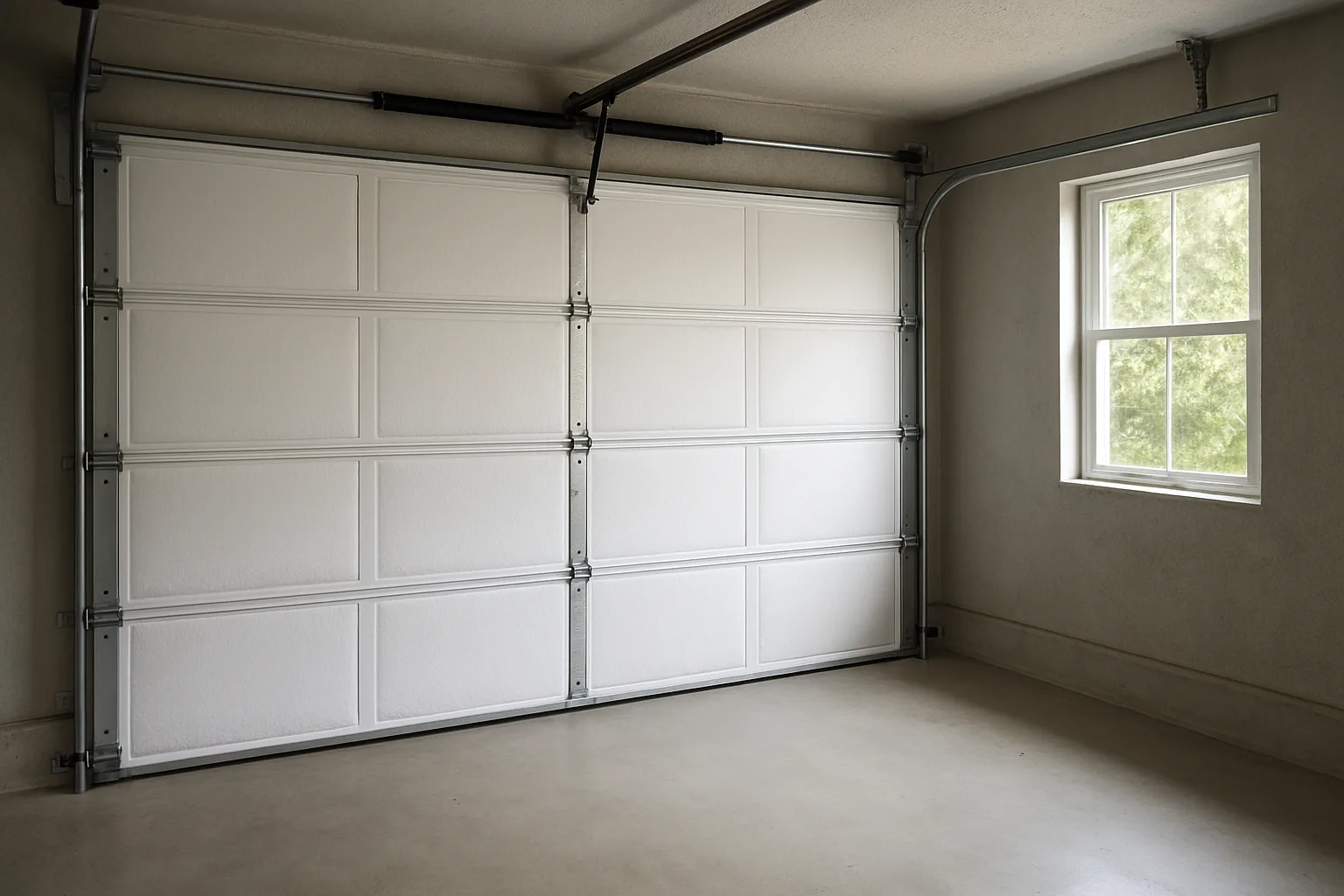
An uninsulated steel garage door is a thin sheet of metal between the garage and the weather. On a sunny afternoon the outside skin can get hot enough to burn a hand, and on a cold morning it pulls heat straight out of the space. A garage door insulation kit fixes a lot of that in an afternoon, but the three common types, reflective foil, rigid foam board and fiberglass batts, do not perform the way their R-value labels suggest.
Below: how each type handled heat, the three Amazon kits worth buying, the weight they add, install tips, and the spring check most people forget.
Quick verdict
- Best kit for a two-car door: the NASA TECH 2-Car Garage Door Insulation Kit, 18 x 8 ft. Four 2-foot rolls of white-faced foil over foam, tape, a squeegee and a knife, enough for a 16-foot door in one box.
- Best for a single door in a hot climate: the SmartGARAGE Reflective Garage Door Insulation Kit (White). One long roll of foil-faced foam with a white inside face; it took a sun-baked door surface down by 10 to 15 degrees.
- Quickest install: the Reach Barrier Reflective Garage Door Insulation Kit, 8 x 8. Pre-cut panels on adhesive pads, almost no added weight, and a clear difference in winter.
- Most heat blocked: one-inch rigid foam board, such as Owens Corning FOAMULAR NGX, cut to fit each section. It is a home-center item rather than an Amazon kit, but it beat every other type in a side-by-side heat test.
Garage door insulation types side by side
The heat-reduction figures come from a double steel door with each section heated from outside: how much cooler the inside surface read than the outside surface. A bare section only dropped from 176°F to 156°F. The Amazon kits were not all part of that test, so their rows show what installing them showed instead.
| Insulation | Shop | Type | Rated R-value | Heat result | Added weight |
|---|---|---|---|---|---|
| NASA TECH 2-Car Garage Door Insulation Kit, 18 x 8 ft |  View on Amazon | Foil-faced foam roll, white inside face | R-8 (listed) | Not measured; holds up well behind the door hardware | Light |
| SmartGARAGE Reflective Garage Door Insulation Kit (White) | 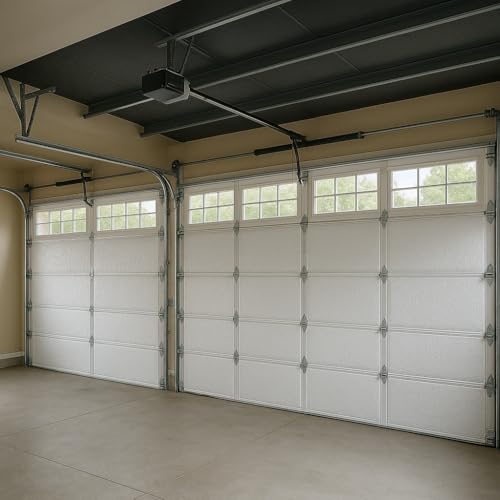 View on Amazon | Foil-faced foam roll, just under 1/4 in | R-8 (listed) | Door surface 10–15°F cooler | Light |
| Reach Barrier Reflective Garage Door Insulation Kit, 8 x 8 | 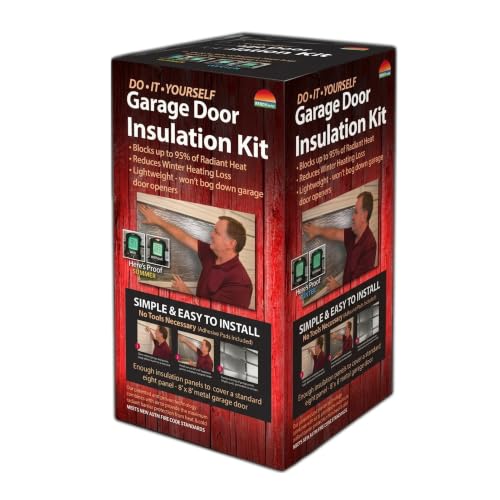 View on Amazon | Reflective panels, 5/32 in | Low | 43% (similar reflective foil); about 10°F warmer in winter | About 4 lb (double door, single layer) |
| 1 in rigid foam board (FOAMULAR NGX) | Rigid foam (XPS) | R-5 per inch | 56% | About 12 lb (double door) | |
| Fiberglass batt kit, R-8 | Vinyl-faced fiberglass | R-8 | 47% | About 24 lb (double door) | |
| 2 in foam board | Rigid foam | Not listed | 51% | About 14 lb (double door) | |
| Homemade foam-and-air cells | Two half-inch foam layers with air gaps | Not listed | 57% | About 10 lb (double door) | |
| Gap-filling spray foam | Canned expanding foam | Not listed | 45% | About 24 lb (double door) |
Best for a two-car door
NASA TECH 2-Car Garage Door Insulation Kit, 18 x 8 ft
Four rolls of white-faced foil over foam with tape, a squeegee and a knife, enough for a 16-foot door in one box.
- Four 2 x 18 ft rolls
- Foil and white faces
- Tape and tools included
Good for
- Standard two-car doors
- A clean white surface for mounting lights
Skip it if
- You don't want to trim the extra width and length
What the temperatures showed
Rigid foam won. The one-inch FOAMULAR NGX panel took an outside surface of about 205°F down to 87 to 88°F on the inside, a drop of about 117 degrees. A two-inch foam board held a section at around 185°F outside to 93°F inside. Only a homemade cell, two half-inch foam sheets separated by air pockets and sealed with foil tape, did slightly better: 208°F outside to 88°F inside. It took far more work for one extra point.
Fiberglass and spray foam landed in the middle at 47% and 45%. The spray foam also needed two cans to fill the panels when the garage was around 99°F, which is hotter than the can's recommended application range, so the first can barely expanded.
Reflective foil was the weakest against heat at 43%. On a section heated to about 175°F, the inside face read close to 100°F, a drop of roughly 75 degrees.
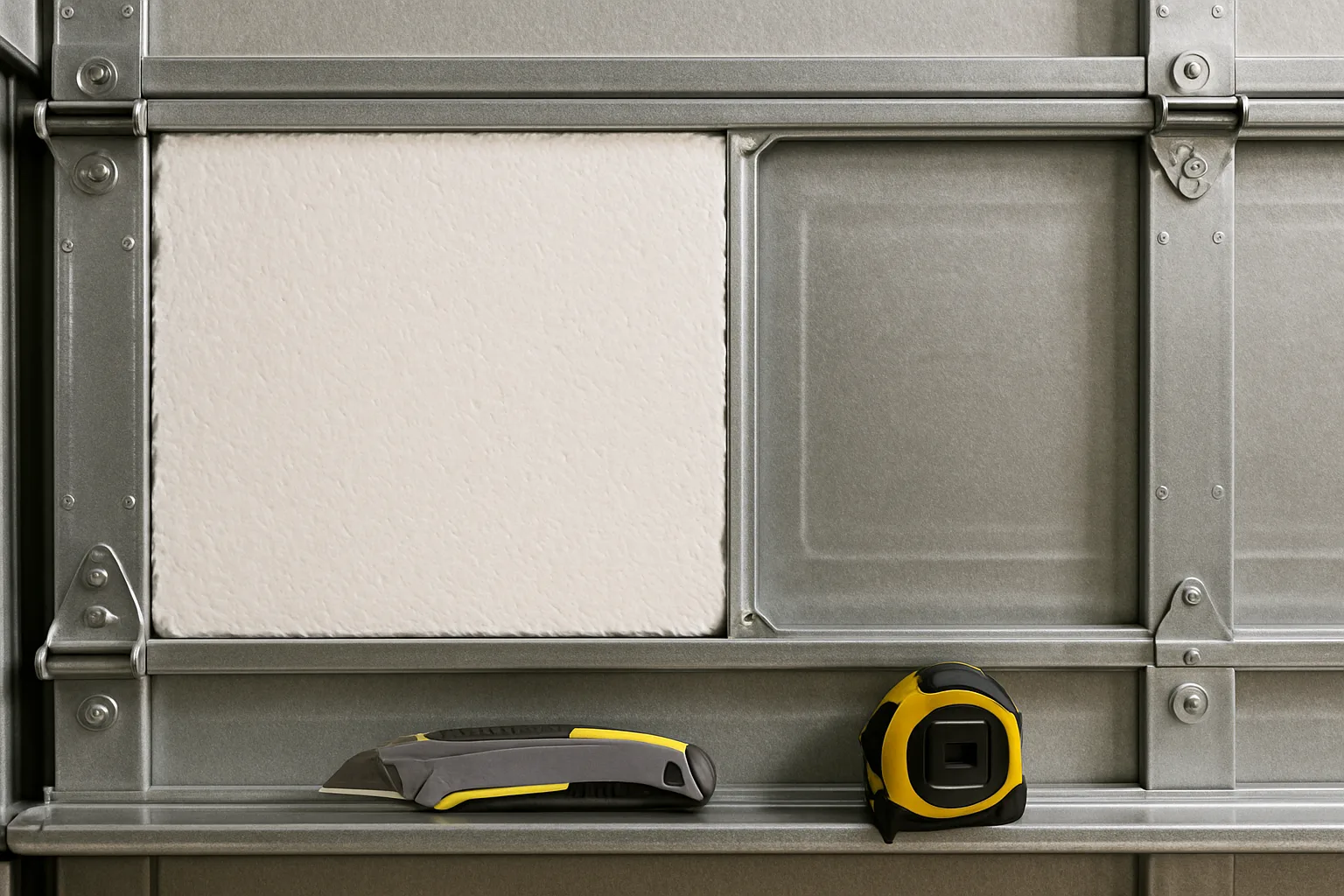
Reflective foil vs. foam board vs. fiberglass
Reflective foil
Double reflective insulation is essentially bubble wrap with foil on both faces. It is thin, cuts with household scissors and sticks on with adhesive pads. It works by reflecting radiant heat rather than slowing heat through the material, so it is the weakest of the three but by far the lightest.
Rigid foam board
Foam board comes in two common forms: white expanded polystyrene (EPS, sometimes called beadboard) and the colored extruded polystyrene (XPS) boards such as Owens Corning FOAMULAR NGX. These are sold at home centers rather than as Amazon kits. Both are cut with a utility knife and pressed into the recess of each door section. Foam gave the best mix of heat blocking, low weight and fast installation. Thickness is the limit: two-inch board was too thick to fit the panels on a standard steel door, and even one and a half inches was a tight squeeze.
Fiberglass batts
Fiberglass kits, such as the Owens Corning R-8 kit sold at home centers, come as vinyl-faced batts sized for door sections, with clips that hold each piece in place. They install in a few minutes per panel, but tie spray foam as the heaviest choice and cost the most to cover a double door.
Best for a single door in the sun
SmartGARAGE Reflective Garage Door Insulation Kit (White)
One long roll of foil-faced foam that cut a sun-baked door's surface temperature by 10 to 15 degrees.
- One 21 in x 37 ft roll
- 108 ft of tape
- Foil and white faces
Good for
- Single-car doors in hot climates
- A white or black inside face
Skip it if
- You expect an air-conditioned feel
What R-value tells you, and what it doesn't
R-value measures resistance to heat flow. The higher the number, the better the material insulates. FOAMULAR NGX is rated R-5 per inch, so a one-inch panel is roughly R-5, and an inch and a half would be about R-7.5. The fiberglass kit is rated R-8.
Even so, the R-5 foam blocked more heat than the R-8 fiberglass. A rating describes the material in a lab, not how it fits a door. Gaps at the edges, compressed batts and the bare steel frame around each section can let heat bypass the insulation. Thin reflective rolls that list R-8 deserve the same caution: the number describes a rated assembly, not a quarter inch of foam. Reflective foil earns its keep another way, because R-value doesn't capture how much radiant heat it reflects, which is why it helps more on a sun-baked door than its number suggests. Favor a material that fills each section snugly.
Door weight and spring balance
Every type except foil adds real weight: about 10 to 14 pounds for foam and about 24 pounds for fiberglass or spray foam on a double door. A garage door is meant to be lifted mostly by its springs, not the opener. Extra weight on an unbalanced door wears the opener faster.
After insulating, check the balance. Disconnect the opener, lift the door by hand to about halfway and let go. A balanced door stays where it is. If it drifts down or springs up, call a garage door technician to adjust the spring tension. It is a one-time adjustment, but torsion springs hold enough force to cause serious injury, so this is not a do-it-yourself job. Replacing a worn-out opener? Compare chain, belt and wall-mount garage door openers.
Lightest for cold weather
Reach Barrier Reflective Garage Door Insulation Kit, 8 x 8
Eight pre-cut reflective panels that kept an insulated panel about 10 degrees warmer on a late-winter day, adding almost no weight.
- 8 pre-cut 24 x 48 in panels
- 48 adhesive pads
- One 8 x 8 door per kit
Good for
- Winter warmth on a single 8 x 8 door
- Doors where added weight matters
Skip it if
- Your main goal is blocking summer heat
Don't skip the gaps around the door
Insulating the panels does little if cold air and heat leak around the edges. Before installing any kit, look at the bottom seal and the weatherstripping along the sides and top. Daylight showing under the door, a cracked or flattened bottom rubber, or gaps at the corners all let air through. A new bottom seal and side stop molding are simple fixes and can matter as much as the insulation.
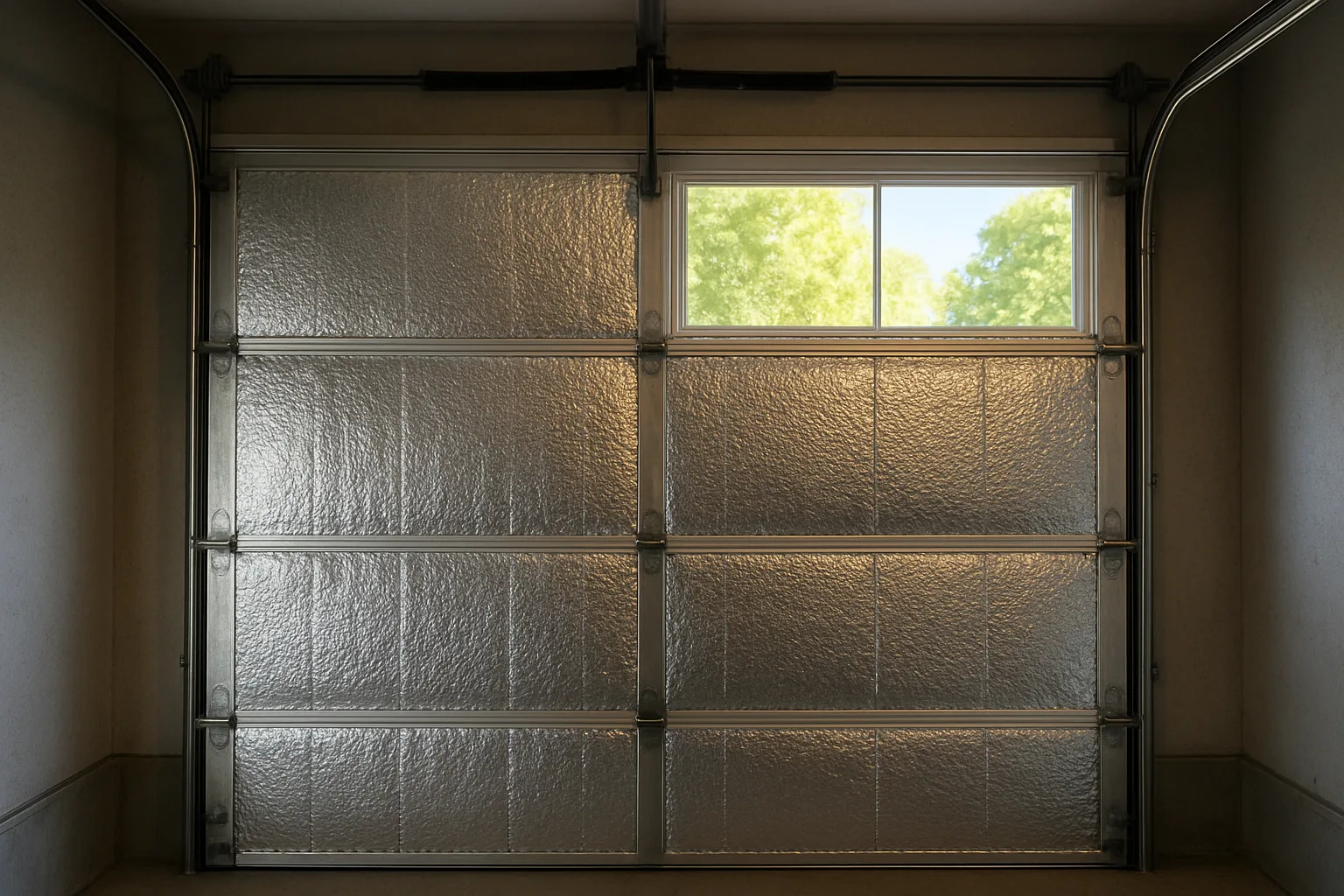
The picks in detail
NASA TECH 2-Car Garage Door Insulation Kit, 18 x 8 ft
This is the kit to buy for a standard two-car door. The box holds four rolls of 2 by 18 foot foam core with foil on one face and white on the other, plus double-sided tape, a squeegee and a knife. The rolls run a little wider and longer than a 16-foot door needs, so lay each one out, then trim the excess. Clean the door frame with rubbing alcohol before the tape goes on.
The neatest install loosens the hinges and brackets a few at a time, slides the insulation behind them, and bolts them back down so the hardware clamps the foil in place on top of the tape. Don't unbolt everything at once, or the door sections can shift. A razor run along each section slit gives a clean fit, and the foam can be trimmed around hinges instead of covering them. After a couple of weeks the tape was holding well; one strip peeled early on, and some owners add a few small screws for extra hold. The white face also makes a clean surface for mounting lights across the door. The listing says it is made in the USA.
Best for a two-car door
NASA TECH 2-Car Garage Door Insulation Kit, 18 x 8 ft
Four rolls of white-faced foil over foam with tape, a squeegee and a knife, enough for a 16-foot door in one box.
- Four 2 x 18 ft rolls
- Foil and white faces
- Tape and tools included
Good for
- Standard two-car doors
- A clean white surface for mounting lights
Skip it if
- You don't want to trim the extra width and length
SmartGARAGE Reflective Garage Door Insulation Kit (White)
SmartGARAGE ships one roll, about 21¼ inches wide and 37 feet long, of thin polyethylene foam between a reflective foil face and a white film, plus 108 feet of double-sided tape, a basic knife and a plastic scraper. One kit is meant for a single-car door; a door with 46-inch panels got about nine and a half panels out of one roll, with tape to spare. It also comes in black.
On a metal door in full afternoon sun, the outside surface read 125 to 130°F before the install and 10 to 15 degrees less after. It won't make a garage feel air-conditioned, but it cuts the heat radiating off the door. The trick that made the job easy: trim about a quarter inch off the height of each piece so it fits between the panel's top and bottom edges without bunching. Stick one corner first, then add the tape strips and roll the insulation across the panel, smoothing it by hand.
Best for a single door in the sun
SmartGARAGE Reflective Garage Door Insulation Kit (White)
One long roll of foil-faced foam that cut a sun-baked door's surface temperature by 10 to 15 degrees.
- One 21 in x 37 ft roll
- 108 ft of tape
- Foil and white faces
Good for
- Single-car doors in hot climates
- A white or black inside face
Skip it if
- You expect an air-conditioned feel
Reach Barrier Reflective Garage Door Insulation Kit, 8 x 8
Reach Barrier's kit is eight pre-cut 24 by 48 inch reflective panels with 48 adhesive pads, enough for one standard 8 by 8 foot door; a two-car door needs two kits. Both faces look the same, so either side can face out. Panels cut with scissors or a box knife, and rather than trimming every one, the bottom edge can be folded and tucked under the lip of each section so it stays put.
In cold weather it made a clear difference. On a late-winter day, a bare panel inside the garage read 59.4°F while the insulated panel read 70°F, about 10 degrees warmer. Against summer heat, reflective foil was the least effective type, but at about 4 pounds for a double door it adds almost no load.
Lightest for cold weather
Reach Barrier Reflective Garage Door Insulation Kit, 8 x 8
Eight pre-cut reflective panels that kept an insulated panel about 10 degrees warmer on a late-winter day, adding almost no weight.
- 8 pre-cut 24 x 48 in panels
- 48 adhesive pads
- One 8 x 8 door per kit
Good for
- Winter warmth on a single 8 x 8 door
- Doors where added weight matters
Skip it if
- Your main goal is blocking summer heat
Worth knowing: home-center options
Three strong options aren't sold as Amazon kits. One-inch FOAMULAR NGX foam board cut the most heat for its weight: about 205°F outside down to 87 to 88°F inside, and roughly a minute per panel to install once the pieces are cut. The Owens Corning R-8 fiberglass kit looks finished with its vinyl face and goes in a few minutes per panel, but blocked less heat than one-inch foam and adds about 24 pounds to a double door. One kit covers about half a 16-foot door. Henry's garage door kit uses rigid foam panels with one glossy face and one perforated face. Score the glossy side with a utility knife against a straightedge, snap it like drywall, then flex the panel on its perforations to tuck it into each section, bottom edge first. A double door took three kits. Work carefully around the roller brackets and pins.
Install tips
- Clean the door first. Dust the inside of each section, especially the bottom panels, so adhesive pads and tape actually stick.
- Raise the door partway. Stopping the door a little open puts the panels at a comfortable height and lets you work straight on instead of reaching overhead.
- Expect to cut. Reflective kit panels fit large sections as-is, but doors with smaller, split sections need each panel cut in half. Household scissors work for foil; foam board needs a sharp utility knife and a straightedge.
- Add tape to long panels. Corner pads alone can let the middle of a long reflective panel sag. Extra double-sided tape across the center keeps it flat.
- Fold the bottom edge. Creasing the bottom of a reflective panel and tucking it into the section gives a snug fit without trimming.
- Run the door. Open and close it fully to confirm nothing peels or catches.
Best for a two-car door
NASA TECH 2-Car Garage Door Insulation Kit, 18 x 8 ft
Four rolls of white-faced foil over foam with tape, a squeegee and a knife, enough for a 16-foot door in one box.
- Four 2 x 18 ft rolls
- Foil and white faces
- Tape and tools included
Good for
- Standard two-car doors
- A clean white surface for mounting lights
Skip it if
- You don't want to trim the extra width and length
Summer heat vs. winter cold
For a hot, sun-facing garage, rigid foam is the clear choice: it cut heat the most for the weight. Reflective foil helps on a sunny door, but much less. For winter, any of these keeps the inside face of the door warmer, and even a single layer of reflective foil raised the inside panel temperature by about 10 degrees. For a garage used as a workshop, add heat too; see the garage heater buying guide for propane, electric and mini-split options. If the door itself is due for replacement, a factory-insulated door is worth considering; how to choose a garage door for Utah's climate covers what to look for.
Who should buy which
- A two-car door in one box: the NASA TECH 2-Car Garage Door Insulation Kit, 18 x 8 ft.
- A single door that bakes in the afternoon sun: the SmartGARAGE Reflective Garage Door Insulation Kit (White).
- A light door, an older opener or the fastest job: the Reach Barrier Reflective Garage Door Insulation Kit, 8 x 8.
- The most heat blocked, whatever the effort: one-inch rigid foam board from a home center, cut to fit every section.
Posted by Kristopher Larson
Frequently asked questions
What is the best type of garage door insulation?
Rigid foam board blocks the most heat for its weight. One-inch extruded foam rated R-5 per inch cut heat through a steel door by 56%, more than an R-8 fiberglass kit (47%) or reflective foil (43%), while adding only about 12 pounds to a double door. For an Amazon kit, foil-faced foam rolls such as NASA TECH and SmartGARAGE are the easiest whole-door options.
Does a garage door insulation kit really keep the garage cooler?
Yes. A bare steel section heated to 176°F still read 156°F on the inside. Insulated sections with outside surfaces between about 175 and 208°F read roughly 87 to 100°F inside, depending on the material. Foam did the most; reflective foil the least.
Is reflective foil garage door insulation worth it?
It is the lightest and quickest option and still helps. It cut heat less than foam or fiberglass, but in cold weather a reflective kit kept an insulated panel at 70°F while a bare panel read 59.4°F. It suits doors that can't take extra weight.
Will insulation hurt a garage door opener?
Added weight can make the opener work harder if the door is out of balance. Foam adds about 10 to 14 pounds to a double door and fiberglass about 24. After installing, lift the door halfway by hand with the opener disconnected; if it doesn't stay put, have a garage door technician adjust the springs.
How many garage door insulation kits do I need for a two-car door?
It depends on the kit. Single-door kits like SmartGARAGE and Reach Barrier cover one standard 8 by 8 foot door, so a two-car door needs two. The NASA TECH 2-car kit covers an 18 by 8 foot area in one box. Check the listed coverage against your door's width and height before ordering.
How long does it take to insulate a garage door?
Usually an afternoon. Pre-cut foam board goes in at about a minute per section and fiberglass kits at a few minutes per section. Reflective kits are quick too, though doors with small or split sections need panels cut to fit. Clean the door first so the adhesive holds.
Keep reading
More from the blog

Ring Drone Cam and Rover Cam: Release Dates, Prices and What Homeowners Should Know

Best Cold Brew Coffee Maker: OXO vs. Takeya vs. County Line Kitchen
Best Portable Bluetooth Speaker: JBL Flip 7 vs. Bose SoundLink Flex vs. Soundcore