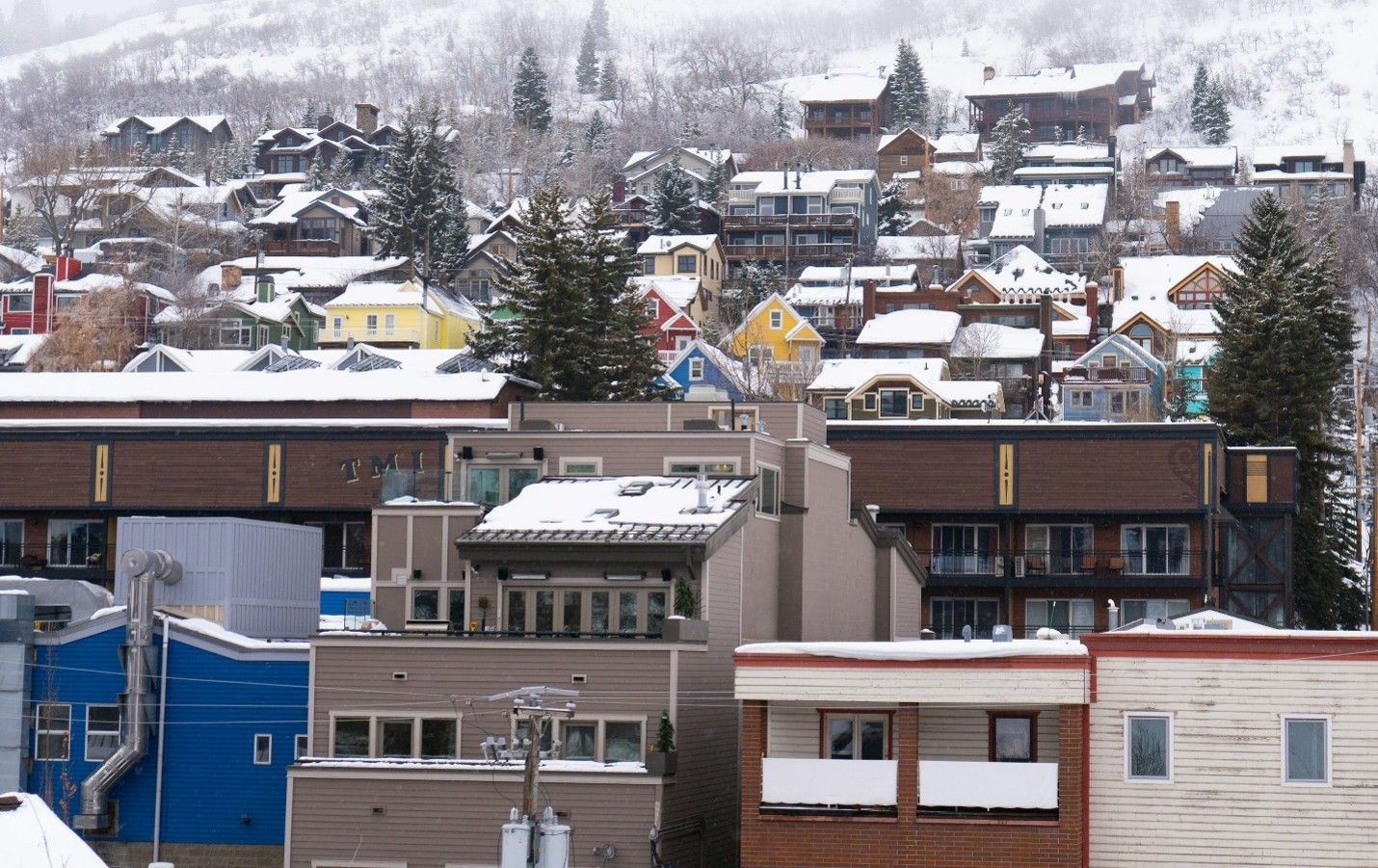
Moving to Utah: 7 Costly Mistakes to Avoid Before You Buy a Home
Moving to Utah can be a great lifestyle upgrade — but relocation buyers often make costly mistakes by focusing on the house before the lifestyle. This guide covers 7 common errors, from underestimating true housing costs to buying new construction without reading the fine print.
Moving to Utah can be a smart lifestyle move, but it can also become an expensive mistake when the decision is based on outdated assumptions. Many relocation buyers focus on the house first, then try to make the rest fit later. That approach often leads to budget strain, long commutes, and buyer's remorse.
The better approach is simpler: choose the lifestyle first, the area second, and the house third. Utah is not one-size-fits-all. Salt Lake City, Provo, Davis County suburbs, and fast-growing new construction areas can feel very different in cost, culture, pace, and convenience.
This guide covers the most common moving-to-Utah misconceptions, what to evaluate before relocating, and how to make a decision that still feels right years later.
For readers comparing communities and listings across the state, Best Utah Real Estate provides a statewide starting point for browsing Utah homes and markets.
Why Moving to Utah Requires More Planning Than Many Buyers Expect
Utah attracts families, professionals, retirees, and outdoor-focused buyers for good reasons. The state offers mountain access, strong job centers, highly regarded schools in many areas, and a quality of life that appeals to people leaving larger, more expensive markets.
But popularity has changed the math. Buyers who arrive expecting "cheap Utah" are often surprised by home prices, HOA costs, commute trade-offs, and the differences between counties and communities.
That is why relocation planning matters more in Utah than many people realize. A home that looks perfect online may create friction in daily life if it is too far from work, the airport, restaurants, schools, ski access, or the social environment a household actually wants.
Mistake #1: Assuming Utah Is Still Broadly Affordable
Utah may feel more affordable than coastal markets like California, Washington, or New York, but that does not mean it is inexpensive. Utah's statewide median sales price sits around $565,000 in Salt Lake City, which is roughly 34% higher than the national average.
That creates a common problem for relocation buyers. They assume moving to Utah will automatically lower their monthly housing cost, then discover that the payment is tighter than expected once principal, interest, taxes, insurance, and HOA dues are all included.
What to Do Instead
Build a budget around the monthly payment that feels comfortable, not just the maximum a lender approves.
Include taxes, insurance, HOA dues, utilities, and commuting costs.
Compare housing costs against the lifestyle value Utah offers, such as outdoor access, schools, or job opportunities.
Readers who want more context on Utah affordability and recent market conditions can review this Utah housing market update. For a broader look at what the 2026 market may bring, see our Utah Spring Housing Market Update.
Mistake #2: Buying Before Spending Time in Utah
Online listings are useful, but they do not show what a neighborhood feels like during rush hour, in winter, or once the excitement of moving wears off. A relocation purchase made without firsthand experience can backfire even if the house itself checks every box.
A newer home farther from the urban core might seem ideal until daily life revolves around long drives and limited nearby amenities. On the other hand, a buyer who chooses convenience near Salt Lake City may later realize more space and a quieter pace would have been a better fit.
What to Do Instead
If possible, visit Utah before buying and treat the trip like a lifestyle test, not just a home tour.
Drive the commute at realistic times
Visit grocery stores and everyday retail
Go out to dinner in the area
Walk neighborhoods
Check distance to the airport, downtown, or recreation
Notice how developed the area actually is, not just what is planned
If an in-person visit is not possible, a detailed remote process matters even more. That means neighborhood-specific virtual tours, honest local pros and cons, and more than just a filtered list of homes with the right bedroom count. Our guide on living in Salt Lake City is a good place to start for newcomers evaluating the metro area.
Mistake #3: Thinking "Outside Salt Lake County" Automatically Means Cheaper
This advice sounds reasonable because, at a broad county level, nearby counties can be less expensive than Salt Lake County. But the difference is often smaller than buyers expect, and local variation matters more than county labels.
Recent median sales price figures by county were approximately:
Salt Lake County: $562,700
Utah County: $569,900
Davis County: $569,000
Those gaps are real, but not always large enough to transform affordability. Some cities outside Salt Lake County are also notably expensive. Examples include Alpine, Highland, Kaysville, and Farmington, all of which can rival or exceed many Salt Lake County options.
Why This Matters
A lower purchase price is not the whole story. Some areas are cheaper because they are farther from job centers, less built out, or still in heavy development. That can mean:
Longer commutes
More construction nearby
Changing road patterns
Fewer amenities
Different access to the airport, downtown, or ski resorts
Buyers comparing areas can use Utah market comparison data to review pricing, days on market, and price-cut activity across multiple cities.
Mistake #4: Believing New Construction Is Automatically the Safest Choice
New construction is especially appealing to out-of-state buyers. It often offers modern layouts, clean finishes, fewer immediate maintenance worries, and a builder warranty. In Utah, many relocation buyers consider communities in places like Lehi, Saratoga Springs, Eagle Mountain, Herriman, and South Jordan because of their strong new-build presence.
But "new" does not automatically mean "simple" or "safe."
Common New Construction Surprises
Base price is not final price. Lot premiums, upgrades, and design-center selections can raise the cost significantly.
Preferred lender incentives may come with trade-offs. Buyers need to evaluate the full financing terms, not just the credit being offered.
HOA dues can add up. Many master-planned communities include monthly fees.
Property taxes may change. Early estimates are not always the long-term reality.
Road access and traffic can shift. A partially built neighborhood may function very differently once fully occupied.
School boundaries can change. This matters for families choosing based on current assignments.
Construction timelines can be long. Some builds take a year or more.
Living around construction can continue well after move-in.
The safest new construction purchase is one where the buyer understands the full cost, timeline, and community plan. For more detail on this topic, see buying new construction homes in Utah.
Mistake #5: Treating HOA Fees Like a Minor Detail
In many Utah communities, HOA dues are not a side note. They directly affect affordability, lifestyle, and resale. In 2025, more than 58% of new Utah listings included HOA fees, with a median monthly HOA cost of around $164.
HOAs are not automatically bad. In some neighborhoods they cover valuable services and amenities, such as:
Landscaping
Snow removal
Parks and playgrounds
Trails
Community amenities or events
But buyers should never ignore the restrictions and financial health behind the fee.
What to Review Before Buying in an HOA
What the HOA covers
What the HOA restricts
Whether there are rules about parking, rentals, pets, or exterior changes
Whether RVs or boats can be kept on site
How often dues have increased
Whether the association has healthy reserves
Whether special assessments are a risk
In short, buyers should compare the full monthly cost, not just the purchase price. A cheaper townhome with a meaningful HOA fee may not be a better deal than a single-family home with no HOA once the numbers are added up. Buyers who want background on governing documents can also read what bylaws and CC&Rs mean in an HOA.
Mistake #6: Waiting for a Utah Housing Market Crash Before Making Any Plan
It can be smart to wait if a buyer needs more savings, better credit, or less debt. What tends to fail is waiting for a vague "crash" without a clear buying strategy.
Utah's statewide median sales price was down less than 1% year over year, while the number of homes sold increased by 8.7% year over year and median days on market was about 53 days. That does not describe a uniform collapse.
It also does not mean every neighborhood is competitive in the same way. Some sellers may be overpriced. Some homes may sit longer. But that is different from assuming the entire state is about to become dramatically cheaper.
A Better Question Than "When Will Utah Crash?"
Instead of waiting for a headline, buyers should define what would actually make them ready. For example:
A lower monthly payment
A larger down payment
Improved credit
More inventory in a target area
A clearer understanding of neighborhoods
That creates an actionable plan. It also helps buyers move decisively if the right opportunity appears. For broad market data and official housing resources, readers can consult the State of Utah and housing research from the National Association of Realtors.
Mistake #7: Assuming Utah Is a Poor Fit for Anyone Who Is Not LDS
This is one of the most common concerns for out-of-state movers, and the simplistic answers are usually the least helpful. Religion and culture do play an important role in Utah's history and community life. By around 2025, the LDS population had dropped to slightly under 50% statewide as more people moved into Utah.
The practical takeaway is this: Utah is not one uniform culture.
Different cities and neighborhoods can feel very different socially. Salt Lake City often feels very different from Provo. Some communities may feel more traditional or more strongly influenced by LDS culture, while others feel more mixed, more urban, or more diverse.
What Matters Most
The key issue is not whether a buyer belongs to the majority religion. It is whether the specific community fits that household's expectations for:
Social life
Family culture
Neighborhood involvement
Political and cultural atmosphere
Day-to-day comfort
That is another reason an area visit matters. Reading opinions online rarely gives the same clarity as walking neighborhoods, visiting local businesses, and seeing how daily life actually feels.
How to Choose the Right Place in Utah
One of the biggest relocation mistakes is choosing a house before defining the life that house needs to support. A better framework starts with lifestyle, then narrows to geography and budget.
A Practical Utah Relocation Framework
Set the payment ceiling. Use the monthly payment that feels sustainable, not the absolute maximum qualification amount.
Define the lifestyle priorities. Mountain access, schools, job convenience, quiet suburbs, newer homes, walkability, airport access, and nightlife do not all point to the same neighborhoods.
Choose commute limits honestly. Not the commute a buyer could tolerate once, but the one they can handle every week.
Compare full housing costs. Add HOA dues, taxes, insurance, and likely utility differences.
Test the community fit. Look beyond price and square footage.
Match the purchase to the time horizon. A three-year plan and a ten-year plan may point to very different homes.
Questions Every Out-of-State Buyer Should Answer Before Moving to Utah
What monthly payment feels comfortable long term?
Which parts of Utah have actually been explored, not just searched online?
Is the move primarily about outdoor access, schools, work, space, or a slower pace?
How often will the household need to reach downtown, the airport, or ski areas?
What hidden costs could affect the decision?
What kind of community environment feels most comfortable?
Is this likely a short-term stop or a long-term home base?
Utah Relocation Checklist Before Making an Offer
Review a realistic monthly budget
Compare at least two or three target areas
Test commute times and airport access
Confirm HOA rules and fees if applicable
Understand new construction upgrade and timeline risks
Evaluate whether the neighborhood is fully built or still developing
Consider resale if the stay may be short
Prioritize lifestyle fit over listing photos
Final Takeaway
The biggest mistake people make when moving to Utah is treating the purchase like a simple house hunt. Utah relocation works best when buyers plan around real life: cost, commute, amenities, culture, and how the area will feel after the first few months.
Utah can absolutely be worth the move. But the right decision usually comes from asking better questions, not from following generic advice like "just move farther out," "buy new construction," or "wait for the crash."
The strongest relocation decisions start with one principle: buy the lifestyle first, then the location, then the house.
Frequently asked questions
Is moving to Utah still affordable compared to other states?
Should someone visit Utah before buying a home there?
Is it cheaper to live outside Salt Lake County in Utah?
Are new construction homes in Utah a safer choice for out-of-state buyers?
How common are HOAs in Utah, and do they matter?
Should buyers wait for the Utah housing market to crash before purchasing?
Can non-LDS buyers feel comfortable living in Utah?
Keep reading
More from the blog
How to Vet a Home Services Contractor in Utah
Living Near Utah's Ski Resorts: Towns, Drive Times and Trade-Offs

Staying Put After 65: Utah Programs That Help Seniors Keep Their Homes in 2026