Custom Mailbox Materials: Corten, Brass, Copper and Powder-Coated Steel
Your mailbox is an upgrade people see daily. Compare corten, powder-coated steel, brass, copper and wood accents, and learn how to match finishes to your entrance.
Everyone obsesses over kitchen backsplashes and statement light fixtures, but the front of the house gets the leftovers. Big mistake. If you want an upgrade that people see every day, take a look at handmade custom mailbox designs and the materials behind them, because what your box is made of decides whether it looks fresh in ten years or ends up in the scrap pile.
Let's break down the main players, because each one has its own personality and its own level of upkeep.
Mailbox Materials Compared
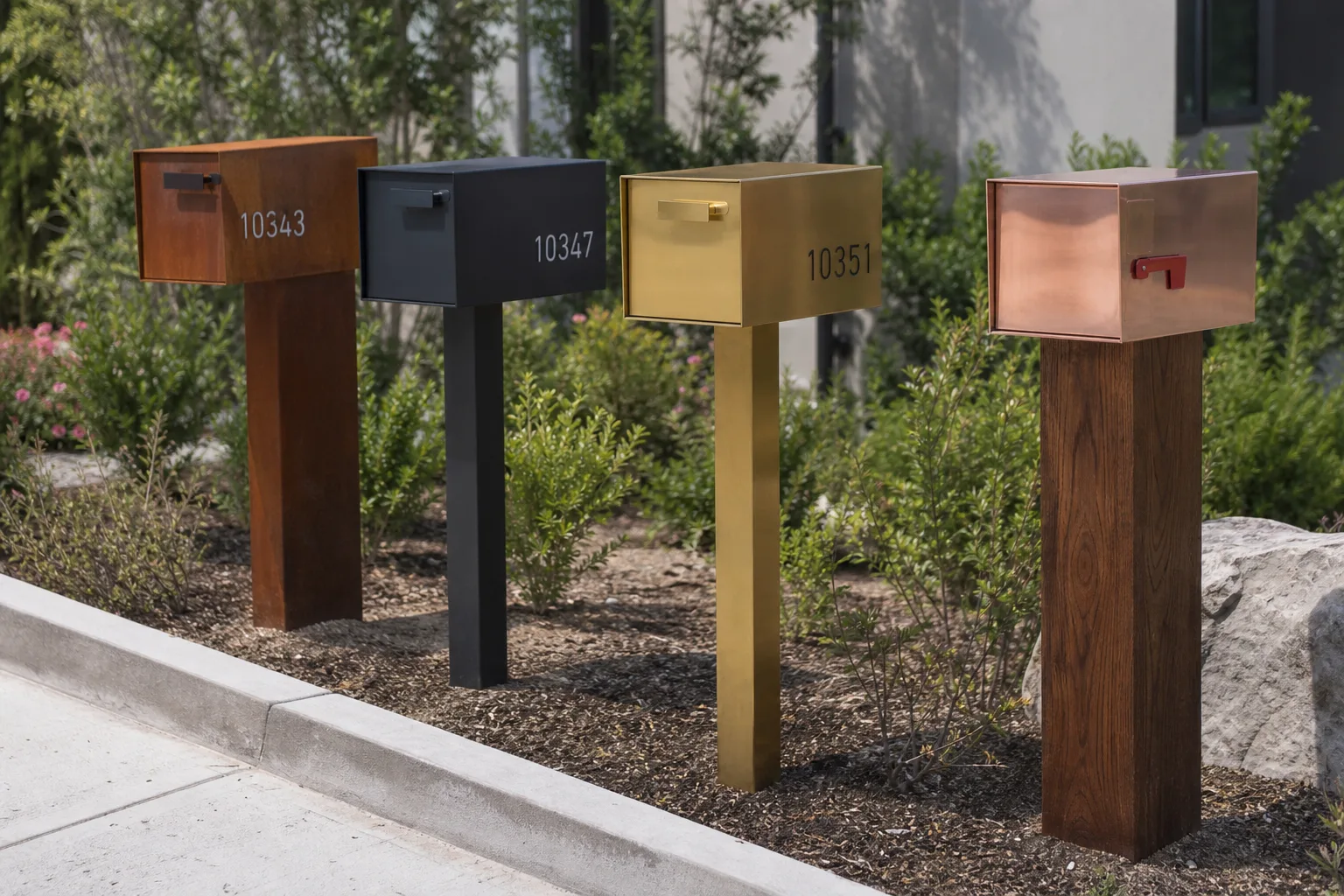
Corten Steel
Corten steel is the cool kid right now. It's weathering steel that grows a rusty orange patina on purpose, and that layer actually protects the metal underneath. No paint, no touch-ups, just a warm rustic look that fits modern and industrial homes alike. One heads-up: while the patina is forming in the first months, rain can carry some rust-colored runoff, so don't mount it right above light-colored stone or a fresh concrete step.
Powder-Coated Steel
Powder-coated steel is the workhorse. It comes in pretty much any color, holds up to the weather, and looks crisp on contemporary houses. Matte black is the crowd favorite, but deep green or charcoal can look amazing against white siding.
Brass
Brass is for folks who want a little swagger. It starts out golden and slowly darkens into a softer antique tone unless it gets a protective lacquer. It pairs beautifully with traditional homes, brick and dark front doors. Fair warning, it's a splurge.
Copper
Copper is brass's moody cousin. Over time it shifts from shiny penny to brown and eventually that classic green patina you see on old rooftops. If you love things that age with character, copper is your jam.
Wood Accents
Wood accents, like a hardwood front panel on a steel box, soften the look and work great with cedar fences or warm-toned exteriors. Just make sure the wood is a dense outdoor species and the box itself is metal, so the mail stays dry.
Match Your Mailbox to the Rest of the Entrance
Whatever you pick, match it to the hardware you already have. If your door handle, house numbers and porch lights are all matte black, a shiny brass box can look random unless you're going for an intentional contrast. Pull one or two finishes from the front of the house and repeat them. That's the trick designers use to make an entrance feel pulled together, and it costs you nothing extra.
Curb appeal matters to sellers and homeowners planning exterior upgrades alike, and it is one of the first things buyers in places like Washington, Utah notice.
Why Handmade Is Worth It
Here's the thing most people miss: handmade means you're not stuck with whatever sizes the store has on the shelf. You can ask for a wider slot for magazines, a lock, a newspaper holder, or a shape that lines up with your porch trim. That's the real difference between a box you settle for and one you actually like looking at.
Pick the material that matches how you live and how much maintenance you're willing to do. Then let the mailbox finally get the glow-up it deserves.
Frequently asked questions
What is the lowest maintenance material for a custom mailbox?
Does a Corten steel mailbox stain nearby surfaces?
Will a brass mailbox turn green like copper?
How do I choose a mailbox finish that matches my home?
Why choose a handmade custom mailbox over a store-bought one?
Keep reading
More from the blog
Closing Costs in Utah: Who Pays What, Buyer and Seller, Line by Line

The Point in Draper: What Buyers Nearby Should Know Before Counting on It
Decoding the HVAC Maintenance Clause in Your Lease Agreement