
bds
|
ba
|
sqft
ac lot
|
car garage
|
|
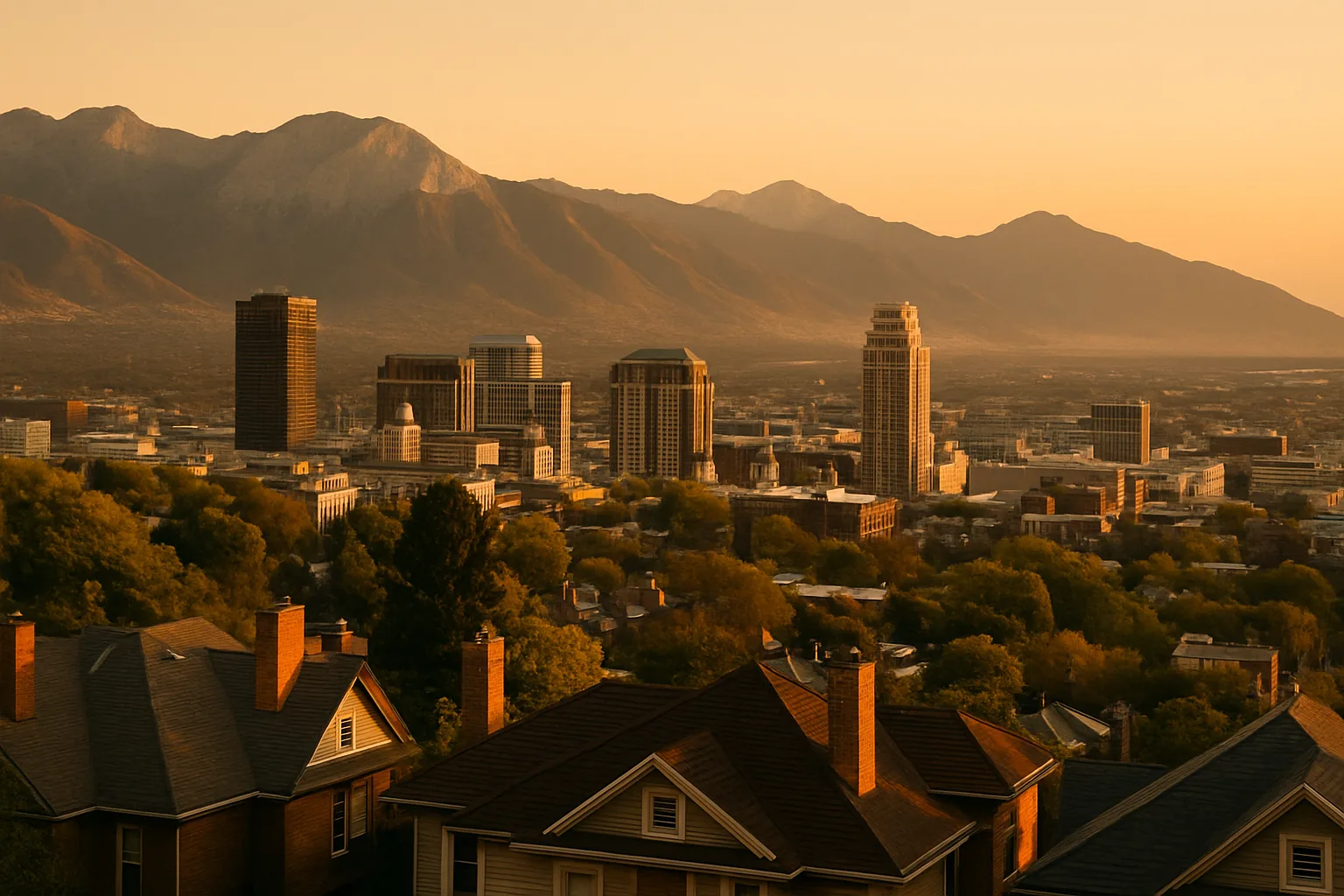
Utah
Salt Lake City Utah Homes for Sale
Live MLS listings, market trends, and neighborhood data for Utah's capital — updated continuously. Browse Salt Lake City homes for sale across 910 active listings from the Avenues and Capitol Hill to Sugar House, the East Bench, and the west side, with a median sale price of $540,000 in 2026.
September 2026
closed sales · last completed month
Heads up: this is last month's data.
Median sale price
$540,000
-2.7% YoY
Median days on market
19
-17 d YoY
Sale-to-list ratio
97.8%
-0.59pp YoY
Homes sold
205
-33 YoY
September 2026 snapshot
Salt Lake City, Utah housing market
Unsold inventory in Salt Lake City is asking $519,950 at the median, -7.56% year-over-year. Homes that closed sold at $540,000 — 97.8% of each home's final list price, going to contract in a median of 19 days.
Unsold inventory
910
active + pending
Homes in Salt Lake City that have not yet closed — includes Active, Pending, Active Under Contract, and Coming Soon. Pending is included because a deal under contract can fall through, so the home still counts as unsold inventory until it actually closes. Pulled live from the MLS.
New listings
330
in September 2026
Number of homes that came on the market during September 2026.
Median sale price
$540,000
205 sold
Middle sale price of homes that closed in September 2026. Median (not average) so luxury sales don't skew it.
Median list price
$519,950
current asking
Middle asking price across all unsold inventory right now (Active + Pending). Differs from median sale price because list = what sellers want, sale = what buyers actually paid.
Sale-to-list
97.8%
of final list
For each home that closed, closeprice ÷ its own final list price, averaged across the month. Over 100% = homes sold above asking (sellers' market), under 100% = below asking (buyers have leverage). Measures vs final list (post-reductions), not vs original asking.
Median days
19
on market
Median days a home spent listed before going under contract during September 2026. Lower = faster-moving market.
Data through September 30, 2026.
View full market report
→
Just listed
Latest in Salt Lake City
New Salt Lake City listings, straight to your inbox
We'll email you the moment a new one hits the MLS. Free, and you can stop anytime.
Neighborhoods
Explore Salt Lake City communities
AVENUES
14 listings
· median $815,750
HOFFMAN HEIGHTS
11 listings
· median $399,999
COUNTRY CLUB HEIGHTS
11 listings
· median $750,000
INCLINE TERRACE
8 listings
· median $314,500
HIGHLAND PARK
7 listings
· median $665,000
AMERICAN TOWERS
7 listings
· median $540,000
ALL SEASONS
6 listings
· median $58,000
TOWNE PARK
6 listings
· median $304,950
MEADOWBROOK
5 listings
· median $98,800
ALBERT PLACE
5 listings
· median $499,999
MARMALADE
5 listings
· median $435,000
MEADOWBROOK VILLAGE
5 listings
· median $75,000
Nearby
Compare to other cities
| City | Unsold | Median list |
|---|---|---|
| South Jordan | 441 | $575,000 |
| Herriman | 415 | $652,973 |
| West Valley City | 391 | $475,000 |
| West Jordan | 357 | $560,000 |
| Sandy | 285 | $660,000 |
| Murray | 177 | $549,000 |
| Draper | 161 | $815,000 |
| Millcreek | 156 | $637,450 |
About Salt Lake City
Living in Salt Lake City
Salt Lake City is Utah's capital and the cultural, economic, and geographic anchor of the Wasatch Front. As of the 2024 U.S. Census, the city itself counts roughly 218,000 residents, with the Salt Lake City-Murray metro area approaching 1.3 million — the 46th-largest metro in the country. The city is hemmed in to the east by the Wasatch Range, to the west by the Oquirrh Range, and to the north by the Great Salt Lake, which has shaped everything from the street grid (laid out on Brigham Young's 10-acre block plan) to the ski-resort access that puts seven major ski resorts within roughly an hour of downtown.
The better question for most buyers is not whether Salt Lake City has the amenities — it does — but which Salt Lake City neighborhood actually fits. The East Bench reads as an entirely different city than the west-of-State-Street neighborhoods, both in housing stock and price point. Downtown condos and historic Avenues bungalows compete for the same buyer profile in completely different ways. This guide breaks the city down honestly, with live market data, internal-link maps to every major neighborhood, and the long-form context buyers actually use to decide.
Why Buyers Choose Salt Lake City, Utah
Salt Lake City's draw is the unusual combination of mid-sized-metro economics with outdoor access that most peers can't match. Boise has the lifestyle but a thinner job market. Denver has the job market but you're 75 minutes from real ski terrain. Portland and Seattle have the urbanism but four-month gray seasons. Salt Lake threads all three: a diversified economy anchored by Intermountain Health (68,000 caregivers, headquartered in the city), the University of Utah (Utah's flagship research university with R1 status and the Huntsman Cancer Institute), and the broader Silicon Slopes tech corridor that runs south from the city through Cottonwood Heights, Draper, and Lehi.
- Olympic legacy + 2034 return. Salt Lake hosted the 2002 Winter Games and was awarded the 2034 Winter Olympics on July 24, 2024 by an 83-6 IOC vote in Paris. The Games are now branded "Utah 2034." Infrastructure spending and venue refresh begin in earnest in the 2027-2030 window.
- Seven ski resorts within roughly an hour. Alta, Snowbird, Brighton, Solitude (the four Cottonwood Canyon resorts), plus Park City Mountain, Deer Valley, and Sundance — all reachable from downtown in 30-60 minutes depending on canyon and weather.
- Job market with real depth. Healthcare, fintech, aerospace, biotech, and tech all employ at meaningful scale. Major employers include Intermountain Health, the University of Utah, Goldman Sachs (one of the firm's largest U.S. offices outside New York), Delta Air Lines (Salt Lake is a Delta hub), and the federal Internal Revenue Service Western processing facility.
- Airport that punches above its weight. Salt Lake City International (SLC) is a Delta hub with direct flights to most major U.S. cities and seasonal international service to London, Paris, Amsterdam, and Mexico City. A complete $5.1B replacement airport opened in phases between 2020 and 2024.
- University-town energy. The University of Utah enrolls roughly 35,000 students, anchors the East Bench, and pulls research dollars, campus arts programming, and Big 12 collegiate sports (since 2024) into the city's cultural calendar.
- Walkability and transit unusual for the region. Downtown, the 9th & 9th district, Sugar House, and parts of the Avenues are walkable in a way Provo, Sandy, or Lehi are not. Salt Lake City condos and townhomes around the TRAX light rail spine appeal to buyers who want to reduce car dependence.
Buyers who find Salt Lake a weaker fit are usually those who specifically want a brand-new suburban floor plan with a three-car garage and a private yard at every house. Most of central Salt Lake is pre-1960 housing stock on small lots — that's the trade. Buyers who want new construction at scale typically look south to South Jordan, Herriman, or Eagle Mountain, or north to Bountiful and North Salt Lake.
Top Neighborhoods in Salt Lake City
Salt Lake City's neighborhoods are unusually distinct for a metro of its size — boundaries hold, character holds, and the price differential between adjacent areas can be 2x or more. Below are the most-searched neighborhoods on the east, central, and west sides, each linked to its dedicated community page with current MLS listings.
East Bench & University Area
- The Avenues — the city's signature historic-residential district, terraced into the foothills directly north of Temple Square and the State Capitol. Late-1800s Victorians, Craftsman bungalows, and well-kept brick cottages predominate. Walkable to downtown, with views over the valley that sit above the winter inversion layer most days.
- Federal Heights — small, high-end pocket just east of the University of Utah, often the city's highest sale prices per square foot. Quiet, leafy, mature trees, large lots by central-SLC standards.
- Yalecrest — National Register historic district between 9th & 9th and the U. Tudor Revival and Period Cottage architecture, strong neighborhood association. One of the safer East-Bench pockets per the SLCPD community-council data referenced in the neighborhood safety guide.
- Mt Olympus — the cluster of foothill neighborhoods along the eastern bench from roughly 3300 South down to Cottonwood Heights, named for the dominant peak. Mid-century ranches and updated splits, with bench-elevation views.
- Wasatch Hollow — pocket east of Sugar House anchored by the namesake nature preserve. Walkable to Sugar House Park, smaller homes with strong appreciation history.
Central & Sugar House
- Sugar House — the city's most-searched neighborhood. Mix of pre-war bungalows, postwar ranches, and a dense, walkable commercial core (Sugar House Park, the Highland-2100 South business strip, Westminster University on its eastern edge). Functions as the city's "second downtown."
- 9th & 9th — small but iconic commercial node at the intersection of 900 East and 900 South, surrounded by walkable residential streets. Tower Theatre, neighborhood restaurants, and tight-knit feel. Limited inventory, strong demand.
- Liberty Wells — between 900 and 1700 South west of 700 East, named for the historic artesian wells. Walkable to Liberty Park and 9th & 9th, smaller lots, more affordable than Yalecrest or Sugar House proper.
- East Liberty Park — the streets immediately east of the city's flagship Liberty Park. Smaller historic homes, dog-walking commute to the park's pickleball courts, tennis courts, and Tracy Aviary.
Capitol Hill & Marmalade
- Capitol Hill — the bluff district north of downtown, anchored by the Utah State Capitol. Historic mansions, modest cottages, and infill condos. Foothill views, walkable to downtown but on a separate elevation tier.
- Marmalade — the formally designated historic district immediately west of Capitol Hill, named for the citrus-tree streets (Apricot, Almond, Quince) planted by early settlers. Sub-1,800-sqft historic homes, small lots, urban grit alongside historic preservation. One of the city's cleaner safer-alternative pockets per the SLCPD-data-backed safety guide.
- Arlington Hills — small pocket on the bench above Marmalade, mature trees, mid-century homes with renovation potential.
West Side
- Rose Park — postwar planned neighborhood west of I-15 and north of I-80. Built on a rose-shaped street pattern, hence the name. Brick ranches on standard 1950s lots, more affordable entry-point for the city, ongoing gentrification pressure as central SLC prices push west.
- Glendale — south of Rose Park, similar postwar housing stock and some of the city's more affordable entry points. The Jordan River Parkway trail runs through the neighborhood.
- Fairpark — the streets around the Utah State Fairpark grounds. Older housing, redevelopment activity tied to the 2034 Olympics and adjacent baseball-stadium discussions.
- Poplar Grove — between Fairpark and Glendale, west of I-15. Smaller historic homes, walking access to the Jordan River.
- Westpointe — the newer-construction subdivisions in the far northwest corner, near the airport. The only part of Salt Lake proper where buyers find recent suburban-style floor plans at scale.
The Downtown core, the Granary District (the post-industrial neighborhood south of 600 South being redeveloped with art galleries, breweries, and live-work conversions), and the Foothill corridor between the U and Cottonwood Heights all see active listings as well, alongside the citywide condo and townhome filter pages.
Salt Lake City Home Prices in 2026: What Buyers Should Know
Current Salt Lake City market signals (live from the MLS, updated monthly):
- Median sale price: $540,000 (last completed month)
- Median time on market: 19 days
- Sale-to-list ratio: 97.8%
- Active listings: 910 homes available
Salt Lake City's market is meaningfully tighter than the broader Wasatch Front average. A sale-to-list ratio near 99% means most homes close close to list price, and a median time on market measured in a few weeks or less means well-priced listings don't sit. Buyers should expect to compete on starter and mid-tier homes in the Avenues, Sugar House, Capitol Hill, and the East Bench pockets — sometimes with multiple offers. Higher-end East Bench inventory ($1.5M+) sits longer simply because the buyer pool is smaller.
Why Zillow estimates can miss the mark here
Utah is one of a small handful of non-disclosure states — actual sale prices are not made public. Zillow, Redfin, and similar valuation tools rely on partial MLS data and proprietary algorithms that have less ground-truth in Utah than in disclosure states like California or Texas. For Salt Lake City specifically, the variation in housing stock within a single ZIP code (a 1910 Avenues bungalow next to a 2018 infill condo a block away) further degrades algorithmic estimates. A comparative market analysis built from nearby recent sales, available through the free home valuation page, is significantly more accurate.
Buyers comparing price brackets can narrow the search with Salt Lake City condos for sale, townhomes, luxury homes, and new construction. Month-by-month trends are on the Salt Lake City market stats page.
Outdoor Recreation: Canyons, Lakes, and Trails
Salt Lake's outdoor access is the single most distinctive feature of the city for most buyers, and the canyon geography is what makes it work. Five major canyons cut into the Wasatch directly from the city:
- Little Cottonwood Canyon — Alta and Snowbird ski resorts, the highest-snow corner of the Wasatch. 30-45 minutes from most central-SLC neighborhoods in summer; longer when canyon roads are snow-restricted.
- Big Cottonwood Canyon — Brighton and Solitude resorts plus extensive summer hiking (Donut Falls, Lake Blanche, Mill D). Same 30-45 minute drive window.
- Millcreek Canyon — no resort, but the city's most popular dog-walking and mountain-biking canyon. Closer-in than the Cottonwoods (15-25 minutes from Sugar House or the Avenues).
- Emigration Canyon — the historic pioneer route into the valley, now lined with mountain homes and the trailhead for road cyclists climbing toward East Canyon and Park City.
- City Creek Canyon — directly north of the State Capitol, closed to cars on alternating days, popular for trail running and walking. Reached by foot from the Avenues without driving.
Closer to downtown, segments of the Bonneville Shoreline Trail trace the ancient shoreline of Lake Bonneville along the East Bench, with foothill trailheads close to most East Bench neighborhoods. On the west side, the paved Jordan River Parkway follows the river north–south through the city. The Great Salt Lake itself sits 20 minutes northwest, with Antelope Island State Park and Saltair as the recreational anchors.
For buyers prioritizing immediate trail access, the foothill neighborhoods (Avenues, Federal Heights, Mt Olympus, Wasatch Hollow) and the canyon-mouth communities of Cottonwood Heights, Holladay, and Millcreek are the strongest fits. Browse Salt Lake City homes with mountain views for the inventory that fits this priority.
The 2034 Winter Olympics: Salt Lake City's Next Chapter
Salt Lake City was officially awarded the 2034 Winter Olympics on July 24, 2024, by an 83-6 vote of the International Olympic Committee at its 142nd Session in Paris. The bid was branded "Utah 2034" in November 2025 to reflect that venues will span Salt Lake City, Park City, Heber City, Provo, and several smaller mountain communities. Salt Lake is one of only two North American cities ever to host the Winter Games twice; the 2002 Games are widely cited as the most operationally successful Winter Olympics in modern history, and the venues built for them (Utah Olympic Park in Park City, the Olympic Oval in Kearns, the Salt Lake City Sports Complex) have been continuously maintained as active training facilities.
For homebuyers, the implications are real but measured. Venue refresh and infrastructure spending begin in earnest 2027-2030, and Salt Lake's situation is distinctive because nearly all venues already exist — there's no Olympic Village or stadium needing to be built from scratch. The 2034 host responsibilities are spread across Salt Lake City, Park City, Heber City, Provo, and several smaller mountain communities, which distributes the infrastructure load. The bigger question for buyers is whether the publicity bump in 2032-2034 accelerates national in-migration to the city, the way the 2002 Games are widely credited with catalyzing the modern Salt Lake real estate market.
Buyers planning to be in Salt Lake long enough to capture the Olympic cycle should give particular weight to the foothill bench neighborhoods (Avenues, Federal Heights, Mt Olympus) and the canyon-gateway communities (Cottonwood Heights, Holladay) where event-adjacent demand is most likely to surface.
Schools and Higher Education
Salt Lake City is served by the Salt Lake City School District, which operates three traditional public high schools, plus a small number of charter and magnet alternatives. The district's three high schools:
- East High School (840 S 1300 E) — serves the East Bench and central east-side neighborhoods (Yalecrest, Sugar House, 9th & 9th, parts of the Avenues). Founded 1914, enrollment ~2,100. The Avenues and Federal Heights also feed in. Strong AP and IB programs.
- West High School (241 N 300 W) — serves downtown, the west-side neighborhoods (Rose Park, Glendale, Fairpark, Poplar Grove, Westpointe), and Capitol Hill / Marmalade. Founded 1890, the oldest high school in the district and second-oldest in Utah. Enrollment ~2,560.
- Highland High School (2166 S 1700 E) — serves Sugar House proper (Sugar House Park is directly adjacent), the lower East Bench, and the southern third of the central city. Founded 1956, enrollment ~1,540. Strong arts program.
Voters approved a $730 million bond that funds major rebuilds of West High and Highland High, with construction phasing through the late 2020s. East High has had recent significant renovations. The east/west school differential that older guides reference (with East and Highland historically scoring higher on standardized assessments than West) has narrowed as the district has invested in west-side schools, but boundary choice remains a real consideration for buyers.
For buyers considering private school, Salt Lake offers strong options: Rowland Hall (Pre-K through 12, the city's most-established independent school), Judge Memorial Catholic High School (9-12), and The Waterford School (in nearby Sandy, K-12). Several smaller religious and Montessori options serve the city as well.
At the post-secondary level, the University of Utah sits on the city's eastern edge (~35,000 students, R1 research designation, home of the Huntsman Cancer Institute and Eccles School of Business, Big 12 athletics since 2024). Westminster University (private, ~3,000 students, Sugar House) and the Salt Lake Community College system round out higher-ed options inside city limits, with Brigham Young University and Utah Valley University about 45 minutes south in Provo and Orem respectively.
Crime and Safety
Salt Lake City's safety profile varies more by specific block than by city-wide reputation, and any honest discussion has to acknowledge that the urban-core neighborhoods (Ballpark, parts of Central City, the Rio Grande corridor) carry meaningfully different crime patterns than the East Bench. A detailed neighborhood-level read of recent SLCPD incident data is in the 10 Neighborhoods to Avoid in Salt Lake City guide; it sources from the public SLCPD crime map and reports raw 6-month counts rather than fabricated per-capita rates. That post documents both the higher-incident neighborhoods and verified safer-alternative pairings (Yalecrest, East Bench, 9th & 9th / East Liberty Park, Marmalade / Capitol Hill) for the avoid-list areas.
For buyers wanting the short version: the East Bench (Avenues, Federal Heights, Yalecrest, Mt Olympus, Wasatch Hollow) and the higher-end Sugar House and 9th & 9th pockets consistently report among the city's lowest property and violent crime counts. Capitol Hill, Marmalade, and Sugar House proper read as middle-of-the-pack. The west-side neighborhoods (Rose Park, Glendale, Poplar Grove) vary considerably block-by-block — well above the citywide average in some pockets, comparable to the East Bench in others — and warrant a street-level look rather than a neighborhood-wide assumption.
City-wide crime figures from FBI Uniform Crime Reporting data carry the same caveat as any big-city statistic: the citywide average masks meaningful neighborhood-level variation, so the street-level data is the better guide.
Air Quality and Inversions: The Honest Answer
Salt Lake's air-quality story is real, complicated, and worth understanding before buying. The city sits in a bowl-shaped valley bounded by mountains on three sides. In winter, cold air sinks into the valley floor and gets capped by warmer air above — a temperature inversion that traps particulate pollution (PM2.5) close to the ground. These inversions historically pushed Salt Lake to the top of "worst air quality" national rankings on the worst winter days.
The picture has been improving. In November 2025, the EPA removed the Wasatch Front from its federal "serious nonattainment" list for the 2006 24-hour PM2.5 standard, recognizing significant emissions reductions over the prior decade as vehicle fleets turned over and industrial sources were tightened. The Utah Department of Environmental Quality maintains continuous monitoring and issues "no-burn" mandates during inversions; winter 2025-2026 saw fewer red-air days than the early 2010s.
What buyers should weigh:
- Elevation matters. Foothill neighborhoods above roughly 4,800 feet (most of the Avenues, Federal Heights, Mt Olympus, upper Sugar House) sit above the inversion cap on most days. Valley-floor neighborhoods (Rose Park, Glendale, Poplar Grove, the downtown core) bear the brunt.
- Inversion season is real but not year-round. January-February sees the bulk of bad-air days. Summers are generally clean, with occasional ozone exceedances during heat waves. Spring and fall are typically excellent.
- Sensitive groups should plan accordingly. Buyers with respiratory conditions benefit from foothill elevation, modern HVAC with HEPA filtration, and the willingness to limit outdoor activity on the worst winter days.
The honest framing: Salt Lake's air is meaningfully better than its reputation suggests on 340+ days a year and meaningfully worse on the remaining ones. For most buyers, the trade is acceptable — particularly with a foothill-bench purchase that sits above the worst of it.
Healthcare
Salt Lake City is the medical-services anchor for the entire Intermountain West, with two large hospital systems and one of the country's most-cited cancer centers all within city limits.
- Intermountain Health is headquartered in Salt Lake and operates LDS Hospital (Avenues area) and Intermountain Medical Center (just south in Murray) as its primary local facilities. The system runs 33 hospitals and 385 clinics across the Intermountain West and employs about 68,000 caregivers.
- University of Utah Health operates University Hospital, Huntsman Cancer Institute (NCI-designated cancer center) and the Moran Eye Center, all clustered on the East Bench at the foot of the University of Utah campus. U Health is the region's only academic medical center and serves as the tertiary referral center for a five-state region.
- Veterans Affairs Salt Lake City Health Care System serves veterans across Utah, southern Idaho, eastern Nevada, and western Wyoming from its Foothill Drive campus.
Specialty care from cardiology to orthopedics to oncology is available without leaving the city, which is meaningful for buyers relocating from smaller mountain-west communities where care often requires travel.
Tech, the Economy, and Silicon Slopes
Salt Lake City sits at the northern anchor of the "Silicon Slopes" tech corridor, an 80-mile stretch from the city south through Cottonwood Heights, Sandy, Draper, Lehi, American Fork, and Provo. Most of the corridor's big-name tech employers are 20-40 minutes south of downtown — Adobe (Lehi), Microsoft (Lehi), Qualtrics (Provo), Ancestry (Lehi), Domo (American Fork), Pluralsight (Draper). Salt Lake City itself hosts the regional Goldman Sachs office (one of the firm's largest U.S. campuses outside New York), Recursion Pharmaceuticals (biotech), and a growing cluster of fintech and SaaS startups.
The practical implication for buyers: tech workers at Adobe, Microsoft, or Qualtrics often live in Salt Lake City for the lifestyle even though their office is in Lehi or Draper, accepting a 30-45 minute commute each way. Downtown condos near the TRAX Blue Line, Sugar House, and the southern East Bench (Mt Olympus, the canyon-mouth corridor) are the most-favored locations for this profile.
Beyond tech, the local economy diversifies into healthcare (Intermountain Health, University of Utah Health), aerospace (Hill Air Force Base 30 miles north drives a substantial defense-contracting footprint), federal government (the IRS Western processing facility is one of the city's largest employers), financial services (Goldman Sachs, Zions Bancorporation HQ), and higher education (the U is the city's third-largest employer). Per the Kem C. Gardner Policy Institute at the University of Utah, the Wasatch Front is projected to add roughly 600,000 residents between 2024 and 2050, with the largest share of that growth landing in the Lehi-to-Provo corridor.
Food, Dining, and Culture
Salt Lake's food scene is its quietly best feature for relocating households and the part most likely to surprise. Notable anchors:
- Downtown: Stanza (Italian, Eccles Theater corridor), Takashi (sushi destination), Current Fish & Oyster, Eva, Pretty Bird (Nashville-style hot chicken).
- 9th & 9th: Pago (farm-to-table), East Liberty Tap House, Loa Coffee, the Tower Theatre indie cinema.
- Sugar House: Mazza (Lebanese), HSL (chef-owned American), Tea Grotto, and a tight cluster of breweries (Sugar House Distillery, Templin Family Brewing, T.F. Brewing).
- Granary District (south of 600 South): Fisher Brewing, Brewvies, Saltfire Brewing, and a growing cluster of post-industrial conversions hosting art galleries, breweries, and live-work space.
- 15th & 15th: Trestle Tavern, Caputo's market (Italian + Spanish imports), Tulie Bakery.
The cultural calendar covers a wider range than the city's size suggests: Salt Lake shared Sundance Film Festival screenings with Park City for years before the festival's announced move to Boulder, Colorado, beginning in 2027; the Utah Symphony and Utah Opera perform at Abravanel Hall and the Capitol Theatre; Ballet West is one of the country's longest-running regional companies; and the Utah Jazz (NBA), Utah Mammoth (NHL, relocated to Salt Lake from Arizona in 2024), and Real Salt Lake (MLS) cover the major-league sports landscape. The University of Utah Utes joined the Big 12 in 2024, raising the profile of collegiate sports significantly.
Public Transportation: TRAX, FrontRunner, and the Airport
Salt Lake's public transit is unusual for a Mountain West city of its size. The Utah Transit Authority (UTA) operates three light-rail (TRAX) lines that converge downtown — the Blue Line (Salt Lake to Draper), the Red Line (University of Utah to South Jordan), and the Green Line (Salt Lake International Airport to West Valley City) — with fairly reliable 15-20 minute headways through the day. The FrontRunner commuter rail line connects Salt Lake's Central Station to Ogden (north, 45 minutes) and Provo (south, 60 minutes) on the same UTA fare structure, making Salt Lake one of the few mid-sized Western metros where it's genuinely viable to commute from a satellite city without driving.
Salt Lake City International Airport (SLC) is a Delta Airlines hub with nonstop service to over 90 destinations including major European cities (London, Paris, Amsterdam) and is consistently ranked among the most on-time large U.S. airports. The $5.1 billion airport replacement project completed its final phase in 2024, replacing the prior terminals with a single consolidated facility. Drive time from downtown is 10-15 minutes; TRAX Green Line connects directly.
For cyclists, the city built out a network of protected lanes and the 9-Line Trail (a former rail corridor cutting east-west across the city). Bike commuting from Sugar House or the Avenues to downtown is genuinely practical April through October.
Parks, Museums, and Recreation
Salt Lake has more parks and museums than its size suggests. Major anchors:
- Liberty Park (the city's flagship park, south of downtown) — Tracy Aviary, pickleball, tennis, a pond, and a perimeter walking loop.
- Sugar House Park — large open lawns, fishing pond, hill sledding in winter, 4th of July fireworks display.
- This Is The Place Heritage Park — living-history pioneer village on the city's east edge, popular for school field trips and family weekends.
- Hogle Zoo — at the mouth of Emigration Canyon, AZA-accredited, a frequent family day-trip.
- Natural History Museum of Utah and Red Butte Garden — both on the U campus, both year-round family staples. Red Butte's summer concert series is one of the city's best-loved events.
- Discovery Gateway Children's Museum and The Leonardo (science/art/tech) — both downtown.
- Wheeler Historic Farm — historic farm run by Salt Lake County in neighboring Murray, with farm animals and seasonal events.
Beyond the named institutions, the simple proximity of canyon trailheads and ski resorts means weekend recreation is unusually accessible for a major metro.
Growth and Future Outlook
Salt Lake City itself is largely built out — the metro's growth is happening in the surrounding suburbs (Lehi, Herriman, Eagle Mountain, Saratoga Springs) more than within city limits. That said, the city has seen significant infill development over the past decade: downtown high-rise condo construction, Granary District post-industrial conversion, and ongoing intensification along the TRAX corridors.
Key forward-looking signals:
- Population: Per the Kem C. Gardner Policy Institute, the Wasatch Front metro is projected to add ~600,000 residents 2024-2050; Salt Lake County alone is projected to add ~250,000. Most growth lands in the southern suburbs, but Salt Lake City proper is projected to grow modestly via infill.
- Olympics: The 2034 Winter Games drive infrastructure investment (transit, venue refresh, airport ground access) through 2027-2032.
- Tech corridor maturation: Silicon Slopes is projected to continue concentrating in the Lehi-to-Provo zone, with Salt Lake City benefiting indirectly as the lifestyle and housing-stock destination for tech workers who don't want to live in a master-planned suburb.
- Inland Port: A 16,000-acre logistics development in the city's northwest quadrant is the largest single piece of new infrastructure under construction, with ongoing debate about its environmental footprint and economic impact.
- Major League Baseball expansion: A new ballpark site in the Fairpark area is under active discussion as Salt Lake pursues an MLB expansion franchise. If selected, the project would meaningfully change the western side of the city's redevelopment trajectory.
For buyers thinking 5-10 years out, Salt Lake City offers an unusual combination of mature urban amenities with continued growth tailwinds. The metro is not going to slow down meaningfully — the question is more about which specific neighborhood captures the most of the next decade's appreciation.
The Bottom Line
Salt Lake City is the right fit for buyers who want real urban amenity, distinct neighborhood character, mountain-adjacent outdoor access, and a job market with genuine depth — and who are willing to trade a brand-new suburban floor plan for historic housing stock, walkable scale, and proximity to canyons and culture. Buyers who specifically want new construction at scale, large yards, and a master-planned community typically find better fits in the surrounding cities: Sandy, Draper, Holladay, Cottonwood Heights, South Jordan, West Jordan, West Valley City, Millcreek, Bountiful, and North Salt Lake are all within the SLC metro and worth comparing.
For a free, accurate Salt Lake City home valuation, request a free CMA. The filter sidebar below collects every active price, property-type, lifestyle, and feature filter for Salt Lake City — browse by what matters most to your search.
The MLS data on this page is sourced from the Regional Multiple Listing Service and refreshed every 15 minutes; information is deemed reliable but not guaranteed and should be independently verified. Census population figures from U.S. Census Bureau 2024 ACS estimates. Olympic award date per IOC 142nd Session, July 24, 2024. School enrollment figures per Salt Lake City School District. Air quality nonattainment status per U.S. EPA Green Book, updated November 2025.
Local expertise
Move forward with a Salt Lake City expert
Best Utah Real Estate isn't a directory — we're licensed agents who live and work in Salt Lake City. Get pricing context that goes beyond the median, schedule tours on your timeline, and have a local who knows the neighborhood walk every step with you.