Roborock Saros 20 Flow vs. Saros 20 vs. Qrevo Curv 2 Flow: Which Roborock Robot Vacuum and Mop to Buy
Roller mop or spinning pads? How the Roborock Saros 20 Flow, Saros 20 and Qrevo Curv 2 Flow differ on mopping, thresholds, height and dock upkeep.
Roborock sells three top-end robot vacuum and mop combos that look alike on a spec sheet and clean floors in different ways. The Saros 20 Flow and the Qrevo Curv 2 Flow mop with a wet roller that is rinsed and scraped clean as it spins. The Saros 20 mops with two spinning pads. Two of the three can climb a tall door threshold, and one of them is too tall to fit under a low sofa.
Here is what the roller changes, what the Saros 20 Flow fixes from the Qrevo Curv 2 Flow (Roborock's first roller mop robot), how the spinning-pad Saros 20 cleans, and which home suits each.
Quick verdict
- Best roller mop for mostly hard floors with tall thresholds: the Roborock Saros 20 Flow. It mops kitchens very well, climbs double-layer thresholds up to 3.46 inches, stands 3.54 inches tall and has the easier dock to keep clean. Its weak spot is corners.
- Best roller mop for single-level homes with open floors: the Roborock Qrevo Curv 2 Flow. It vacuums nearly as well and mops about as well once the water flow is turned up. It can't climb tall thresholds, and at 4.69 inches it won't fit under much furniture.
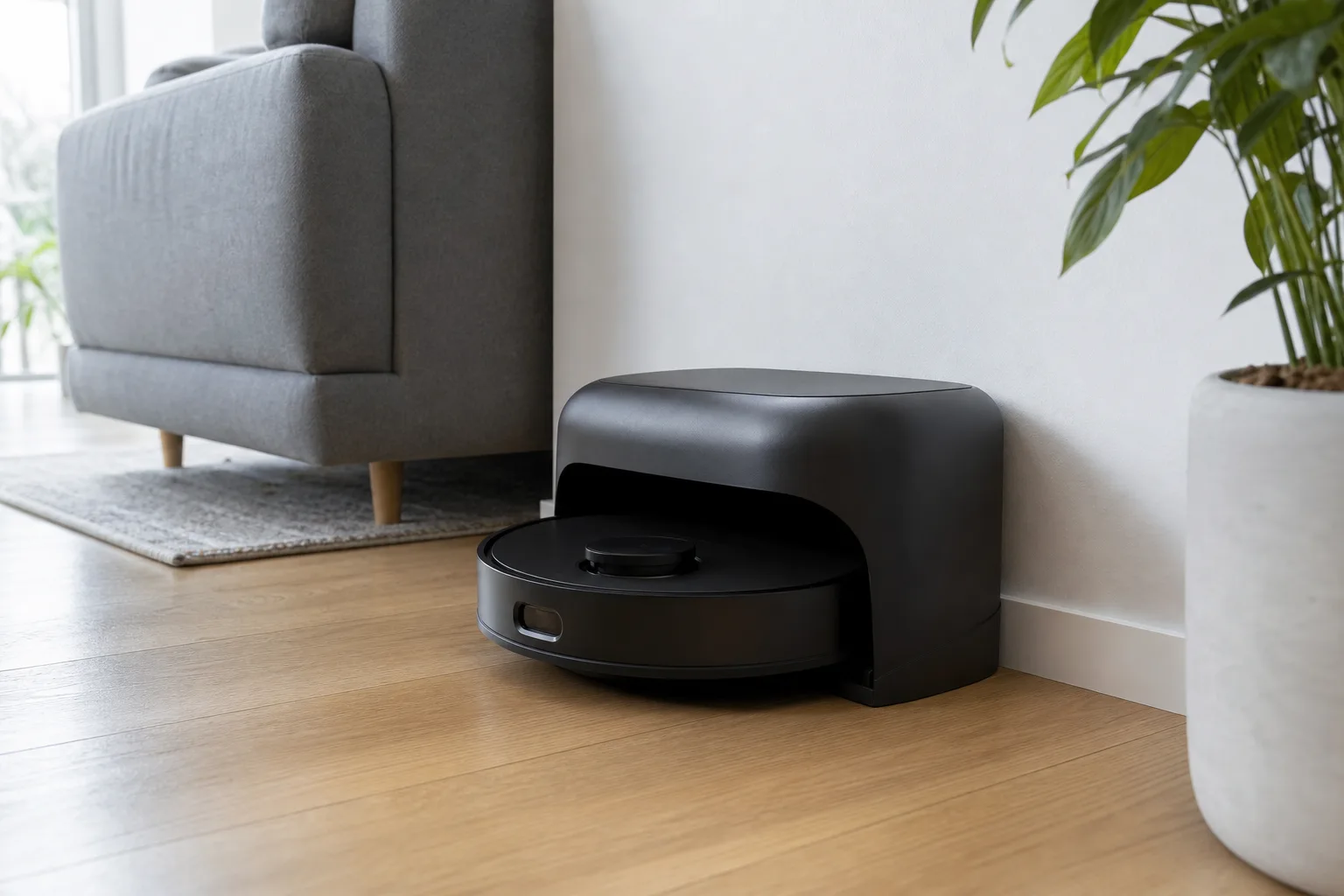
- Best for carpet, corners and the lowest furniture: the Roborock Saros 20. It pulls deep grit out of carpet, reaches into corners with a side brush that swings out, removes dried stains with little water, runs quietly and is the thinnest of the three at 3.14 inches.
The three Roborock models side by side
| Model | Shop | Mop type | Suction | Height | Threshold climbing | Mop wash / drying | Detergent dispenser |
|---|---|---|---|---|---|---|---|
| Roborock Saros 20 Flow |  View on Amazon | Roller, 16 water outlets, up to 240 RPM | 36,000 Pa | 3.54 in (retractable LiDAR) | Double-layer, up to 3.46 in | Up to 212°F / 145°F air | Yes |
| Roborock Qrevo Curv 2 Flow | 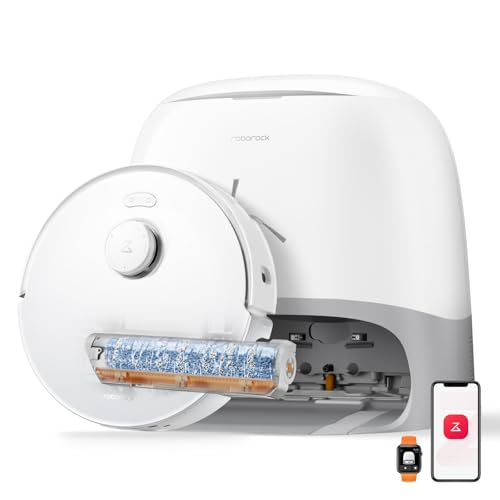 View on Amazon | Roller, 8 water outlets, up to 220 RPM | 20,000 Pa | 4.69 in (fixed LiDAR turret) | No climbing system | Up to 167°F / 131°F air | No |
| Roborock Saros 20 |  View on Amazon | Two spinning pads, 200 RPM, auto-detaching | 36,000 Pa | 3.14 in (no LiDAR turret) | Double-layer, up to 3.46 in | Up to 212°F / 131°F air | Yes |
Figures are Roborock's own, from the Saros 20 Flow, Saros 20 and Qrevo Curv 2 Flow product pages.
Best roller mop for thresholds
Roborock Saros 20 Flow
24% offCyber Monday DealEnds in 2 daysoff list price · as of 9:20 pm MT · details
A roller mop robot that mops kitchens very well, climbs double-layer thresholds and has the easiest dock of the three to keep clean.
- 36,000 Pa
- 3.54 in tall
- 16-outlet roller mop
Good for
- Hard floors with raised sills between rooms
- Kitchens and tile floors
- Pets and long hair
Skip it if
- You want a quiet mop
- Clean corners matter most
Roller mop vs. spinning pads
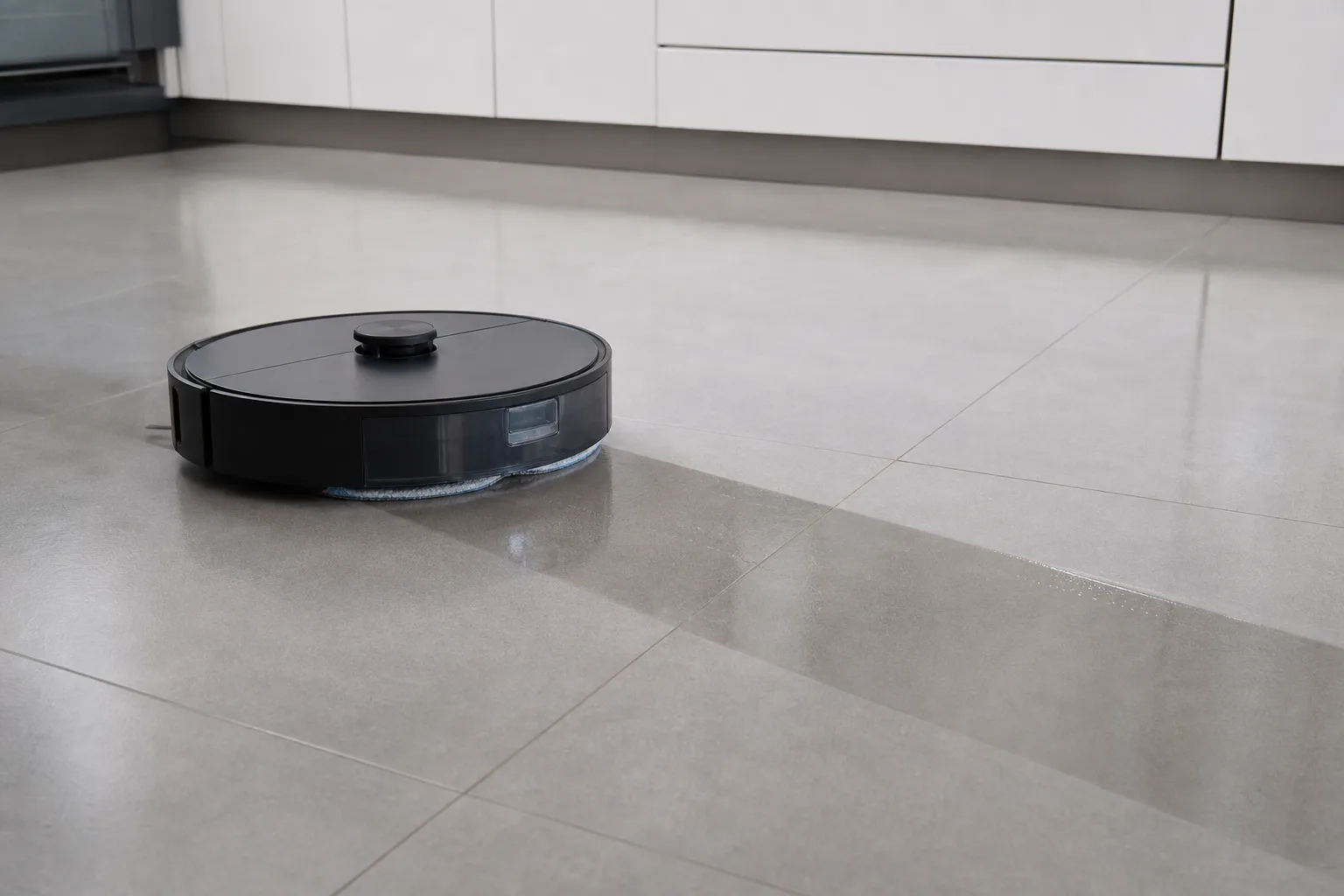
A spinning-pad robot wets two round pads at the dock and carries whatever they pick up until it drives back for a wash. A roller mop robot feeds clean water onto a fabric cylinder as it works, and a scraper squeezes the dirty water into an onboard tank, so the part touching the floor is always freshly rinsed.
That matters most in homes with grit on the floor. When the vacuum brush misses a few grains of cat litter or sand, spinning pads can push them along and leave a streak. A roller lifts leftover debris off the floor and sends it to the dirty water tank, so it works as a second pickup stage behind the brush.
The roller has drawbacks. It is louder than spinning pads and adds height. It needs more hand cleaning: hair collects under the roller, and the parts are rinsed in a sink and left to air dry. And it stays on board over carpet, lifted about 15 mm and covered, while the Saros 20 leaves its pads at the dock for carpet-only runs. For a wider look at mop types and docks across brands, see the robot vacuum and mop buying guide.
What the Saros 20 Flow changes from the Qrevo Curv 2 Flow
It climbs, and it fits under more furniture
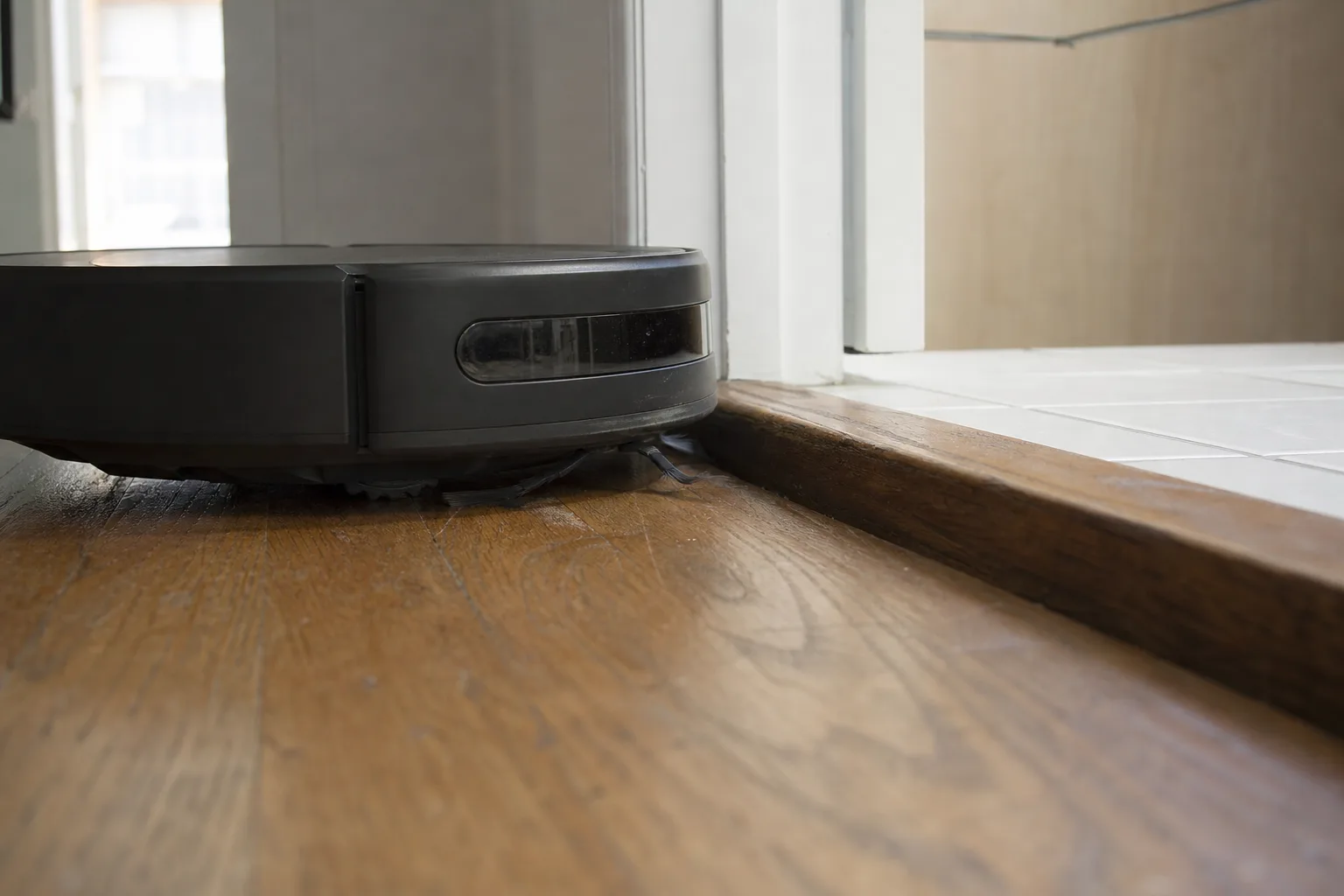
The Saros 20 Flow has two arms that swing down and lift the chassis over a raised sill, then a second step behind it: up to 1.77 inches plus 1.69 inches. It gets over raised sills reliably, including a strip into a garage, both ways. The Qrevo Curv 2 Flow has ordinary drive wheels. It hops small transitions and stops at anything taller.
Height is the other physical difference. The Saros 20 Flow's LiDAR turret drops into the body when it needs to, so the robot is 3.54 inches tall under furniture, and it clears some furniture without lowering it at all. The Qrevo Curv 2 Flow's turret is fixed and the body is thicker, for 4.69 inches in total. It skips the space under low beds and sofas.
The roller stays wet from end to end
The two rollers look alike and fit either robot. The difference is how water reaches them. The Qrevo Curv 2 Flow has eight outlets, and the fabric between them can dry out mid-run, which shows up as streaks on glossy floors. The Saros 20 Flow has 16 outlets set closer together. It mops well at a low water setting, pushes its roller out to the base of cabinets and bins, and mops under toe-kicks. The Qrevo Curv 2 Flow needs its water flow turned up to match it. With that done, the two finish a dried-on stain about equally, and both do better with two passes on a stubborn one.
The dock is easier to live with
On the Qrevo Curv 2 Flow, the roller is washed in the dock's tray, and a pump pulls the dirty water out of the tray. The tray gets grimy, a small catch tray on the robot has to come out for cleaning, and the pump is audible. On the Saros 20 Flow the wash happens inside the robot, and the dock sucks the dirty water straight out of the robot's tank. The tray only catches drips, and the wash cycle is very quiet.
The dock also adds an automatic detergent tank, a roomier dust bag compartment, hotter wash water and warmer drying air, and the robot's dirty water tank has a lift-off lid that makes it far easier to rinse.
What stayed the same, and what got smaller
Suction jumps from 20,000 Pa to 36,000 Pa on paper. On the floor the gap is small: the Saros 20 Flow vacuums a little better, and in the middle of a room the two are close. Both use the same split main brush, which stays free of wrapped long hair. Neither has a side brush that swings out, so both leave crumbs in tight corners. The Saros 20 Flow's onboard bin is visibly smaller than the Qrevo Curv 2 Flow's, though both empty into the dock, and its battery is larger, at 6,400 mAh.
Best roller mop for level homes
Roborock Qrevo Curv 2 Flow
45% offCyber Monday DealEnds in 2 daysoff list price · as of 9:20 pm MT · details
Mops and vacuums close to the Saros 20 Flow on open, level floors, but is too tall for low furniture and can't climb.
- 20,000 Pa
- 4.69 in tall
- 8-outlet roller mop
Good for
- Single-level homes with low transitions
- Open rooms with little low furniture
Skip it if
- Rooms sit behind tall thresholds
- You want streak-free mopping on glossy floors at low water settings
Where the Saros 20 Flow falls short
- Spill detection works on liquids, not on everything. A thin spill like soda is usually spotted, and the robot stops vacuuming and mops it. A thick one like ketchup can get the vacuum brush instead, and dry messes such as kitty litter aren't recognized as anything special.
- It isn't hands-off on the water side. Roborock's 65-day figure covers the dust bag only. Dirty mop water left in the dock tank starts to smell, so empty and rinse it every day or two of mopping.
- It is louder than a pad mop. If quiet matters, the spinning-pad Saros 20 is the better choice.
Obstacle avoidance is a strength: it stops for cables, socks and keys and finds a way around within a second or two.
How the Saros 20 cleans
The Saros 20's carpet pickup is excellent. It removes close to 90 percent of sand pressed into medium-pile carpet, about three-quarters of sand ground deep into the fibers, nearly 90 percent of pet hair flattened into carpet, and all of the sand on hardwood. Its split main brush doesn't wrap hair 7 to 10 inches long, and the chassis rises for carpet pile up to 1.18 inches.
Its mopping is strong. It removes stains well while putting down little water, which helps prevent streaks. It spots a coffee stain dried overnight, scrubs it back and forth, washes its pads and returns for a second pass that leaves it looking clean. On a wet spill it switches to mopping only. One pad and the side brush swing out on an arm, reaching into corners and right up to baseboards, the job both Flow models struggle with.
It steers around shoelaces, cords and pet-waste lookalikes, though it will nudge a light toy or bottle. At 3.14 inches it fits under a range and slips under the low ledge along baseboards. It runs daily without getting stuck on doormats, and it is among the quietest robots of its kind.
Thresholds mostly go its way. It crosses single steps of around 2 inches, sometimes after shimmying, but a two-step sill near its 3.46-inch rating on a slick surface can defeat it. The dock washes the pads in 212°F water, dries them with 131°F air and doses detergent. The app is one of the most detailed around, with Matter support and a camera for checking in on the home.
Its weak points: dry spills such as coffee grounds or kitty litter don't always get the extra passes wet spills do, the onboard dustbin is small for heavy pet hair, and it covers slightly less floor per charge than most rivals.
Best for carpet and corners
Roborock Saros 20
38% offCyber Monday DealEnds in 2 daysoff list price · as of 9:20 pm MT · details
The thinnest of the three, with deep carpet pickup, pads and a side brush that reach into corners, and quiet runs.
- 36,000 Pa
- 3.14 in tall
- Dual spinning pads
Good for
- Homes with a lot of carpet
- Furniture with barely 3.2 inches of clearance
- Corner and edge cleaning
Skip it if
- Floors collect grit or litter that pads can drag
- You have heavy pet hair and want a large onboard bin
The picks in detail
Roborock Saros 20 Flow: the roller mop that climbs
The Roborock Saros 20 Flow is the pick for a home with mostly hard floors, a raised sill or two, and furniture a taller robot can't get under. Setup takes minutes, and the app offers vacuum then mop, both together or vacuum only, with a water-flow slider. It works with Matter.
Skip it for a level home with open floor plans, where its climbing arms and low profile go unused and the Qrevo Curv 2 Flow mops about as well.
Best roller mop for thresholds
Roborock Saros 20 Flow
24% offCyber Monday DealEnds in 2 daysoff list price · as of 9:20 pm MT · details
A roller mop robot that mops kitchens very well, climbs double-layer thresholds and has the easiest dock of the three to keep clean.
- 36,000 Pa
- 3.54 in tall
- 16-outlet roller mop
Good for
- Hard floors with raised sills between rooms
- Kitchens and tile floors
- Pets and long hair
Skip it if
- You want a quiet mop
- Clean corners matter most
Roborock Qrevo Curv 2 Flow: the roller mop for level homes
The Roborock Qrevo Curv 2 Flow does the core job nearly as well: similar vacuuming in open rooms, the same tangle-free brush, the same roller pressed down at the same force, and good obstacle avoidance. It also holds up well over months of regular use.
Its limits are physical. It is 4.69 inches tall, it stops at tall thresholds, its dock tray needs regular cleaning, and its long dust bag sits folded in a short compartment, so it needs changing sooner. Turn the water flow up from the default if a glossy floor shows streaks.
Best roller mop for level homes
Roborock Qrevo Curv 2 Flow
45% offCyber Monday DealEnds in 2 daysoff list price · as of 9:20 pm MT · details
Mops and vacuums close to the Saros 20 Flow on open, level floors, but is too tall for low furniture and can't climb.
- 20,000 Pa
- 4.69 in tall
- 8-outlet roller mop
Good for
- Single-level homes with low transitions
- Open rooms with little low furniture
Skip it if
- Rooms sit behind tall thresholds
- You want streak-free mopping on glossy floors at low water settings
Roborock Saros 20: the spinning-pad pick
The Roborock Saros 20 shares the Flow's 36,000 Pa motor, threshold-climbing chassis and 212°F mop wash, and swaps the roller for two pads spinning at 200 RPM. It has no LiDAR turret, which is how it gets down to 3.14 inches. It is the one for a lot of carpet, very low furniture or clean corners, and the quietest of the three. Don't confuse it with the Saros 20 Sonic, which mops with a vibrating plate instead of pads.
What it gives up is the roller's constant rinse: on floors with pet litter or tracked-in grit, a roller is the better tool.
Best for carpet and corners
Roborock Saros 20
38% offCyber Monday DealEnds in 2 daysoff list price · as of 9:20 pm MT · details
The thinnest of the three, with deep carpet pickup, pads and a side brush that reach into corners, and quiet runs.
- 36,000 Pa
- 3.14 in tall
- Dual spinning pads
Good for
- Homes with a lot of carpet
- Furniture with barely 3.2 inches of clearance
- Corner and edge cleaning
Skip it if
- Floors collect grit or litter that pads can drag
- You have heavy pet hair and want a large onboard bin
Who should buy which
- Raised sills or sunken rooms, mostly hard floors, a busy kitchen: the Saros 20 Flow.
- One level, low transitions, open rooms: the Qrevo Curv 2 Flow. Owners have little reason to switch unless thresholds or furniture height are a daily problem.
- Lots of carpet, very low furniture, corners that matter, or a quiet home: the Saros 20.
- Pets with litter, or tracked-in grit on hard floors: either roller model over the pads.
No robot replaces a deep clean. For sticky messes a robot smears, a wet-dry vacuum mop does in one pass what a robot needs several for, and a cordless stick vacuum still handles stairs.
Posted by Kristopher Larson
Deal badges come from Amazon. Product prices and availability are accurate as of the date/time indicated and are subject to change.
Frequently asked questions
What is the difference between the Roborock Saros 20 and the Saros 20 Flow?
The mop. The Saros 20 Flow uses a roller that is rinsed and scraped clean inside the robot as it works. The Saros 20 uses two spinning pads that are washed at the dock, and one pad and the side brush swing out to reach corners, which the Flow can't do. Both have 36,000 Pa of suction and climb double-layer thresholds up to 3.46 inches. The Saros 20 is thinner, at 3.14 inches against 3.54, quieter, and leaves its pads at the dock for carpet-only runs.
Is a roller mop better than spinning mop pads on a robot vacuum?
For gritty or sticky hard floors, usually yes. A roller is fed clean water and scraped as it turns, so it lifts leftover debris instead of pushing it along. Spinning pads are quieter, need less hand cleaning, allow a thinner robot, reach into corners on models with a swing-out pad, and can be left at the dock when the robot vacuums carpet.
Can the Roborock Qrevo Curv 2 Flow climb thresholds?
It crosses the small transitions between rooms, and it has no lifting system for tall ones. The Saros 20 Flow and Saros 20 have a chassis that lifts the robot over double-layer thresholds up to 3.46 inches combined (1.77 inches, then 1.69 inches). A slick two-step sill near that limit can still stop them.
How tall is the Roborock Saros 20 Flow?
It is 3.54 inches (89.8 mm) tall with its LiDAR turret retracted. The Qrevo Curv 2 Flow is 4.69 inches (119 mm) with its fixed turret, and the Saros 20, which has no turret, is 3.14 inches (79.8 mm). Measure the gap under beds and sofas before choosing.
How often does the Roborock Saros 20 Flow dock need emptying?
Roborock rates the dust bag for up to 65 days. The dirty water tank is a different matter: mop water left in it goes murky and starts to smell, so empty and rinse it every day or two of mopping. The roller also needs hair picked from under it now and then.
Is the Roborock Saros 20 good on carpet?
Yes. It removes most of the sand worked into medium-pile carpet and nearly all loose debris, picks up flattened pet hair well, and its split brush doesn't wrap long hair. It raises its chassis for carpet up to 1.18 inches thick and leaves its mop pads at the dock for carpet-only runs. Its onboard dustbin is small, so homes with heavy pet hair may want it to empty more often.
Keep reading
More from the blog
Narwal Freo 20 vs. Flow 2: Which Narwal Robot Vacuum and Mop to Buy
Govee Sky Ceiling Light vs. Ceiling Light Ultra vs. Ceiling Light Pro: Which One to Buy
Levoit Eleva 500X vs. Eleva 300X: Room Size, CADR, Noise and How They Compare With the Core 300S