PETLIBRO Luma vs. Litter-Robot 5 Pro vs. PETKIT Purobot Max Pro 2: Which Controls Odor Best?
Which self-cleaning litter box controls odor best? PETLIBRO Luma vs. Litter-Robot 5 Pro vs. PETKIT Purobot Max Pro 2: airflow, drawer seals, filters.
Every self-cleaning litter box claims to stop odor, but the PETLIBRO Luma, the Whisker Litter-Robot 5 Pro and the PETKIT Purobot Max Pro 2 go about it in three very different ways. The Luma pulls air through a carbon filter with a fan. The Litter-Robot relies on timing and a passive carbon filter. The PETKIT stacks three layers: a deodorizer in the bin, a scented module that refreshes the drum, and an automatic bin door.
Side-by-side odor comparisons split the problem in two: the smell in the room while waste is still in the litter bed, and the smell that escapes from the stored waste between emptyings. Each box handles those two jobs differently, and the difference shows up in daily use and in how often filters need replacing.
As an Amazon Associate, Best Utah Real Estate earns from qualifying purchases.
Quick verdict
- Best for removing odor from the air: PETLIBRO Luma. It was the only one of the three that actively pulls smelly air through a filter, and its filter lasts the longest.
- Best for fast cleanup and drawer containment: Litter-Robot 5 Pro. WasteID cycles quickly after stool, and the closed globe plus carbon filter keep the drawer contained between cycles. It is sold through Whisker rather than as a new Amazon listing.
- Best layered approach: PETKIT Purobot Max Pro 2. A bin deodorizer, a drum refresher and a bin door work together, though the refresher leans toward masking and the door is not airtight.
Odor-control specs compared
| Feature | PETLIBRO Luma | Litter-Robot 5 Pro | PETKIT Purobot Max Pro 2 |
|---|---|---|---|
| Design | Open-top drum, 17.4-inch entrance | Closed globe | Closed cylinder |
| Main odor method | Fan pulls air through an activated carbon deodorizer | WasteID timing plus a carbon filter | N50 bin deodorizer plus N60 drum module |
| Active airflow | Yes, Low and High fan speeds | No, the filter is passive | Yes, the N60 module refreshes drum air |
| Waste storage | 2.9-gallon (11 L) sealed drawer | Sealed drawer, up to 10 days for one cat | 8 L sealed bin with an automatic door |
| Filter or refill schedule | About every 3 months (one cat) | About once a month | N50 about 30 days; N60 up to 45 days |
| Cat weight range | Up to 22 lb (auto-clean off under 2.2 lb) | 3 to 30 lb | 3.3 to 22 lb |
| Shop |  Buy on Amazon |  Buy on Amazon |
What the side-by-side comparison found
Room odor: active suction beat timing and masking
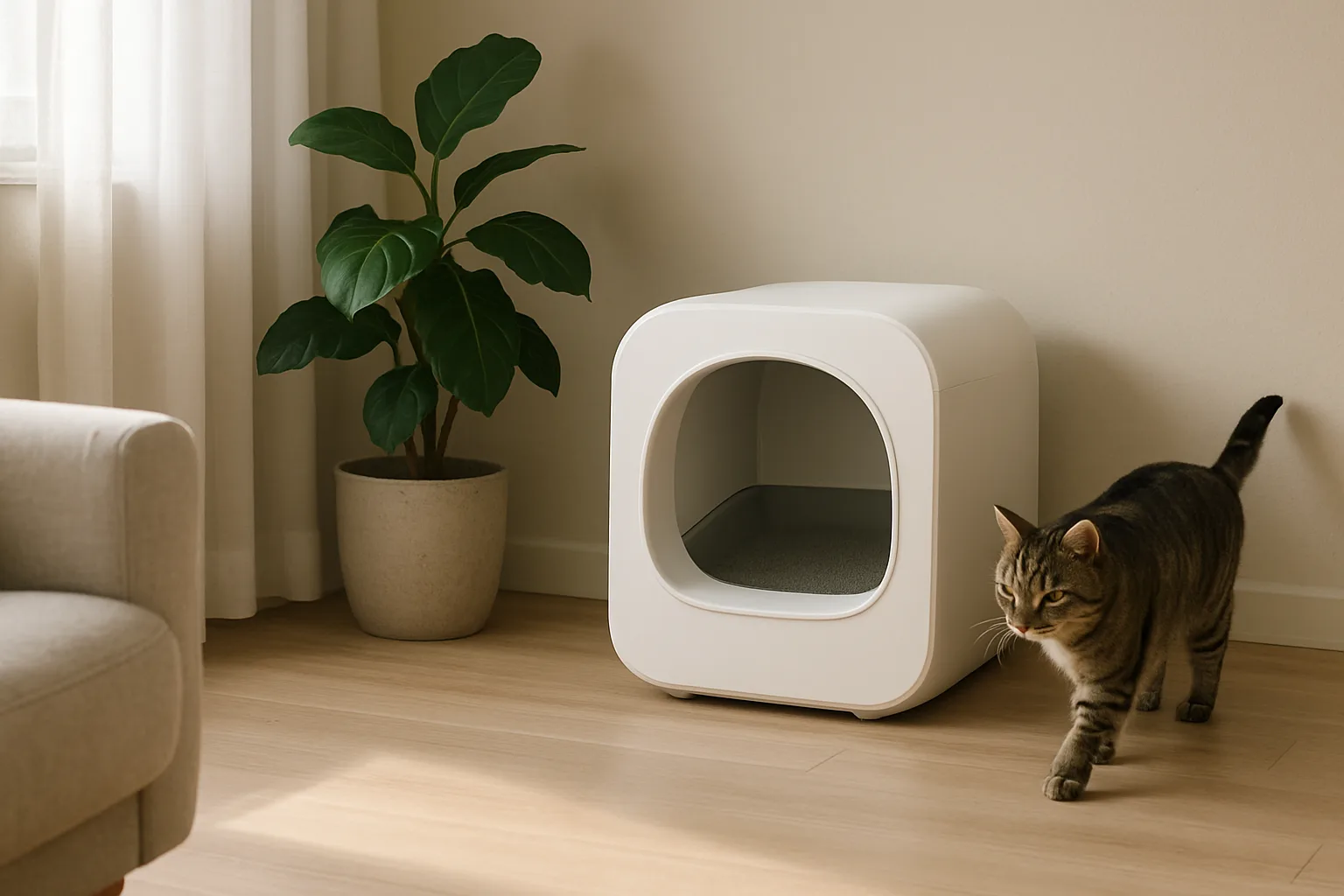
The clearest difference was how each box treats the air around it. The Luma's fan draws air from the litter area and pushes it through a dense activated carbon block at the back of the unit. In a smoke demonstration, the smoke went straight into the filter rather than drifting into the room. PETLIBRO says the system traps 97% of odors, based on a six-hour third-party test, and notes that results vary.
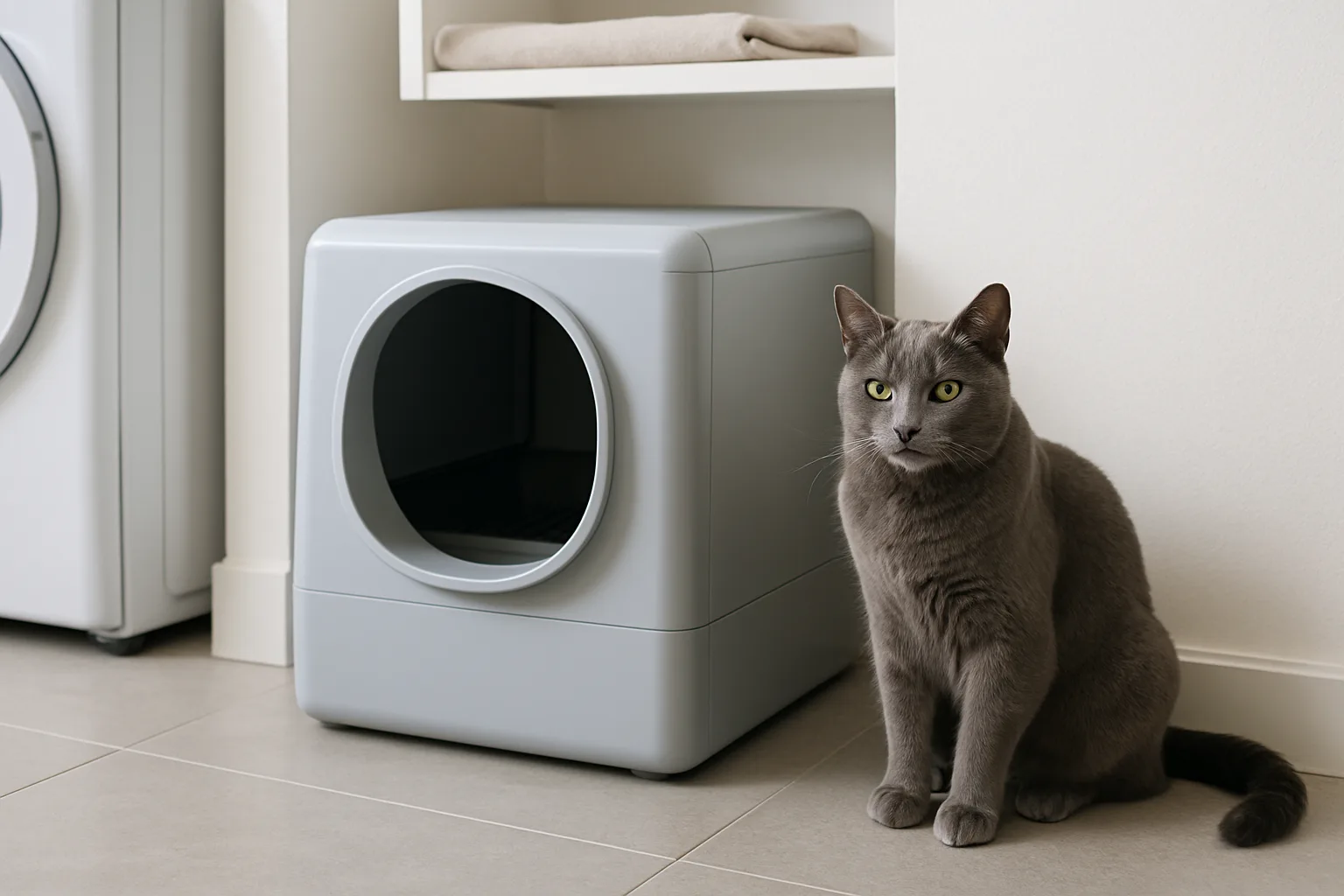
The Litter-Robot 5 Pro takes a timing approach instead. Its carbon filter sits under the globe, directly above the waste drawer, and nothing moves air through it. Odor control in the room comes mainly from cleaning soon after a visit and from the enclosed globe, which holds a little more smell in than an open design would.
The PETKIT's N60 module does move air. After a cat leaves, it runs air through a deodorizing block and into the drum. That gives a noticeable breeze and a fresher smell, but much of the effect comes from fragrance. PETKIT describes the N60 as a continuous mint-scent release, so it covers odor more than it removes it.
Stored waste: the drawer opening matters
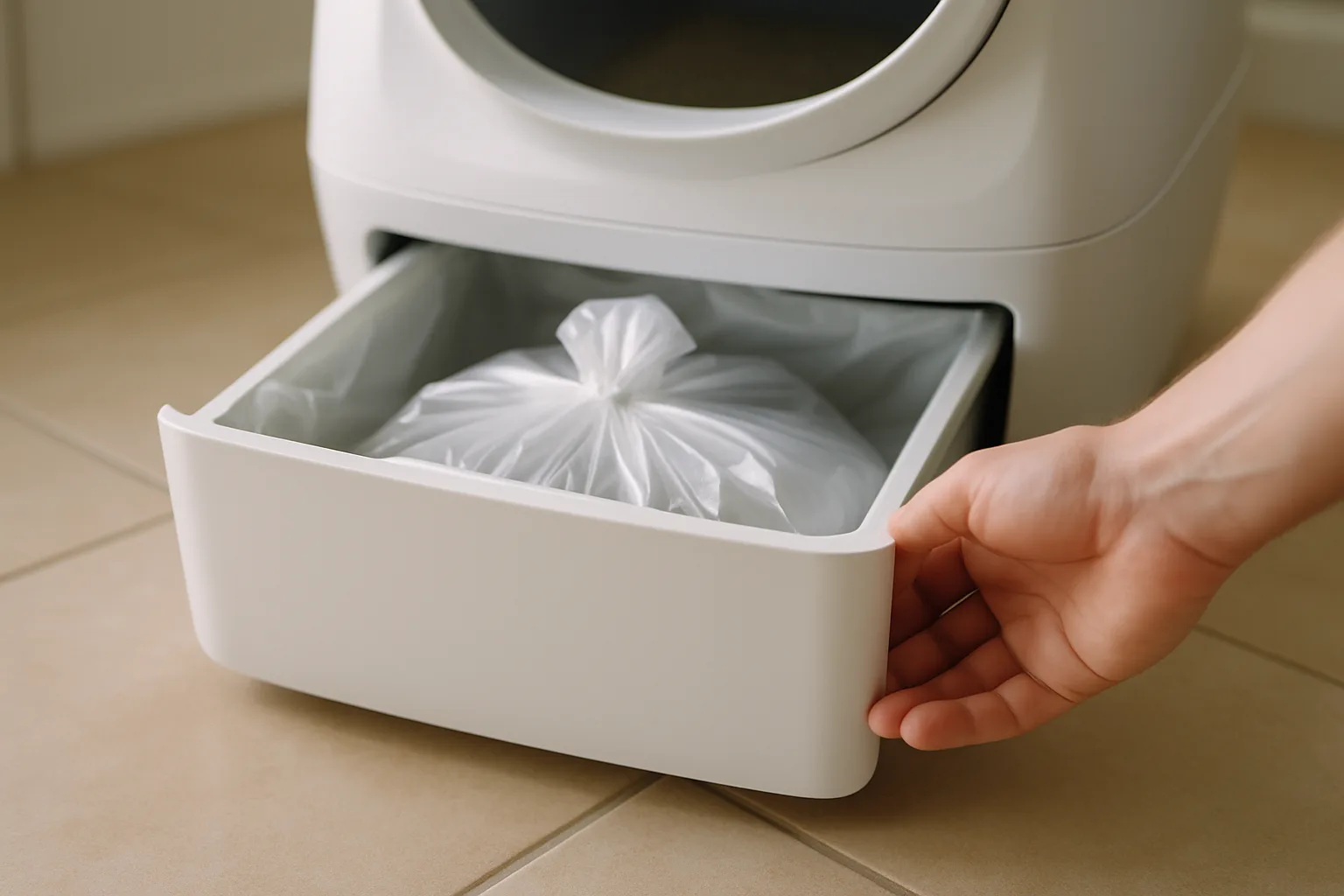
All three boxes seal their waste storage, but they differ in what happens during a cleaning cycle. On the Luma, a cover sits over the drawer and opens only after the drum has rotated over it, so the opening is already enclosed when waste drops. Once the drum swings back toward the room, the cover closes again. A smoke test in the drawer showed the smoke staying put.
The Litter-Robot's drawer is well contained while the globe is at rest, with the carbon filter sitting over it. During a cycle, though, the globe opens fully to the drawer, and that smell has nowhere to go but out. There is no active odor handling at that moment.
The PETKIT's bin door closes automatically after cleaning and opens only while waste drops, so it stays open for short periods. It is not a tight seal, however, and a small amount of bin odor can drift back into the drum and the room. The N50 cube in the bin lid is there to absorb that smell at the source.
Noise: the trade-off for active airflow
The Luma's fan is not silent. On Low it makes a faint, steady whir that is noticeable up close but easy to tune out, especially in a laundry room or bathroom. On High it is much louder. PETLIBRO lists operating noise at roughly 35 to 47 dB, depending on fan speed. High works best during and shortly after a cleaning cycle, when the most odor is released. The PETKIT's drum refresher sounds similar, falling somewhere between the Luma's Low and High settings.
How to choose a litter box for odor control
- Removal or masking. A fan pulling air through carbon removes odor. A scented module covers it. Homes that want the room to smell like nothing at all should favor removal.
- What happens during the cycle. Look at whether the drawer is exposed to the room when the drum dumps. That moment releases the strongest smell.
- Your cat's stool. Quick-cycling after stool is efficient for firm waste. Cats with loose or messy stool can smear it across the drum when a cycle runs fast.
- Refill schedule. Monthly filters and two separate refills add up over a year. A longer filter interval means fewer purchases and less upkeep.
- Placement and noise. A fan running all the time suits a laundry room better than a bedroom. Sleep or quiet-hour settings help in shared spaces.
- Entry style. An open-top drum is easier for many cats to accept. A closed globe holds a little more odor in but can put off a hesitant cat.
The picks in detail
PETLIBRO Luma: best at pulling odor out of the air
The Luma was the only open-drum design of the three, and its fan does the most to clean the air. In the PETLIBRO app, owners can start air purification on demand, choose Low or High, and run the fan around the clock. Sleep Mode sets quiet hours for both cleaning and air purification. Before each cycle, a camera, infrared and weight sensors confirm the cat has left. PETLIBRO rates the 2.9-gallon drawer for up to 7 days of waste from two cats.
The weak points are the fan noise on High and the open-top layout, which leaves the litter bed exposed to the room. That is why the fan matters so much on this design. The carbon deodorizer is the main running cost. PETLIBRO recommends replacing it with the litter mat about every three months in a one-cat home, or sooner as needed. Comparison testing put the realistic range at one to three months, depending on use. The Luma also sits in a lower price tier than the Litter-Robot 5 Pro and is roughly level with the PETKIT.
PETLIBRO LumaCheck today’s price on AmazonBuy on Amazon →
Litter-Robot 5 Pro: smart timing and good containment
Whisker's WasteID system identifies what a cat left behind. For solid waste, it cycles quickly to contain odor. For urine, it waits for clumps to form, for as long as the owner sets. That is a smart way to keep stool from sitting in the open, as long as a cat's stool is firm. Loose stool can be smeared through the globe, which is messy and can leave lasting smell.
The carbon filter is passive and sits under the globe over the drawer. Whisker says to replace it about once a month, and offers OdorTrap packs as an upgrade (the filter pocket takes one or the other, not both). The 5 Pro adds dual 1080p cameras with facial recognition and works for cats from 3 to 30 pounds. The 5 Pro does not appear to have a new Amazon listing. It is sold on Whisker's Litter-Robot site and through authorized retailers.
PETKIT Purobot Max Pro 2: a three-layer system
PETKIT layers three defenses. The Purobot Max Pro 2 drops waste into an 8-liter sealed bin with an N50 deodorizer cube on the lid. An N60 module refreshes the drum air after use. An automatic door closes the bin between cycles. Together they put it ahead of most self-cleaning boxes on odor, even if the drum module leans on fragrance and the door lets a little odor through. The unit handles cats from 3.3 to 22 pounds.
Maintenance is the downside. Both refills need replacing on a regular schedule. PETKIT rates each N50 cube at about 30 days and the N60 module at up to 45 days, and in practice comparison testing treated both as monthly swaps. That makes the PETKIT the most upkeep of the three. Replacement PETKIT N60 odor eliminators list the Max Pro 2 as compatible.
PETKIT Purobot Max Pro 2Check today’s price on AmazonBuy on Amazon →
Filters and ongoing upkeep
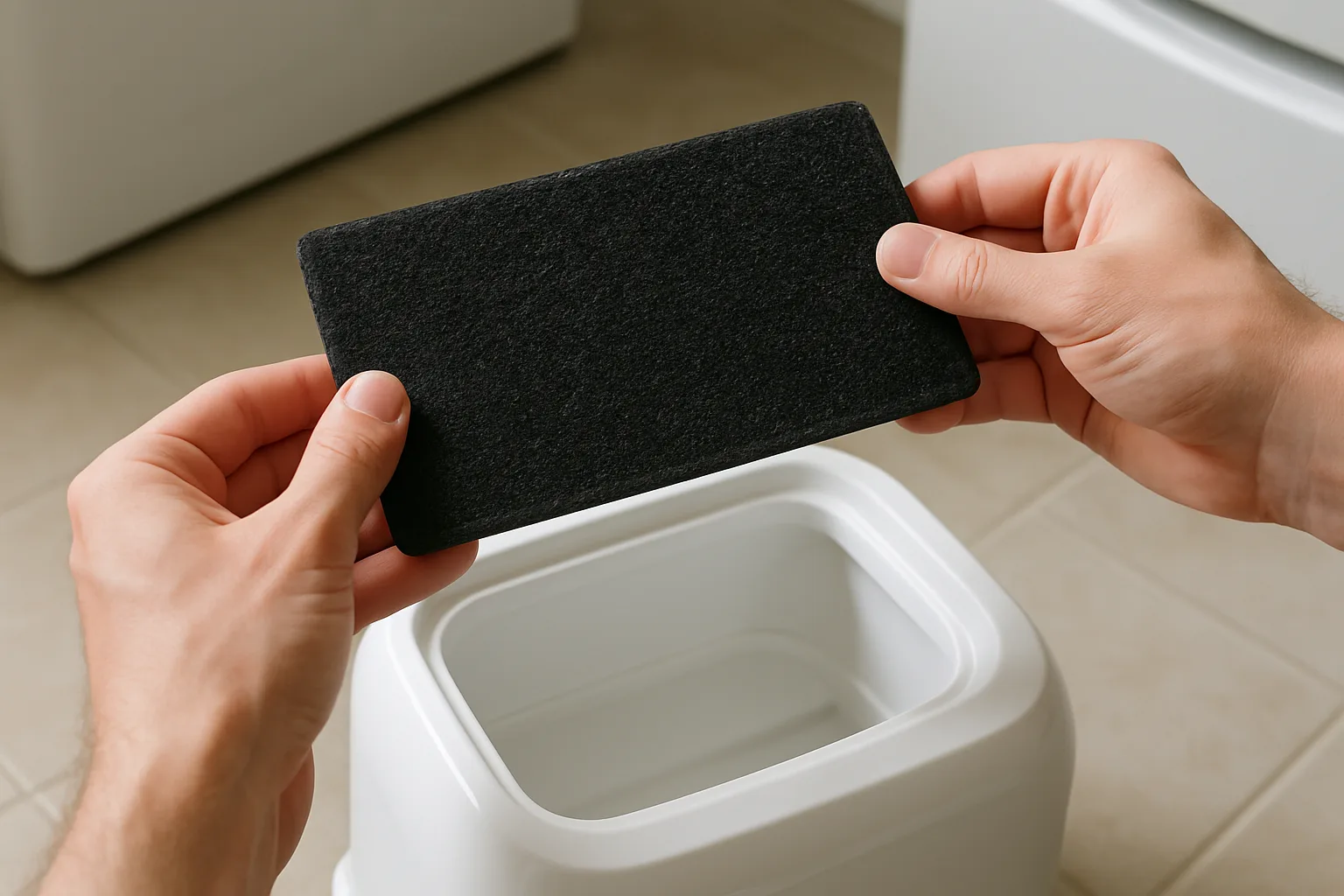
Every odor system here depends on a part that wears out. Ranked by how often something needs replacing, the PETKIT needs the most (two refills on a monthly-to-six-week cycle), the Litter-Robot is next (one filter monthly), and the Luma needs the least (one filter every few months). Over a year, that difference adds up to many fewer refill orders for the Luma. The genuine PETLIBRO activated carbon filter for the Luma is the part to stock.
 PETLIBRO Luma Carbon FilterCheck today’s price on AmazonBuy on Amazon →
No filter makes up for a neglected box. Empty the drawer when the app says it is full, and keep the litter at the recommended depth. Unscented clumping litter works best with all three, because perfumed litter can clash with carbon filters and scented modules. For pet odor beyond the litter area, a room air purifier sized correctly for the space helps; this guide to choosing an air purifier by room size and CADR explains the numbers. Accidents on rugs call for a deep clean, and this carpet cleaner comparison covers the machines that handle pet stains.
Who should buy which
- Buy the PETLIBRO Luma if the goal is a room that smells like no litter box is there. It pairs active suction with a well-sealed drawer and has the longest filter interval. Accept some fan noise, especially on High.
- Buy the Litter-Robot 5 Pro if fast cleanup after stool and a closed globe matter most, and the cat's stool is consistently firm. Plan on a monthly filter change.
- Buy the PETKIT Purobot Max Pro 2 if a layered system with a fresh scent appeals, and two regular refills are not a burden.
All three handle odor well compared with most automatic boxes. The Luma came out ahead because it removes odor from the air rather than timing around it or covering it up. Households that also fight pet hair on hard floors may find this robot vacuum and mop buying guide useful.
Posted by Kristopher Larson
Frequently asked questions
Which self-cleaning litter box is best for odor control?
Among the PETLIBRO Luma, Litter-Robot 5 Pro and PETKIT Purobot Max Pro 2, the Luma did the most to remove odor from the room. Its fan pulls air through an activated carbon deodorizer, while the other two rely on timing, passive filtering or a scented module.
Does the Litter-Robot 5 Pro have an active carbon filter?
It has a carbon filter, but no fan moves air through it. The filter sits under the globe directly above the waste drawer and absorbs odor passively. Whisker recommends replacing it about once a month, or using OdorTrap packs in the same pocket instead.
Is the PETLIBRO Luma loud?
The fan makes a faint whir on Low that most people tune out, and it is noticeably louder on High. PETLIBRO lists the noise at roughly 35 to 47 dB depending on fan speed. Sleep Mode in the app can schedule quiet hours for cleaning and air purification.
How often do self-cleaning litter box filters need replacing?
It varies by brand. PETLIBRO suggests about every three months for the Luma's carbon deodorizer in a one-cat home. Whisker says monthly for the Litter-Robot 5 carbon filter. PETKIT rates the N50 cube at about 30 days and the N60 module at up to 45 days. More cats means more frequent swaps.
Can a fast cleaning cycle make litter box odor worse?
It can if a cat has loose stool. Boxes that cycle quickly after detecting stool, like the Litter-Robot 5 Pro with WasteID, may smear soft waste across the drum. That mess can hold odor until the drum is cleaned by hand.
What kind of litter works best for odor in an automatic litter box?
Unscented clumping litter is the safest choice. Clumps separate cleanly during a cycle, and an unscented litter will not compete with a carbon filter or a scented deodorizer module. Keep the litter at the depth the manufacturer recommends so the sensors and cycle work as designed.
Keep reading
More from the blog
GE Opal 2.0 Ultra vs. Typhur vs. Kismile vs. Frigidaire: 12 Countertop Ice Makers Measured
Laser vs. Ink Tank Printer for Home: Brother HL-L2480DW vs. Epson EcoTank ET-2800 and ET-2980
Best Baby Monitor for Your Parenting Style: VTech vs. eufy E21 vs. Nanit Pro vs. Owlet vs. Harbor