Oral-B vs. Sonicare: Which Electric Toothbrush to Buy
Cleaning feel, pressure sensors, noise, battery life, travel cases and the real cost of brush heads: how Oral-B and Sonicare compare, and which to buy.
Oral-B or Sonicare is the question everyone asks about electric toothbrushes, and the honest answer is that both clean teeth very well when used correctly. The clinical research leans slightly toward Oral-B's spinning round head, but not decisively, and how you brush matters far more than which logo is on the handle. The brands do differ in ways that matter day to day, though: how the brushing feels, how loud it is, how long the battery lasts, how well it travels and, most of all, what replacement heads cost over the years you'll own it.
This guide covers those differences and which brush fits which person, from a first electric toothbrush to a smart brush that coaches you.
Quick verdict
- Best for most people: the Philips Sonicare 4100. Gentle, quiet, a timer and pressure sensor, and long battery life, with nothing you won't use.
- Best simple Oral-B: the Oral-B iO2, for the round-head, tooth-by-tooth clean without the extras.
- Best for fixing bad habits: the Philips Sonicare DiamondClean 9900 Prestige, which eases off automatically when you press too hard and has the best travel case.
- Best starter bundle: the Aquasonic Black Series, a solid first electric brush with extra heads and a travel case in the box.
Oral-B vs. Sonicare side by side
| Toothbrush | Shop | Brush style | Pressure sensor | Feel | Best for |
|---|---|---|---|---|---|
| Philips Sonicare 4100 |  View on Amazon | Sonic (oval head) | Yes | Gentle hum | Most people, sensitive gums |
| Oral-B iO2 | 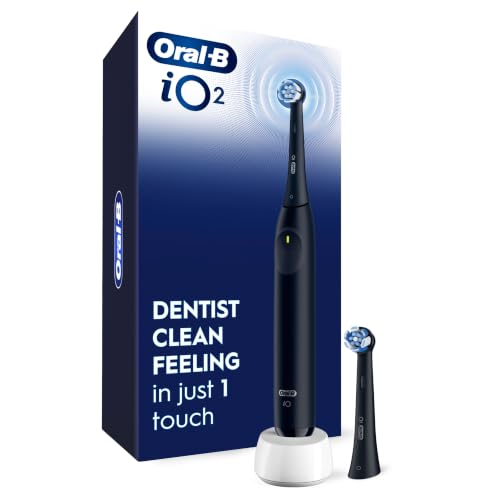 See options | Oscillating-rotating (round head) | Yes | Direct, thorough | Oral-B feel, kept simple |
| Philips Sonicare DiamondClean 9900 Prestige | 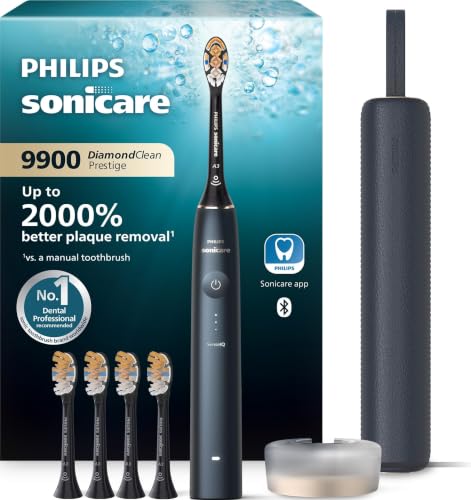 View on Amazon | Sonic (oval head) | Yes, adjusts power | Gentle, many settings | Travelers, gadget lovers |
| Aquasonic Black Series |  View on Amazon | Sonic (oval head) | No | Strong vibration | A first electric brush |
Best for most people
Philips Sonicare 4100
A two-minute timer with 30-second pacing, a pressure sensor, a gentle clean that's easy on sensitive gums and a long-lasting battery.
- Sonic
- Pressure sensor
- 2-min timer, 30 s pacing
Good for
- Sensitive gums
- Simple daily brushing
Skip it if
- You want modes, an app or a fancy charger
How Oral-B and Sonicare actually differ
How they clean and how they feel
Oral-B brushes use a small round head that spins back and forth (oscillating-rotating), working one tooth at a time. Sonicare brushes use a conventional oval head that vibrates side to side at high speed. Both remove similar amounts of plaque. Oral-B's action feels more intense and mechanical, like a polish; Sonicare's feels softer, a steady hum, and many people with gum recession or sensitivity prefer it. New users often say Sonicare takes a few days to get used to because of the tingling vibration.
Head size matters too. Oral-B's small round head is easier to guide around back molars and suits small mouths, a strong gag reflex or jaw problems that limit how wide you can open. With tall front teeth, though, you have to move it along the full length of each tooth so you don't skip the gum line. Sonicare's larger head covers more of each tooth at once.
The features that matter
Two features matter more than any app: a two-minute timer with a pacer that buzzes every 30 seconds so you move to the next quarter of your mouth, and a pressure sensor that warns you when you're pressing too hard. Brushing too hard is the most common mistake, and it can wear on gums over time. Both features are on the Sonicare 4100, the Oral-B iO2 and the Prestige; the Aquasonic has the timer but no pressure sensor.
How the warning works differs. Sonicare brushes change their vibration and sound as well as lighting up, so you notice even if you can't see the light, which also helps blind users. Oral-B's iO brushes use a colored ring of light, red for too hard and green for right, which is clear if you're looking at it but easy to miss otherwise.
Beyond that, extras like extra cleaning modes, apps that track where you've brushed and in-handle screens are nice but don't clean better. Simple and fully loaded brushes from both brands clean about the same; the extras add features and comfort.
Replacement heads: the real long-term cost
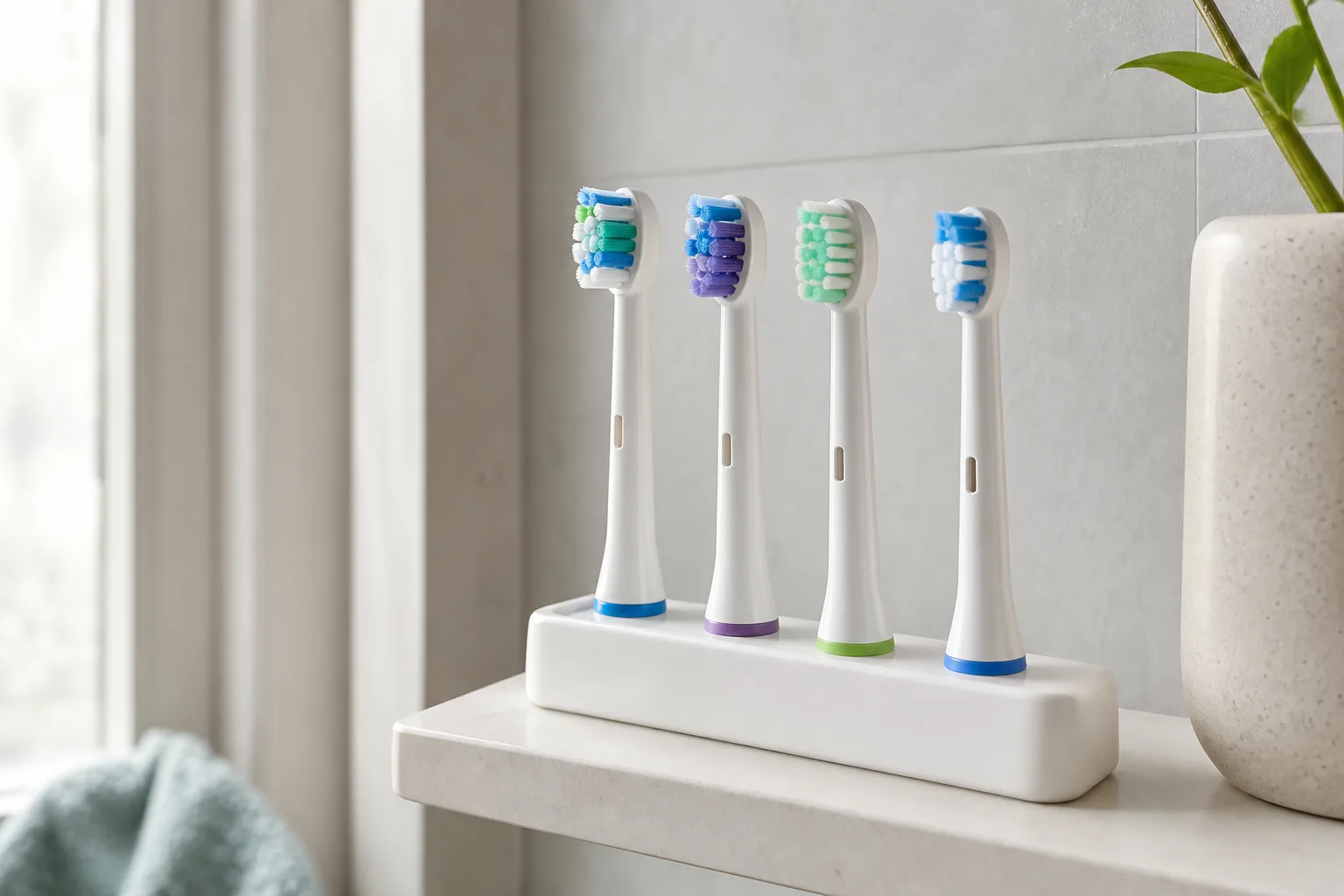
The American Dental Association recommends replacing a toothbrush every three to four months, or sooner if the bristles fray, so you'll buy at least four heads a year per person. Standard Oral-B heads cost noticeably less than Sonicare heads, and over three or four years, especially for a family, that difference adds up. Oral-B heads also come with colored rings, making it easy for a family to share one handle. The exception is Oral-B's iO line, whose heads cost about the same as Sonicare's.
Sonicare heads have a chip that tells the handle how long the head has been used and reminds you to replace it; some models even switch to the right mode for the head you attach. That's convenient, but the chip adds a little electronic waste with every head.
Noise
Sonicare brushes are quieter, often by a wide margin: many run in the 60-decibel range while older Oral-B handles can top 75. Oral-B's newer iO handles are more than 10 decibels quieter than its older models, closing much of the gap. Sonicare's sound is a hum; Oral-B's is more mechanical.
Battery life and travel
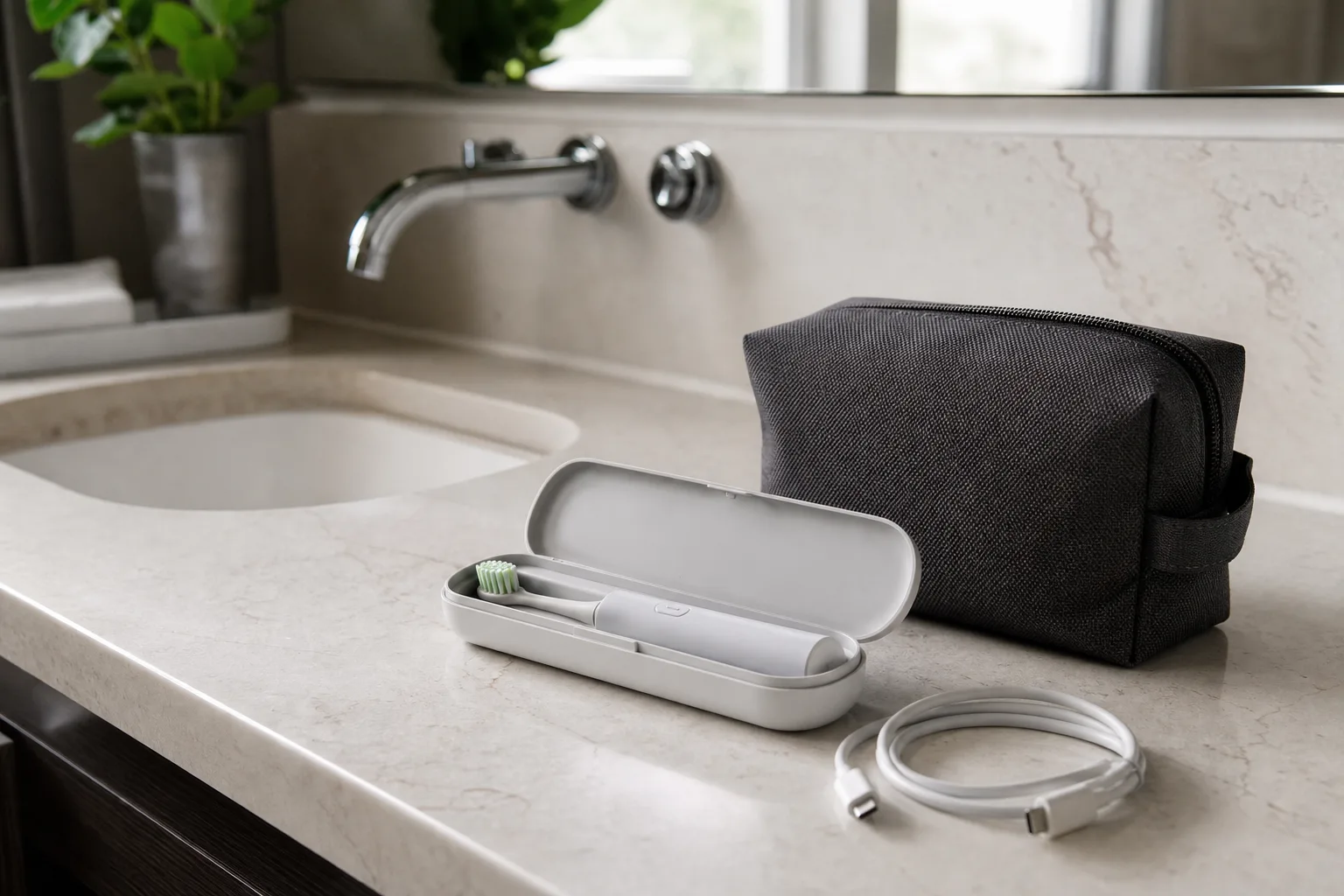
Sonicare wins clearly. Its lithium-ion batteries are typically rated for two to three weeks and often last four or more, while Oral-B brushes are generally rated for about two weeks and rarely go much longer; some Oral-B models still use older nickel-metal hydride batteries. Sonicare's travel cases are slimmer, and many charge the brush inside the case from a USB cable, which is easy anywhere in the world. Oral-B's travel cases are bulkier and use its own plug, with no USB charging. For frequent travelers, Sonicare is the better choice.
Design and grip
Sonicare handles generally look and feel more premium, with clearer labels for modes and intensity settings, and separate mode buttons on many models. Some Oral-B handles have large, textured rubber grips, which are easier to hold for people with arthritis or weak grip, though they're harder to keep clean.
The picks in detail
Philips Sonicare 4100: best for most people
The 4100 covers what matters and skips what doesn't: a two-minute timer with 30-second pacing, a pressure sensor, a gentle high-frequency clean that's easy on sensitive gums, and a long-lasting battery. It's simple to use every day, quiet and well made. If you want more modes, an app or a fancier charger, it will feel basic, but for most people that simplicity is the point.
Best for most people
Philips Sonicare 4100
A two-minute timer with 30-second pacing, a pressure sensor, a gentle clean that's easy on sensitive gums and a long-lasting battery.
- Sonic
- Pressure sensor
- 2-min timer, 30 s pacing
Good for
- Sensitive gums
- Simple daily brushing
Skip it if
- You want modes, an app or a fancy charger
Oral-B iO2: best simple Oral-B
The iO2 gives you Oral-B's round-head, tooth-by-tooth cleaning and its quieter, newer iO motor with a pressure sensor, without screens, apps and a dozen modes. If you like the feel of a more vigorous, polished clean, or have a small mouth, start here. It lacks the smart tracking and fancier charging of the higher iO models, and iO heads cost more than standard Oral-B heads.
Best simple Oral-B
Oral-B iO2
Oral-B's round-head, tooth-by-tooth cleaning with the quieter iO motor and a pressure sensor, without screens, apps and a dozen modes.
- Oscillating-rotating
- iO motor
- Pressure sensor
Good for
- A vigorous, polished clean
- Small mouths
Skip it if
- Smart tracking
Philips Sonicare DiamondClean 9900 Prestige: best for fixing bad habits
At the top of the range, the Prestige is the more complete package. It reduces its own power automatically if it senses too much pressure or scrubbing, tracks brush-head wear, adjusts to the head you attach, and comes with a compact travel case that charges the brush over USB-C. It doesn't clean meaningfully better than the 4100; it makes brushing more pleasant and helps fix bad habits. It's the brush for someone who wants every extra or who travels often. Oral-B's equivalent is its top iO model, with more brushing modes and more detailed tracking of which surfaces you've reached.
Best for fixing bad habits
Philips Sonicare DiamondClean 9900 Prestige
Eases off automatically when you press or scrub too hard, tracks head wear and comes with a travel case that charges the brush over USB-C.
- Auto pressure adjust
- Head-wear tracking
- USB-C travel case
Good for
- Fixing bad brushing habits
- Frequent travel
Skip it if
- A meaningfully better clean than the 4100 (it isn't)
Aquasonic Black Series: best starter bundle
The Aquasonic comes with several brush heads, multiple cleaning modes and a travel case, so it's a complete kit for someone switching from a manual brush. Its cleaning power is better than you'd expect. It doesn't feel as refined as Oral-B or Sonicare and it has no pressure sensor, so it won't warn you if you scrub too hard. That makes it a better fit for gentle brushers.
Best starter bundle
Aquasonic Black Series
Several brush heads, multiple cleaning modes and a travel case in the box, with cleaning power better than you'd expect.
- Extra heads
- Multiple modes
- Travel case
Good for
- Switching from a manual brush
- Gentle brushers
Skip it if
- Heavy scrubbers (no pressure sensor)
What to avoid
- Basic battery-powered brushes that take AA batteries. They're usually weak or overly harsh, and fine for kids but not ideal for adults. A rechargeable brush with a charging stand is a better buy.
- Buying features you won't use. If you'll only ever use one mode and never open the app, a simpler brush cleans just as well.
- Using it like a manual brush. Don't scrub. Hold the head gently against each tooth at the gum line and let the brush do the work, moving slowly from tooth to tooth.
"Hybrid" brushes like quip are different: they vibrate gently but don't do the cleaning for you, so you brush with the normal back-and-forth technique of a manual brush. They suit people who like the feel of manual brushing.
Best simple Oral-B
Oral-B iO2
Oral-B's round-head, tooth-by-tooth cleaning with the quieter iO motor and a pressure sensor, without screens, apps and a dozen modes.
- Oscillating-rotating
- iO motor
- Pressure sensor
Good for
- A vigorous, polished clean
- Small mouths
Skip it if
- Smart tracking
How to brush with an electric toothbrush
- Divide your mouth into four quarters and spend 30 seconds on each; the pacer buzz tells you when to move.
- Angle the bristles toward the gum line and glide slowly; with a round head, pause on each tooth.
- Press lightly. If the pressure light comes on or the brush slows, ease up.
- Replace the head every three months or when the bristles splay.
- Clean between your teeth once a day too. A toothbrush can't reach there.
How to choose
- Sensitive gums or want a quiet brush? Sonicare, starting with the 4100.
- Prefer a vigorous, polished feel or have a small mouth? Oral-B, starting with the iO2.
- Buying for a family? Oral-B's cheaper standard heads with colored rings save the most over time.
- Travel a lot? Sonicare, for battery life and USB charging; the Prestige has the best case.
- First electric brush? The Aquasonic Black Series.
Posted by Kristopher Larson
Frequently asked questions
Is Oral-B or Sonicare better?
Both clean very well when used correctly and remove similar amounts of plaque. The research leans slightly toward Oral-B's oscillating-rotating round head, but not decisively. Oral-B usually costs less to own because its standard replacement heads are cheaper; Sonicare is quieter, gentler, has longer battery life and travels better. Pick the feel you prefer and the one you'll use twice a day.
Which electric toothbrush is best for sensitive gums?
Many people with sensitive gums or gum recession prefer Sonicare's gentler sonic vibration. Whichever you choose, get one with a pressure sensor so it warns you when you press too hard, and use the lowest intensity setting that feels clean.
How often should you replace an electric toothbrush head?
Every three to four months, or sooner if the bristles are frayed, which is the American Dental Association's recommendation for any toothbrush. Sonicare handles can track head use and remind you; on other brushes, set a calendar reminder.
Are fully loaded electric toothbrushes worth it?
For cleaning alone, usually not. Simple and fully loaded brushes from Oral-B and Sonicare clean about the same. Top models add extra modes, apps, brushing tracking, nicer chargers and travel cases. The features that matter are a two-minute timer with a 30-second pacer and a pressure sensor, and many simpler brushes have both.
How long does an electric toothbrush battery last?
Sonicare brushes are typically rated for two to three weeks of twice-daily brushing and often last four weeks or more. Oral-B brushes are generally rated for about two weeks. For travel, the longer battery and USB charging cases make Sonicare more convenient.
How do you use an electric toothbrush correctly?
Don't scrub. Hold the head lightly against each tooth at the gum line and let the brush do the work, moving slowly from tooth to tooth. Spend 30 seconds on each quarter of your mouth for two minutes total, and with a round Oral-B head, cover the full height of each tooth. Clean between your teeth once a day as well.
Keep reading
More from the blog
Which Keurig Should You Buy? K-Mini vs. K-Express vs. K-Supreme
Best Flashlight: Streamlight vs. Olight vs. Fenix vs. Coast
Best Rechargeable Hand Warmers: DeeKom, Ocoopa, Unihand