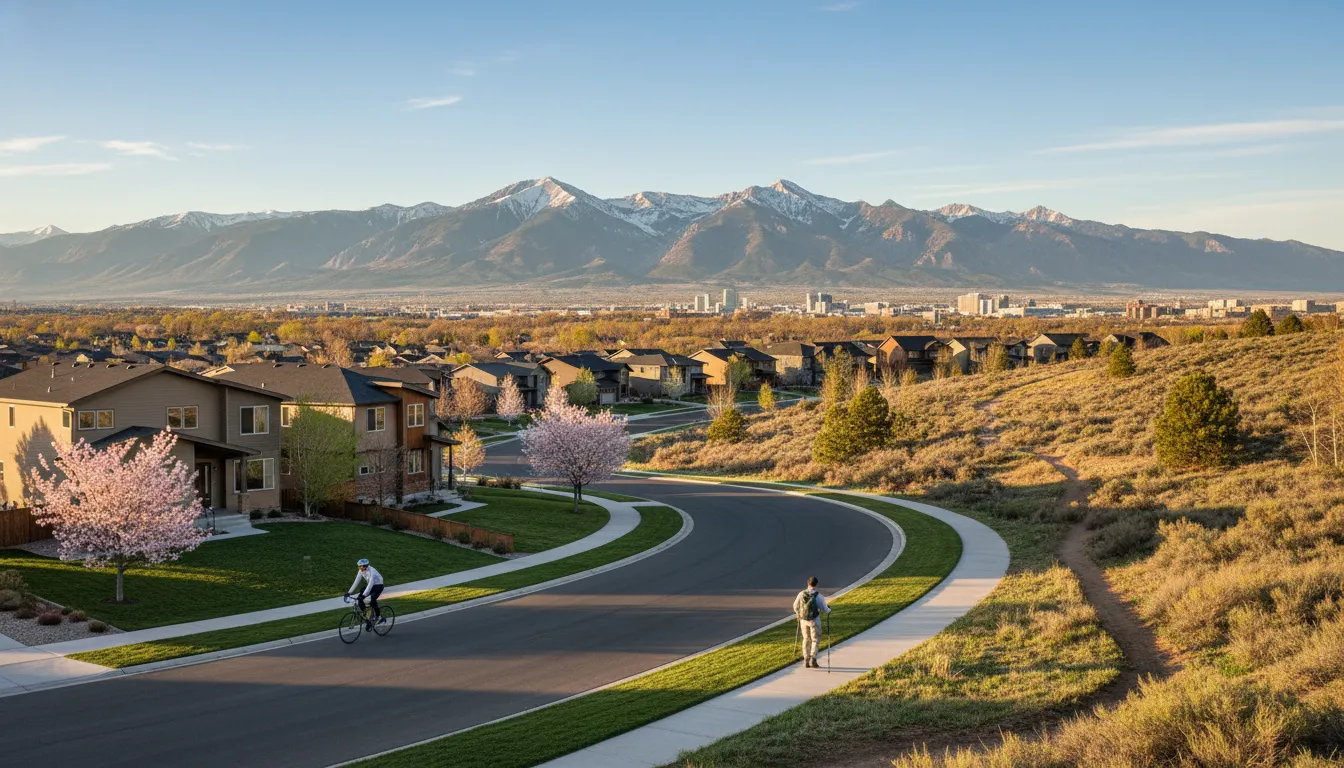

Moving to Salt Lake City? How to Choose the Right Area in Utah's Wasatch Front
Choosing where to live in northern Utah means more than picking a city name — it means understanding how geography, commute patterns, and lifestyle priorities interact across the Wasatch Front. This guide breaks down Salt Lake County, Utah County, Davis County, and Weber County so you can find the area that truly fits your daily life.
Choosing where to live in northern Utah is not just about picking a city name on a map. The Salt Lake area stretches across multiple counties, each with different home styles, commute patterns, price points, and lifestyle tradeoffs. A move that looks good on paper can feel very different once daily traffic, access to jobs, lot size, and neighborhood age are factored in. When you are ready to start looking, view active Salt Lake City listings.
For anyone relocating to Utah, the biggest mistake is assuming "Salt Lake City" means one single type of living experience. In reality, the Wasatch Front includes several connected housing markets, from downtown Salt Lake City to suburban growth corridors in Utah County and established communities farther north toward Davis and Weber counties.
This guide explains how the region is laid out, why prices vary so much, and which parts of the metro tend to fit different priorities. For broader statewide housing resources, Best Utah Real Estate is a helpful starting point.
Why Understanding Utah's Geography Matters Before Buying a Home
Northern Utah is shaped by geography in a way that directly affects housing. The population is concentrated along the Wasatch Front, especially in and around the Salt Lake Valley. Mountains rise on both sides, with the Wasatch Range to the east and the Oquirrh Mountains to the west. The Great Salt Lake sits to the northwest, and Utah Lake anchors the southern end of the broader urban corridor.
That layout limits how far development can spread. Unlike metro areas that can keep expanding in every direction, the Salt Lake region is constrained by mountains, lakes, elevation, and undevelopable land. That limited space has long been one of the reasons housing inventory can feel tight.
Utah also has a large share of land under state or federal ownership, which further restricts where growth can happen. On top of that, developers and public officials must consider water access and infrastructure capacity when new communities are planned. The result is simple: not every open-looking area is truly buildable, and not every fast-growing suburb is equally convenient.
Readers who want added context on statewide relocation factors may also find this Utah moving guide useful. You can also explore 7 costly mistakes to avoid before you buy in Utah for practical relocation advice.
What Counts as the Salt Lake Area?
Many people say they are moving to Salt Lake City when they are actually considering a much wider region. In practical terms, most relocation decisions involve one of these major areas:
Salt Lake County, the core valley and largest population center
Utah County, especially the fast-growing northern cities near Lehi
Davis County, north of Salt Lake City and tied closely to commuting and defense-sector employment
Weber County, farther north around Ogden
These counties are linked by Interstate 15, which is the main north-south transportation spine for the region. That freeway connection makes the entire corridor feel connected, but commute times can still vary dramatically depending on where a home sits relative to east-west roads.
Why Home Prices in the Salt Lake Valley Can Be So High
Home prices in the Salt Lake region are influenced by more than demand alone. Several structural factors push values higher:
Land constraints caused by mountains, lakes, and elevation
Large amounts of non-developable public land across the state
Water considerations that affect where future growth is practical
Concentrated population growth along a relatively narrow urban corridor
Limited east-west freeway access that makes certain locations more desirable than others
This helps explain why two homes that seem close together on a map can have notably different prices. Access, age of the neighborhood, lot size, school-area demand, proximity to recreation, and commute efficiency all matter. For a deeper look at what's driving affordability challenges statewide, see why Utah homes are so unaffordable and what could lower costs.
For current market conditions, inventory trends, and buyer leverage, see this update on Utah's buyer's market shift.
How to Think About Salt Lake County by Area, Not Just City Name
A practical way to understand Salt Lake County is to think of it in broad sections. Each part of the valley tends to attract different buyers.
Northeast Salt Lake County
This area includes the older neighborhoods closer to downtown Salt Lake City, the University of Utah, and long-established parts of the city grid. Homes here often date back much earlier than suburban housing farther south or west.
Typical characteristics:
Older housing stock
Smaller lots on average
Closer access to downtown jobs, culture, and nightlife
More urban feel
This section often appeals to buyers who value central location, historic neighborhoods, and quick access to city amenities more than sheer square footage.
Northwest and West-Side Salt Lake County
Areas on the west side of the valley tend to be among the more affordable options for homebuyers in Salt Lake County. Communities such as Magna, West Valley, Taylorsville, West Jordan, and Rose Park are often considered by buyers who want to stay in the county while keeping purchase price in check.
Typical characteristics:
Better affordability relative to many east-side neighborhoods
Mix of older homes and established communities
Good fit for buyers prioritizing value over proximity to mountain recreation
For some households, this area offers the best balance between county location and housing budget.
Southeast Salt Lake County
This part of the valley includes places such as Cottonwood Heights, Sandy, Draper, Midvale, and parts of Murray. It is popular with buyers who want a suburban setting while staying close to both the freeway system and the mountains.
Typical characteristics:
Generally more expensive than many west-side areas
Strong access to the ski canyons and mountain recreation
Established neighborhoods with broad appeal
Useful location for commuting north toward Salt Lake City or south toward Utah County
One major reason this side of the valley often commands higher prices is proximity to the Wasatch canyons and the route toward Park City. Ski access is a real market force in northern Utah.
Southwest Salt Lake County
This is one of the biggest growth areas in the valley. Cities such as South Jordan, Riverton, Bluffdale, and Harriman have seen major development, especially over the last decade.
Typical characteristics:
Newer subdivisions and master-planned growth
Larger homes and larger lots are more common
More opportunities for newer construction
Different lifestyle feel from downtown and older urban neighborhoods
Buyers often look here when they want more square footage, newer finishes, and a suburban environment. The tradeoff is that east-west travel can be frustrating because the road network is not as efficient as many newcomers expect.
The Commute Issue Many Buyers Underestimate
One of the most important relocation realities in the Salt Lake area is that north-south travel is usually easier than east-west travel. Interstate 15 handles much of the region's long-distance movement, but east-west freeway options are limited.
That matters because a home can seem fairly close to work, family, or recreation on a map and still take much longer to reach than expected. Surface streets, stoplights, and a limited number of major connectors can turn an ordinary cross-valley trip into a daily frustration.
Before choosing a neighborhood, buyers should test these questions:
Will the daily commute go north-south or east-west?
How often will family activities require crossing the valley?
Is quick freeway access more important than house size?
Would a slightly smaller home in a better commute location improve quality of life?
In the Salt Lake metro, a longer straight freeway drive can sometimes be easier than a shorter route across local roads.
Who Should Consider the East Side of the Valley?
The east side is often attractive for buyers who want a more central-feeling suburban location with strong mountain access. It tends to suit:
Skiers and outdoor enthusiasts who want quicker access to Little Cottonwood Canyon, Big Cottonwood Canyon, or the route toward Park City
Buyers seeking established neighborhoods with long-standing demand
Households commuting to central Salt Lake City that want suburban housing without moving too far west
The tradeoff is cost. Buyers often pay more for that location advantage.
Those comparing city and suburban options may want to browse Salt Lake City homes and area information for a closer look at the core market.
Who Should Consider the West and Southwest Side?
West-side and southwest valley communities often make sense for buyers focused on house size, lot size, and newer construction. These areas can be appealing to:
Families wanting more space
Buyers seeking newer subdivisions
Households that value square footage over central location
People comfortable with a more suburban or semi-rural feel in some pockets
These neighborhoods can offer a very different lifestyle from downtown-adjacent areas. There is often less of an urban atmosphere and more emphasis on newer residential development.
Should Buyers Look Beyond Salt Lake County?
Often, yes. Many relocations work better when the search expands to Utah County, Davis County, or Weber County.
Utah County and the Lehi Growth Corridor
Northern Utah County has become one of the most important job and housing growth zones in the state. Lehi is especially significant because of its strong commercial and tech presence, often associated with Silicon Slopes.
For buyers working in or near Lehi, living in southern Salt Lake County may still be practical, but some households prefer to move closer to the job base.
Areas farther west in Utah County, including Saratoga Springs and Eagle Mountain, are known for newer communities and rapid population growth. These areas are often considered by buyers who want new construction and are willing to trade some convenience for purchase-price savings.
In general terms, homes can become less expensive as buyers move farther west from Lehi into Saratoga Springs, and then less expensive again farther out into Eagle Mountain. The tradeoff is a more isolated feel and heavier dependence on a limited number of roads.
Davis County and Weber County
North of Salt Lake City, the corridor through Davis County toward Ogden in Weber County forms another major residential market. This region is strongly influenced by Hill Air Force Base and surrounding defense contractors.
That makes it a natural fit for military households, defense-sector professionals, and buyers who want a different balance of cost, commute, and community character than central Salt Lake County offers.
Buyers exploring this northern corridor can review homes in Layton, one of the key cities in Davis County.
Provo and Orem
Farther south, Provo is its own distinct housing market with a strong university influence. Brigham Young University shapes both the local culture and housing demand. The broader Provo and Orem area often attracts younger households and people who want to be near the educational and commercial opportunities in central Utah County.
Anyone specifically considering that market can compare listings and community details in Provo.
How to Match Utah Areas to Your Lifestyle
Instead of asking, "What is the best place to live near Salt Lake City?" a better question is, "What area fits the way daily life will actually work?"
Best Fit for Nightlife and Urban Convenience
Closer-in Salt Lake City neighborhoods
Older, established areas nearer downtown
Good for buyers prioritizing restaurants, culture, and city access
Best Fit for Ski Access and Mountain Proximity
East-side communities such as Cottonwood Heights, Sandy, Draper, and nearby areas
Good for buyers who expect regular access to the canyons or Park City corridor
Best Fit for Larger Homes and Newer Neighborhoods
South Jordan, Riverton, Bluffdale, Harriman
Saratoga Springs and Eagle Mountain for buyers willing to go farther out
Best Fit for Affordability Within Salt Lake County
West-side communities such as Magna, West Valley, Taylorsville, and parts of West Jordan
Best Fit for Tech-Related Employment Access
Lehi and northern Utah County
South end of Salt Lake County for a more in-between option
Best Fit for Military and Defense Employment
Davis County and Weber County near Hill Air Force Base and related employers
Common Mistakes People Make When Choosing the Wrong Area in Utah
Assuming All of "Salt Lake City" Feels the Same
Neighborhood age, home style, pricing, and daily routines can vary widely across the valley.
Focusing Only on Price Per Square Foot
A larger home farther out may look like the better deal, but road access and commute time can offset the savings in everyday life.
Ignoring East-West Traffic
This is one of the biggest relocation mistakes in the metro. Cross-valley travel can be much slower than expected.
Underestimating How Geography Affects Inventory
Northern Utah is physically constrained. Buyers who expect unlimited suburban expansion may misread why certain areas stay competitive.
Choosing a Location Before Identifying the Real Job Center
Lehi, downtown Salt Lake City, Ogden, and Provo are not interchangeable commute targets. A household should map the actual destination before selecting a county.
A Simple Framework for Choosing the Right Area
Identify the primary work destination. Downtown Salt Lake City, Lehi, Provo, Ogden, and Hill Air Force Base all create different ideal search zones.
Rank lifestyle priorities. Decide what matters most: affordability, lot size, nightlife, mountain access, new construction, or commute ease.
Decide how much home age matters. Older central neighborhoods and newer outer-ring suburbs offer very different housing stock.
Test travel times in every direction that matter. Include schools, airport runs, family visits, and weekend recreation, not just office commute.
Compare tradeoffs honestly. A cheaper house is not always the better fit if it creates a difficult daily routine.
Final Takeaway
The right area in Utah depends less on the city name and more on how geography, commute patterns, and lifestyle priorities interact. Salt Lake County offers everything from older urban neighborhoods to newer edge-of-valley subdivisions. Utah County provides major growth and new construction opportunities, especially near Lehi, Saratoga Springs, and Eagle Mountain. Davis and Weber counties open up strong options for northern commuters and military-connected households.
For most buyers, the smartest move is to narrow the search by daily function first, then compare home prices second. In the Wasatch Front, location decisions affect not just housing cost, but also how the entire week feels.
For general population and geographic context about Utah, the U.S. Census Bureau and the State of Utah provide useful public information.
Frequently asked questions
What is the best area to live near Salt Lake City?
Why is Salt Lake City real estate so expensive?
Is it better to live in Salt Lake County or Utah County?
Which part of the Salt Lake Valley has newer homes?
Are west-side Salt Lake suburbs more affordable?
Is Eagle Mountain a good place for new construction in Utah?
Salt Lake City, Utah housing market
A quick read on what homes are doing in Salt Lake City right now — pulled live from the MLS.
Keep reading
More from the blog
Salt Lake City's Power District in 2026: What's Approved, What's Pending and What It Means for West-Side Buyers

55+ Communities in the Salt Lake City Area
Moving to South Salt Lake, Utah: The 2026 Guide