How Utah Homeowners Can Prevent Winter Slip-and-Fall Accidents
A winter routine for Utah homeowners: track where meltwater refreezes, clear the route visitors use, fix drainage, light the steps and know local sidewalk rules.
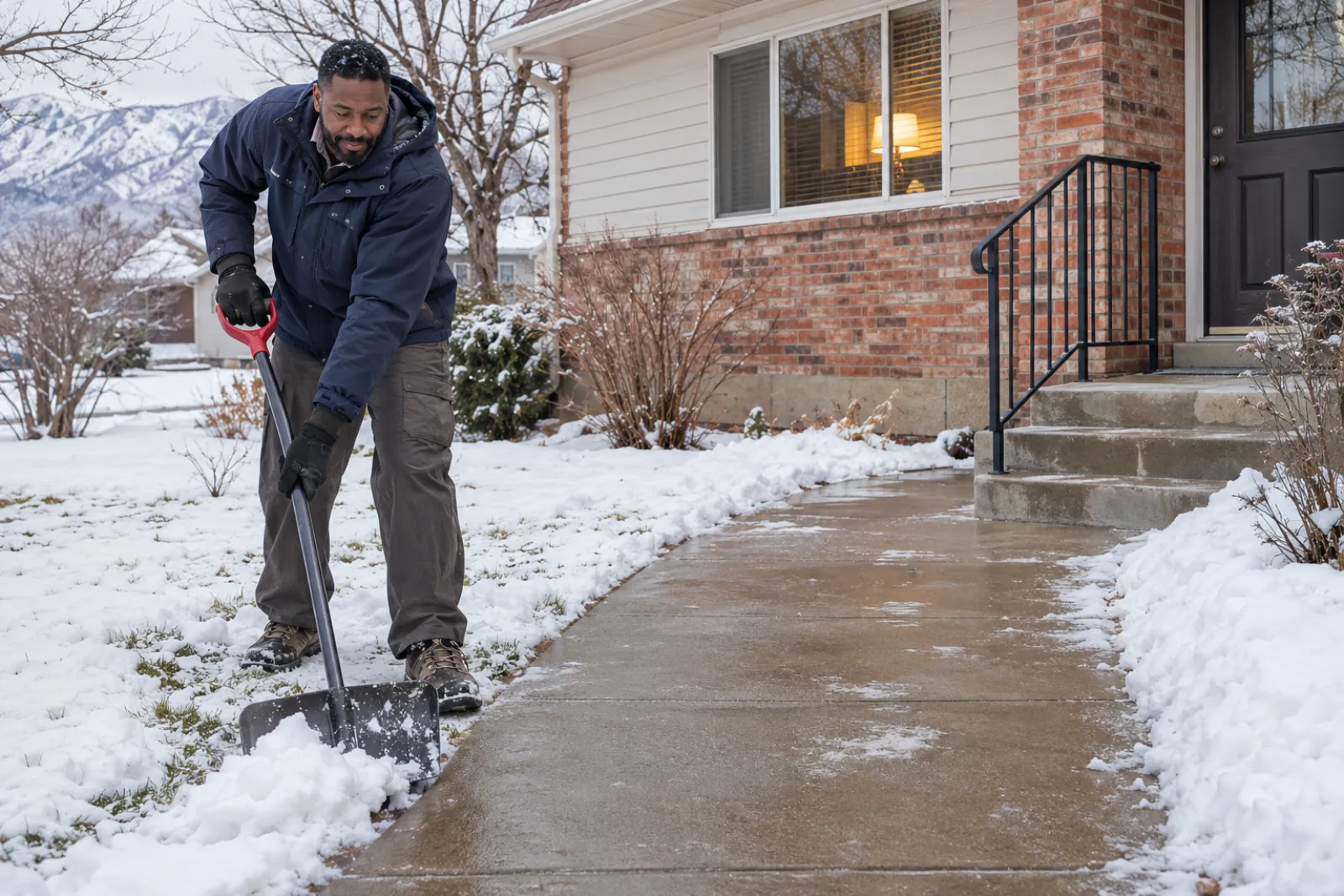
Clear the full route visitors use, including the steps and sidewalk connection. Image: AI-generated.
A freshly shoveled walkway can become slippery again before anyone notices. Snow piled beside a driveway melts in the afternoon, water crosses the concrete, and falling temperatures turn it into ice. By the time a guest or delivery driver arrives, the route may look clear while offering very little traction.
For Utah homeowners, winter safety takes more than a shovel by the garage. A useful routine includes checking where water flows, keeping walking routes clear, improving visibility and making sure someone handles follow-up inspections. These steps help protect the people who visit your home while keeping small maintenance problems from becoming recurring hazards.
Watch for ice after the snow stops
Pay attention to the path melting snow takes across your property. A pile uphill from the front walk may send water across the same spot each afternoon. Roof edges and porch covers can drip onto steps. Shaded sections deserve a closer look because a clear area nearby does not tell you whether the whole route is safe.
The Minnesota Pollution Control Agency explains that meltwater from roofs and other elevated surfaces can refreeze on walkways. The practical lesson for a homeowner is to look beyond the patch of ice and find its source.
Check walking surfaces after daytime melting and again when temperatures fall. Before leaving for work, look at the route that children, neighbors and delivery drivers will use. Repeat the check when conditions change, even if no new snow has fallen.
Clear the route people actually use
Think through the full trip from the street or parking area to your door. Clear the sidewalk, the connection across the driveway, the front steps and the landing. Include a side entrance if that is where family members or visitors usually arrive.
Give people enough room to walk without stepping into snowbanks. Keep handrails accessible, and remove cords, toys and tools that snow could hide. Place shoveled snow where its runoff will not cross the cleared route. Keep drains and access points open.
Remove loose snow before treating the remaining ice. Select a deicer suited to the surface and conditions, and follow its application directions. Utah State University Extension's snow-removal guidance notes that these products can contribute to damage on vulnerable concrete surfaces. More product is not automatically a better solution. Check the treated area afterward and address slippery spots that remain.
Fix drainage that keeps bringing ice back
If ice repeatedly forms in one location, inspect the drainage before reaching for another bag of deicer. Look for a leaking gutter, a downspout emptying onto the walk or a low spot that holds water.
Check gutters and downspouts from a safe position on the ground. Arrange help for work that requires climbing or dealing with overhead ice. Correct a downspout's discharge so water avoids walking surfaces without creating a problem at the foundation, on a neighboring property or farther along the sidewalk. Check local drainage requirements before making changes.
A downspout extension should not become a new tripping hazard. Keep it out of the walking route. Where a lasting repair must wait for suitable weather, monitor the area and provide a safer route while arranging the repair.
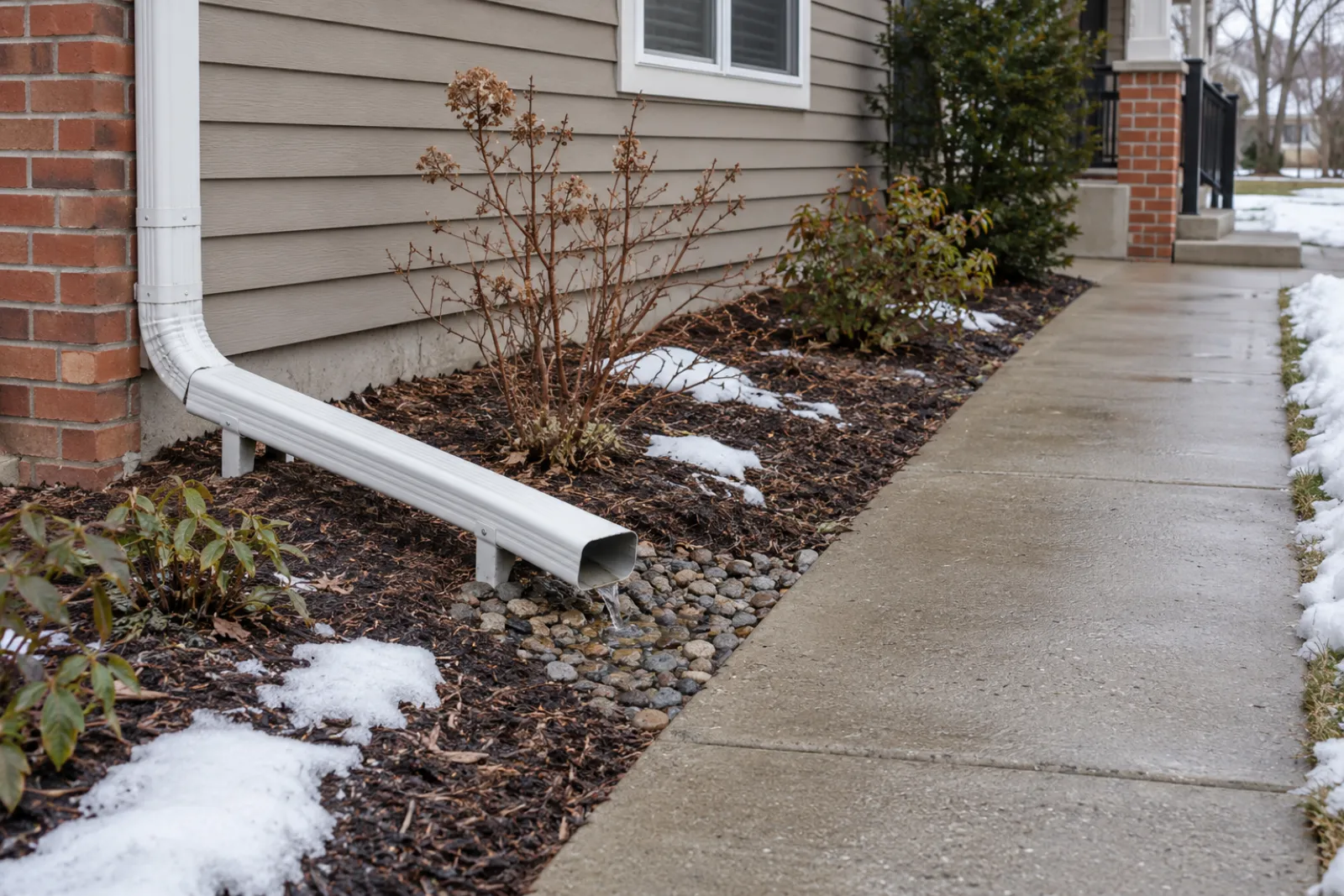
Route runoff away from walking surfaces and keep extensions out of the path. Image: AI-generated.
Make steps and entrances easy to see
Inspect the approach to your home after dark. A bright porch bulb may light the door while leaving the first step or the driveway connection in shadow. Look at the route from a visitor's direction, including the places where the surface changes height.
Replace failed bulbs, clean fixtures and adjust timers for shorter days. Test motion sensors to make sure lights switch on before someone reaches the steps. Aim lighting at the walking surface without creating harsh glare.
Check for loose handrails, uneven pavers and mats with curled edges. Use secure mats appropriate for the location, and remove or replace any that become wet, frozen or unstable. Lighting helps people see a hazard, but the underlying problem still needs attention.
Decide who handles each part of the property
Write down who clears the sidewalk, driveway connection, shared steps and private walk. In a rented home or homeowners association, review the lease, association documents and maintenance arrangements. Ask specific questions: Does the snow contractor clear the steps? Does service include ice treatment? Who returns after an afternoon thaw?
Assigning a task does not automatically settle legal responsibility. The agreement, applicable rules and circumstances still matter. Arrange a backup for travel, illness or missed contractor visits, and make sure that person can reach the supplies.
Check local sidewalk requirements as part of the plan. For example, Salt Lake City's sidewalk-maintenance page points to a city snow-removal rule. Salt Lake City Code section 14.20.070 requires owners, occupants, lessors or agents to clear adjoining paved city sidewalks within 24 hours after hail, snow or sleet stops at Salt Lake City Airport, as reported by the National Weather Service. The required path is at least 42 inches wide, or the full width of a narrower sidewalk, along its entire length, including corners and curb ramps. The code also addresses ice removal and treatment.
That is a Salt Lake City requirement, not a statewide deadline. Homeowners in Midvale and other Utah communities should check their own local rules. For everyday safety, respond to a known hazard promptly rather than treating a legal deadline as a maintenance schedule.
Keep a simple, factual maintenance record
A phone note, shared checklist or small notebook can help everyone follow the same routine. Record the date and time, the areas checked, the conditions observed and the work completed. Note any remaining problem and who will handle it.
For example, an entry might say: “7:15 a.m.: Cleared front walk and steps. Water still dripping beside bottom step. Alternate entrance available. Gutter contractor contacted.” This is more useful than a general note saying the property was checked.
Keep relevant photos, repair receipts and contractor messages together. Make entries when the work happens, and label later additions accurately. Photos should show both the specific condition and enough of the surrounding area to identify its location.
These records can reveal repeat problems and reduce missed handoffs. They do not guarantee protection from liability. Strong Law Accident & Injury Attorneys explains how photographs, maintenance records and control of the area may be examined in a Midvale slip-and-fall claim.
Recheck before visitors arrive
Before a gathering, showing or scheduled delivery, inspect the approach again. Clear fresh snow, check for refreezing and make sure the lights work. If one entrance is unsafe, direct visitors to a safer route while the hazard is addressed.
The goal is a routine that responds to what is happening at your home: follow the meltwater, clear the route, correct recurring problems and confirm the work is done. Consistent attention makes the path to your front door easier to use throughout winter.
Frequently asked questions
Why does ice keep forming on my walkway after I shovel?
Snow piled nearby can melt in the afternoon, send water across the concrete and refreeze when temperatures fall. Roof edges, porch covers and downspouts can also drip onto steps and walks. Look for the source of the water, not just the patch of ice.
How soon do you have to clear a sidewalk in Salt Lake City?
Salt Lake City Code section 14.20.070 requires adjoining paved city sidewalks to be cleared within 24 hours after hail, snow or sleet stops falling at Salt Lake City Airport, with a path at least 42 inches wide (or the full width of a narrower sidewalk). That is a Salt Lake City rule, not a statewide deadline, so check your own city's rules.
Can deicer damage concrete?
Utah State University Extension notes that deicing products can contribute to damage on vulnerable concrete surfaces. Remove loose snow first, choose a deicer suited to the surface, follow its directions and remember that more product is not automatically better.
What should a winter maintenance record include?
Record the date and time, the areas checked, the conditions you saw and the work completed, plus any remaining problem and who will handle it. Keep photos, repair receipts and contractor messages together.
Keep reading
More from the blog

What Covenants, Conditions and Restrictions Mean for Homebuyers in an HOA Community

Room for the View: A Lower Line for Mountain Living
How to Choose Between Repairing and Replacing an Old Lawn Mower