Buying a Home in Lehi, Utah in 2026: What Buyers Need to Know About East vs West Lehi
Lehi is one of Utah County's most active housing markets in 2026 — but East Lehi and West Lehi now behave like separate submarkets. Here's what buyers need to know about price bands, commute tradeoffs, and where the real opportunities are hiding.
Lehi is still one of Utah County's most closely watched housing markets, but it is no longer a single, uniform story. Buyers searching for homes in Lehi in 2026 are stepping into a city with different price bands, different commute realities, and very different upside depending on where they buy. Ready to see what is on the market? Browse homes for sale in Lehi.
For anyone relocating, upgrading, or investing, the biggest mistake is treating all of Lehi the same. In practice, East Lehi and West Lehi now behave more like separate submarkets than one citywide market. That matters for budget, lifestyle, resale timing, and long-term appreciation potential.
For broader statewide context, Utah buyers can also compare local markets and active inventory through Best Utah Real Estate.
Why Lehi Still Matters in Utah Real Estate
Lehi remains a major employment and growth center along the Wasatch Front. It sits in a strategic location between Salt Lake County and Provo, with direct access to the I-15 corridor and continued infrastructure investment. That alone keeps Lehi relevant, but the deeper reason buyers keep focusing on it is the city's expanding economic base.
Lehi has long been associated with Silicon Slopes and major tech employers. In 2026, that identity is broader. The city is also being shaped by semiconductor manufacturing, healthcare expansion, municipal fiber buildout, and major transportation projects. A more diversified economic base can make a market more durable over time because housing demand is not tied to a single industry.
If you're weighing Lehi against other parts of the Wasatch Front, our guide to choosing the right Utah area is a useful starting point for understanding how geography and commute patterns interact across the region.
Lehi Is No Longer One Housing Market
If a buyer only looks at citywide median pricing or average days on market, the result can be misleading. Lehi's overall numbers may look healthy, but those averages hide the fact that some neighborhoods move quickly while others sit for months.
The more useful way to analyze Lehi in 2026 is this:
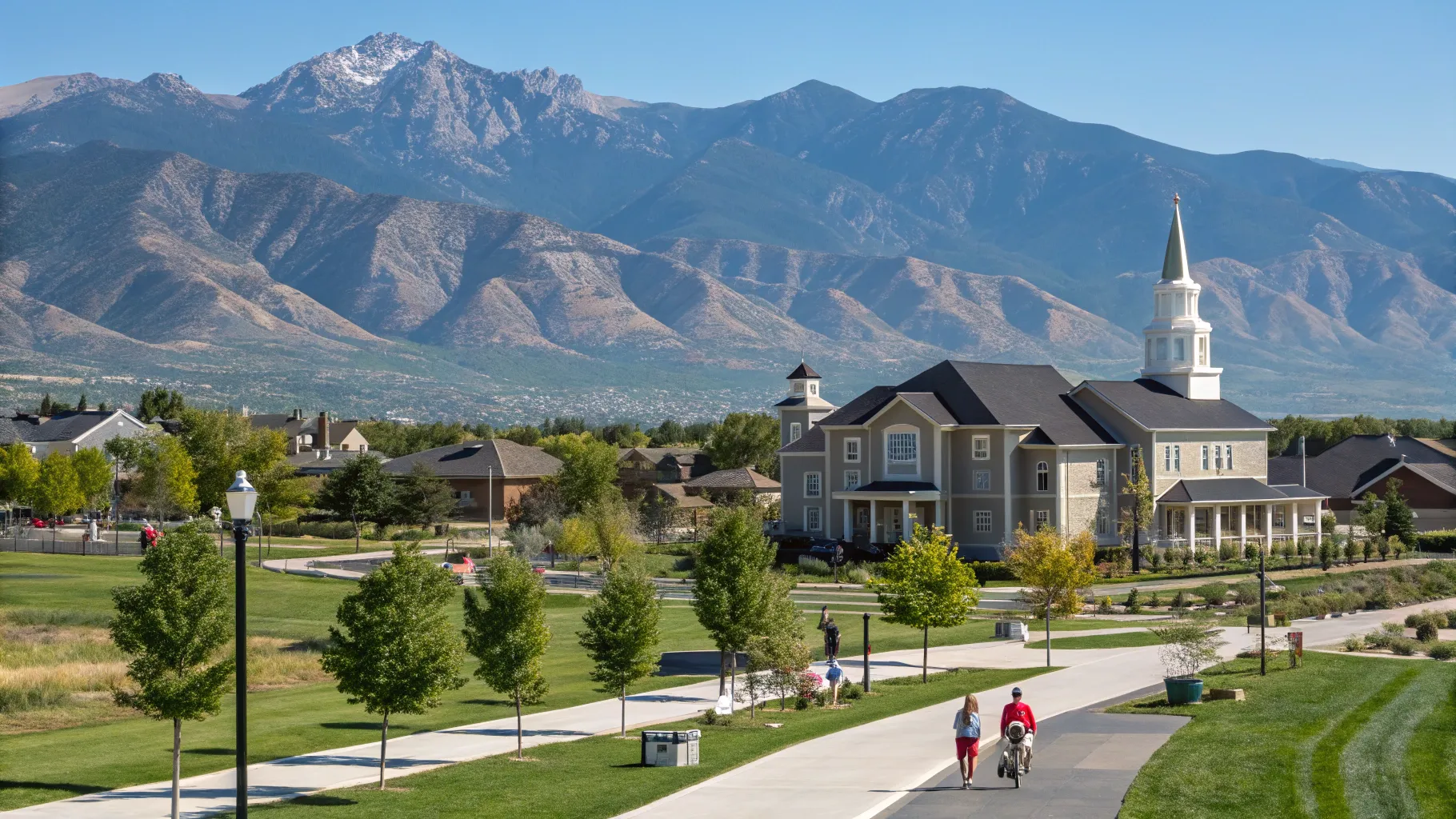
East Lehi is generally the established, convenience-oriented side.
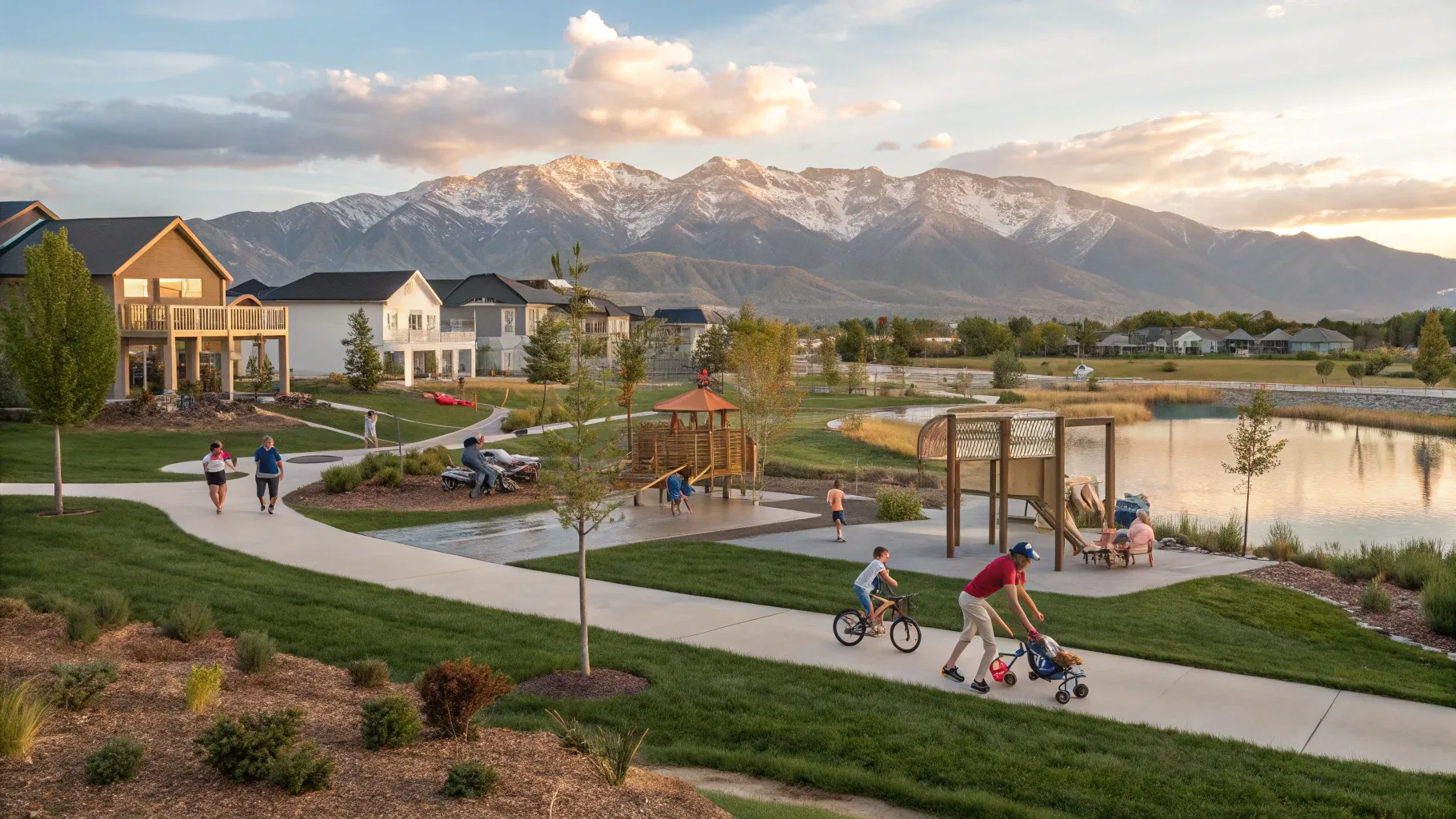
West Lehi is generally the growth, new-construction, and future-upside side.
That division is not just cosmetic. It affects what buyers can afford, how much construction inconvenience they will tolerate, and what kind of appreciation story they are buying into.
East Lehi vs West Lehi: How the City Has Split
What Defines East Lehi
East of I-15 includes the more established Lehi many buyers already recognize. Areas near Thanksgiving Point, Traverse Mountain, and the Silicon Slopes corridor tend to offer:
More mature subdivisions
Established school patterns
Better immediate freeway access
More trees and finished neighborhood feel
Close proximity to major existing tech campuses
This side of Lehi tends to appeal to buyers who value convenience and stability over speculative upside. Homes here may command higher prices per square foot, and the market can be more stable, especially in established subdivisions.
What Defines West Lehi
West of I-15 is where much of Lehi's current buildout is taking place. It includes newer communities, expanding infrastructure, and areas near the new Primary Children's Hospital Miller Family Campus. Buyers on this side are typically choosing among:
Newer subdivisions and production homes
More builder inventory and incentives
Ongoing roadwork and active development
Areas positioned near future transportation improvements
West Lehi can offer a newer home at a price that may overlap with an older home farther east. The tradeoff is that buyers are often purchasing before the area feels fully finished.
Which Side of Lehi Fits Which Buyer?
For many house hunters, the real issue is not whether Lehi is a good market. The issue is whether the right part of Lehi matches the budget and lifestyle.
East Lehi Is Usually a Better Fit for Buyers Who Want:
An established neighborhood environment
Shorter and simpler I-15 access
Immediate proximity to Thanksgiving Point and Silicon Slopes employers
More stable pricing behavior
A move-in-ready lifestyle without years of nearby construction
West Lehi Is Usually a Better Fit for Buyers Who Want:
More value in newer construction
Builder concessions or incentives
Longer-term appreciation potential
Proximity to new healthcare and future road improvements
A home purchase before infrastructure is fully priced in
For comparison shoppers also considering nearby alternatives, Saratoga Springs and Eagle Mountain are often part of the same Utah County search.
What the 2100 North Expressway Project Means for Buyers
One of the biggest factors shaping West Lehi in 2026 is the 2100 North Expressway project. Ground broke in March 2026 on a roughly three-mile freeway-to-freeway connection between I-15 and the Mountain View corridor. The project carries a reported $621 million price tag and includes major bridge and path improvements, with completion targeted for late 2028.
That matters because transportation projects affect housing demand in two phases:
During construction, demand can soften because buyers see cones, detours, dust, and delayed travel times.
After completion, the same areas may benefit from improved access and renewed buyer interest.
According to the project framing, the finished route is expected to save many commuters about 12 minutes each direction at peak times. If those savings materialize, nearby communities become more attractive once the disruption ends.
For official project context, buyers can review updates through the Utah Department of Transportation.
Why Construction Can Create a Buying Window
Visible construction often suppresses buyer enthusiasm more than long-term fundamentals would justify. That does not always show up as a dramatic citywide price drop. Instead, it can show up as softer demand, longer decision cycles, and more negotiating room in affected areas.
In Lehi, that creates a specific type of opportunity for buyers who:
Do not need immediate convenience perfection
Can tolerate roadwork and detours for a few years
Want to buy before commute improvements are fully reflected in prices
Are focused on a 4 to 10 year ownership horizon rather than a quick flip
That does not make every West Lehi purchase a bargain. It simply means buyers may be entering before the area's finished form is fully visible to the broader market.
Who Should Be Cautious
Not every buyer benefits from that strategy. A household that commutes through active construction every day may end up regretting the decision, even if the long-term math looks favorable.
West Lehi is less forgiving for buyers who:
Need stress-free daily east-west commuting right now
Are highly sensitive to road noise, dust, or unfinished surroundings
Expect a fully mature neighborhood from day one
May need to sell again in the very near term
Why Neighborhood-Level Data Matters More Than City Averages
Lehi's citywide median home price was cited at $585,000 in January 2026, up about 10.5 percent year over year. That headline sounds straightforward, but it does not tell a buyer whether a specific subdivision is hot, overpriced, or quietly offering value.
Subdivision-level differences are where Lehi becomes a true hyperlocal market.
Fast-Moving Neighborhoods
Some subdivisions have been moving in just days. Examples cited include Holbrook Farms and Inverness. Faster-moving neighborhoods often share a few traits:
Accurate initial pricing
Floor plans that align with current buyer demand
Usable lots
Better internal location within the subdivision
Updated finishes and layouts
Buyers searching in newer West Lehi communities can monitor inventory in places like Holbrook Farms to see how local pricing and availability compare in real time.
Slow-Moving Neighborhoods
Other areas, particularly in parts of the luxury tier such as Lakeview Estates, Vivian Estates, Seasons Estates, and portions of Traverse Mountain, have seen listings sit for 100, 200, or even more days. In those cases, major price reductions may reflect something more specific than a weak citywide market.
Common reasons for slow movement include:
Pricing anchored to older peak-era comparables
Overestimation of luxury buyer demand
Lot or layout issues
A mismatch between seller expectations and current market tolerance
The Biggest Buyer Mistake in Lehi Right Now
One of the most common assumptions in any market is that long days on market automatically equal a great deal. In Lehi, that can be a trap.
A listing that has been sitting for months may not be the hidden opportunity buyers hope it is. In many cases, it is simply a home that started overpriced, reduced once, and is still not where the market wants it to be.
Meanwhile, well-priced homes in desirable subdivisions can move fast with little or no price cut at all.
What to Do Instead
Track specific subdivisions, not just Lehi as a whole.
Watch how quickly fairly priced homes go pending.
Study original list price versus final sale behavior when possible.
Evaluate lot placement, floor plan, finish level, and builder reputation.
Do not assume the stalest listing is the best value.
Buyers wanting a bigger-picture read on shifting leverage can also review this broader overview of the Utah buyer's market. For a statewide look at what's driving prices, see our breakdown of why Utah homes are so unaffordable and what could lower costs.
A Practical Framework for Buying in Lehi in 2026
Buyers can simplify the Lehi search process by narrowing the market in this order.
1. Choose the Side of the City First
Start with East Lehi versus West Lehi based on budget, commute, and tolerance for construction. This prevents wasted time searching for the wrong product in the wrong area.
2. Pick Three to Five Target Subdivisions
Once the side of town is clear, narrow down to a short list of neighborhoods. That is where pricing patterns become meaningful.
3. Compare Subdivision-Level Days on Market
A citywide median can hide the actual pace of competition. Subdivision-level timing gives a better read on urgency.
4. Set Alerts for New Inventory
In faster-moving neighborhoods, the best opportunities are often the newly listed homes that are priced correctly from the beginning.
5. Evaluate the House, Not Just the Headline Price
Two homes with the same asking price can have very different resale potential depending on lot placement, commute impact, and internal finishes.
Lehi's Long-Term Growth Case: More Than Just Tech
Lehi's longer-term appeal in 2026 rests on more than the Silicon Slopes brand. Several major economic anchors are shaping future housing demand.
Texas Instruments
The LFAB2 semiconductor plant represents an $11 billion investment and has been described as the largest single economic investment in Utah history. The project is expected to bring roughly 1,000 high-wage jobs directly, along with additional supplier and support jobs.
Primary Children's Hospital Miller Family Campus
The new hospital campus represents a $335 million healthcare investment on 38 acres. Healthcare employment tends to be more stable across economic cycles than some other sectors, which adds resilience to local housing demand.
Municipal Fiber Buildout
Lehi has also bonded for a $65 million municipal fiber backbone intended to reach all residents by mid-2026. For remote workers and bandwidth-heavy households, citywide gigabit fiber access can become a meaningful quality-of-life and competitiveness advantage.
Why Diversification Matters
When a city depends too heavily on one industry, housing values can be more vulnerable during sector-specific downturns. A broader mix of tech, healthcare, semiconductor manufacturing, and infrastructure investment can make demand more durable over time.
Readers looking for statewide relocation planning can also compare this with other Utah move considerations in Moving to Utah: Everything You Need to Know.
How the 2034 Winter Olympics Could Affect Lehi
The 2034 Winter Olympics return to Utah adds another long-range tailwind for the Wasatch Front. Lehi sits in a central position along the regional growth corridor between Salt Lake City and Provo. While no event guarantees appreciation, large statewide infrastructure and branding cycles often raise visibility for already growing markets.
For official Olympic context, buyers can review planning updates through the International Olympic Committee announcement.
Who Should Buy in Lehi in 2026?
Lehi may be a strong fit for buyers who:
Want access to major employment hubs in Utah County and northern Utah County corridors
Prefer a market with both established and new-construction options
Are comfortable analyzing neighborhoods at a granular level
Can choose between stability on the east side and future upside on the west side
Plan to hold for several years and benefit from infrastructure completion
Who May Want to Look Elsewhere?
Lehi may be less ideal for buyers who:
Need the lowest possible price point in northern Utah County
Want to avoid active development entirely
Need a fully mature neighborhood but cannot stretch to East Lehi pricing
Are unwilling to navigate a competitive, hyperlocal search process
Key Takeaways for Lehi Home Buyers
Lehi is not one uniform market. East and West Lehi now function differently.
East Lehi is generally the stability play. It offers maturity, convenience, and established feel.
West Lehi is generally the appreciation play. It comes with construction and development tradeoffs.
The 2100 North project matters. Construction may temporarily soften demand before improving access.
Subdivision-level research is essential. City averages can lead buyers in the wrong direction.
Long days on market do not automatically mean value. Overpricing is often the real story.
Lehi's fundamentals are broader than tech alone. Manufacturing, healthcare, fiber, and infrastructure all matter.
Frequently asked questions
Is Lehi, Utah a good place to buy a home in 2026?
What is the difference between East Lehi and West Lehi?
How does the 2100 North Expressway project affect home buyers?
Why do some Lehi homes sit on the market for months while others sell in days?
What major economic investments are driving Lehi's long-term housing demand?
Lehi, Utah housing market
A quick read on what homes are doing in Lehi right now — pulled live from the MLS.
Keep reading