Buying an Older Home? Ask These Questions Before Replacing the Windows
One drafty window doesn't mean every window must go. These questions help buyers separate air leaks, glass problems, and opening damage before agreeing to repair or replacement.
During a showing, one chilly window can turn into a much bigger thought: will every window need to go? Age and appearance alone do not answer that question. A buyer needs to know what is happening, which part is involved, and what supports the proposed work. Start with questions that separate an air leak, a glass problem, and damage to the opening instead of treating them as one expense.
What does the seller mean by a window seal problem?
The word “seal” can refer to different parts of a window. Someone may mean the flexible material around a moving section, a fixed joint between the frame and surrounding materials, or the sealed space within a multi-pane glass unit. A repair description should identify the part, not just repeat the word.
Ask what was noticed first. Was there moving air at an edge, moisture on the room-side glass, fogging that appeared between panes, or difficulty closing the window? These observations call for different follow-up questions. They do not establish the answer by themselves.
For an older home in Utah, the local setting matters too. Ask what happens during the property's cold, windy, hot, or wet periods rather than assuming the conditions on a calm showing day tell the whole story. The same question is useful in neighboring areas with similar exposure, such as West Jordan or Taylorsville, while the appropriate repair still depends on the individual opening.
What work has already been done?
Ask for descriptions of earlier repairs and, if available, supporting paperwork. The useful details are which windows were addressed, what was replaced or sealed, and whether the original complaint returned. A note saying “windows serviced” is less informative than a record naming the actual part and location.
Find out whether the problem affected one opening or several. A localized concern does not prove that every window needs identical work. Conversely, one recently repaired window does not establish the condition of the rest of the house. Keep the questions tied to the openings you are considering.
If a repair was made shortly before listing, ask what prompted it. You can request an explanation without assuming that recent work was either unnecessary or complete. New trim paint and a clean bead of material show that work occurred; they do not explain what was underneath or what result was checked.
Can the existing window still be repaired and used normally?
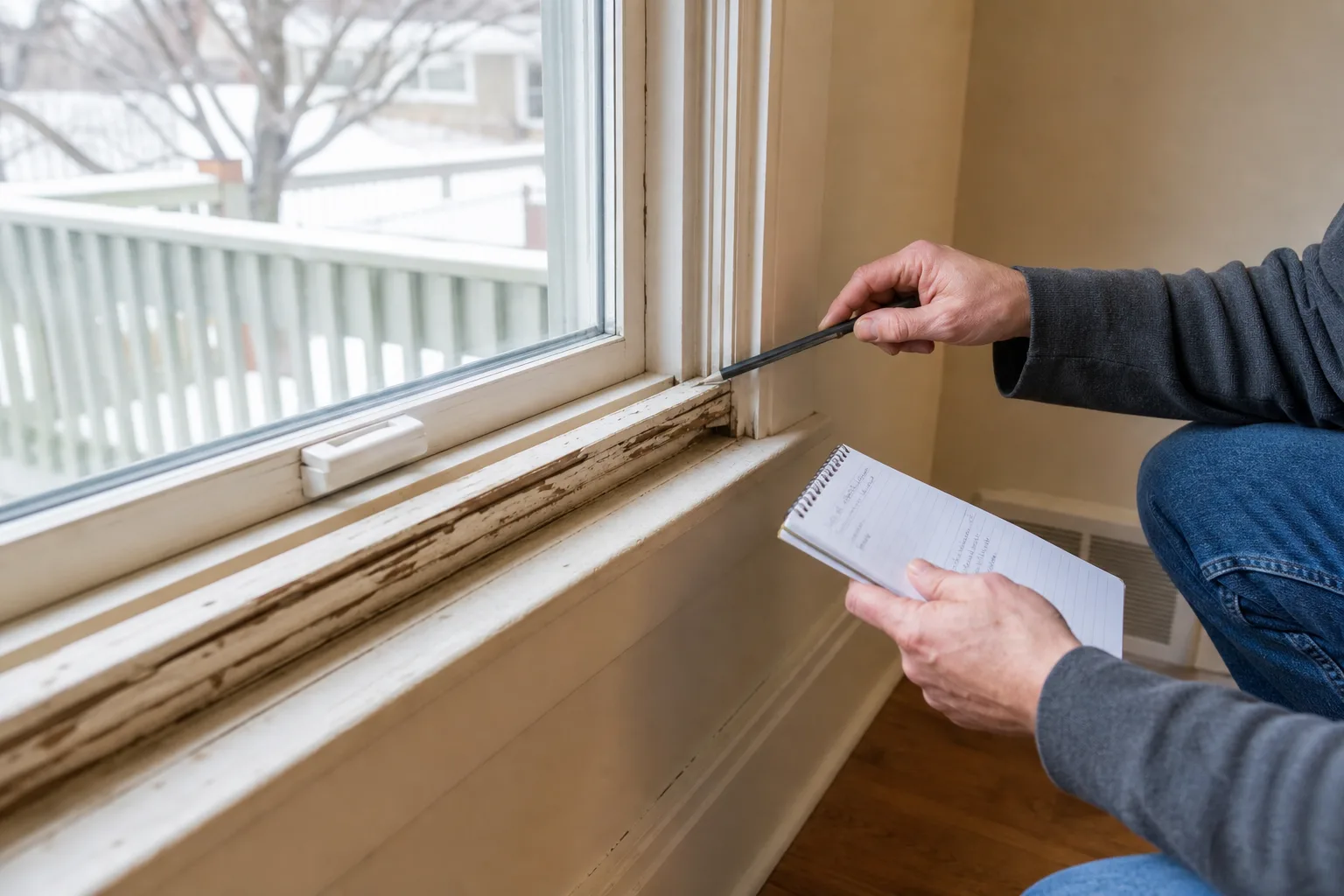
With permission, observe ordinary opening, closing, and locking. Do not force a stiff sash, remove trim, or disturb an unfamiliar part during a showing. A window that needs unusual effort should be noted for an appropriate assessment rather than pushed until it works once.
Where air leakage is the concern, ask whether the existing opening and moving sections can be addressed with a suitable repair. As a Chicago example, window insulation services in Chicago describe work on existing windows, including appropriate air sealing and weatherstripping. That example helps frame the repair question; Utah buyers should arrange a suitable local assessment, not assume the company serves their property.
Also ask whether drainage and normal operation will remain intact. A proposal to seal an opening should explain which joints need work. It should not depend on making a window permanently immovable or covering openings that are part of its drainage design.
Moisture needs its own description. Condensation on an accessible glass surface is different from moisture that appears between panes, and neither should be silently relabeled as a gap around the outside trim. A qualified local person can examine the relevant parts and explain which question the evidence supports.
What would repair or replacement actually include?
Request a clear scope for the particular opening. Does the proposal concern a worn seal, the glass unit, hardware, damaged surrounding material, or the whole window? These are different amounts and kinds of work. The explanation should connect the recommendation to what was found.
If full replacement is recommended, ask what makes repair unsuitable. If repair is recommended, ask what remains outside that work and how normal use will be checked. Neither choice should rest only on the statement that an old window is always bad or a repair is always enough.
Keep purchase decisions separate from promises about future savings. Without the property's actual conditions and a defined scope, a generic figure cannot establish the outcome for this home. Compare specific proposals and findings, not slogans about a universal payback or guaranteed improvement.
Bring the unanswered questions to the right local professional
A home inspection and a window repair visit have different purposes. Use the information from each within its stated scope, and ask what additional examination is needed when a question remains unresolved. Photos and seller recollections are useful starting points, not a complete view of a concealed condition. A borescope can help an inspector look into concealed spaces.
Before work that disturbs old paint is planned, ask about appropriate lead-safe handling. That issue is separate from whether a window opens or feels drafty. It is another reason to avoid experimenting with sanding, scraping, or removing parts during a buyer's walkthrough.
You do not have to decide the fate of every window from one chilly moment. A useful set of questions identifies what is wrong, what has been tried, and what each proposed repair would address. That gives you something concrete to discuss as part of the broader home purchase, including your closing costs in Utah planning.
Frequently asked questions
Should I replace all windows when buying an older home?
What is the difference between a failed window seal and a drafty window?
What should I ask a seller about past window repairs?
Can a home inspection tell me if windows need replacing?
Is lead paint a concern when repairing old windows?
Keep reading
More from the blog

Settlement, Closing and Possession in Utah: When a Buyer Actually Gets the Keys

Best Low-Maintenance Indoor Plants for Rental Properties

Buying Near the Jordanelle and Deer Valley East Village: What to Check First