
bds
|
ba
|
sqft
ac lot
|
car garage
|
|
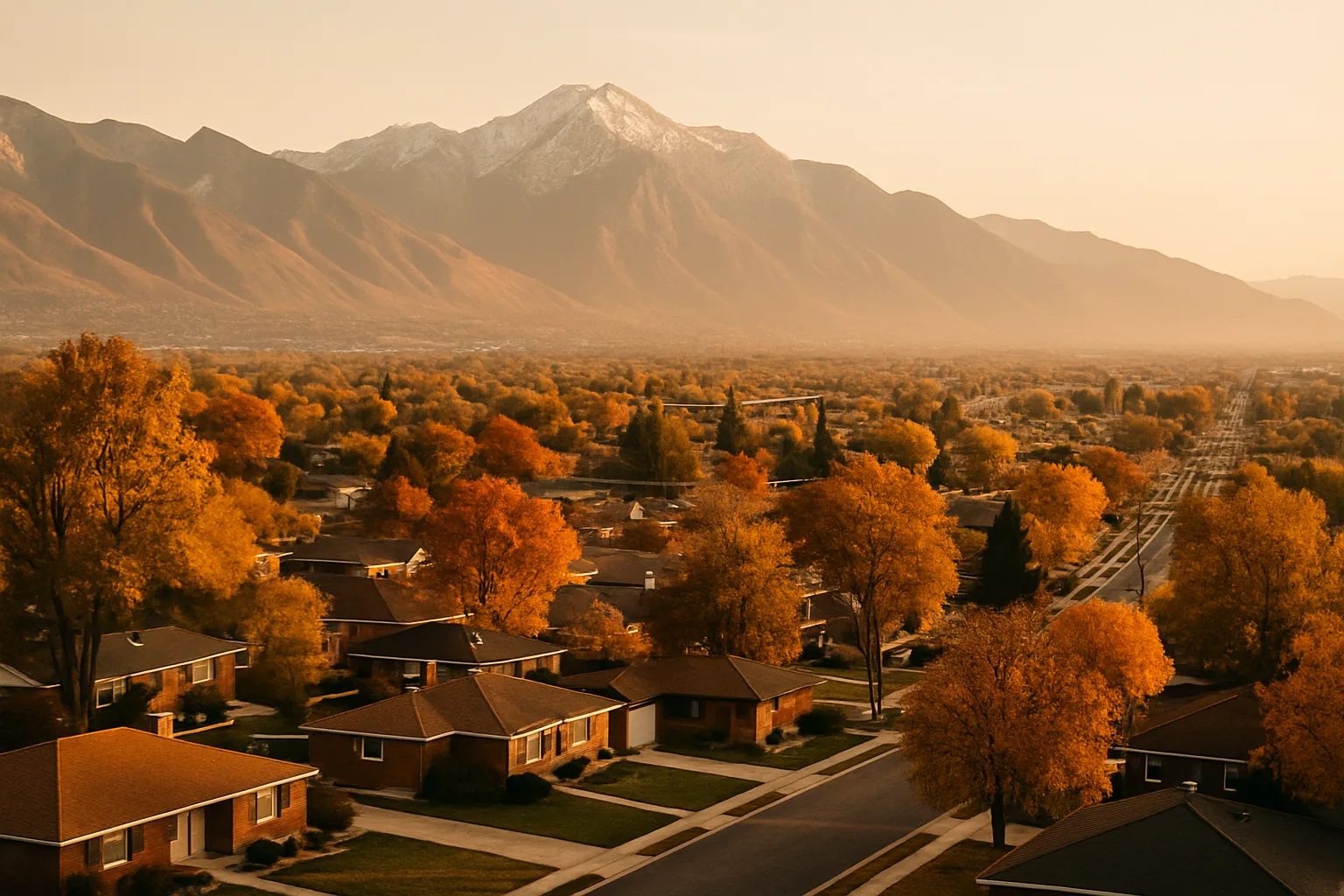
Utah
Murray Utah Homes for Sale
Live MLS listings, market trends, and neighborhood data for the geographic and transit heart of Salt Lake County — updated continuously. Browse Murray homes for sale across 167 active listings, from established Three Fountains and Winchester to newer Birkhill townhomes, with a median sale price of $495,000 in 2026.
July 2026
closed sales · last completed month
Heads up: this is last month's data.
Median sale price
$495,000
-6.2% YoY
Median days on market
31
-4 d YoY
Sale-to-list ratio
96.5%
-2.28pp YoY
Homes sold
24
-32 YoY
July 2026 snapshot
Murray, Utah housing market
Unsold inventory in Murray is asking $532,900 at the median, -5.26% year-over-year. Homes that closed sold at $495,000 — 96.5% of each home's final list price, going to contract in a median of 31 days.
Unsold inventory
167
active + pending
Homes in Murray that have not yet closed — includes Active, Pending, Active Under Contract, and Coming Soon. Pending is included because a deal under contract can fall through, so the home still counts as unsold inventory until it actually closes. Pulled live from the MLS.
New listings
69
in July 2026
Number of homes that came on the market during July 2026.
Median sale price
$495,000
24 sold
Middle sale price of homes that closed in July 2026. Median (not average) so luxury sales don't skew it.
Median list price
$532,900
current asking
Middle asking price across all unsold inventory right now (Active + Pending). Differs from median sale price because list = what sellers want, sale = what buyers actually paid.
Sale-to-list
96.5%
of final list
For each home that closed, closeprice ÷ its own final list price, averaged across the month. Over 100% = homes sold above asking (sellers' market), under 100% = below asking (buyers have leverage). Measures vs final list (post-reductions), not vs original asking.
Median days
31
on market
Median days a home spent listed before going under contract during July 2026. Lower = faster-moving market.
Data through July 31, 2026.
View full market report
→
Just listed
Latest in Murray
Neighborhoods
Explore Murray communities
COTTONWOOD CREEK
7 listings
· median $510,000
BULLION
6 listings
· median $504,900
WINCHESTER ESTATES
5 listings
· median $185,000
COTTONWOOD COVES
5 listings
· median $95,000
THREE FOUNTAINS
5 listings
· median $532,499
WILLOWS CONDM
4 listings
· median $259,450
SOUTH 67 CONDOS
3 listings
· median $275,000
TATE
3 listings
· median $999,950
WATERBURY OP
2 listings
· median $344,950
APPLEGATE CONDM
2 listings
· median $334,950
VILLAGE GARDENS
2 listings
· median $491,988
WATERSTONE
2 listings
· median $759,900
Nearby
Compare to other cities
| City | Unsold | Median list |
|---|---|---|
| Salt Lake City | 964 | $590,000 |
| South Jordan | 448 | $601,100 |
| Herriman | 443 | $599,900 |
| West Valley City | 393 | $465,000 |
| West Jordan | 327 | $580,000 |
| Sandy | 308 | $699,900 |
| Draper | 166 | $898,745 |
| Taylorsville | 147 | $465,000 |
About Murray
Living in Murray
Murray sits at the geographic and transit-infrastructure heart of Salt Lake County — population roughly 51,000 (2024 U.S. Census ACS estimate), at the I-15 / I-215 interchange, anchored by Intermountain Medical Center (the flagship hospital of Intermountain Health) and Fashion Place Mall (the region's premier shopping center since 1972). Where Sandy reads as the established East Bench suburb and Holladay reads as the leafy premium pocket, Murray reads as the central, transit-rich, mid-density inner-valley city — the place buyers pick when they want maximum access to everything in the valley without the East Bench premium or the south-end commute.
Murray's identity is shaped by an unusual mix of history and modernity. The city grew up as a smelter town (the American Smelting and Refining Company — ASARCO — anchored the local economy through the early 20th century; Murray High's mascot was the "Smelterites" until 1952). Today, that former 100-acre smelter site has been reclaimed via the EPA Superfund program and rebuilt as Intermountain Medical Center, which opened in 2007 as the largest hospital in Utah. The Murray Theater on State Street, a 1938 Art Moderne building on the National Register of Historic Places, reopened in September 2025 after a major renovation. That layering of post-industrial reinvention, established mid-century housing stock, and modern transit-oriented redevelopment is what makes Murray distinctive.
Why Buyers Choose Murray, Utah
Murray's draw is the combination of central-valley location, transit infrastructure, and value-priced inner-suburb housing that's harder to find elsewhere in Salt Lake County. A few of the structural reasons buyers consistently pick Murray:
- True center-of-the-valley location. Murray sits at the intersection of I-15 and I-215, with State Street running through the city's commercial spine. From a central Murray neighborhood, downtown Salt Lake City is 15-20 minutes north, the Silicon Slopes tech corridor (Lehi, Draper) is 15-25 minutes south, the airport is 20 minutes northwest, and the Big and Little Cottonwood ski canyons are 25-35 minutes east. Few Utah cities have this much directional flexibility.
- Intermountain Medical Center. The flagship hospital of Intermountain Health, on a 100-acre campus at 5121 S Cottonwood St. 504 licensed beds (the largest in Utah), Level I trauma center, the only Joint Commission–certified Comprehensive Stroke Center in the state. Major regional referral center for six Mountain West states. Medical professionals and healthcare workers often live in Murray specifically for the commute.
- Fashion Place Mall. Murray's anchor regional shopping destination, opened 1972, at 6191 S State Street. 145 stores anchored by Nordstrom, Crate & Barrel, Macy's, and Dillard's — Utah's only Zara, Crate & Barrel, Urban Outfitters, The Container Store, and Abercrombie Kids locations are here. The mall is consistently cited as Utah's top regional shopping destination.
- Transit access better than most inner suburbs. TRAX Blue Line stops at Murray Central and Murray North, with the Murray Central station also serving as a major FrontRunner commuter-rail hub connecting north to Ogden and south to Provo. The combination of light rail + commuter rail at one transfer point is unusual in the metro.
- Murray City School District. One of the few standalone city school districts in Utah (most Salt Lake County cities are in Canyons, Granite, or Jordan districts). Murray High School (the Spartans) is the only high school and offers the highest number of Salt Lake Community College Concurrent Enrollment classes of any high school in the state — strong feeder for college credit.
- Value-priced inner-suburb housing. Murray's housing stock is heavily mid-century (1950s-1980s) with newer townhome and condo infill clustered around the State Street corridor and the Murray Central transit hub. Per-square-foot pricing typically sits below comparable Sandy, Holladay, and Cottonwood Heights properties — buyers get inner-valley location at outer-suburb pricing.
- Diverse, established neighborhoods. Murray's demographics are notably more diverse than other Salt Lake County suburbs (about 14.6% Hispanic per 2024 ACS, with strong Latino and immigrant-community presence along the State Street corridor). The mid-century housing stock and established neighborhoods give the city a settled, lived-in feel that newer suburbs can take decades to develop.
Buyers who find Murray a weaker fit are usually those who specifically want brand-new construction at scale (the inventory is mature; new builds are largely infill condos and townhomes rather than greenfield single-family) or who want bench-elevation foothill views (Murray sits on the valley floor — the views go east toward the mountains, not above them). Those buyers typically look to Sandy, Holladay, or Cottonwood Heights for the bench premium, or south to Herriman and South Jordan for greenfield new construction.
Top Neighborhoods in Murray
Murray's neighborhoods are organized more by housing-stock era and transit access than by elevation. Three broad clusters: the established central-Murray neighborhoods built between the 1950s and 1980s, the transit-oriented State Street / Murray Central infill, and the planned communities (gated 55+, townhomes, condos) sprinkled throughout. Each one linked below carries dedicated MLS listings on its community page.
Established Central Murray
- Winchester and Winchester Estates — established planned neighborhoods in central Murray, family-stable, mature trees, mid-century to 1980s housing stock. Among the city's most-searched residential pockets.
- Willows — established neighborhood with a strong neighborhood-association presence, walkable to Murray Park.
- Willowbrook — adjacent established pocket, similar mid-century housing profile, family-suburban character.
- Walden Hills — small established neighborhood, quieter cul-de-sac streets, larger lots than Murray average.
- Apple Gate — planned community in central Murray, mature landscaping, family demographics.
- Auburn Gardens — established residential pocket, well-maintained mid-century homes.
- Glendon Way — quiet single-family street network, family-friendly.
Gated, 55+, and Planned Communities
- Three Fountains and Three Fountains East — gated 55+ active-adult community with single-level homes, mature landscaping, community pool, and tight neighborhood feel. Among the most-searched 55+ enclaves in central Salt Lake County. Browse all 55+ Murray communities for the current inventory.
- Cottonwood Coves — established planned community in southeast Murray near the Cottonwood-Holladay border, family-stable demographics.
- Waterbury — planned community with mid-tier housing stock, family demographics.
- Ridges at Murray — newer planned community, mix of single-family and attached homes.
Transit-Oriented & Newer Townhome Infill
- Birkhill — newer townhome and condo community near Fashion Place Mall, popular with young professionals and downsizing buyers seeking a low-maintenance lock-and-leave home with high transit access. TRAX stop within walking distance.
- Various condo and townhome developments along the State Street and Murray Central corridor — a mix of mid-century apartment conversions and newer mid-rise developments oriented around the TRAX line. Browse Murray condos and Murray townhouses for the current inventory.
Murray Home Prices in 2026: What Buyers Should Know
Current Murray market signals (live from the MLS, updated monthly):
- Median sale price: $495,000 (last completed month)
- Median time on market: 31 days
- Sale-to-list ratio: 96.5%
- Active listings: 167 homes available
Murray's market is competitive but generally a notch more accessible than its higher-priced neighbors. Per-square-foot pricing in Murray typically sits 10-25% below comparable inventory in Holladay, Cottonwood Heights, and the East Bench portions of Sandy. The Murray monthly sold count is smaller than larger neighboring cities, which means month-to-month median sale prices can swing depending on which neighborhoods closed; the directional 6-12 month trend is more reliable than the single-month median.
Why Zillow estimates can miss the mark here
Utah is a non-disclosure state — actual sale prices are not public record. Zillow, Redfin, and similar algorithmic estimators rely on partial MLS data and have less ground truth in Utah than in disclosure states like California or Texas. Murray's housing-stock mix amplifies the problem: a 1955 brick bungalow off Vine Street and a 2022 Birkhill townhouse near TRAX can both sit in the 84107 ZIP. A local-agent comparative market analysis via the free home valuation page is meaningfully more accurate than any algorithm.
Murray's Anchor Institutions: Hospital, Mall, and Theater
Three institutions anchor Murray's identity and economy more than any others — and the unusual scale of all three for a city of 51,000 is much of what makes Murray distinctive.
- Intermountain Medical Center (5121 S Cottonwood St) — the flagship hospital of Intermountain Health, opened October 29, 2007. 504 licensed beds (largest in Utah), Level I trauma center accredited by the American College of Surgeons, the only Joint Commission–certified Comprehensive Stroke Center in Utah, and a major regional referral center for six surrounding states. The 100-acre campus sits on the reclaimed site of the former ASARCO Murray lead smelter — the project was the most significant EPA Superfund redevelopment in Utah history. Specialty services include cardiothoracic surgery, neurosurgery, women's services, orthopedics, oncology, and transplant surgery.
- Fashion Place Mall (6191 S State St) — Utah's premier regional shopping center since 1972. 145 stores anchored by Nordstrom, Crate & Barrel, Macy's, and Dillard's. Holds Utah's only Zara, Crate & Barrel, Urban Outfitters, The Container Store, and Abercrombie Kids locations. The State Street corridor surrounding the mall has continued to densify with restaurants, hotels, and supporting retail.
- Murray Theater (4961 S State St) — a 1938 Art Moderne theater on the National Register of Historic Places, one of the area's best surviving examples of the streamlined-modern theater architecture of the era. After years of partial use and renovation work, the theater reopened in September 2025 under new management with a programmed mix of independent film, live performance, and community events. Among Murray's most visible commitments to historic preservation alongside contemporary use.
- Murray Park & Amphitheater (495 E 5300 S) — the city's flagship 47-acre park, with the Murray Park Amphitheater (built 1985) hosting the city's annual summer concert and theater series, the Murray Arts Council's longstanding outdoor musical-theater productions, picnic pavilions, fishing pond, and a network of walking paths along Little Cottonwood Creek.
For a city of 51,000, having a Level I trauma center, the state's top mall, a National-Register-listed historic theater, and a city-park amphitheater hosting summer concerts is well above what comparable inner-suburbs deliver.
Schools and Higher Education
Murray is served by the Murray City School District — one of only a handful of standalone city school districts in Utah (most Salt Lake County cities are part of Canyons, Granite, or Jordan districts). The district operates a single high school plus three middle schools and seven elementary schools, all within Murray city limits.
- Murray High School (5440 S State St) — the only high school in the district. Mascot the Spartan, school colors orange and black. Enrollment ~1,465. Notably, Murray High offers the highest number of Salt Lake Community College Concurrent Enrollment classes of any high school in the state — students can graduate with substantial college credit. The school's mascot was the "Smelterites" (a reference to the historic ASARCO smelter that dominated the local economy) until 1952, when it was changed to the Spartans. Famous alumni include David Archuleta (American Idol season 7 runner-up); the campus also hosted the 2008 Disney Channel reality show "High School Musical: Get in the Picture." A new wing is currently under construction, opening Fall 2027.
- Hillcrest Junior High School and Riverview Junior High School — the district's two junior highs, both feeding into Murray High.
- Seven elementary schools across the city.
Being a standalone city district has real implications: schools are smaller than their Canyons or Granite counterparts, the district makes decisions independently of the larger county systems, and Murray families consistently report stronger community involvement in school governance than is typical in larger districts.
For families preferring private school, options near Murray include Juan Diego Catholic High School (in Draper), Rowland Hall (in Salt Lake City), and Catholic and Montessori elementary options scattered through the inner valley. The Salt Lake Community College Taylorsville Redwood Campus is 10-15 minutes west; the University of Utah is 20-25 minutes northeast.
Crime and Safety
Murray's overall safety profile is mid-range for Salt Lake County — meaningfully safer than the higher-incident urban-core neighborhoods of Salt Lake City proper, and broadly comparable to peer inner suburbs Midvale, South Salt Lake, and West Valley City. Property crime concentrates around the State Street commercial corridor (where Fashion Place Mall and the dense retail spine sit), the I-15 / I-215 transition zone, and the State Street / Vine Street commercial blocks; quiet residential neighborhoods (Winchester, Three Fountains, Walden Hills, Willowbrook, Walden Hills, Apple Gate) report substantially lower incident counts.
For buyers wanting the short version: the eastern half of Murray (east of State Street, between Vine Street and the 5300 South corridor) reads consistently cleanly safer than the western half closer to the I-15 corridor and the State Street commercial spine. Three Fountains, Winchester, Willowbrook, and the established central-Murray pockets all sit below the citywide average. The State Street commercial corridor carries the elevated property-crime counts that are unavoidable with high-volume retail traffic — but those numbers should not be conflated with residential safety, which is materially different.
Murray's overall FBI Uniform Crime Reporting numbers consistently sit near the national average for mid-sized inner-suburban cities, comparable to peer Utah cities Midvale and South Salt Lake, lower than Salt Lake City proper, and higher than Sandy or Holladay.
Healthcare
Murray's healthcare access is among the strongest in the country for a city its size, anchored by the Intermountain Medical Center complex but extending well beyond it:
- Intermountain Medical Center (5121 S Cottonwood St) — the regional flagship, 504 licensed beds, full Level I trauma center, comprehensive stroke certification, and specialty services across cardiology, oncology, orthopedics, women's services, and transplant.
- The Intermountain Medical Center campus includes the LDS Hospital cardiothoracic surgery program (relocated from Avenues), the Intermountain Healing Hearts cardiac program, the TOSH (The Orthopedic Specialty Hospital) orthopedic specialty hospital, the Intermountain Cancer Center, and the Live Well Center for preventive care — all on the same 100-acre site for one-stop specialty access.
- Saint Mark's Hospital (3900 S 1200 East, ~5 minutes north in Millcreek) — the historic Episcopal hospital, now part of HCA. Strong cardiac, women's, and behavioral-health programs.
- University of Utah Health Madsen Health Center and other U Health clinics throughout the inner valley — academic-medicine specialty access.
For buyers with chronic health needs, families with young children, or healthcare professionals, the density of in-city specialty care is genuinely difficult to match in any other Utah suburb.
Tech, Economy, and the Murray Job Market
Murray's central-valley location makes it one of the most-favored "commute from anywhere" cities in the metro for tech professionals. Most Silicon Slopes tech employers (Adobe, Microsoft, Qualtrics, Ancestry, Domo) are 15-25 minutes south in Lehi, Draper, and American Fork; downtown Salt Lake City's financial-services and federal-government employers are 15-20 minutes north. Murray-based tech professionals routinely report 25-30 minute commute times in either direction.
Major employers headquartered or anchored in Murray include Intermountain Health (Intermountain Medical Center is one of the city's largest single employers), the Murray City School District, the City of Murray itself (municipal government), and a strong cluster of independent professional-services firms along the State Street and 5300 South corridors. Nearby Midvale hosts Beyond, Inc. (the parent company of Overstock and Bed Bath & Beyond, recently restructured but maintaining Utah operations), and the broader inner-valley cluster includes financial services, healthcare-adjacent technology, and regional retail headquarters.
Per the Kem C. Gardner Policy Institute at the University of Utah, the Wasatch Front is projected to add roughly 600,000 residents between 2024 and 2050. Most net new growth lands in the south-end suburbs (Lehi corridor, Eagle Mountain, Saratoga Springs), but central-valley cities like Murray benefit from sustained demand pressure as inner-valley housing stock becomes increasingly scarce relative to job opportunities.
Food, Dining, and Shopping
Murray's dining and retail clusters more densely than most inner suburbs of its size:
- Fashion Place corridor (State Street between 5300 and 6400 South): the mall plus a thick ring of national and regional restaurants — Texas de Brazil churrascaria, Cheesecake Factory, P.F. Chang's, R&R BBQ, Cubby's Sandwiches, plus a strong cluster of casual chains and full-service options.
- State Street commercial spine: Murray's State Street corridor north of 5300 South has one of the metro's strongest concentrations of Mexican and Latin American restaurants — Red Iguana 2, Taqueria 27, and numerous family-owned taquerias and pupuserias reflecting the city's strong Latino community.
- 5300 South and Vine Street: mid-tier independent restaurants, breakfast spots, and bakeries, along with the historic Murray Theater.
- Big-box and grocery: Costco (5052 W 6200 S), Target, Smith's (Kroger), Sprouts, Whole Foods, Trader Joe's, and Walmart all have Murray or immediate-Murray-adjacent locations. Coverage is unusually comprehensive for the city's footprint.
Public Transportation: A Central Transit Hub
Murray is genuinely one of the most transit-rich cities in Utah for its size. The TRAX Blue Line light rail stops at Murray North (5253 S State St) and Murray Central (140 W 5170 S, the larger of the two), connecting south to Sandy and Draper and north to downtown Salt Lake City with 15-20 minute headways. FrontRunner commuter rail's Murray Central station shares the Murray Central TRAX hub, making it one of the very few one-transfer-or-no-transfer commuter access points to Ogden (45 min north) and Provo (60 min south).
For car commuters, drive times from a central Murray neighborhood (off-peak):
- Downtown Salt Lake City: 15-20 min
- University of Utah: 20-25 min
- Lehi (Adobe / Microsoft Silicon Slopes campuses): 20-30 min
- Salt Lake City International Airport: 18-25 min
- Alta or Snowbird base areas (Little Cottonwood Canyon): 25-40 min
- Brighton or Solitude (Big Cottonwood Canyon): 25-35 min
- Park City via I-80 east: 30-40 min
Few inner suburbs in any Mountain West metro offer this combination of car flexibility plus genuine rail-transit options.
Family Life and Recreation
Murray's parks and family-amenity density is strong for its footprint:
- Murray Park (495 E 5300 S) — the city's flagship 47-acre park anchored by the Murray Park Amphitheater (built 1985, 2023 reseat with cup-holder stadium seating), with the Little Cottonwood Creek running through, picnic pavilions, fishing pond, walking and biking paths, and the Murray Park Center community building.
- The Park Center (202 E 5300 S) — Murray's city recreation center with indoor pool, gym, fitness equipment, and family programming year-round.
- Wheeler Historic Farm — though just outside Murray's city limits in unincorporated Salt Lake County immediately south, Wheeler is the closest farm-experience destination for Murray families and a frequent weekend stop.
- Jordan River Parkway — the paved 45+ mile trail along the western edge of the metro passes through Murray's western neighborhoods.
- Sugar House Park (in adjacent Salt Lake City's Sugar House neighborhood) — 10 minutes north for family weekend trips.
- Loveland Living Planet Aquarium in nearby Draper, 15-20 minutes south — frequent family day-trip destination.
Beyond the named institutions, the central-valley location means that virtually any major Salt Lake County family-attraction destination is within a 25-minute drive: Hogle Zoo, Red Butte Garden, the Natural History Museum, Discovery Gateway Children's Museum, Living Planet Aquarium, and the Cottonwood-canyon trailheads are all reachable within a single weekend afternoon.
Growth and Future Outlook
Murray is largely built out, with metro-wide growth concentrating in southern and western suburbs (Herriman, Eagle Mountain, Saratoga Springs, Lehi). Murray's growth is happening through infill and redevelopment rather than greenfield. Key forward-looking signals:
- State Street corridor redevelopment — the Murray Central transit hub area has been intensifying with mixed-use townhome and condo development for over a decade, with continued multifamily and mixed-use projects in the planning and construction pipeline.
- Continued Intermountain Health expansion — the IMC campus has added specialty centers and outpatient capacity regularly since opening, with continued multi-year capital plans.
- Murray High School expansion — the new high school wing opening Fall 2027 reflects sustained district investment.
- Olympics 2034 — Murray's central location means it benefits from broader Wasatch Front Olympics-publicity demand, though Murray itself is not a primary venue site.
- Transit-oriented demand — as fuel and infrastructure costs continue to rise, the dual TRAX + FrontRunner access point at Murray Central is likely to compound in value, supporting price strength for nearby properties.
For buyers thinking 5-10 years out, Murray offers a distinctly different value proposition than newer master-planned suburbs: established neighborhoods, mature trees, comprehensive transit, anchor-institution economic stability, and inner-valley scarcity. Few cities in the metro combine all five.
The Bottom Line
Murray is the right fit for buyers who want central-valley location with real transit infrastructure, mid-priced inner-suburb housing, established neighborhood character, and anchor institutions (Intermountain Medical Center, Fashion Place Mall, Murray Theater) that punch well above the typical suburban scale. Buyers willing to trade brand-new construction and East Bench foothill elevation get inner-valley access, transit options, and value pricing in return.
Buyers wanting newer construction, larger lots at lower price points, or East Bench foothill character typically find better fits in the surrounding cities. Compare with Sandy (established suburban, East Bench, Canyons schools), Holladay (East Bench premium, leafy), Cottonwood Heights (canyon-mouth premium), Midvale (more affordable adjacent), Millcreek (newer city, similar central location), South Salt Lake (denser, more affordable north neighbor), West Valley City (western value), Taylorsville (southwestern value), and South Jordan (master-planned, family suburb to the south).
For a free, accurate Murray home valuation, request a local-agent CMA. To talk through a relocation, financing, or specific neighborhood question, give us a call. The filter sidebar below collects every active price, property-type, lifestyle, and feature filter for Murray — browse by what matters most to your search.
The MLS data on this page is sourced from the Regional Multiple Listing Service and refreshed every 15 minutes; information is deemed reliable but not guaranteed and should be independently verified. Census population figures from U.S. Census Bureau 2024 ACS estimates. Intermountain Medical Center facts per Intermountain Health public communications. Fashion Place Mall facts per Brookfield Properties communications. Murray Theater facts per Murray City Cultural Arts and the National Register of Historic Places. School district facts per Murray City School District.
Local expertise
Move forward with a Murray expert
Best Utah Real Estate isn't a directory — we're licensed agents who live and work in Murray. Get pricing context that goes beyond the median, schedule tours on your timeline, and have a local who knows the neighborhood walk every step with you.