Living in Woodland Hills, Utah 2026: Is It Worth It?
Woodland Hills is southern Utah County's smallest, quietest, most wooded city — about 1,650 residents at the foot of Loafer Mountain, Salem Hills schools, Summit Creek as the master-planned anchor, and the smallest market in the cluster. Here's the honest 2026 read on schools, commute, and what to expect from a tiny custom-home market.
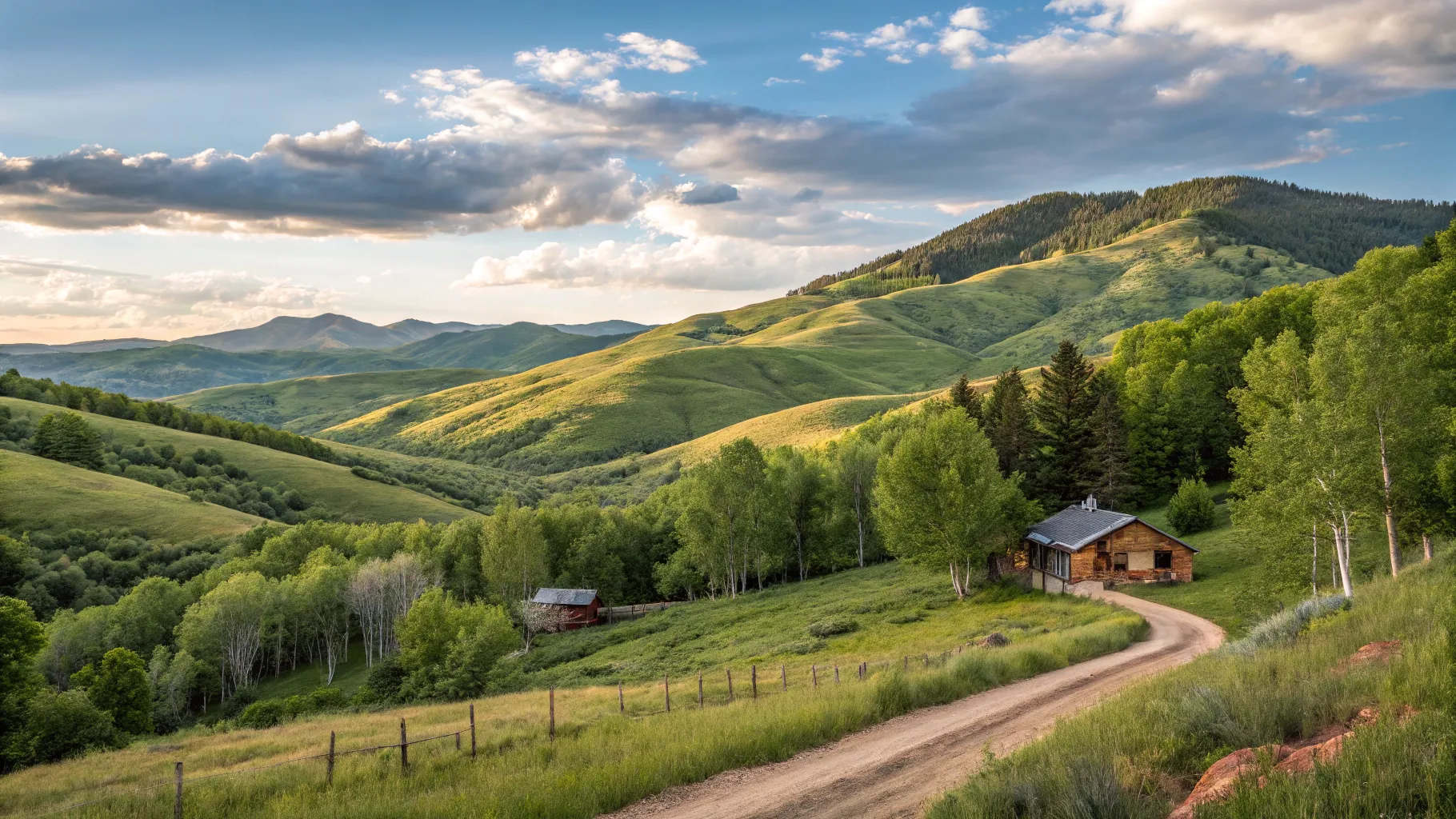
Woodland Hills is the smallest city in the southern Utah County cluster — about 1,650 residents tucked into the wooded foothills above Salem, at the base of Loafer Mountain and Santaquin Peak. The city earned its name in the early 1970s when developers started a subdivision in what was then essentially uninhabited bench land; the homes sat amongst the wooded hills, and the name stuck. Woodland Hills incorporated as a town in 1979 and became a city at the end of 2000.
The honest question for buyers is not whether Woodland Hills is a scenic, quiet place to live. Almost every home has trees, views, and the kind of acreage you can't find in central Utah Valley. The better question is whether the trade-offs match a specific commute, a very small and luxury-skewed market, and a lifestyle that requires driving for everything. This guide covers what to expect in 2026, where Woodland Hills earns its appeal, and where it asks for compromises.
Buyers can also browse current Woodland Hills homes for sale alongside this guide, or compare against the broader Utah real estate market.
Who Woodland Hills Is Best For
Woodland Hills attracts a more specific buyer than even most small Utah County cities. The market currently has 15 active listings reported through the multi-month aggregator, with a median list price around $1,761,500. Closed sales typically run just 1 to 3 transactions per month — meaning a single luxury sale can swing the headline median by more than a million dollars (the recent 6-month range has run from $875,000 to nearly $2 million depending on which homes happened to close).
The strongest fits:
- Buyers wanting wooded-hillside view lots and significant acreage — Woodland Hills is what its name describes; homes are placed amongst trees on bench parcels that are increasingly hard to find elsewhere in Utah Valley
- Households drawn to the Summit Creek master-planned community — Summit Creek is the largest recent development in the city and the most common entry point for new residents (see Summit Creek homes)
- Families prioritizing Salem Hills High School — Woodland Hills shares the school with Salem, Elk Ridge, and parts of Payson, giving a multi-city identity to the high school experience
- Buyers comfortable with custom-home and high-end inventory — Woodland Hills does not have a starter-home segment; most listings are custom and view-oriented
- Households planning a long hold — small markets aren't kind to quick resales
It's a weaker fit for buyers needing in-city retail, sellers needing a fast resale, anyone with a daily Salt Lake City commute, or households expecting a predictable monthly market read.
Woodland Hills Home Prices in 2026: What Buyers Should Know
Woodland Hills is the smallest residential market in southern Utah County. That has serious implications for how buyers and sellers should read the numbers:
- Active listings: 15
- Median list price: $1,761,500
- Typical closed-sale range (last 6 months): $875,000 to nearly $2 million, depending on the mix
- Sale-to-list ratio: historically near 100%, but volatile month-to-month given the small sample
The monthly closed-sale count in Woodland Hills is typically 0 to 3 transactions. Some months have zero sales at all. When a single high-end custom home does close, it can set the "median" for that month at $1.5M or more, which has nothing to do with the broader inventory mix. Buyers and sellers should plan against the 12-month range and the inventory currently on the market, not the latest single month's headline number.
Inventory is concentrated in the luxury segment, with a sizable share on acreage parcels. The most consistently active community is Summit Creek by a wide margin, with Four Seasons, Flintridge, and Thousand Oaks rounding out the remainder.
Why Zillow estimates are essentially useless here
Utah is a non-disclosure state — sale prices are not publicly reported to third-party valuation sites. In a market this small, automated estimates have so few comparable sales to draw from that the algorithm produces numbers that often swing $300,000–$500,000 between weekly updates. Buyers shopping by Zillow alone are flying blind in Woodland Hills.
The Commute Reality
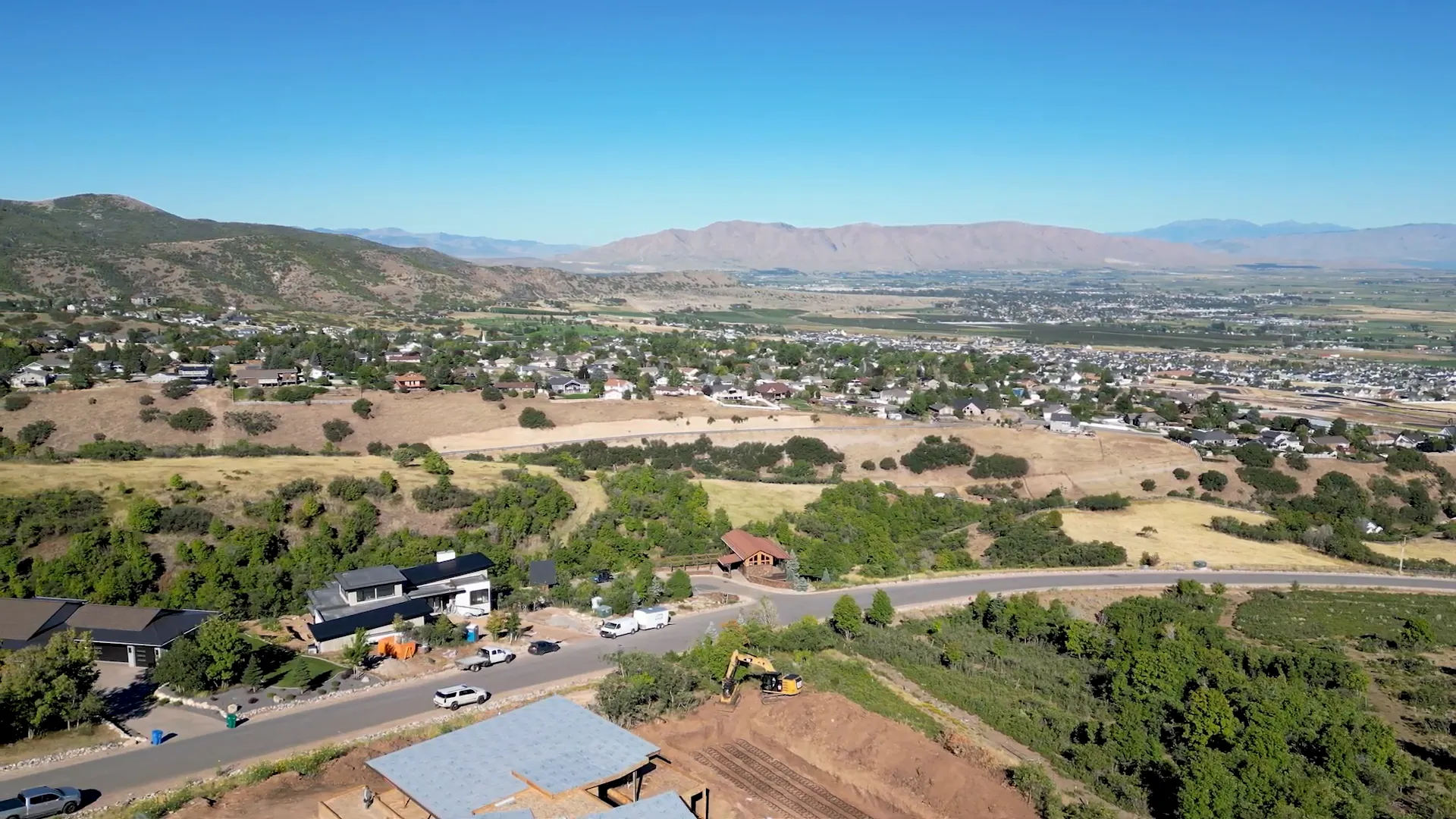
Woodland Hills has no through-route — buyers enter via Salem from the west or via Elk Ridge from the north, and that's it. The trade-off is real quietness; the cost is a slightly longer freeway reach than the larger cities have.
When the commute works
- Salem: about 5 to 7 minutes
- Elk Ridge: about 5 minutes — neighbor community sharing Salem Hills HS
- Spanish Fork: about 15 to 20 minutes for Canyon Creek shopping and dining
- Provo: 30 to 35 minutes north in normal traffic
- Lehi / Silicon Slopes: 50 to 60 minutes off-peak
For Provo-area workers, remote and hybrid employees, retirees, or anyone happy to live well off the main corridor, Woodland Hills is workable.
When it doesn't
Daily peak-hour commutes to downtown Salt Lake City run 70 to 90 minutes one way before snow or accidents. The bench-town location adds meaningful time to any direction except south through Salem. Households committed to a daily SLC drive should test the actual route at 7:00 AM on a weekday before they buy.
Schools in Woodland Hills
Woodland Hills is part of Nebo School District. The city does not have its own schools inside city limits — students attend schools shared with the broader bench community:
- Salem Hills High School — opened 2008, serves Woodland Hills, Salem, Elk Ridge, and parts of Payson
- Elementary and junior high — students attend nearby Salem and the broader Nebo district. Families should verify the specific school assignment for the exact address before buying.
For families prioritizing in-town K-12, Woodland Hills doesn't offer that. The Salem Hills shared identity is the practical equivalent — students share their high school experience with three other small bench-and-canyon towns.
Safety and Everyday Feel
Woodland Hills consistently ranks among the safer cities in Utah County. Crime is rare and overwhelmingly concentrated in property crime; violent incidents are essentially non-existent at this population scale. The city's combination of no through-route, tiny population, and homeowner-heavy demographics produces one of the quietest residential environments in Utah Valley.
The everyday character is the wooded-hillside character — large lots, mature trees, custom architecture, and the strong sense that everyone in town actively chose to live there rather than commute through. Woodland Hills does not carry a major event calendar; community life is small-scale and locally focused.
Loafer Mountain, Santaquin Peak, and the Wooded-Hillside Lifestyle
Two mountains define Woodland Hills' geography.
Loafer Mountain rises immediately northeast of the city, peaking at over 10,600 feet. It's the visual anchor for most of the city's higher-elevation lots and provides direct trail access into the Wasatch backcountry.
Santaquin Peak sits south of Loafer, just over 10,600 feet itself. Together, Loafer and Santaquin Peak frame the eastern skyline that defines the Woodland Hills view inventory.
The "wooded" half of the name is literal — Woodland Hills was platted in the early 1970s specifically because the bench above Salem still had mature tree cover, which most of Utah Valley had long since lost. Homes here are typically placed among existing trees rather than cleared land, which gives the city its visual identity.
Recreation access includes:
- Loafer Mountain trail system — direct hiking and mountain-biking access into the foothills
- The Nebo Loop Scenic Byway — about 20 minutes south via Payson; one of Utah's signature fall-color drives
- Salem Pond — 5 to 7 minutes via Salem; year-round trout fishing and walking
- Spanish Fork Canyon — 25 minutes east via Spanish Fork; Diamond Fork Hot Springs and Strawberry Reservoir lie deeper in
Retail and Dining: Honest Expectations
Woodland Hills has zero in-city retail. No grocery store, no big-box, no restaurants, no gas. The city's tiny population and no-through-route geometry mean commercial development has stayed elsewhere — and most residents view that as a feature.
For daily needs, residents drive 5 to 7 minutes to Salem or 15 minutes to Payson for basics. For groceries, dining, or big-box retail, the destination is 15 to 20 minutes west to Spanish Fork's Canyon Creek (Costco, Walmart, Lowe's, the dining cluster). Buyers should be honest about how often a 15-minute drive for routine errands will feel acceptable rather than tedious.
The Real Trade-Off
Woodland Hills' trade-off is the trade-off of a tiny wooded-hillside town deliberately outside every development pattern:
- What buyers get: wooded view lots, Loafer Mountain and Santaquin Peak vistas, custom-home neighborhoods, Salem Hills schools, larger lots than any neighboring city, Summit Creek as a master-planned anchor, and the quietest residential environment in southern Utah County
- What buyers give up: any in-city retail or services, fast resale (the market is small enough that selling can take months), predictable monthly market reads, dining variety, daily Salt Lake City commutes, and starter-home pricing of any kind
For households who actively want the wooded-hillside address and don't mind driving for everything, the math works. For buyers needing any kind of convenience or speed of resale, the case is much weaker.
A Simple Scorecard for Deciding if Woodland Hills Fits
Before choosing Woodland Hills, buyers can run a five-part check:
1. Commute reality
Test the actual drive from a target address to the I-15 freeway at 7:00 AM on a weekday. Woodland Hills adds the longest freeway reach of any city in the southern cluster.
2. Market patience
Woodland Hills is the smallest market in the cluster. Buyers and sellers should plan against the 12-month range, not any single month's median figure.
3. School commitment
Salem Hills High serves the multi-city bench community. There is no in-town K-12 option in Woodland Hills itself.
4. Retail tolerance
How often will a 15-minute drive to Spanish Fork for groceries, dining, or routine errands feel acceptable rather than tedious? There is nothing in Woodland Hills itself.
5. Lifestyle match
Will the household actually use the trees, the views, the Loafer trails, and the quietness? If yes, the value compounds. If not, Woodland Hills' case is mostly about quiet for its own sake.
Common Mistakes Buyers Make Before Moving to Woodland Hills
- Anchoring on a single month's median sale — Woodland Hills' typical 1-to-3-sales-per-month count makes the headline number swing wildly
- Testing the commute on a weekend — the freeway reach is the longest in the cluster and only shows on weekday mornings
- Trusting Zillow estimates — the algorithm is essentially blind in markets this small
- Expecting any in-city retail — Woodland Hills has none, period
- Assuming the schools are Woodland Hills-only — Salem Hills is the shared bench-community high school
- Underestimating the resale timeline — small markets at the higher end can take many months to find the right buyer
Is Woodland Hills a Good Place to Live in 2026?
Yes — for the right buyer, Woodland Hills is the quietest, most wooded-hillside option in southern Utah County. It works well for:
- Households wanting wooded view lots and significant acreage
- Buyers drawn to Summit Creek or the custom-home segment
- Families willing to share Salem Hills with the broader bench community
- Provo-area workers who'll accept the long freeway reach for the trees and quiet
- Long-hold buyers comfortable with a small market
It's less ideal for:
- Daily Salt Lake City commuters
- Buyers expecting in-city services of any kind
- Sellers planning a quick exit
- Households uncomfortable with custom and luxury-heavy inventory
Bottom Line
Woodland Hills is the tiny, wooded, custom-home city at the foot of Loafer Mountain and Santaquin Peak — Salem Hills schools, Summit Creek as the master-planned anchor, the longest freeway reach in the cluster, and the smallest market in southern Utah County. The trade-offs are zero in-city retail and a market that takes patience on both buy and sell sides. The three things easiest to test before buying are the actual commute, how often a 15-minute drive feels acceptable, and whether the household genuinely values the wooded-hillside lifestyle over convenience.
For more context on Utah relocations, the broader moving to Utah guide covers statewide considerations. Anyone serious about Woodland Hills should walk through current Woodland Hills homes for sale and reach out for a tour.
Posted by Kristopher Larson
Frequently asked questions
Is Woodland Hills, Utah a good place to live?
Yes, particularly for buyers wanting wooded-hillside view lots, custom-home neighborhoods, and the quietest residential setting in southern Utah County. Woodland Hills sits at the foot of Loafer Mountain and Santaquin Peak just east of Salem, has no through-route, and is served by Salem Hills High School (Nebo School District). The trade-offs are zero in-city retail, a very small market that takes patience, and the longest freeway reach in the cluster.
How long is the commute from Woodland Hills to Provo?
About 30 to 35 minutes north on I-15 in normal traffic. Salem is 5 to 7 minutes west, Elk Ridge 5 minutes north, Spanish Fork 15 to 20 minutes, and Lehi or Silicon Slopes 50 to 60 minutes off-peak. Daily Salt Lake City commutes run 70 to 90 minutes during weekday rush hour. Woodland Hills has the longest freeway reach of any city in southern Utah County.
What schools serve Woodland Hills, Utah?
Woodland Hills is part of Nebo School District but has no schools inside city limits. High schoolers attend Salem Hills High School (opened 2008), which also serves Salem, Elk Ridge, and parts of Payson. Elementary and junior high students attend schools in nearby Salem and the broader Nebo district. Families should verify the specific school assignment for the exact address before buying.
What is Woodland Hills, Utah known for?
Woodland Hills is known for being the smallest, quietest, and most wooded-hillside city in southern Utah County. About 1,650 residents live among mature trees on a bench above Salem at the base of Loafer Mountain and Santaquin Peak. The city's name traces to early-1970s subdivision developers who chose the area specifically because the wooded hills had survived clearing. Woodland Hills incorporated as a town in 1979 and became a city at the end of 2000.
How much do homes in Woodland Hills cost in 2026?
Woodland Hills currently has 15 active listings with a median list price around $1,761,500. Closed sales over the last six months have ranged from roughly $875,000 to nearly $2 million depending on the mix of properties — the city's small sale count (typically 0 to 3 transactions per month) produces extremely volatile monthly medians, so buyers should plan against the 12-month range rather than a single month's figure.
What is Summit Creek in Woodland Hills?
Summit Creek is the largest master-planned community in Woodland Hills and the most common entry point for new residents. It accounts for the majority of Woodland Hills' recent listings, with a focus on custom and view-oriented homes on wooded lots. For buyers researching Woodland Hills specifically because of a Summit Creek listing, this is typical — the community has anchored much of the city's growth over the last decade.
Woodland Hills, Utah housing market
A quick read on what homes are doing in Woodland Hills right now — pulled live from the MLS.
Keep reading
More from the blog
Why Regional Real Estate Brokerages Are Investing in Custom Property Apps
How Web Scraping Powers Accurate Utah Real Estate Data Feeds
How Managed IT Services Keep Utah Real Estate Deals Running