Bumpable Offers Explained: Bump Clauses, Bumpable Buyers & Utah Contracts
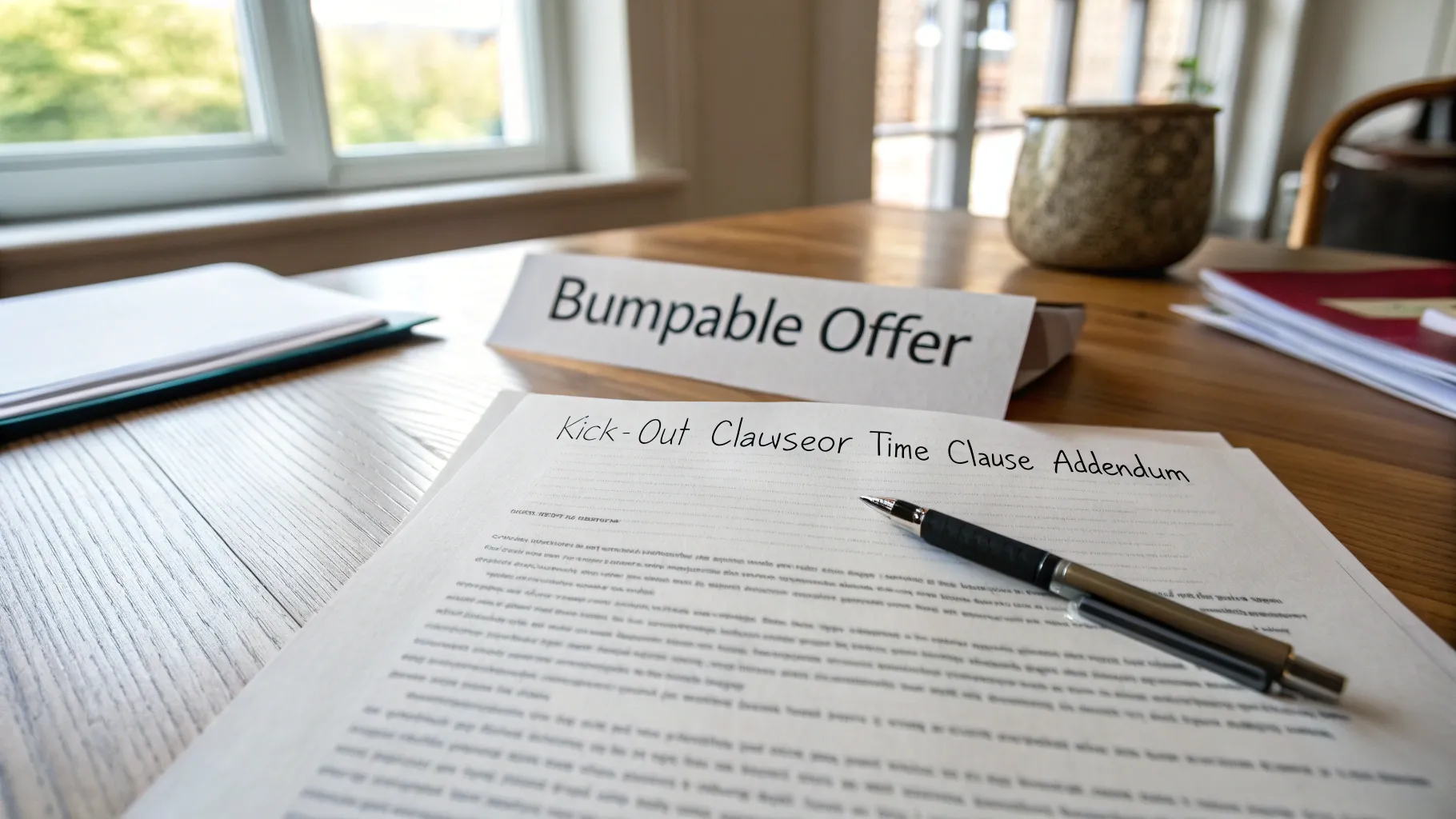
A bumpable offer — also called a kick-out clause or time clause addendum — lets you accept a buyer's contingent offer and keep marketing your home. If a stronger, noncontingent bid arrives, you can "bump" the first buyer unless they remove their contingency — usually within 24-72 hours.
A bumpable buyer is a buyer whose accepted offer can be pushed aside, or "bumped," if a stronger offer comes in. It usually happens when the buyer still needs to sell a current home before buying. The seller accepts that contingent offer but keeps the house on the market, and if a better offer arrives, the first buyer gets a short window to drop the contingency or step aside.
The provision that makes this possible is called a bump clause, kick-out clause or time clause. Used well, it lets a seller take a decent offer without giving up the chance at a cleaner one. Used carelessly, it can scare off good buyers or end in a dispute over deadlines.
What Is a Bumpable Offer in Real Estate?
A bumpable offer is an accepted offer that includes a bump clause. The typical sequence:
- Buyer A makes an offer contingent on selling their own home. The seller accepts, with a bump clause attached.
- The home stays on the market. The seller can keep showing it and take other offers.
- Buyer B makes an offer the seller wants to accept, often one with no home-sale contingency.
- The seller gives Buyer A written notice. Buyer A then has the time set in the clause, often 24 to 72 hours, to remove the contingency and move forward.
- Buyer A either waives the contingency and keeps the house, or the first contract ends and the seller moves forward with Buyer B.
The clause protects both sides. The seller is not stuck waiting on a home that may not sell, and Buyer A gets a fair chance to keep the house before anyone else can take it.
Active Offer With Bump vs. Active Offer No Bump
Some MLS systems and listing sites show these labels on homes that already have an accepted offer:
- Active offer with bump (or "active with bump clause") means the seller has accepted an offer that includes a bump clause. The home is still effectively available: a buyer who writes a stronger offer, usually without a sale contingency, can trigger the clause.
- Active offer no bump means the seller has accepted an offer that has no bump clause. The listing may still appear in searches, but a new offer is unlikely to displace the accepted one. It mostly makes sense as a backup offer in case the first contract falls apart.
Status names vary from one MLS to another, so a buyer interested in a home with either label should ask what the accepted contract allows and how long the current buyer would have to respond.
How Bump Clauses Work in a Utah Contract
Utah's state-approved Real Estate Purchase Contract (REPC) does not contain a bump clause on its own. Section 2.2, "Sale of Buyer's Property," asks whether the buyer's purchase is or is not "conditioned upon the sale of real estate owned by Buyer." If that box is checked, the REPC says the terms of an attached sale-of-buyer's-property addendum apply. The Utah Division of Real Estate posts the REPC with its other state-approved forms, which is the place to check the current version.
That means the bump terms (whether the seller may keep marketing the home, how notice is delivered, and how many hours or days the buyer has to respond) have to be written into the addendum that goes with the contract. Settling those details at the first offer, not after a second buyer shows up, avoids most of the confusion.
How Sellers Can Use a Bump Clause Well
1. Know when a bump clause makes sense
A bump clause is most useful when a contingent offer is the best one available but the home is still drawing interest. The clause keeps the listing active while the seller is under contract with the contingent buyer and gives that buyer a short window to waive their contingency if a better offer appears. In a slow market with few showings, the clause rarely gets used, and accepting a contingent offer simply means waiting for the buyer's home to sell.
2. Ask for meaningful earnest money
Because the seller is taking on the risk of a home-sale contingency, a solid earnest money deposit matters. Sellers gain security and leverage by having money on deposit while they continue to market the property. Under the Utah REPC, the deposit becomes non-refundable only after certain deadlines and conditions pass, so the deadlines in the contract matter as much as the amount.
3. Set a response window that fits the market
A 72-hour response period is common, but shorter windows such as 24 or 48 hours keep a second buyer from losing interest. Very short windows can be hard for the first buyer to meet, especially if a lender has to confirm they can carry two mortgages. The window, the start time and how weekends and holidays count should all be spelled out in writing.
4. Keep marketing the home
A bump clause only pays off if new buyers keep seeing the listing. Online exposure does most of the work: listing photos, price updates and retargeted ads that reach people who viewed the home but did not act. Those buyers will keep seeing your ads as they browse, which gives the seller another chance at the stronger offer that triggers the clause.
5. Put notice rules in writing
The clause works only with clear rules: how notice is delivered (email, text or transaction software), who receives it, and when the clock starts. Requiring confirmation of receipt creates a paper trail and avoids arguments over whether the deadline was met.
6. Line up backup interest
Interest from other buyers is what gives the clause its force. The existence of a second offer often pushes the first buyer to drop the contingency faster, which keeps the sale moving toward closing.
7. Help the contingent buyer see the cost of waiting
A buyer who removes the home-sale contingency sooner gets to lock in the long-term financial perks of owning, such as possible mortgage interest deductions and the capital gains exclusion on a primary home when it sells later. Some buyers are able to waive the contingency by arranging bridge financing or qualifying to carry both payments for a short time.
8. Read the local market
How much leverage a bump clause gives depends on how quickly homes sell. Homes in Salt Lake City have recently taken a median of about 15 days to go under contract, compared with about 57 days in St. George. Where homes sell quickly, a second offer is more likely to show up during the contingency period. In a 2025 report, KUTV said Utah's median single-family price hovers around $564,000 statewide, and at that price many move-up buyers need the equity from their current home, which is why sale contingencies are common. Current inventory can be checked in new Salt Lake City listings and new St. George listings.
9. Stay transparent
Every interested buyer should know a time clause is in play, and the deadlines should be honored exactly. Inventing a second offer to pressure the first buyer is a misuse of the clause and can lead to legal trouble.
Tips for Buyers Facing a Bump Clause
- Get the current home listed, or under contract, before writing the offer. A contingent offer on a home that is already under contract is far stronger.
- Talk to a lender early about whether both payments, or a bridge loan, are possible if the seller sends a bump notice.
- Negotiate the response window. A 72-hour window gives more room to arrange financing than 24 hours.
- Watch email and texts closely during the contingency period; missing a notice can mean losing the house.
Bottom Line
A bump clause lets a seller accept a contingent offer without taking the home off the market, and gives the first buyer a fair chance to keep it. In Utah, the terms live in the addendum attached to the REPC, so the response window, notice method and marketing rights should be clear from the start. Sellers deciding whether to accept a contingent offer may also find it helpful to read about selling a Utah house fast, negotiating a cash offer and pricing and negotiating a FSBO sale, or request a free home value estimate before listing.
Posted by Kristopher Larson
Frequently asked questions
What is a bumpable buyer in real estate?
A bumpable buyer is one whose accepted offer includes a bump clause, usually because the purchase depends on selling their current home. The seller keeps marketing the property, and if a stronger offer arrives, the bumpable buyer gets a set amount of time to remove the contingency or the contract ends.
What does active offer with bump mean?
It means the seller has accepted an offer that includes a bump clause. The home is still effectively available, and a buyer who writes a stronger offer, typically without a home-sale contingency, can trigger the clause and give the first buyer a short window to commit or walk away.
What does active offer no bump mean?
It means the seller has accepted an offer without a bump clause. The listing may still show in searches, but a new offer is unlikely to replace the accepted one. Buyers who still want the home can usually submit a backup offer in case the first contract falls through.
How long does a bumped buyer have to respond?
Whatever the contract says. Response windows of 24 to 72 hours are common, and the clause should state exactly when the clock starts, how notice is delivered and how weekends or holidays count.
Does the Utah REPC include a bump clause?
No. Section 2.2 of Utah's state-approved Real Estate Purchase Contract asks whether the purchase is conditioned on the sale of the buyer's property, and if so, an attached sale-of-buyer's-property addendum applies. Any right to keep marketing the home and bump the buyer has to be written into that addendum.
How can a buyer avoid being bumped?
The most reliable way is to remove the home-sale contingency when the notice arrives, which usually means having the current home under contract or being approved to carry both payments or a bridge loan. Listing the current home before writing an offer and negotiating a longer response window also help.
Keep reading
More from the blog
How to Vet a Home Services Contractor in Utah
Living Near Utah's Ski Resorts: Towns, Drive Times and Trade-Offs

Staying Put After 65: Utah Programs That Help Seniors Keep Their Homes in 2026