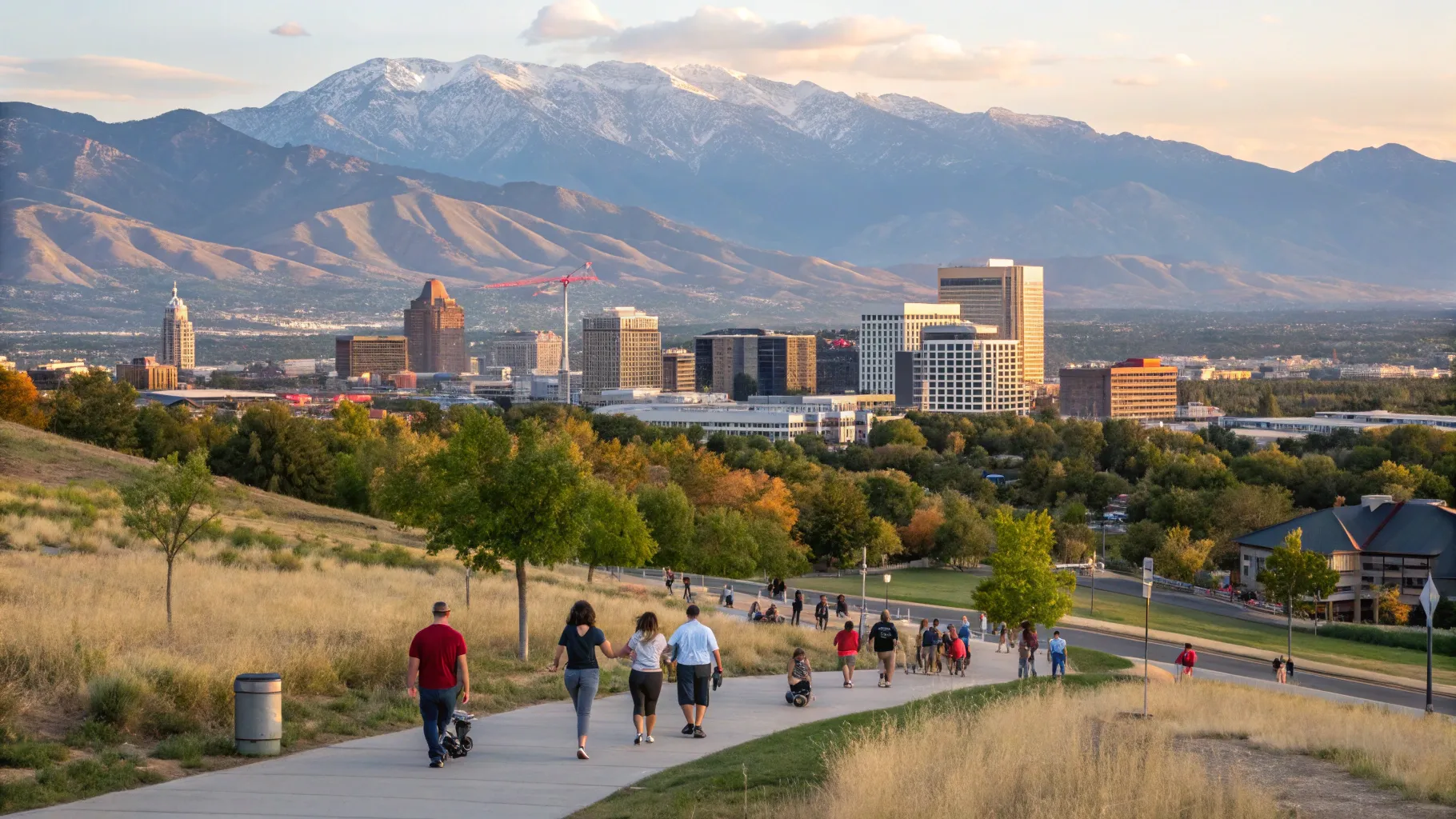
Why Utah Keeps Growing: Economy, Demographics & the Affordability Risk
Utah’s population growth stands out nationally. No state has grown faster as a percentage of population over the last two decades. That expansion is not accidental or purely trendy.
Utah’s population growth stands out nationally. No state has grown faster as a percentage of population over the last two decades. That expansion is not accidental or purely trendy. Multiple structural forces work together to produce steady growth year after year. This article examines the long-term drivers behind Utah’s expansion, explains common misconceptions, and highlights the single risk that could alter the state’s trajectory.
1. A deliberately diversified economic engine
Utah’s economy is built on diversification by design. Rather than relying on a single industry, the state supports a broad mix: technology, real estate, healthcare, defense, advanced manufacturing, outdoor products, finance, government employment, energy, and education. That balance creates resilience. When one sector falters, others pick up the slack, limiting statewide employment shocks. The 2020 national downturn illustrated this: Utah’s economy barely flinched compared with many other states. That consistent employment base attracts families, entrepreneurs, and remote workers seeking a stable place to build careers and businesses.
2. Demographic momentum: Utah’s birth rate advantage
Demographics provide a quieter but powerful growth driver. Utah has one of the highest birth rates in the nation, and a younger-than-average population. Even if net migration slowed dramatically, natural increase from births exceeding deaths would still add residents. That younger population means stronger long-term housing demand, persistent enrollment in schools, and an expanding local labor force. These demographic trends act like a flywheel: more families increase demand for housing and services, sustaining job creation and further population growth.
3. Migration is complex—California does not explain it all
Popular narratives often single out one source of newcomers, but migration into Utah is diverse. Only a minority of new residents originate from any single state. While California supplies a meaningful share of in-migrants, more than 80 percent of people moving to Utah come from a wide mix of western and eastern states, returning Utahns, international arrivals, and relocations within the state. Many are drawn by perceived value—the combination of economic opportunity, quality of life, safety, and community—not just cheaper costs. For many migrants, the calculus is quality of life per dollar.
4. Culture as a multiplier
Community norms and social design amplify Utah’s attraction. Family-oriented neighborhoods, low crime rates, high volunteerism, and a built-in sense of connection create a magnetic environment for people who prioritize safety, family, and civic engagement. The region’s social fabric helps retain residents after they arrive, which compounds growth through both natural increase and lower out-migration rates.
5. Land, density, and the myth of running out of space
Concerns about running out of developable land are valid in constrained pockets such as the Salt Lake Valley, where mountains and lakes limit outward expansion. However, Utah is more than a single urban corridor. Growth will occur through a mixture of outward expansion in suburbs and smarter use of existing land: higher-density neighborhoods, transit-oriented development, mixed-use zoning, and vertical construction in urban centers. Those strategies transform the way available land is used and allow continued population increases without the same level of sprawl seen in past decades.
6. Growth that is already locked in
Several factors make Utah’s future growth predictable rather than speculative. The state has the youngest population in the country, continued tech infrastructure growth—including the Silicon Slopes corridor—large state investments in infrastructure, and rising logistics and transportation assets such as an inland port that position Salt Lake City as the crossroads of the West. Population forecasts point to continued expansion in Southern Utah County, Eagle Mountain, the west corridor near Ogden, and the broader Wasatch Back and southwest regions. In short, planning and investment have already set a course toward more growth over the next decades.
7. The one variable that could change the story: affordability
Affordability is the single greatest risk to Utah’s pattern of growth. If housing costs continue to outpace incomes, families will be pushed farther from job centers or choose to relocate to other states. That shift would decentralize growth and could slow the overall inflow of new residents. While Utah’s fundamentals will likely keep the state growing, unaffordability could change the pace and geography of that growth, making transit, infill development, and affordable housing policy essential planning topics for the next decade.
What this means for buyers, sellers, and investors
For buyers: competition remains strongest where job growth, schools, and community amenities converge. Consider neighborhoods that are planned for transit-oriented development or areas targeted for infrastructure investments.
For sellers: homes in family-friendly neighborhoods and transit-connected locations hold value due to long-term demographic trends and cultural demand.
For investors: rental demand will remain robust near employment corridors, university towns, and fast-growing suburban cities like Eagle Mountain and parts of Utah County. Long-term stability is highest where economic diversification reduces industry-specific risk.
Additional local resources and deep-dive guides can help with specific decisions about moving or investing in Utah. A consolidated resource for statewide listings and market information can be found at . For those considering specific cities, Provo’s community and job market profile is a useful city-level reference: /news/provo/resources/discover-why-provo-utah-is-the-place-to-live-in-utah. For national demographic context, consult census data at census.gov, and for state-level planning and infrastructure details see utah.gov.
Summary: designed to grow
Utah’s continued expansion is the product of multiple aligned forces: a deliberately diversified economy, demographic momentum, complex migration patterns, a culture that retains residents, adaptable land-use strategies, and major public and private investments already in place. The state is built for growth toward 2050 rather than short-term spikes. Affordability remains the key challenge; addressing it will determine whether growth continues in its current form or shifts in pace and pattern.
Frequently asked questions
Is Utah’s growth mainly from people moving in from California?
No. While California contributes a notable share of new residents, a large majority of in-migrants come from a wide variety of states, international sources, returning residents, and movements within Utah. Migration into Utah is a mixed and geographically diverse flow.
Will Utah keep growing if migration stops?
Yes. Natural increase from births exceeding deaths contributes significantly to growth because Utah has a younger population and a relatively high birth rate. That demographic momentum sustains population gains even without strong in-migration.
Is land scarcity going to stop new housing development?
Not entirely. Some valleys and urban pockets are constrained, but statewide growth can continue through smarter land use: higher-density projects, transit-oriented development, and expansion into less-developed regions. Planning shifts will determine where and how housing expands.
What is the biggest threat to Utah’s growth?
Housing affordability. If prices rise faster than incomes, families may be forced to move farther out or leave the state, changing the pace and pattern of growth. Addressing affordability through policy and development will be critical.
Where are the fastest growing areas to watch?
Growth forecasts point to southern Utah County, Eagle Mountain, west-side expansion near Ogden, and corridor development along the Wasatch Front and Wasatch Back. These areas combine available land with planned infrastructure and jobs growth.
Keep reading
More from the blog

Easy Steps to Building a Pond in Your Backyard

More Bookings, Same Rate: Make Your Airbnb More Competitive

Why Utah's Dry Climate Demands Active Wine & Cigar Storage