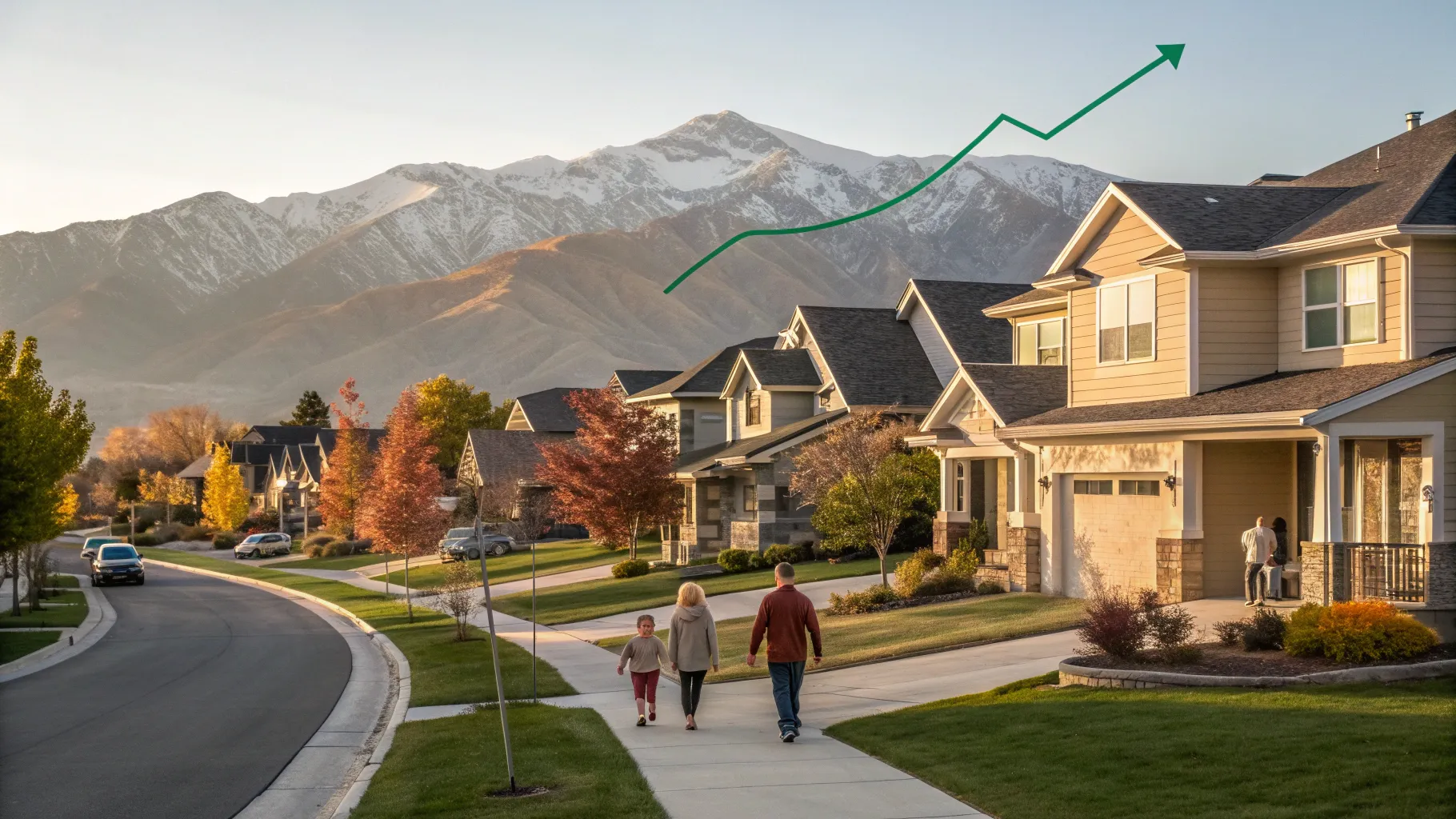
Utah Home Prices Hold Steady — Local Data vs National Headlines November 2025
Utah single-family medians rose 2.47% year-over-year to $579,000. Learn how seasonal patterns, mortgage-rate shocks, and local fundamentals explain why Utah avoided the national decline.
National headlines recently reported that more than half of U.S. home values dropped over the last year. A closer look at Utah single-family home data tells a different story. Utah experienced a modest year-over-year gain, remains only slightly below its mid-2022 peak, and shows the predictable seasonal pattern that drives short-term ups and downs. Understanding local numbers and the drivers behind them helps buyers, sellers, and investors make more informed decisions than relying on broad national summaries.
Utah market snapshot: key numbers and context
The median sales price for Utah single-family homes shows resilience compared with the national narrative. Recent figures show a November median of $565,000 and a current median of $579,000, representing a 2.47% year-over-year gain. While the market still sits slightly below the absolute peak reached in July 2022—when median sales prices hit $599,000—the gap is small, roughly 3.4% below that high.
Those numbers underscore an important point: seasonal volatility affects headline comparisons. Values typically climb into the summer, level off in the fall, and begin rising again as the new year unfolds. Short-term dips do not necessarily signal a structural collapse; they often reflect normal seasonal movement combined with temporary shocks, such as rapid shifts in mortgage rates.
What caused the mid-2022 decline and the January 2023 trough?
The most significant domestic shock came from mortgage rates. Rates moved from roughly 4.5% to around 7% in a short period. That rapid rise froze a large segment of marginal buyers—people who could wait rather than purchase immediately. When millions of buyers pause, transaction volume drops and prices respond. The trough observed in January 2023 represented that pause: a window when homes sat longer and some sellers adjusted expectations. When borrowing costs stabilized and more buyers returned, prices began a steady recovery.
Why local data matters more than national headlines
Real estate is inherently local. Statewide and city-level supply, employment trends, population growth, new construction activity, and local land constraints create unique market dynamics. Utah’s strong population growth, job market, and constrained supply in many regions cushion the state from the same price pressure seen in other parts of the country. National reports give an important macro view, but micro-market analysis reveals who is actually gaining or losing equity and where opportunity exists for buyers or sellers.
How buyers, sellers, and investors should interpret current trends
- Buyers: Consider timing relative to mortgage rates and local inventory. Short-term dips caused by rate shocks may offer windows of opportunity, but affordability should be assessed with current financing options.
- Sellers: Seasonal timing still matters. Listing when demand typically rises—late spring and early summer—can produce stronger results. Pricing should reflect recent local comps and the current mortgage-rate environment.
- Investors: Focus on fundamentals—rental demand, job growth, and supply constraints—rather than short-term headline volatility. Utah’s demographic trends and economic expansion support long-term demand in many submarkets.
Data-driven next steps and resources
For anyone evaluating whether to buy, sell, or invest, the following actions help translate statewide trends into property-level decisions:
- Pull recent median and median-sales data for the specific city or neighborhood under consideration. Seasonal patterns and recovery speed differ by micro market.
- Factor current mortgage rates into monthly payment calculations instead of relying on historical price charts alone.
- Compare inventory levels and days on market to gauge demand intensity. Rising inventory with slowing sales usually favors buyers; tight inventory and quick sales favor sellers.
- Use trusted local resources and city pages when researching neighborhoods. For broader local guides and city-specific pages, see resources such as the St. George market reports and the Park City investment guides linked below.
Helpful resources and further reading: Utah real estate portal, Is the Utah housing market in trouble, How interest rates affect the St. George market, and an industry overview at nar.realtor.
Frequently asked questions
Are Utah home values falling like national reports suggest?
No. While national reports indicate more than half of U.S. markets experienced declines, Utah single-family homes have shown a small year-over-year gain and remain only about 3.4% below the July 2022 peak. Local seasonal patterns and demand fundamentals explain much of the divergence from the national picture.
What role did interest rates play in the 2022-2023 price movement?
Interest rates were the primary shock. A rapid increase from roughly 4.5% to about 7% caused many buyers who could wait to pause, reducing demand and pushing prices lower in early 2023. As rates stabilized, buyer activity returned and prices began to recover.
When was the best time to buy during the recent cycle?
Hindsight points to early 2023--January in particular--when rates had spiked and many buyers exited the market, creating temporary opportunities as homes stayed on market longer. However, financing cost and personal readiness remain the most important factors for individual timing decisions.
Should decisions be based on national headlines or local data?
Decisions should be based on local data. National headlines provide context but can mask large regional differences. Micro-market analysis--city, neighborhood, and property-type level--yields actionable insight for buying, selling, or investing.
Keep reading
More from the blog

Gas Line Installation: What Homeowners Need to Know First
Roof Timeline Guide for Buying an Older Utah Home
How to Choose Windows for a Utah Home With a Mountain View