Top 10 Rubber Pool Deck Options
How secure and pleasant your pool area feels is heavily dependent on the decking material you choose. There is good justification for the meteoric rise in popularity of rubber decking in recent years. I
How secure and pleasant your pool area feels is heavily dependent on the decking material you choose. There is good justification for the meteoric rise in popularity of rubber decking in recent years. It feels good on naked feet, lasts a long time, and stays grippy even when wet. Even after water drops on regular concrete or tile, rubber keeps its grip. This can make the surface more slippery and dangerous. When you are rebuilding or making a new pool deck, it is good to know what kinds of rubber there are. This will help you find a material that meets your safety requirements, looks great, and is affordable.
There's a surprising number of rubber deck products out there now. You've got everything from liquid systems that get poured on-site to tiles you can snap together yourself. The choices might feel a bit much when you first start looking. Still, it's up to you what to choose depending on what matters most—your local weather, what you want it to look like, and how much you can spend. Here are ten solid rubber pool deck options worth considering for your backyard oasis.
Poured-in-Place Rubber
This is one of the smoothest-looking options you'll find. Workers mix rubber crumbs with a special binding agent and spread it right onto your prepared deck surface. You end up with one continuous piece that has no seams or gaps. Installers can get creative with colors and patterns, and they'll shape it to match any odd corners or curves around your pool. The surface grabs your feet really well, plus it has some bounce to it. Kids who love running around the pool will appreciate that softer landing if they take a tumble.
Rubber Pavers and Tiles
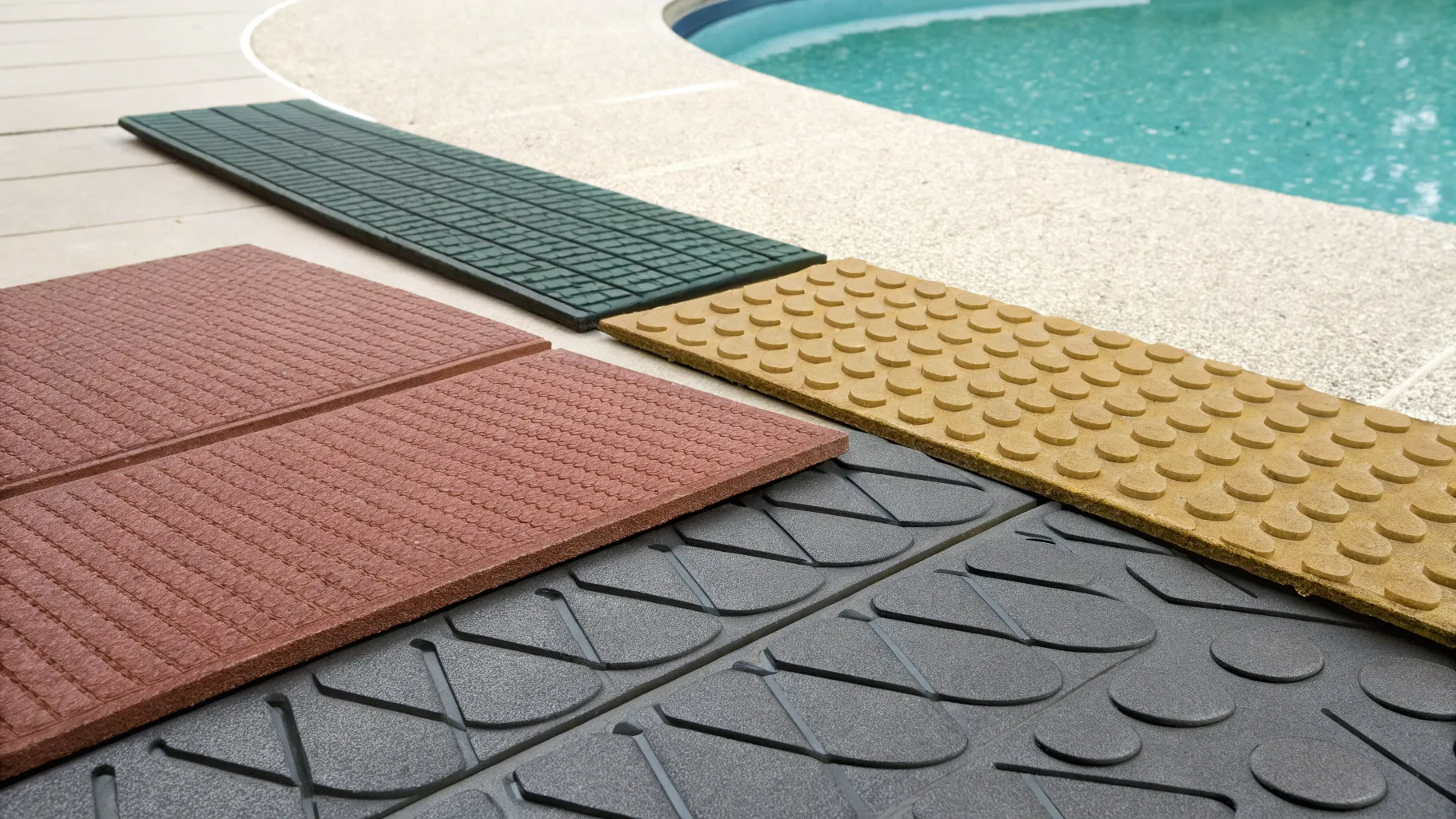
If you like to do things by yourself, these interlocking parts are fantastic to work with. You don't need adhesive because the edges of the tiles fit together like puzzle pieces. There are many distinct colors, textures, and thicknesses of them. You may also lay them on top of your existing concrete deck, which makes the remodeling procedure a lot easier. If one area of the deck gets destroyed in the future, you won't have to rebuild the whole thing; you can only fix that part.
Recycled Rubber Mulch
Are you in the mood for anything environmentally conscious? Old tires are repurposed to create rubber mulch, which is beneficial for the area surrounding your pool. The water drains exceptionally efficiently from this loose substance, and it has a smooth texture when walked across. In addition, it is less expensive than the more sophisticated rubber systems. You will need to have a border of some kind in order to keep it within its boundaries and to maintain its appearance. Of course, it will be necessary for you to periodically add additional mulch, and it will not have the same polished appearance as other options. However, it functions quite adequately for an informal pool setting and provides you with pleasant padding around the diving boards.
Bonded Rubber Mats
These pre-made mats get rolled out and glued down to whatever surface you already have. Manufacturers squish rubber pieces together under serious pressure, creating tough mats that handle weather without falling apart. Most have bumpy surfaces that help your feet grip better when things are wet. The colors tend to be pretty neutral, so they match most pool designs without looking too busy or out of place.
Rubber Deck Coating
This liquid rubber gets brushed or rolled onto your existing concrete or wood deck. It's perfect for old decks that have cracks or worn spots. The coating seeps into little imperfections and creates a waterproof layer that protects against sun damage. You apply several coats—a primer first, then the main layers, and finally a top coat. Some people add color chips or patterns between coats to jazz things up visually.
EPDM Rubber Sheets
EPDM usually goes on flat roofs, but it works surprisingly well for pool decks too. This synthetic rubber handles weather like a champ and lasts forever when installed right. The big sheets mean fewer seams, giving you a smooth surface all around the pool. It mostly comes in black, which gets hot in sunny spots, though lighter colors are starting to appear more often. You'll want a pro to install it, but the toughness and resistance to pool chemicals make it worthwhile.
Rubber Composite Boards
These boards are made of recycled rubber and plastic, which makes them look like wood decking. You put them in place like conventional deck boards, using screws or clips that aren't visible. They won't break, rot, or draw pests like genuine wood does. You may arrange them in numerous ways because they are plank-style. They appear like a classic deck without all the sanding and sealing that wood needs.
Spray-Applied Rubber
This method uses special equipment to spray liquid rubber as a fine mist over your deck. The coverage comes out super uniform, and it handles tricky shapes and curved areas without any trouble. You get a waterproof membrane with texture for grip. You definitely need professionals with the right gear, but they can finish large commercial pool decks pretty quickly while keeping quality consistent throughout.
Rubber Granule Overlays
Here's how this works: someone spreads wet adhesive on your deck, tosses rubber granules over it, then seals everything with a clear coat. The finished surface has great texture and drains water nicely. You can pick different granule colors to get the look you want. It goes over existing concrete just fine and can be thicker or thinner depending on how much cushion you need. The layered approach lets you dial in specific features you're after.
Permeable Rubber Systems
These systems focus heavily on drainage. They have open spaces built in that let water pass straight through into a gravel base underneath. No more puddles forming on your deck, which means less slipping risk. The open design also keeps surface temperatures from getting too crazy when the sun beats down. You need to prep the base correctly, but these handle rainy climates or problem drainage areas better than most alternatives.
Picking What Works for You
The type of rubber you choose will depend on what you're doing with it, how much money you have, whether you're installing it yourself, what the weather is like, and what you want it to look like. Consider how long each type usually lasts and what kind of maintenance it needs. Consider who'll be using the pool and what activities happen there. If you're also planning water play features, checking out splash pad rubber surfacings gives you more ideas for building safe water spaces everyone can enjoy. The right rubber deck turns your pool into a safer, more comfortable spot that makes every swim season better.
Keep reading
More from the blog
Gas Line Installation: What Homeowners Need to Know First
Roof Timeline Guide for Buying an Older Utah Home
How to Choose Windows for a Utah Home With a Mountain View