Luxury Living In St. George: How Architectural Renderings Sell The Lifestyle, Not Just The Property
St. George has changed from a scenic regional market into a place that attracts serious money, relocation buyers, and second-home demand from well outside Utah.
St. George has changed from a scenic regional market into a place that attracts serious money, relocation buyers, and second-home demand from well outside Utah. That shift is visible in the numbers. Recent population tracking places the city above 111,000 residents in 2026, with steady growth since 2020, while local market updates in 2025 showed a wide spread between median and average sale prices - a sign that upper-tier homes are pulling harder on the market. In that setting, architecture rendering becomes more than a design step. It becomes a sales language. If a move is on the table, take a look at current St. George homes for sale.
Developers here are not only marketing floor area or finish schedules. They are selling a feeling: quiet desert mornings, long views, privacy, and a version of luxury that depends on landscape as much as on the house itself. That is why architectural renderings matter so much before construction is done. Traditional photography can only capture what already exists, and that is a problem when the real product is still in framing, still in renovation, or still only a set of plans. A strong render closes that gap. It connects blueprint, place, and aspiration in one image, and it lets the buyer see the life before the life is physically there.
The Art Of The Red Rock Vibe: Beyond Realism
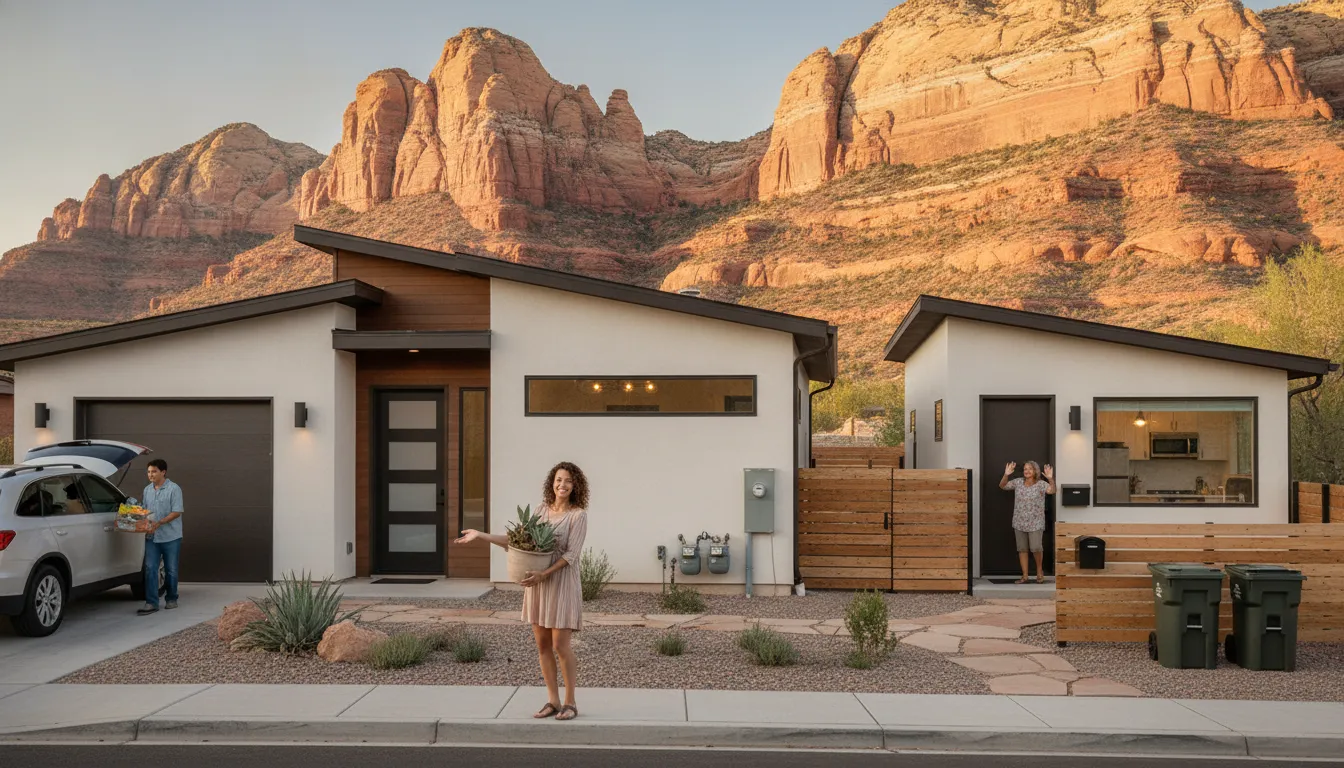
A technically correct model is not enough in St. George. The local premium market runs on atmosphere, and the atmosphere here is tied to the red rock setting. The land does half the storytelling. Deep rust tones, pale stone, dry greens, long shadows, and sunset amber all shape how a property is perceived before anyone asks about square footage. A rendering artist who understands Southern Utah does not treat the background as decoration. The background is part of the value.
This is where lifestyle visualization separates itself from plain modeling. A buyer looking at a desert estate wants to feel peace, distance, and controlled exclusivity. That means local flora have to look right. The topography has to feel grounded. The sky cannot read like a stock sunset pasted behind a house. In 3d architecture rendering, realism still matters, but emotional truth matters just as much. A luxury home in St. George should feel quiet without feeling empty. It should feel private without feeling isolated. That balance is the art, and it is what turns a competent image into a persuasive one.
Bridging The Distance: Trust For The Out-Of-State Buyer
A large share of serious luxury interest in Southern Utah comes from buyers who are not standing on the lot when decisions are made. They may be in California, Washington, Nevada, or New York, and they may only see the property in person late in the process. That changes the job of visualization. The image is no longer just promotional. It becomes a trust tool.
High-fidelity visuals reduce uncertainty because they give remote buyers something concrete to evaluate. Sight lines, material transitions, privacy, pool placement, and the relationship between indoor and outdoor zones all become easier to believe when the image feels precise. And buyers notice when a developer invests in that level of presentation. It signals seriousness. It suggests the project is funded, considered, and being handled with care. For this audience, a polished image is not fluff. It is evidence. That is why a professional rendering company can influence confidence long before the buyer books a flight to Utah. The better the visual proof, the less room there is for hesitation to grow.
Mastering Indoor-Outdoor Living Concepts
Luxury in St. George is closely tied to the idea that the house should open itself to the land without surrendering comfort. That is why renderings in this market have to do more than show rooms. They have to show flow. Glass walls, covered patios, outdoor kitchens, negative-edge pools, and long roof lines all matter because they explain how the property lives through the day.
The best visuals make the boundary between inside and outside feel almost negotiable. A great room should appear to breathe into a terrace. A bedroom should frame the horizon in a deliberate way. And twilight views matter because they suggest the full emotional use of the home, not just its daytime function. This is also where 3d rendering for architects becomes a useful discipline for sales teams. It lets the designer show how structure, light, furniture placement, and view corridors support one lifestyle instead of many disconnected moments. For buyers in this bracket, that continuity is part of the product. They are not purchasing shelter. They are purchasing control, calm, and a certain kind of daily ritual.
The Role Of Atmosphere And Lighting
Utah desert light has its own personality, and a luxury render in St. George fails if it ignores that. The selling moment is often not noon. It is the softer edge of the day, when stone warms up, glazing starts to glow, and a pool begins to reflect more than sky. That short transition is what many buyers remember after the brochure is closed.
Good visualization teams use light direction, shadow length, and material response to guide the eye toward the premium value of the house. Cantilevered roofs read stronger. Masonry gets depth. Water feels still and expensive. This is also where a strong 3d architect rendering workflow can do something photography cannot always do during development: it can stage the home at the exact emotional hour that sells best. The goal is not simply physical correctness. The goal is allure. A St. George sunset should make the estate feel inevitable, as if the building belongs to that light and could not exist anywhere else.
Strategic Implementation: Creating The Perfect Visual Asset
Lifestyle-driven visuals do not happen by accident. Developers and brokers usually get the best results when they treat the rendering brief as part branding exercise, part sales strategy, and part design direction. The visual asset needs to answer a buyer's unspoken questions before the listing agent ever speaks to them. The process below keeps that objective clear.
1.Start with a detailed lifestyle brief. Include local reference imagery, preferred lighting mood, surrounding red rock cues, plant choices, and the exact feeling the property should project, whether that is retreat, prestige, or quiet privacy.
2.Choose interiors that support the St. George setting instead of fighting it. Desert-luxe furnishings, restrained palettes, and layouts that protect the views usually perform better than overdecorated scenes that distract from the landscape.
3.Stage the render with subtle signs of life. A slightly open door, a drink on a patio table, or movement in a curtain can make the home feel inhabited without turning the composition into a cliché.
4.Review the image as if the buyer has never visited the site. Ask whether the composition explains elevation, neighbor distance, privacy, and the scale of the views quickly and clearly.
5.Request high-resolution outputs that can work across sales center displays, listing platforms, investor decks, and digital campaigns so one visual package can support the full launch.
When this planning step is skipped, even expensive visuals can feel generic. When it is handled well, the render becomes a strategic asset that keeps the whole campaign visually coherent from first teaser to final close.
Conclusion
In the St. George luxury market, the image is often doing the first round of selling before a broker, builder, or project director gets a chance to speak. That gives visualization unusual weight. A strong render is not just a representation of a structure. It is a way of packaging mood, trust, geography, and identity into one persuasive frame.
That is why developers who understand the local desert vocabulary - the colors, the light, the stillness, the sense of retreat - tend to market more convincingly than those who rely on generic visuals. High-end buyers respond to clarity. They also respond to the atmosphere. When a project communicates both, the sales cycle tends to shorten and the property feels more coherent as a brand long before construction is complete. That is the practical power of premium visuals in Southern Utah. They do not just show the building. They sell the life around it. And in this market, the best architectural renderings do exactly that.
St George, Utah housing market
A quick read on what homes are doing in St George right now — pulled live from the MLS.
Keep reading
More from the blog

Why People Are Moving to St. George, Utah in 2026
Moving to St. George Utah: Where to Live and What to Check
Pecan Valley Resort vs. Desert Color: St. George Rental Guide