Living in Spanish Fork, Utah 2026: Pros, Cons & Costs
Spanish Fork is Utah County's most balanced mid-sized city — two high schools, Canyon Creek retail, Festival of Colors at the Krishna Temple, and direct canyon access. Here's the 2026 honest take.
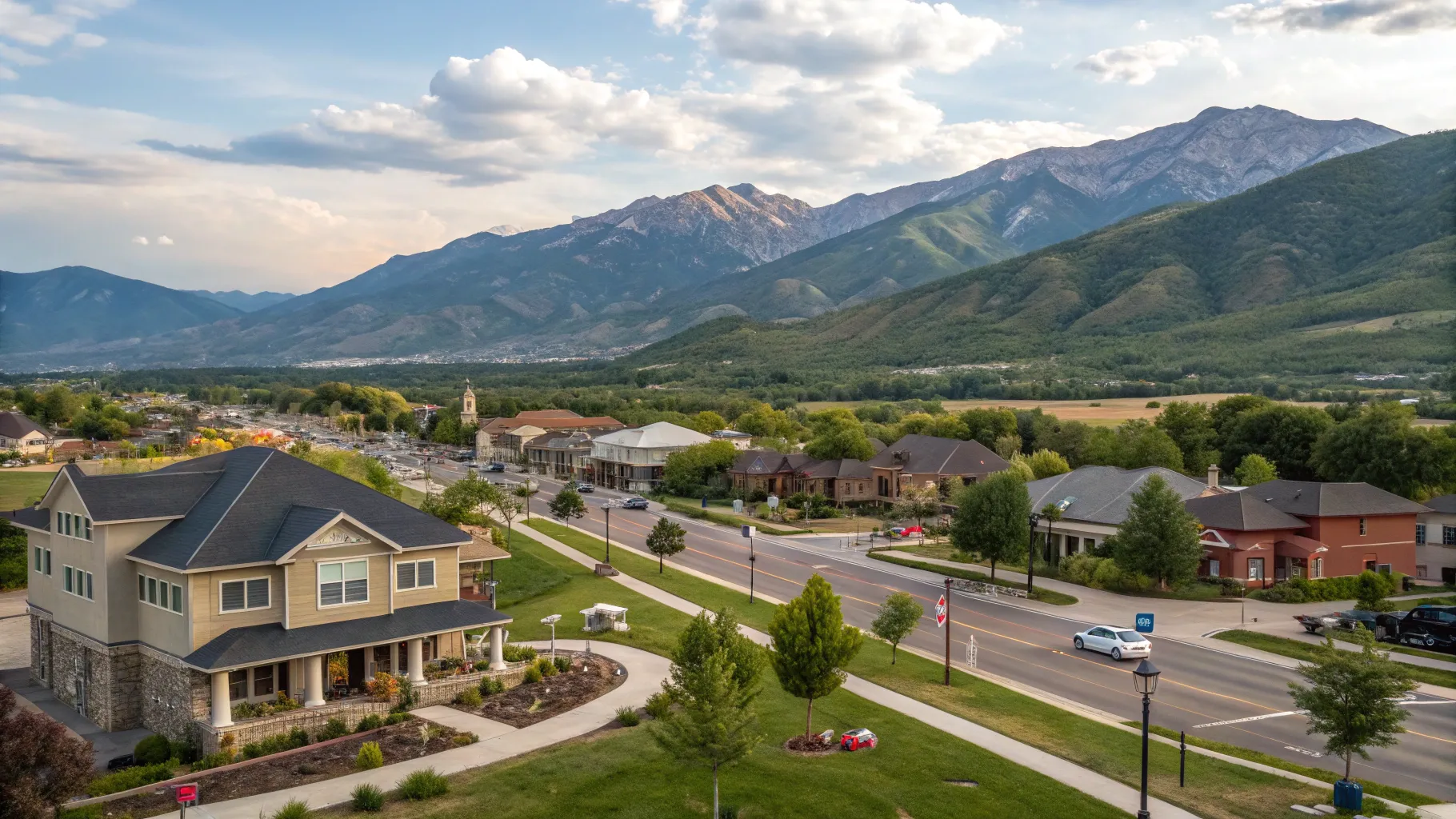
Spanish Fork has quietly become one of Utah County's most popular cities — and one of the most balanced. The population is over 46,000, the city has full retail at Canyon Creek, two large high schools, an active downtown, and direct access to one of Utah's best canyon corridors. It is also home to the Sri Sri Radha Krishna Temple and the Festival of Colors, the largest Holi celebration in North America. Few cities of its size carry that kind of cultural anchor.
The honest question for buyers is not whether Spanish Fork is a nice place to live. It clearly is — that's why the population keeps climbing. The better question is whether the trade-offs work for a specific commute, school stage, budget, and lifestyle. This guide covers what to expect in 2026, where Spanish Fork earns its appeal, and where it asks for real compromises.
Buyers can also browse current Spanish Fork homes for sale alongside this guide, or compare against the broader Utah real estate market.
Who Spanish Fork Is Best For
Spanish Fork is one of the more all-purpose cities in Utah County. The current median sale price is $592,450, with 263 active listings and a median 14 days on market. That puts it within reach of buyers priced out of Highland, Alpine, or central Lehi — without giving up the amenities those cities offer.
The strongest fits:
- Families wanting strong schools and full retail within city limits — Spanish Fork is one of the few south-Utah-County cities that has both
- Provo and Silicon Slopes commuters who want larger homes and lots than they'd find closer to those job centers
- Buyers comfortable with active growth — Spanish Fork is still expanding rapidly, with new construction visible across most of the east and south sides of town
- Households who use Spanish Fork Canyon regularly — Diamond Fork Hot Springs, Fifth Water, Strawberry Reservoir, and the canyon's hunting and fishing are all directly accessible
- Buyers wanting a real downtown with parks, events, a public library, and city investment in community facilities
It's a weaker fit for buyers who need a daily 20-minute commute into central Lehi or Salt Lake City, anyone allergic to ongoing road work and construction, or households uncomfortable with the canyon-wind weather pattern.
Spanish Fork Home Prices in 2026: What Buyers Should Know
Spanish Fork has tracked Utah County's price growth closely. Compared to the smaller towns south of it (Salem, Payson, Santaquin, Nephi), Spanish Fork commands a premium for full amenities. Compared to the northern cities (Lehi, Highland, Alpine), it still represents meaningful value.
As of the most recent reporting month, Spanish Fork's market stats are:
- Median sale price: $592,450
- Active listings: 263
- Median days on market: 14 days
- Sale-to-list ratio: 99.1%
The market is balanced — neither the hot under-10-day market of Springville (45 days median) nor the slower 60-day pace of Nephi (data unavailable). Spanish Fork sits in the productive middle: buyers have negotiating room, sellers don't have to wait long.
Inventory spans starter homes and townhomes under $500K through new master-planned subdivisions, 55-plus communities, and a real luxury segment on east-bench view lots. The most consistently active communities by recent sales are Quiet Valley, River Run, and Oakridge Cove — each anchoring a different price point and lifestyle.
Why Zillow estimates miss the mark here
Utah is a non-disclosure state, which means automated home-value estimates rely on incomplete data. Spanish Fork's growth makes this worse — comparable sales from 12 months ago are already stale, and an automated algorithm doesn't know which subdivision is selling fastest. Buyers shopping by Zillow estimate alone will miss most of the price range and most of the negotiating room.
The Commute Reality
Spanish Fork sits on I-15 and at the mouth of US-6, which makes it one of the better-positioned Utah County cities for commuting.
When the commute works
- Provo: about 15 to 20 minutes north on I-15 in normal traffic
- Orem and UVU: roughly 20 to 25 minutes
- Lehi / Silicon Slopes: 30 to 40 minutes off-peak
- Payson: about 12 minutes south for residents who need that direction
For most Utah County workers, Spanish Fork is a strong location. The drive north is straightforward most of the day, and the city's freeway access is well-positioned compared to towns farther south.
When it doesn't
Daily peak-hour commutes to downtown Salt Lake City run 50 to 65 minutes one way before snow or accidents. The bigger daily headache is the local traffic — the US-6 and Spanish Fork Parkway intersection backs up 10 to 15 minutes during rush hour and event days, and Main Street can get congested during big events at the temple or rodeo.
The city has added roundabouts at multiple intersections to improve flow, with mixed results. Drivers towing boats, trailers, or campers should expect some of the older roundabouts to feel tight.
Schools in Spanish Fork
Spanish Fork is part of Nebo School District, which serves southern Utah County. Unlike many smaller towns in the cluster, Spanish Fork has its own complete K-12 pipeline plus the rare distinction of two high schools:
- Spanish Fork High School — the original, on the west side of the city
- Maple Mountain High School — opened in 2009, serving the east side and parts of Mapleton
- Multiple elementary schools and Spanish Fork Junior High inside city limits
The two-high-school footprint matters more than it sounds. As Spanish Fork has grown, the district has been able to keep class sizes reasonable and avoid the bursting-at-the-seams problem that smaller-district cities face. Maple Mountain in particular has built a strong academic and athletic identity in the 15 years since it opened.
Safety and Everyday Feel
Spanish Fork ranks well on crime for a city of its size. The city feels suburban rather than rural — meaningfully different from Salem or Santaquin — but still oriented around long-term residents and family lifestyles. Property crime tracks with population growth; violent crime is rare. The local police presence and city investment in community programs both scale with the growth.
The everyday feel splits between two halves of town: the older grid west of Main has mature trees and an established small-town center, while the eastern subdivisions feel newer, more spacious, and more suburban-typical.
The Festival of Colors: The Cultural Anchor
The single most distinctive thing about Spanish Fork is the Sri Sri Radha Krishna Temple and its annual Festival of Colors — the largest Holi celebration in North America. The 30th annual festival in 2026 drew an estimated 20,000 visitors over a single weekend in late March.
The festival is unlike anything else in Utah:
- Thousands of attendees in white clothing, throwing brightly colored powder during synchronized countdowns
- Live music, dance, and chanting hosted at the temple grounds south of town
- Vegetarian Indian food from the temple's Krishna's Cuisine — Spanish Fork residents know the prasadam plates sell out fast
- A weekend that draws families and college students from across the Mountain West to a city of 46,000
For most residents, the Festival of Colors is just one part of a packed event calendar that also includes Fiesta Days every July (PRCA rodeo, parade, and fireworks tied to Pioneer Day), the Spanish Fork Farmer's Market, and the Festival of Lights drive-through at Canyon View Park after Thanksgiving. But the Festival of Colors is the one that makes the city culturally distinct in a way no other Utah County town can match.
Family Life and Outdoor Access
Spanish Fork's recreation hook is the canyon. Spanish Fork Canyon (US-6) opens directly east of town and provides access to:
- Diamond Fork (Fifth Water) Hot Springs — a 4.5 to 5.3 mile round-trip hike to natural hot pools and a waterfall, one of Utah Valley's most popular outdoor day trips
- Strawberry Reservoir — about 45 minutes east on US-6, top-tier fly fishing and boating
- Spanish Fork Canyon itself — hunting, hiking, and camping along Forest Service roads
- The Spanish Fork River Trail — approximately 7 miles of paved trail running through town, popular for walking, jogging, and biking year-round
- Utah Lake's south end — fishing, paddling, and shoreline access about 20 minutes northwest
The city itself maintains a strong parks system. North Park, the All Abilities Park (designed for inclusive use), and Canyon View Park are the standouts, with seasonal splash pads, sports fields, and event spaces. The recently expanded community recreation center adds indoor pools and fitness facilities that most south-Utah-County cities don't have.
Retail and Dining: The Canyon Creek Anchor
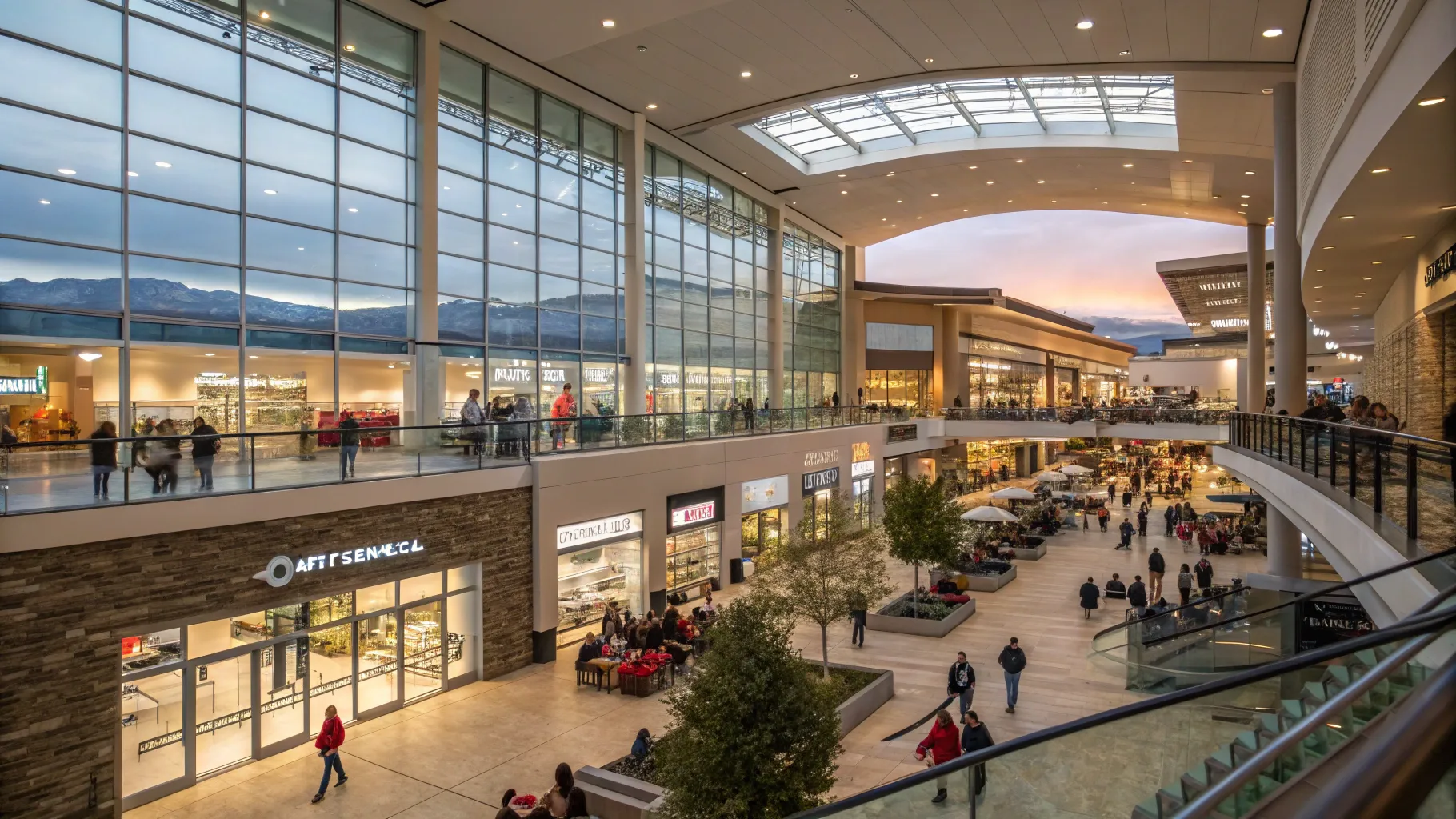
This is where Spanish Fork separates itself from the smaller cities around it. The Canyon Creek shopping district, on the south side of town near the I-15 / US-6 interchange, brought big-box retail to south Utah County for the first time:
- Costco
- Walmart Supercenter
- Lowe's
- Cinemark movie theater
- A dining cluster including Olive Garden, Texas Roadhouse, Chick-fil-A, Cafe Zupas, and others
For Spanish Fork residents, the practical effect is that most weekly errands stay in town. For residents of Salem, Mapleton, Springville, Payson, and Santaquin, Canyon Creek is often the destination — which is part of why Spanish Fork's traffic has grown faster than its population.
Fine dining is still limited. Buyers who eat out frequently at high-end restaurants will spend most of those evenings in Provo. Casual and family dining inside Spanish Fork has grown a lot in the last five years, but the upscale segment hasn't followed yet.
The Real Trade-Off
Spanish Fork's trade-off is the trade-off of a growing mid-sized city — strong amenities and balanced pricing in exchange for traffic and continued construction:
- What buyers get: two high schools, full retail at Canyon Creek, a real downtown, a 7-mile river trail, direct canyon access, a major cultural event, balanced market pricing, and 15–20 minutes to Provo
- What buyers give up: a polished, finished-city feel; predictable peak-hour drives through the US-6 corridor; the canyon-wind weather pattern; and the upscale dining scene that takes a Provo trip
For most Utah County families, the math works clearly. For households committed to the established neighborhoods of Provo or Orem, or anyone deeply allergic to construction zones, Spanish Fork may feel like an in-progress version of the city it's becoming.
A Simple Scorecard for Deciding if Spanish Fork Fits
Before choosing Spanish Fork, buyers can run a five-part check:
1. Commute reality
Test the actual northbound I-15 drive at 7:30 AM on a weekday, and add a separate test of the US-6 / Spanish Fork Parkway interchange. Both feed the commute experience.
2. Side of town
The east-side foothill subdivisions, the west-side older grid, and the south-side new construction all live differently. Drive each before committing.
3. School stage
Confirm school boundaries for the exact address. Spanish Fork has two high schools, and the boundary between them shifts as new subdivisions open.
4. Lifestyle match
Will the household use Spanish Fork Canyon, the river trail, the parks, and the city events? If yes, the value compounds. If not, the case rests mostly on schools and convenience.
5. Wind tolerance
The canyon-wind pattern is real. Some east-side homes catch it harder than others. Walk a property on a windy evening before buying if the buyer is sensitive to wind.
Common Mistakes Buyers Make Before Moving to Spanish Fork
- Testing the commute on a weekend instead of a weekday rush hour through US-6
- Trusting Zillow estimates in a non-disclosure state with fast-moving subdivisions — the algorithm lags here
- Assuming school boundary will hold — Spanish Fork is one of the cities most affected by boundary changes as Maple Mountain and Spanish Fork High balance enrollment
- Underestimating the canyon-wind effect on east-side homes, especially in spring and fall
- Buying near US-6 without weighing the noise — the corridor traffic is constant
- Expecting the city to feel finished — large parts of the south and east sides are still actively building out
Is Spanish Fork a Good Place to Live in 2026?
Yes — for the right buyer, Spanish Fork is one of the most all-purpose cities in Utah County right now.
It works well for:
- Families balancing schools, amenities, and price
- Provo and Silicon Slopes commuters wanting more home for the money
- Outdoor-focused households who'll actually use the canyon and river trail
- Buyers comfortable with a city still in active growth
It's less ideal for:
- Households tied to short daily commutes into central Lehi or Salt Lake City
- Buyers expecting a finished, polished city feel
- Anyone deeply sensitive to wind or ongoing construction
- Buyers focused on high-end dining within city limits
Bottom Line
Spanish Fork sits in the productive middle of the Utah County market — full amenities, two high schools, a real cultural anchor in the Festival of Colors, and balanced pricing. The trade-offs are traffic, wind, and ongoing growth. The three things worth testing before buying are the actual rush-hour commute, the school boundary for the specific address, and the side-of-town personality that fits the household's preferences.
For more context on Utah relocations, the broader moving to Utah guide covers statewide considerations. Anyone serious about Spanish Fork should walk through current Spanish Fork homes for sale and reach out for a tour.
Posted by Kristopher Larson
Frequently asked questions
Is Spanish Fork, Utah a good place to live?
Yes, particularly for families and Provo-area commuters. Spanish Fork has two high schools (Spanish Fork High and Maple Mountain), full retail at Canyon Creek (Costco, Walmart, Lowe's, and a dining cluster), the Sri Sri Radha Krishna Temple and Festival of Colors, direct access to Spanish Fork Canyon and Diamond Fork Hot Springs, and balanced market pricing between the higher-priced cities to the north and the smaller towns to the south.
How long is the commute from Spanish Fork to Provo?
Roughly 15 to 20 minutes north on I-15 in normal traffic. Orem and UVU run 20 to 25 minutes, Lehi and Silicon Slopes 30 to 40 minutes off-peak, and downtown Salt Lake City 50 to 65 minutes during weekday rush hour. The bigger local traffic friction is the US-6 / Spanish Fork Parkway interchange during peak hours.
What schools serve Spanish Fork, Utah?
Spanish Fork is part of Nebo School District. The city has two high schools — Spanish Fork High School on the west side and Maple Mountain High School on the east side (opened in 2009) — plus Spanish Fork Junior High and multiple elementary schools inside city limits. Boundaries between Spanish Fork High and Maple Mountain have shifted as the city has grown, so families should verify school assignments for an exact address before buying.
What is the Festival of Colors in Spanish Fork?
The Festival of Colors is an annual Holi celebration held at the Sri Sri Radha Krishna Temple south of Spanish Fork. The 30th annual festival in 2026 drew approximately 20,000 visitors over a single weekend in late March, making it the largest Holi celebration in North America. The festival features synchronized color throws, live music and chanting, and vegetarian Indian food from the temple's Krishna's Cuisine kitchen.
How much do homes in Spanish Fork cost in 2026?
Spanish Fork's median sale price is around $592,450 as of the most recent reporting month, with 263 active listings and a median 14 days on market. The city sits in the productive middle of the Utah County market — meaningfully less expensive than Lehi, Highland, or Alpine, but with full amenities the smaller cities to the south don't offer.
What outdoor recreation is near Spanish Fork?
Spanish Fork Canyon (US-6) opens directly east of town and provides access to Diamond Fork (Fifth Water) Hot Springs — a 4.5 to 5.3 mile round-trip hike — plus Strawberry Reservoir (about 45 minutes east), Forest Service hunting and hiking, and the Spanish Fork River Trail, which runs roughly 7 miles through town. Utah Lake's south end is about 20 minutes northwest for fishing and paddling.
Spanish Fork, Utah housing market
A quick read on what homes are doing in Spanish Fork right now — pulled live from the MLS.
Keep reading
More from the blog
Best places to see in Spanish Fork, Utah

Why People Are Moving to St. George, Utah in 2026

More Bookings, Same Rate: Make Your Airbnb More Competitive