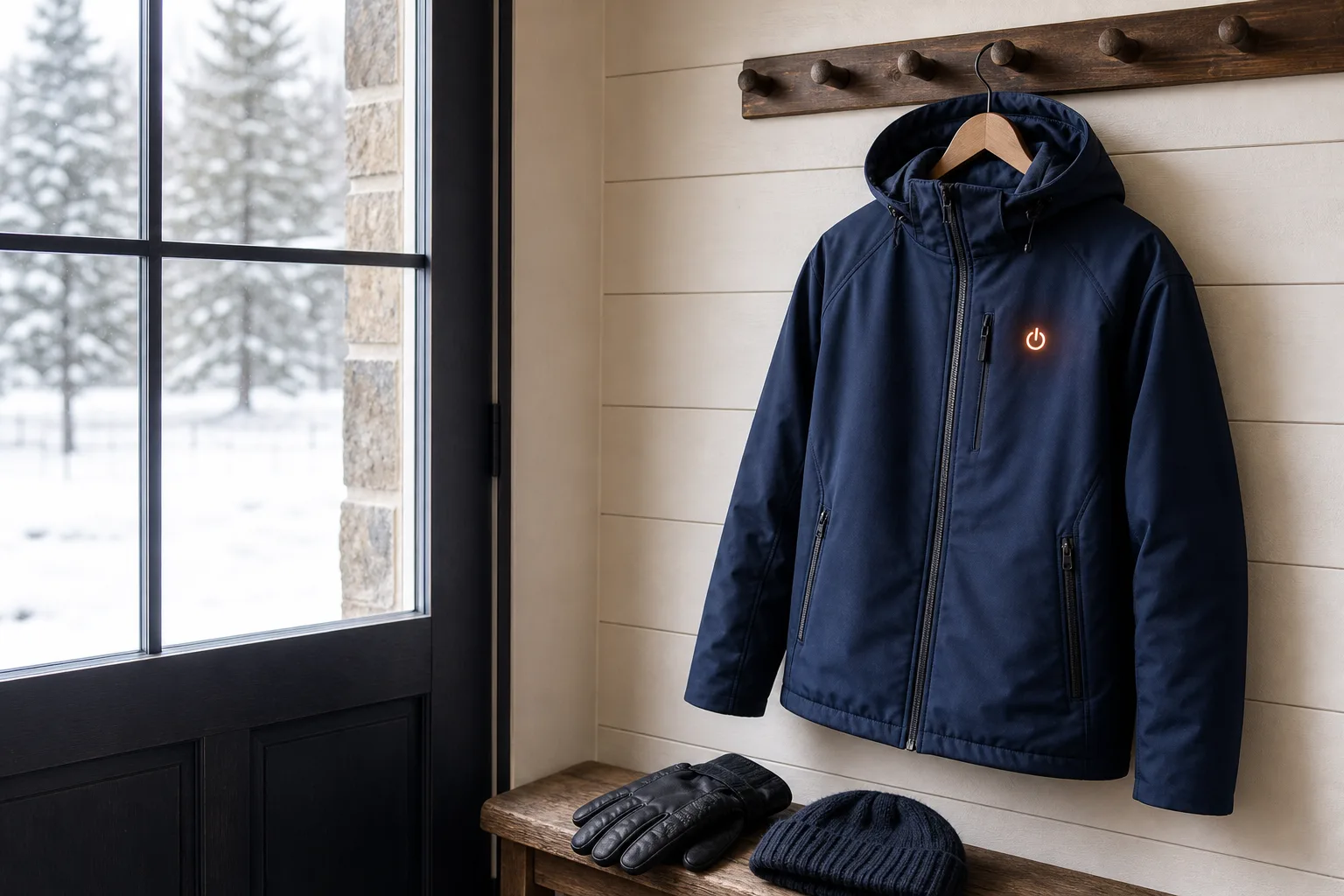
Best Heated Jacket and Heated Vest: ORORO vs. Venustas
Freezer, wind, rain and run-time results for heated jackets, plus which heated vests are worth buying and why a vest is often the warmer choice.
A heated jacket or vest uses thin carbon-fiber heating pads, powered by a rechargeable battery in a pocket, to warm your core at the push of a button. On a cold commute, a long day outside or a winter game in the stands, it can be the difference between miserable and comfortable without piling on bulky layers.
They don't all work equally well, though. Some barely block the wind, some heat a tiny area, and batteries range from slim and comfortable to bulky bricks that drag on a pocket. Whether you buy a jacket or a vest also matters more than most shoppers expect. This guide covers what makes one warmer than another and which ones are worth buying.
Quick verdict
- Best heated jacket for everyday wear: the ORORO Men's Classic Heated Jacket. It held heat best in a sub-zero freezer test, blocked wind and water completely and ran the longest on high.
- Best heated vest: the ORORO Men's Heated Vest, the most popular heated vest, with a small battery that sits comfortably at your side.
- Best vest for choice of colors and styles: the Venustas Men's Heated Vest, with six heat zones, zippered pockets, a slim battery and a more premium feel.
The picks side by side
| Heated gear | Shop | Type | Heat zones | Battery | Best for |
|---|---|---|---|---|---|
| ORORO Men's Classic Heated Jacket |  View on Amazon | Soft-shell jacket | 3 (back and chest) | Flat power-bank style, USB port | Commuting, wind and wet weather |
| ORORO Men's Heated Vest | 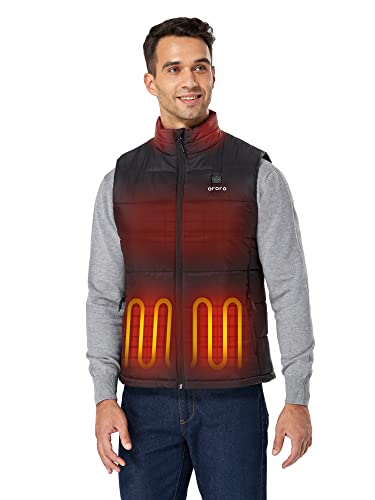 View on Amazon | Puffer vest | 4 | Small, sits at your side | Layering under a coat |
| Venustas Men's Heated Vest |  View on Amazon | Quilted vest | 6, including collar and shoulders | Slim, among the smallest | Layering, more colors |
Best heated jacket
ORORO Men's Classic Heated Jacket
Lost the least heat after 30 minutes at 40 below, blocked wind completely, stayed dry inside and out in the water test and ran about 4 hours on high.
- 3 zones (back and chest)
- About 4 hours on high
- USB power-bank battery
Good for
- Commuting, wind and wet weather
- A barely-noticeable battery
Skip it if
- You want a light, flexible work shell
What makes a heated jacket warm
Blocking the wind matters as much as the heaters
Heating pads can't keep up if cold air blows straight through the fabric. In a wind test with a blower and an air-speed meter, a cotton-blend work jacket let a steady breeze through its fabric and zipper, and its wearer got cold fast on a 25 mph ride in the upper 30s. Soft-shell polyester jackets with good zippers stopped the airflow completely. Look for a wind- and water-resistant shell, a full storm flap or snug zipper, and cuffs and a hem that seal.
Heating area, not just the number of zones
Brands advertise zone counts, but the size and placement of the pads matter more. In one comparison, total heating-pad area ranged from about 52 square inches in the weakest jacket to about 85 in the best covered, and the jacket with the least coverage was the coldest on a windy test ride. Some jackets put many small pads where others use a few large ones, so two jackets with different zone counts can cover about the same area.
Placement matters too. Chest and back pads warm your core most efficiently; pocket heaters are nice for your hands, but one popular work jacket puts its pocket heaters on the outside of the pocket, away from your body, so you barely feel them unless your hands are in the pockets. Neck and collar heat is a welcome extra on the coldest days. Most jackets don't heat the sleeves at all.
The layer closest to you heats best
This is the most important thing to know before buying. Heating pads work best right against your body. Every layer between you and the pads, a sweatshirt, a fleece, a hoodie, cuts how much heat you feel. A heated jacket is your outermost layer, so in real winter, worn over other clothes, it often feels only pleasantly warm. A heated vest worn over a T-shirt or thin base layer, under a regular winter coat, puts the heat right where it's needed, and many people find it warmer overall. For very cold climates, a vest under a good coat is often the better buy.
Battery size, shape and run time
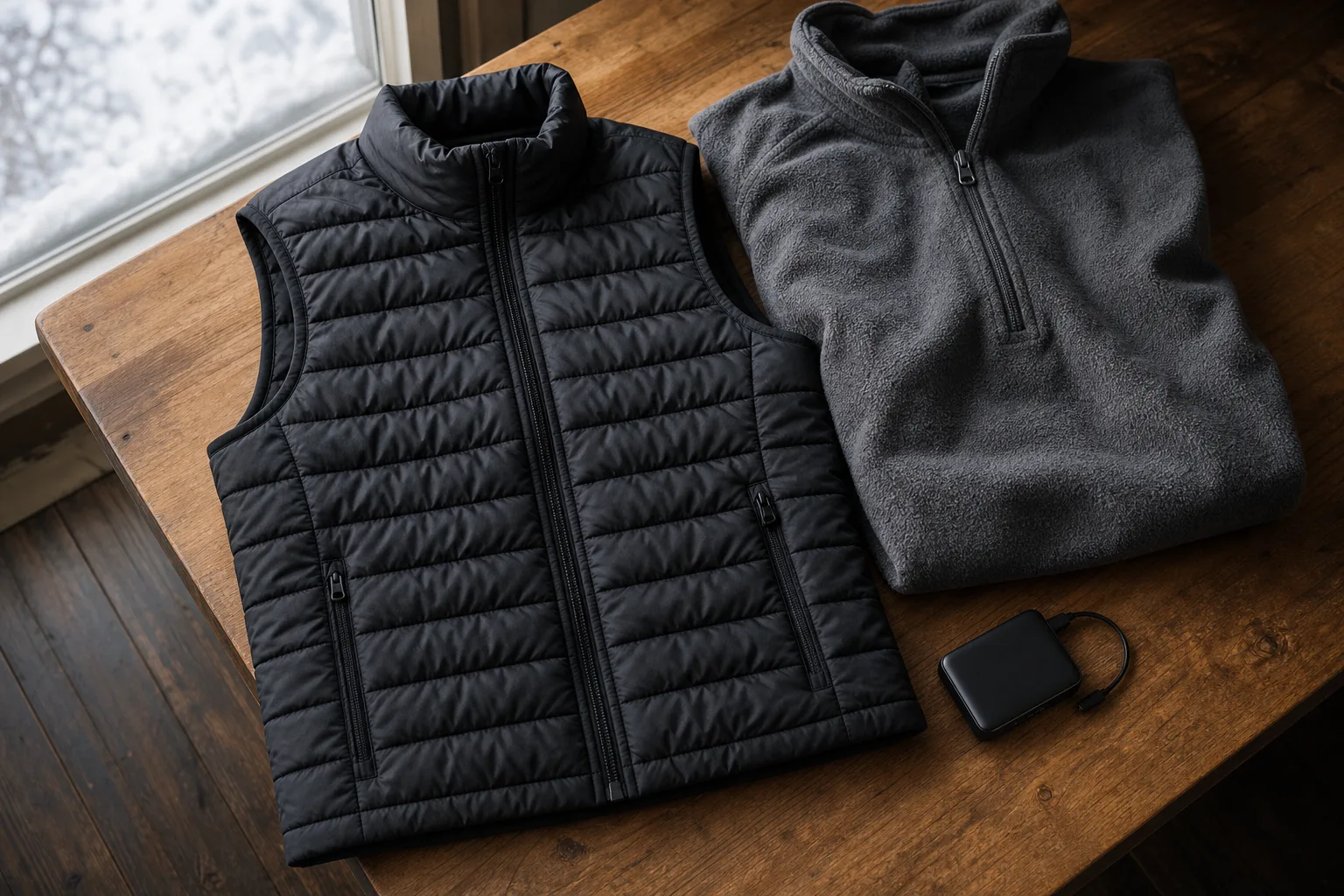
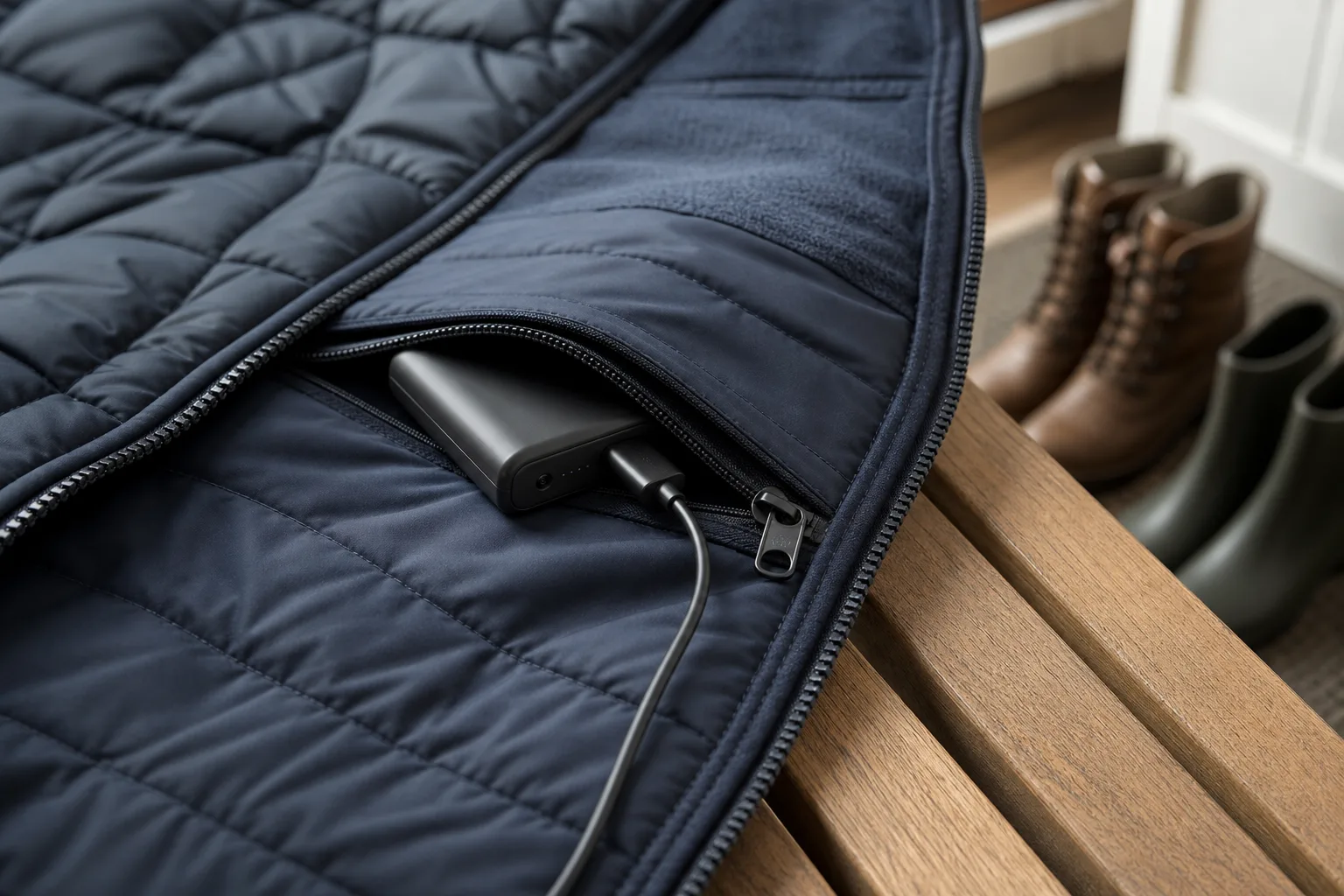
Batteries come in two styles. Tool-brand jackets run on the same packs as the company's drills, which is convenient if you already own them, but those packs are bulky and leave a noticeable bulge in a pocket or at your back. Most apparel brands use flat, phone-sized power-bank batteries that disappear in a pocket and usually have a USB port to charge your phone.
Run time on high is shorter than the advertised figures, which are usually for low. In a head-to-head run-time test on high, the ORORO jacket lasted the longest at about 4 hours, while several tool-brand jackets with more heating pads lasted about 2 to 3 hours. On low, many heated vests are rated for 8 to 10 hours. If you'll be out all day, a second battery is worth buying.
Controls and the light
Nearly all heated gear has three heat levels, usually color-coded on a lit button. Better models add separate controls for the front and back, so you can turn off the back heat while sitting against a seat, or turn the light off while the heat stays on. A light that glows on your chest all day can be distracting at night and draws questions. Zippered hand pockets, so nothing falls out, and an adjustable fit are other small features that make a difference day to day.
The picks in detail
ORORO Men's Classic Heated Jacket: best heated jacket for everyday wear
In a comparison against heated jackets from the big tool brands, this casual soft shell did best where it counts for most people. After 30 minutes in a commercial freezer at 40 below zero, it lost the least heat of any jacket, about 23 degrees Fahrenheit on average, versus 26 to 28 for the rest. It completely blocked wind in the blower test, and in the water test both its outer and inner fabric stayed dry, the only jacket to manage that. On high, it ran the longest of the group, around 4 hours, and its flat battery is not much bigger than a phone and barely noticeable in an inner pocket.
The trade-offs: its fabric is heavier and a bit less flexible than a lightweight work shell, and with heat on only the back and chest, it fell slightly behind jackets with extra shoulder and pocket heaters on a cold, windy ride. It's a jacket for commuting, walking the dog and watching outdoor games, more than for hard physical work.
Best heated jacket
ORORO Men's Classic Heated Jacket
Lost the least heat after 30 minutes at 40 below, blocked wind completely, stayed dry inside and out in the water test and ran about 4 hours on high.
- 3 zones (back and chest)
- About 4 hours on high
- USB power-bank battery
Good for
- Commuting, wind and wet weather
- A barely-noticeable battery
Skip it if
- You want a light, flexible work shell
ORORO Men's Heated Vest: best heated vest
ORORO's vest is the most-reviewed heated vest on Amazon, and it gets the basics right. It's slim enough to wear under a coat, it has the standard three heat levels, and it uses one of the smaller batteries. Its best detail is battery placement: the battery sits right at your side, where you don't notice it, rather than too high or too far back, as on some vests. Some other vests offer much the same heating, but this one feels better made and has a proven track record.
Best heated vest
ORORO Men's Heated Vest
The most-reviewed heated vest on Amazon: slim enough for under a coat, three heat levels and a small battery that sits right at your side.
- 4 zones
- 3 heat levels
- Side battery
Good for
- Layering under a coat
- A proven track record
Skip it if
- Heated arms (it's a vest)
Venustas Men's Heated Vest: best for choice of colors and styles
Venustas is the other top-selling heated vest brand, and its quilted vest feels a step up: less puffy, with a better zipper and zippered side pockets. It has six heating zones, covering the collar, shoulders, mid-back and lower back, and it comes with one of the smallest batteries of any vest. That's lighter to carry, and run time is still comparable to vests with bigger batteries. It comes in more colors than most, including green and heather gray, and there's a fleece version for a more casual look.
Best for colors and styles
Venustas Men's Heated Vest
A less puffy quilted vest with a better zipper and zippered pockets, six heating zones and one of the smallest batteries of any vest.
- 6 zones
- Collar to lower back
- Fleece version available
Good for
- More color choices
- A lighter battery
Skip it if
- Heated arms (it's a vest)
What about tool-brand heated jackets?
Milwaukee, DeWalt and Makita all make heated work jackets that run on their tool batteries. They're tough, with durable ripstop or canvas-style shells, and with extra heating pads on the shoulders or pockets, they kept their wearer slightly warmer than the ORORO on a cold, windy motorbike ride. Milwaukee's jacket, with its battery at the back, was the warmest in that test and moves well for work. But the bulky tool batteries are heavier and less comfortable, a battery at your back gets in the way when you sit against a seat, and they ran out of charge sooner on high, after about 2 to 3 hours. They make the most sense if you already own the batteries and need a jacket for work.
Best heated vest
ORORO Men's Heated Vest
The most-reviewed heated vest on Amazon: slim enough for under a coat, three heat levels and a small battery that sits right at your side.
- 4 zones
- 3 heat levels
- Side battery
Good for
- Layering under a coat
- A proven track record
Skip it if
- Heated arms (it's a vest)
Using heated gear safely and well
- Preheat for a few minutes on high before heading out, then drop to medium or low to save battery.
- Wear thin layers underneath, such as a T-shirt or base layer, so the heat reaches you.
- Turn it down in the car. Heated gear that feels pleasant outside can get uncomfortably hot sitting in a warm car.
- Remove the battery before washing and follow the care label; most heated jackets and vests can be machine-washed on a gentle cycle.
- Store batteries partly charged over the summer and top them up every few months.
For warm hands to go with a warm core, see the rechargeable hand warmer comparison.
How to choose
- Want a heated outer jacket for commuting and errands? The ORORO Men's Classic Heated Jacket.
- Live somewhere very cold and already own a good coat? A heated vest underneath, starting with the ORORO Men's Heated Vest.
- Want a vest that looks less like a puffer, or a specific color? The Venustas Men's Heated Vest.
- Work outside and already own tool batteries? A tool-brand heated work jacket.
- Out all day? Buy a second battery, whichever you choose.
Posted by Kristopher Larson
Frequently asked questions
Are heated jackets worth it?
For people who spend long stretches outside in the cold, commuting, working, watching games or walking the dog, yes. A good one keeps your core warm without bulky layers. Choose one with a wind-resistant shell and a comfortable battery, and expect a few hours on high rather than all day.
Is a heated vest or heated jacket warmer?
Often the vest. Heating pads work best close to your body, and every layer between you and the pads reduces the heat you feel. A heated vest worn over a thin layer and under a regular winter coat puts the heat right against your core, while a heated jacket is the outer layer, usually worn over a sweatshirt or fleece.
How long does a heated jacket battery last?
On high, typically about 2 to 4 hours. In a run-time test, the ORORO jacket lasted about 4 hours on high, while tool-brand jackets with more heating pads lasted roughly 2 to 3. On low, many heated vests are rated for 8 to 10 hours. A second battery is worth it for a full day outside.
Can you wash a heated jacket or vest?
Most can be machine-washed on a gentle cycle once the battery is removed and the cable is tucked into its pocket. Always follow the care label, avoid wringing and bleach, and let the garment dry completely before plugging the battery back in.
Are heated jackets safe?
Reputable heated gear runs at low voltage, and many models include overheat protection. Use the battery and charger that came with it, don't fall asleep with it on high, and turn it down in a warm car, where it can get uncomfortably hot.
Is ORORO a good brand for heated clothing?
Yes. ORORO's classic jacket held heat better than heated jackets from the big tool brands in a sub-zero freezer test, blocked wind and water completely and ran the longest on high. Its heated vest is the most-reviewed heated vest on Amazon.
Keep reading
More from the blog
Ring Drone Cam and Rover Cam: Release Dates, Prices and What Homeowners Should Know

Best Cold Brew Coffee Maker: OXO vs. Takeya vs. County Line Kitchen
Best Portable Bluetooth Speaker: JBL Flip 7 vs. Bose SoundLink Flex vs. Soundcore