Living in Payson, Utah 2026: Pros, Cons & Lifestyle Guide
Payson is the southernmost true Utah County city — Mountain View Hospital, the 2015 Payson Temple, the 1901 Peteetneet historic district, 28 city parks, and Nebo Loop access. Here's the honest 2026 read on the commute, schools, market, and trade-offs.
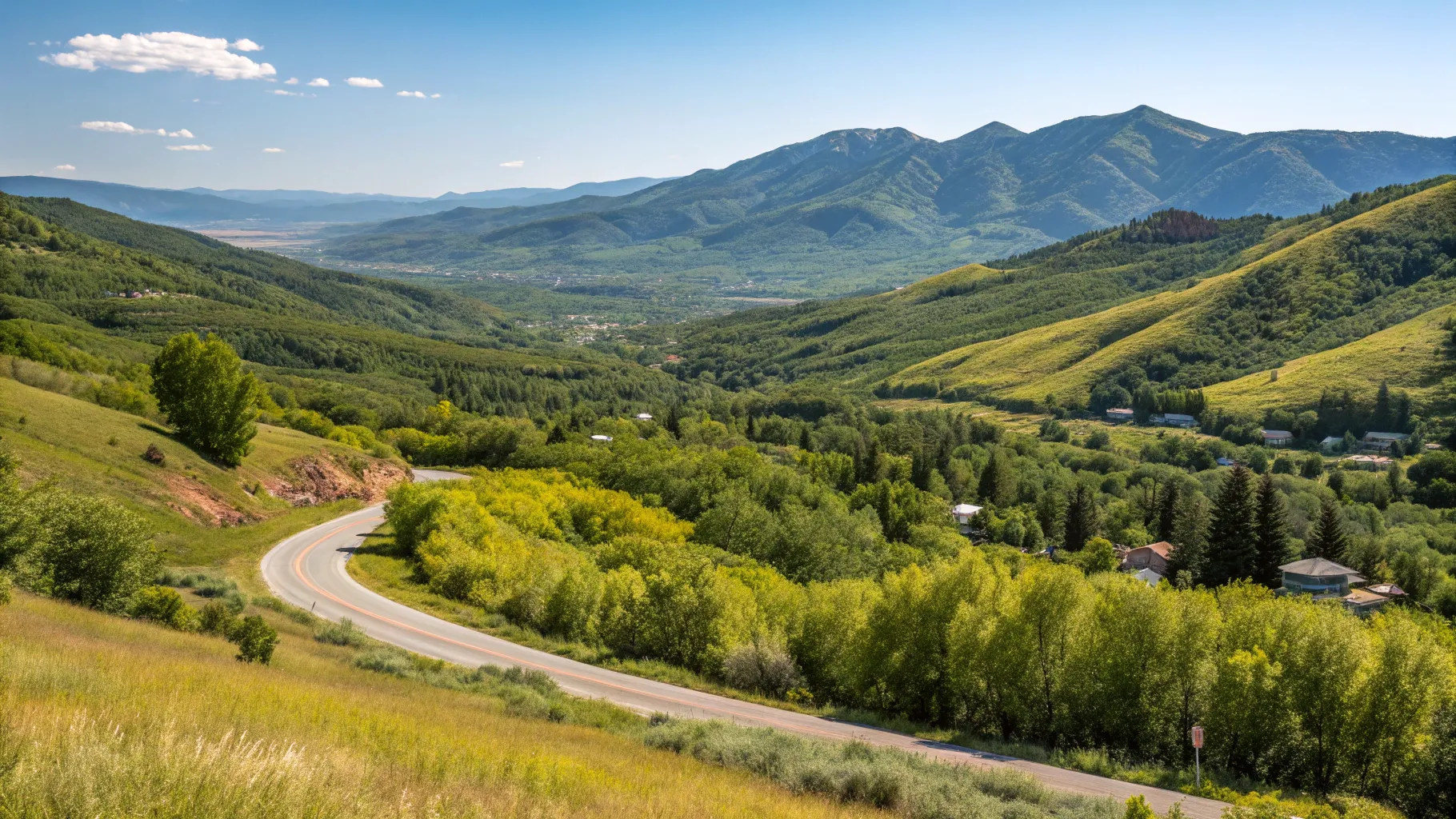
Payson sits at the south end of Utah County where the Wasatch Range climbs to its highest peak. It is the northern gateway to the Nebo Loop Scenic Byway, the home of Utah County's largest hospital south of Provo, and the closest city to the Payson Utah Temple — completed in 2015 and one of the largest LDS temples in the state. For buyers priced out of Spanish Fork or Lehi, Payson is often the last "real Utah County" town before the freeway drops into Juab and the rural south.
The honest question for buyers is not whether Payson is a good place to live. The temple, the hospital, the canyon, and the price point all line up. The better question is whether the trade-offs match a specific commute, school stage, budget, and lifestyle. This guide covers what to expect in 2026, where Payson earns its appeal, and where it asks for compromises.
Buyers can also browse current Payson homes for sale alongside this guide, or compare against the broader Utah real estate market.
Who Payson Is Best For
Payson is one of southern Utah County's strongest value plays. The current median sale price is $506,950, with 134 active listings and a median 42 days on market. That places it noticeably below pricing in Spanish Fork ($489,900) or Mapleton, with meaningful room for buyers in a market that isn't moving as fast as Springville's.
The strongest fits:
- First-time and value-focused buyers priced out of northern Utah County who still want full city amenities, hospital access, and Nebo School District schools
- Families wanting larger lots, including acreage parcels and horse properties on the bench above town
- Retirees and 55-plus buyers — Payson has an active 55-plus community segment (including the Mount Loafer Flats area, one of the fastest-clicking community pages on this site)
- Outdoor-focused households — Payson is the northern gateway to the Nebo Loop, with Payson Lakes, Maple Lake, and Mt. Nebo trailheads all within reach
- Buyers needing in-town healthcare — Mountain View Hospital (HCA) anchors the south end of Utah County
It's a weaker fit for buyers who need a short daily commute to central Lehi or Salt Lake City, households expecting the dense retail of Spanish Fork's Canyon Creek without driving 12 minutes north, or anyone wanting a finished-city upscale dining scene.
Payson Home Prices in 2026: What Buyers Should Know
Payson pricing has tracked Utah County's growth, but the city consistently sits below the Spanish Fork / Mapleton band. That gap is one of the main reasons buyers from northern Utah County look here.
As of the most recent reporting month, Payson's market stats are:
- Median sale price: $506,950
- Active listings: 134
- Median days on market: 42 days
- Sale-to-list ratio: 98.4%
Payson's days-on-market sits in the middle of the cluster: faster than Nephi (24 days) but slower than Springville (38 days). Buyers should expect a market where well-priced listings move within a month, but where there's still room to negotiate compared to the fast-clearing markets up the freeway.
Inventory ranges from homes under $500K on the older grid and the south side, through new construction on the foothill benches, to a small luxury segment on view lots up against Mt. Loafer. The most consistently active communities by recent sales are Arrowhead Ranch, Brookside, Springside Meadows, Villages at Arrowhead Park, and Ridgestone Condos.
Why Zillow estimates miss the mark here
Utah is a non-disclosure state — sale prices are not publicly reported to third-party valuation sites the way they are in many other states. That's especially limiting in Payson, where neighborhoods vary significantly by side of town (older west-side grid vs. newer east-side benches vs. south-side new construction). Automated estimates don't see those distinctions. Buyers shopping by Zillow alone will miss most of the actual range; sellers using it as a pricing anchor often underprice their property.
The Commute Reality
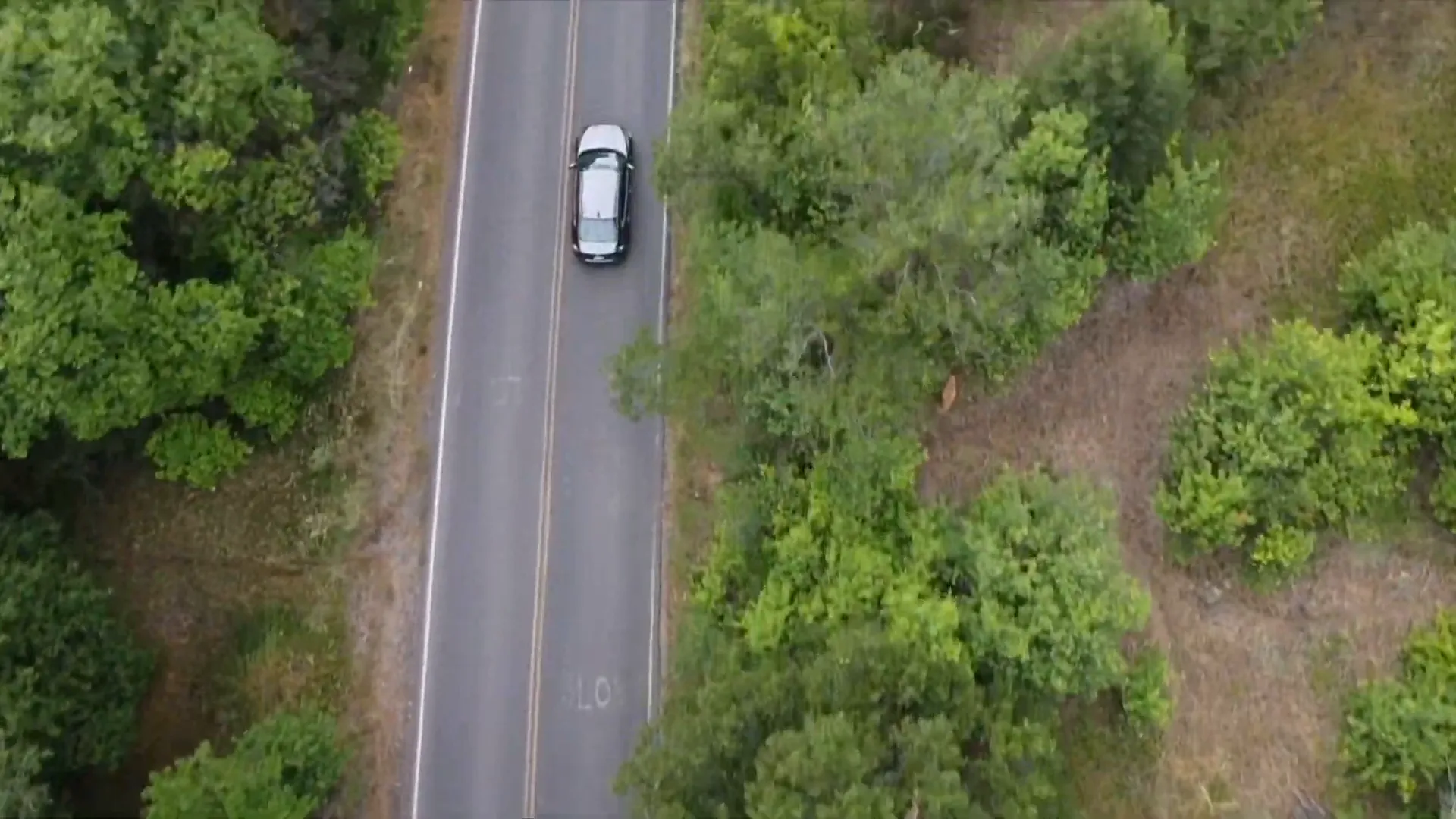
Payson sits on I-15 at the southern end of the major Utah County employment band, which makes it one of the better-positioned cities for southbound commuters and a longer haul for northbound ones.
When the commute works
- Spanish Fork: about 12 minutes north on I-15 — closest full-retail town (Canyon Creek)
- Provo: 25 to 30 minutes north in normal traffic
- Orem and UVU: 30 to 35 minutes
- Lehi / Silicon Slopes: 45 to 55 minutes off-peak
- Nephi: about 20 minutes south for residents who routinely head that direction
For Provo-area workers, remote and hybrid employees, retirees, or anyone whose schedule misses peak hours, Payson is workable. The southbound direction is wide open most of the day.
When it doesn't
Daily peak-hour commutes to downtown Salt Lake City run 65 to 80 minutes one way before snow or accidents. The northbound morning stretch from Spanish Fork to Lehi is the choke point and can add 15 to 20 minutes unpredictably. Households committing to a daily SLC drive should test the actual route at 7:00 AM on a weekday — Payson is far enough south that the math only works for some schedules.
Schools in Payson
Payson is part of Nebo School District, the same district that serves Spanish Fork, Springville, Mapleton, Salem, and Santaquin. The city has a complete in-town K-12 pipeline:
- Payson High School
- Payson Junior High
- Multiple elementary schools inside city limits
Payson High has been the long-standing single high school for the south-of-Spanish-Fork part of the district, and it draws students from Santaquin (which doesn't have an in-town high school) as well. As Nebo School District has grown, a long-discussed second-high-school option south of Spanish Fork has remained on the planning radar — buyers should not bet on specific boundary stability over a 10-year horizon, but should plan for Payson High as the current and near-term assignment.
Safety and Everyday Feel
Payson consistently ranks among the safer Utah County cities, with crime trending with population growth but concentrated in property crime rather than violent incidents. The local police presence is sized for the population.
The everyday feel splits across three parts of town: the historic grid west of Main Street has mature trees, brick storefronts, and a real downtown along Utah Avenue; the eastern foothill subdivisions feel newer with larger lots and Mt. Loafer views; and the southern new-construction areas are still actively building out. This is a small city with a real downtown character — not a generic suburb.
The Payson Temple and Peteetneet: The City's Landmarks
Two landmarks define Payson's identity beyond its size.
The Payson Utah Temple, completed in 2015 and dedicated by Henry B. Eyring on June 7 of that year, is one of the largest LDS temples in Utah and the visual anchor of the south end of Utah Valley. Visible from I-15 and lit at night, it's one of the most-photographed buildings in southern Utah County. For LDS buyers, proximity to the temple is a real factor in choosing Payson over Nephi or Santaquin.
The Peteetneet Museum and Cultural Arts Center — named after Chief Peteetneet, the Timpanogos Ute leader who lived in the area before settlement — occupies the original Peteetneet School built in 1901. Designed in Victorian and Romanesque Revival style by architect Richard C. Watkins, the building served as a school until 1989, when concerned citizens saved it from demolition. Since 1990 it has been on the National Register of Historic Places and now houses the Daughters of the Utah Pioneers museum, the Payson Historical Society, and the Peteetneet Arts Council. It sits at the start of the Nebo Loop Scenic Byway on Highway 198.
The annual rhythm of Payson is anchored by community events:
- Golden Onion Days — Labor Day weekend, founded in 1929. Originally "Onion Harvest and Homecoming," the festival honors Payson's history as one of Utah's leading Spanish-onion producers (the volcanic soil of the Wasatch Front made the city famous for them through the mid-20th century). The modern festival includes a parade, carnival, fireworks, 5K and 10K races, concerts, and a car show.
- Payson Salmon Supper — a summer community dinner organized by the local Lions Club, fundraising for community projects since the 1950s
- Smaller seasonal events at Peteetneet and the city parks year-round
Family Life and Outdoor Access
Payson's recreation hook is its position as the northern gateway to the Nebo Loop Scenic Byway. Direct access from town reaches:
- The Nebo Loop itself — 38 miles of scenic byway running from Payson to Nephi, one of Utah's signature fall-color drives. Closed by snow roughly late October through May.
- Payson Lakes — a chain of small lakes along the byway, popular for fishing, picnicking, and easy hiking with kids
- Maple Lake — higher up the canyon, a more remote camping and fishing destination
- Mt. Nebo trailheads — both the North Nebo and South Nebo summit approaches are accessed from the loop. Mt. Nebo is the highest peak in the Wasatch Range at over 11,900 feet.
- Mt. Loafer — the visual backdrop of the city; trailheads accessed from the south end of town
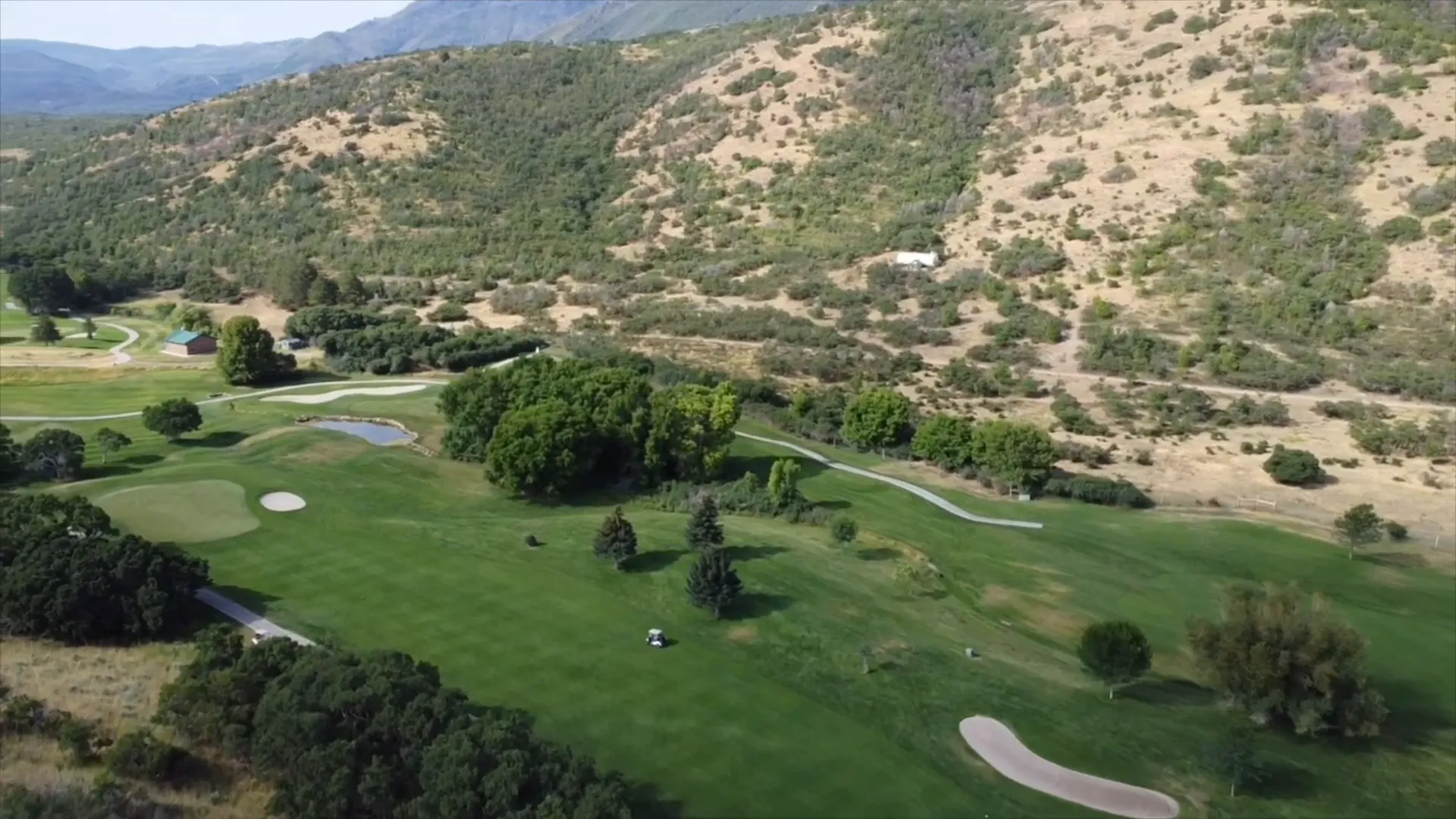
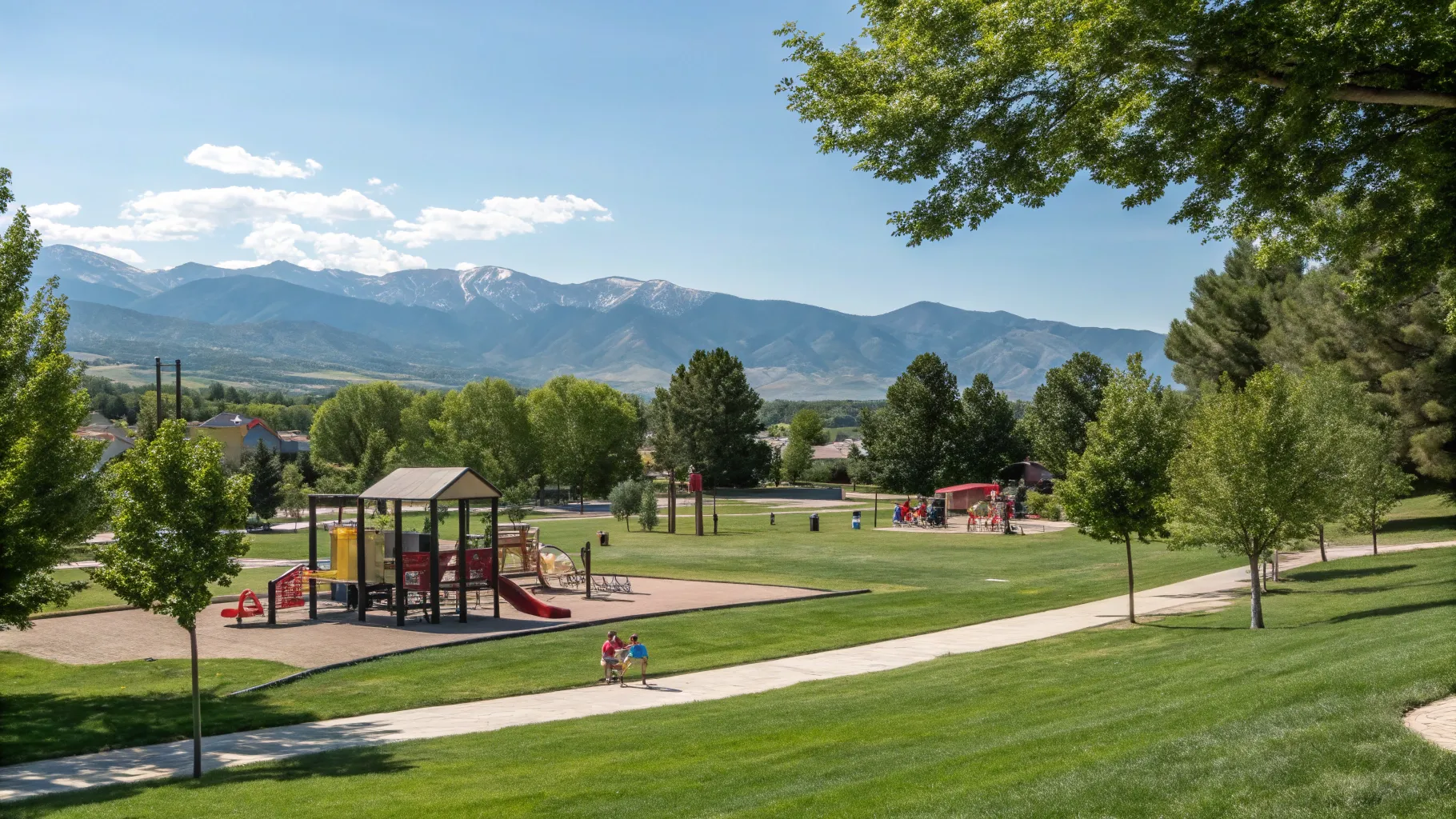
The city itself has 28 parks across town. Memorial Park near downtown, Kiwanis Park at the canyon entrance, and the Hillman Softball Complex are the largest. The Payson City Pool provides summer swimming. Gladstan Golf Course, set against Mt. Loafer and operated by Payson City, is consistently rated among Utah Valley's most scenic public courses.
Healthcare: Mountain View Hospital
One feature that genuinely sets Payson apart from the smaller cities to the south is Mountain View Hospital — the HCA Healthcare facility on the east side of town that anchors south Utah County's hospital coverage. Originally opened in 1979, Mountain View provides emergency care, surgical services, labor and delivery, imaging, and specialty clinics. For families with young children, expectant parents, or anyone with ongoing healthcare needs, having a full hospital in town means not having to drive 25 minutes to Provo for emergencies.
This is a meaningful differentiator from Santaquin, Nephi, Salem, or Mona — all of which require driving north to Payson or Provo for any serious medical care.
Retail and Dining: Honest Expectations
Payson's retail mix is functional but limited. The city has the basics — a grocery store cluster, gas, hardware, urgent care, a small movie theater, fast food, and a handful of local restaurants. The historic downtown along Utah Avenue and Main Street has some specialty shops, but the big-box and chain-restaurant scene is concentrated 12 minutes north at Spanish Fork's Canyon Creek (Costco, Walmart Supercenter, Lowe's, the dining cluster).
For most weekly shopping and dining, Payson households drive to Spanish Fork. For larger trips or upscale dining, they go to Provo (25 to 30 minutes). This catches new residents off guard more than almost anything else about the move — the city has enough to function day-to-day, but anything beyond essentials requires a trip north.
The Real Trade-Off
Payson's trade-off is the trade-off of a real small city sitting just past the suburban Utah County band:
- What buyers get: in-town hospital, full K-12 in Nebo School District, the Payson Temple, the Peteetneet historic district, 28 city parks, direct Nebo Loop access, an active 55-plus community segment, and pricing meaningfully below the Spanish Fork / Mapleton band
- What buyers give up: the in-city retail of Spanish Fork's Canyon Creek, predictable peak-hour commute times to SLC, upscale dining inside city limits, and the option to "just run to the store" without a 12-minute drive
For families, retirees, and value-focused buyers, the math often works. For households built around a daily Salt Lake City commute or in-city retail expectations, it usually doesn't.
A Simple Scorecard for Deciding if Payson Fits
Before choosing Payson, buyers can run a five-part check:
1. Commute reality
Test the actual northbound I-15 drive at 7:00 AM on a weekday. Provo at 25 to 30 minutes is real, but SLC at 65 to 80 minutes can stretch under bad conditions.
2. Side of town
The historic west-side grid, the foothill east side, and the south-side new construction price and live very differently. Drive each before committing.
3. Healthcare priority
If in-town hospital access matters (young kids, expectant parents, ongoing health needs), Payson's Mountain View Hospital is a meaningful advantage over Santaquin, Salem, or Nephi.
4. Lifestyle match
Will the household actually use the Nebo Loop, Payson Lakes, Maple Lake, Gladstan Golf, and the historic downtown? If yes, the value compounds. If not, the case rests on price and schools alone.
5. Retail tolerance
How often will a 12-minute drive to Spanish Fork for routine errands feel acceptable rather than tedious?
Common Mistakes Buyers Make Before Moving to Payson
- Testing the I-15 commute on a Saturday instead of a weekday rush hour
- Trusting Zillow estimates in a non-disclosure state with side-of-town variance — automated valuations lag here
- Underestimating winter inversion — Payson sits in the Utah Valley low and shares the worst of the winter air-quality stretches
- Assuming Payson and Santaquin are similar — Payson has the hospital, the temple, full retail proximity to Spanish Fork, and an in-town high school; Santaquin doesn't
- Skipping Peteetneet on a buyer tour — the historic district and museum are central to the city's character, not optional context
- Missing the seasonal Nebo Loop closure — the canyon is one of the best parts of the location, but it's closed roughly six months a year
Is Payson a Good Place to Live in 2026?
Yes — for the right buyer, Payson is one of the best-balanced cities in southern Utah County. It works well for:
- Families balancing schools, hospital access, and home price
- Retirees and 55-plus buyers wanting an active community with full amenities
- Outdoor-focused households who'll actually use the Nebo Loop and Mt. Nebo access
- LDS families prioritizing proximity to the Payson Temple
- Provo-area workers wanting more home for the money
It's less ideal for:
- Daily Salt Lake City commuters
- Buyers expecting in-city big-box retail like Spanish Fork's Canyon Creek
- Households without an interest in the outdoors or small-town rhythms
- Buyers focused on upscale dining inside city limits
Bottom Line
Payson is the southernmost true Utah County city — a place with its own hospital, its own LDS temple, a historic 1901 Peteetneet building on the National Register, the Nebo Loop opening directly out the back door, and pricing meaningfully below Spanish Fork or Mapleton. The trade-offs are limited in-city retail and a longer commute north for daily SLC workers. The three things easiest to test before buying are the actual rush-hour commute, the side-of-town personality that fits the household, and how often a 12-minute drive to Spanish Fork will feel acceptable.
For more context on Utah relocations, the broader moving to Utah guide covers statewide considerations. Anyone serious about Payson should walk through current Payson homes for sale and reach out for a tour.
Posted by Kristopher Larson
Frequently asked questions
Is Payson, Utah a good place to live?
Yes, particularly for families and retirees who value in-town healthcare and amenities. Payson has Mountain View Hospital (HCA Healthcare), the Payson Utah LDS Temple (completed 2015), the 1901 Peteetneet Museum on the National Register, full Nebo School District K-12 schools, direct Nebo Loop Scenic Byway access, and pricing meaningfully below Spanish Fork or Mapleton. It is one of the most-balanced cities at the southern end of Utah County.
How long is the commute from Payson to Provo?
About 25 to 30 minutes north on I-15 in normal traffic. Spanish Fork is 12 minutes, Orem and UVU run 30 to 35 minutes, Lehi and Silicon Slopes 45 to 55 minutes off-peak, and downtown Salt Lake City 65 to 80 minutes during weekday rush hour. The I-15 northbound morning stretch from Spanish Fork to Lehi can add 15 to 20 minutes unpredictably.
What schools serve Payson, Utah?
Payson is part of Nebo School District. The city has Payson High School, Payson Junior High, and multiple elementary schools all inside city limits. Payson High also draws students from Santaquin, which does not have an in-town public high school. The in-town K-12 pipeline is one of the meaningful advantages Payson holds over smaller surrounding cities.
What is Payson, Utah known for?
Payson is best known for the Payson Utah Temple (completed 2015), the 1901 Peteetneet Museum and Cultural Arts Center, and the annual Golden Onion Days festival every Labor Day weekend — a tradition since 1929 honoring the city's Spanish-onion agricultural heritage. The city is also the northern gateway to the Nebo Loop Scenic Byway, with Mt. Nebo (the highest peak in the Wasatch Range), Payson Lakes, and Maple Lake all directly accessible.
How much do homes in Payson cost in 2026?
Payson's median sale price is around $506,950 as of the most recent reporting month, with 134 active listings on the market and a median 42 days on market. The market sits in the middle of the southern Utah County cluster — faster-moving than Nephi but slower than Springville, with meaningful price savings below Spanish Fork or Mapleton.
What healthcare is available in Payson, Utah?
Mountain View Hospital on the east side of Payson is the HCA Healthcare facility that anchors south Utah County's hospital coverage. Originally opened in 1979, it provides emergency care, surgical services, labor and delivery, imaging, and specialty clinics. For families with young children, expectant parents, or anyone with ongoing healthcare needs, having a full hospital in town is one of Payson's meaningful advantages over smaller cities like Santaquin, Salem, or Nephi.
Payson, Utah housing market
A quick read on what homes are doing in Payson right now — pulled live from the MLS.
Keep reading
More from the blog
Things to Do in Payson, Utah
Salt Lake Valley Pizza by Style and City: A Map for Movers
Healthcare in Cedar City, Utah: A Guide for Families and Retirees