Living in Murray, Utah: Pros, Cons, Location & Home Prices
Murray, Utah pros and cons: a central location with TRAX and FrontRunner, older homes, Murray schools, safety, home prices and how far it is from SLC.
Murray is one of the oldest cities in the Salt Lake Valley and one of the most central. It sits in the middle of the valley, a few miles south of Salt Lake City, with I-15 running through it, three TRAX stations, a FrontRunner stop and a major hospital campus. For buyers, that location is the main draw.
The other side of the ledger is older housing, tighter lots, and the noise and traffic that come with sitting at the center of a metro area. Here is how the pros and cons of living in Murray actually play out. To see what is on the market now, browse homes for sale in Murray.
Where Murray Is (and Whether It Is Part of Salt Lake City)
Murray is its own city in Salt Lake County, not a neighborhood of Salt Lake City, although the two share a lot of history. It covers about 12.3 square miles, with Millcreek to the north, Holladay and Cottonwood Heights to the east, Midvale to the south and Taylorsville to the west. Because the city stretches along the Salt Lake grid from roughly 4000 South down to I-215, downtown Salt Lake City is about 6 to 8 miles north depending on where in Murray a home is.
The city grew up around smelting. Smelters were built along the Jordan River beginning around 1870, the town took its name from territorial governor Eli Murray, and it was recognized as a city on January 3, 1903. The 2020 census counted 50,637 residents, and the Census Bureau estimated about 49,500 in 2023. Unlike the fast-growing suburbs on the valley's west side, Murray is largely built out, so its population has stayed fairly steady.
Who Murray Tends to Fit
- Commuters who need to reach downtown Salt Lake City, the south valley and the east bench without a long drive in any one direction.
- People who want to use TRAX or FrontRunner for work or for trips to the airport or University of Utah.
- Healthcare workers at Intermountain Medical Center, the city's largest employer.
- Buyers who prefer an established neighborhood with mature trees and are comfortable with an older home.
It is a weaker fit for buyers who want new construction, large lots, a quiet rural feel, or a home right next to a canyon trailhead.
Murray Home Prices and Housing Stock
Murray's prices reflect its central location. The latest MLS figures:
- Median sale price (latest full month): $454,600
- Median list price of active listings: $545,000
- Median days on market: 35 days
- Sale-to-list ratio: 97.4%
- Active listings: 207
Inventory is modest for a city of 50,000, and well-priced homes often go quickly. A large share of Murray's single-family homes were built in the 1940s through the 1960s: brick ramblers, bungalows and split-levels on established streets. Newer construction is mostly infill townhomes and apartments near State Street, the TRAX stations and the hospital. Condominium communities such as Three Fountains give buyers a lower-maintenance option, and condos in Murray and townhomes in Murray are the usual entry points for first-time buyers. Buyers on a tighter budget can also compare Murray homes under $500k.
What to check in an older Murray home
Older houses can be a good value, but they need a careful inspection. Common items to look at are the electrical panel and wiring, galvanized or older sewer lines (a sewer scope is worth the cost), roof and window age, foundation condition and, for homes built before 1978, lead-based paint disclosures. Budget for updates up front rather than assuming a home is move-in ready because it looks updated in photos.
Getting Around: Murray's Biggest Advantage
Freeways
I-15 divides Murray down the middle, with interchanges at 4500 South and 5300 South, and I-215 follows roughly the city's southern edge. From Murray, most of the valley is within a reasonable drive, including downtown Salt Lake City, Sandy, Draper and the Cottonwood canyons.
Transit
Murray has three TRAX stations: Murray North at Fireclay Avenue (about 4300 South), Murray Central at 5200 South and Fashion Place West. The Blue Line runs to downtown Salt Lake City and Draper, and the Red Line runs to the University of Utah and Daybreak. Murray Central is also a FrontRunner stop, which connects north to Salt Lake City, Ogden and beyond and south to Utah County. UTA's Midvalley Express bus line, which opened in April 2026, runs from Murray Central past Intermountain Medical Center and west toward Taylorsville.
The downside of being central
Central also means busy. State Street, 4500 South, 5300 South and the freeway interchanges are crowded at rush hour, and homes close to I-15, the rail lines or the main arterials hear it. Visit a house at the time of day you would actually be home before buying.
Schools in Murray
Most of Murray is served by the Murray City School District, a city-run district separate from the surrounding county districts. It was established in 1906 and operates one high school (Murray High), two junior high schools and seven elementary schools. Part of the city on the east side, annexed later, stays in the Granite School District; that area includes Cottonwood High School and Twin Peaks and Woodstock elementary schools. Because the district lines and city lines do not match exactly, buyers should confirm the school assignment for a specific address.
Is Murray, Utah Safe?
Murray has its own police and fire departments rather than contracting with the county, which gives the city local control over staffing and response. Crime levels vary from one part of the city to another, as in any central city with busy retail corridors, so buyers who want specifics should review current Murray Police Department reports for the neighborhoods they are considering rather than relying on a single citywide ranking.
A City That Runs Its Own Services
Murray is unusual in how much it handles itself. Besides police, fire and schools, the city runs its own water, library and parks departments and its own electric utility. Murray City Power was founded in 1913 and is the only city-owned power system in Salt Lake County; neighboring cities use Rocky Mountain Power. Rates are set by the city council, and power revenue goes back into the city budget. Buyers comparing utility costs should look at Murray's current rate schedule, since it differs from the rest of the county.
Intermountain Medical Center and Healthcare
Intermountain Medical Center, on the east side of the Murray Central station, is the city's largest employer and one of the main hospital campuses in the region. Having a major hospital in town is a real plus for anyone who wants specialists and emergency care close by, and it supports demand for nearby townhomes and rentals from healthcare workers.
Parks, Recreation and Local Landmarks
- Murray City Park: A wooded 22-acre park with sports fields and an amphitheater that hosts summer plays. Salt Lake County's County Ice Center is in the park, with public skating and hockey leagues.
- Wheeler Historic Farm: A county-run restoration of a turn-of-the-20th-century dairy farm at 6351 South 900 East, with seasonal events and farm programs.
- Jordan River Parkway: A trail along the river on the city's west side with walking and equestrian paths, picnic areas and canoe launches.
- Willow Pond: The city's only public-access lake, stocked with fish.
- Golf: Murray Parkway Golf Course and Salt Lake County's Mick Riley Golf Course, which has an executive course and a par-3 course.
- Murray Theater and Desert Star: The historic Murray Theater is on the National Register of Historic Places, and Desert Star Playhouse is known for community plays and melodramas.
For a longer list of places to go, see these things to do in Murray.
Shopping and Dining
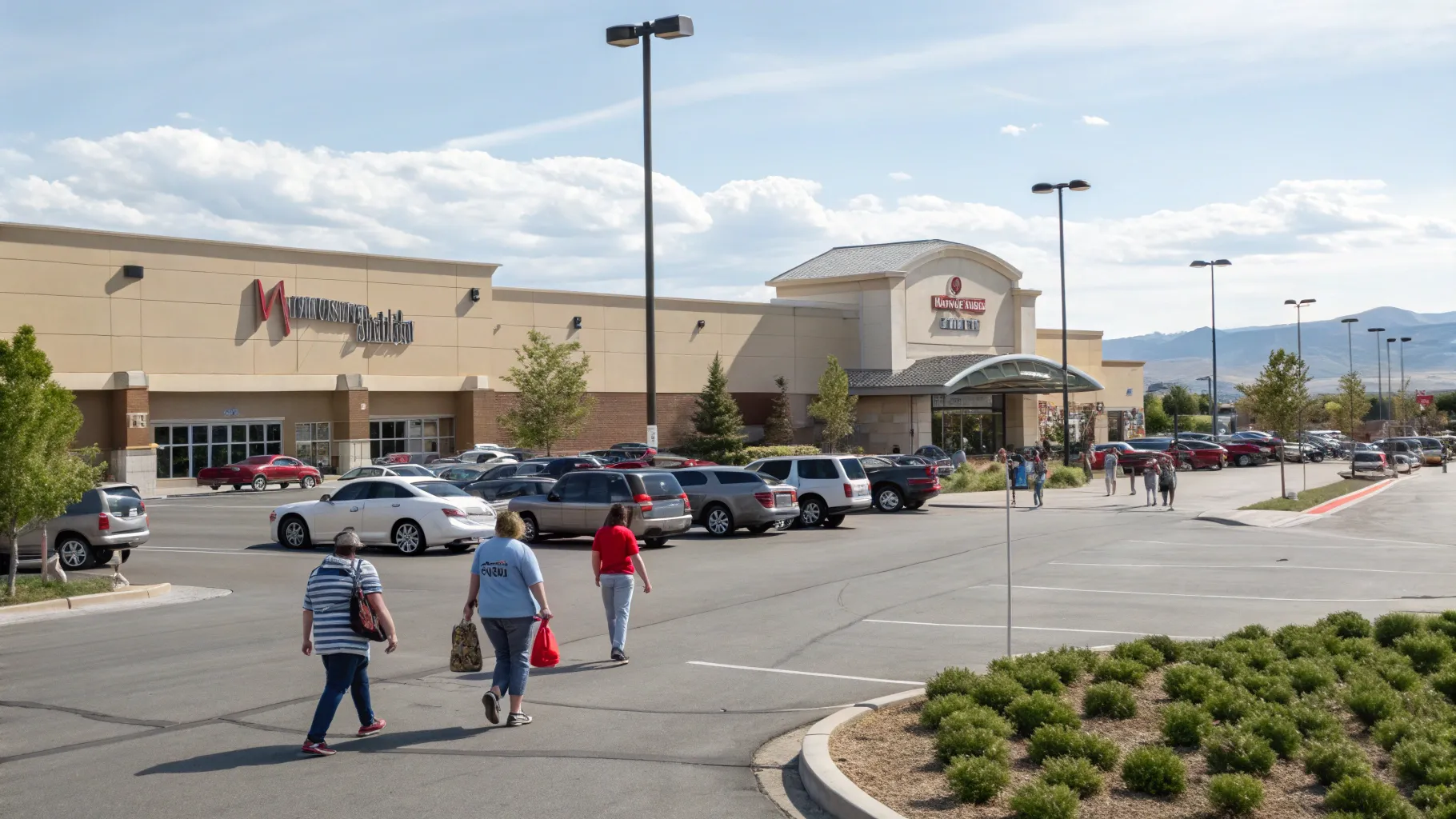
Fashion Place Mall, built in the 1970s and expanded in the 2000s, is the city's main shopping destination, and State Street through the city is lined with big-box stores, chain restaurants and services. Older parts of the city along State Street have locally owned restaurants, thrift and antique shops. Murray covers everyday needs well; residents looking for a denser restaurant and nightlife district usually head to Sugar House or downtown Salt Lake City, both a short drive or train ride north.
Weather and Air Quality
Murray has four distinct seasons: hot, dry summers with stretches in the upper 90s and occasional 100-degree days, and cold winters with snow. Like the rest of the Salt Lake Valley floor, it is affected by winter inversions, when cold air traps pollution in the valley for days at a time, and by summer wildfire smoke drifting in from other states. Buyers with asthma or other respiratory concerns should factor this in for any home on the valley floor, not just Murray.
The Real Trade-Off
What buyers get:
- A central location with fast access to most of the valley
- Three TRAX stations and a FrontRunner stop
- A major hospital, a city school district and city-run utilities
- Established neighborhoods with mature trees
What buyers give up:
- New construction and large lots
- Quiet streets near the freeway, rail lines and major roads
- Move-in-ready condition in many older homes
- Trailheads right outside the door
A Simple Scorecard for Deciding if Murray Fits
1. How much do you value a short commute?
If daily drive time is a top priority, Murray is one of the strongest choices in the valley.
2. Will you use transit?
Homes within walking distance of Murray Central, Murray North or Fashion Place West get real use out of TRAX and FrontRunner.
3. Are you comfortable with an older home?
Plan on inspections, updates and some ongoing maintenance.
4. How sensitive are you to noise?
Compare streets carefully; a few blocks from I-15 or State Street can make a big difference.
5. Which school district does the address fall in?
Murray City School District and Granite School District both serve parts of the city.
Common Mistakes Buyers Make Before Moving to Murray
- Skipping the sewer scope. Older lateral lines are a common, expensive surprise.
- Assuming every Murray address is in Murray schools. Part of the east side is in Granite School District.
- Visiting only on weekends. Freeway and arterial noise is different at weekday rush hour.
- Overlooking the power bill. Murray City Power has its own rates; check them.
- Waiting too long on a good listing. Inventory is limited and well-priced homes move fast.
- Not comparing neighbors. Midvale, Millcreek and Taylorsville offer similar central locations at different price points.
Is Murray a Good Place to Live?
Murray works well for buyers who put location first: short drives, real transit options, a major hospital and established neighborhoods. It is less ideal for buyers who want a brand-new house, a big yard or a quiet setting away from traffic.
Bottom Line
Murray is about convenience. Few cities in Utah put this much of the valley within a short drive or train ride. Buyers who go in expecting an older home, check the inspection carefully and pick their street with noise in mind usually find it a practical place to live. Start with the current Murray listings and the market numbers above.
Posted by Kristopher Larson
Frequently asked questions
Is Murray, Utah a good place to live?
For buyers who value location, yes. Murray sits in the middle of the Salt Lake Valley with I-15 and I-215, three TRAX stations, a FrontRunner stop and Intermountain Medical Center in town. The trade-offs are mostly older homes that may need updates, limited new construction and more traffic and noise near the freeway and main roads.
Is Murray part of Salt Lake City?
No. Murray is a separate city in Salt Lake County, incorporated in 1903, with its own mayor, police, fire department, school district and electric utility. It sits a few miles south of Salt Lake City, not inside its boundaries.
How far is Murray from Salt Lake City?
Downtown Salt Lake City is roughly 6 to 8 miles north of Murray, depending on the part of the city. Drivers take I-15 or State Street, and TRAX Blue Line trains from Murray North, Murray Central and Fashion Place West run straight to downtown. FrontRunner also stops at Murray Central.
Is Murray, Utah safe?
Murray has its own police department, and most residential streets are quiet. Crime levels vary by area. For a specific home, review current Murray Police Department reports for that area rather than a single citywide ranking.
How much do homes cost in Murray?
The median sale price in Murray for the latest full month was $454,600, and the median list price of homes for sale now is $545,000. Homes sold in a median of 35 days at about 97.4% of list price, and there are 207 active listings. See current Murray listings.
What schools serve Murray, Utah?
Most of Murray is in the Murray City School District, which runs Murray High School, two junior high schools and seven elementary schools. Part of the east side is in the Granite School District, including Cottonwood High School and Twin Peaks and Woodstock elementary schools. Check the assigned schools for a specific address.
Murray, Utah housing market
A quick read on what homes are doing in Murray right now — pulled live from the MLS.
Keep reading
More from the blog
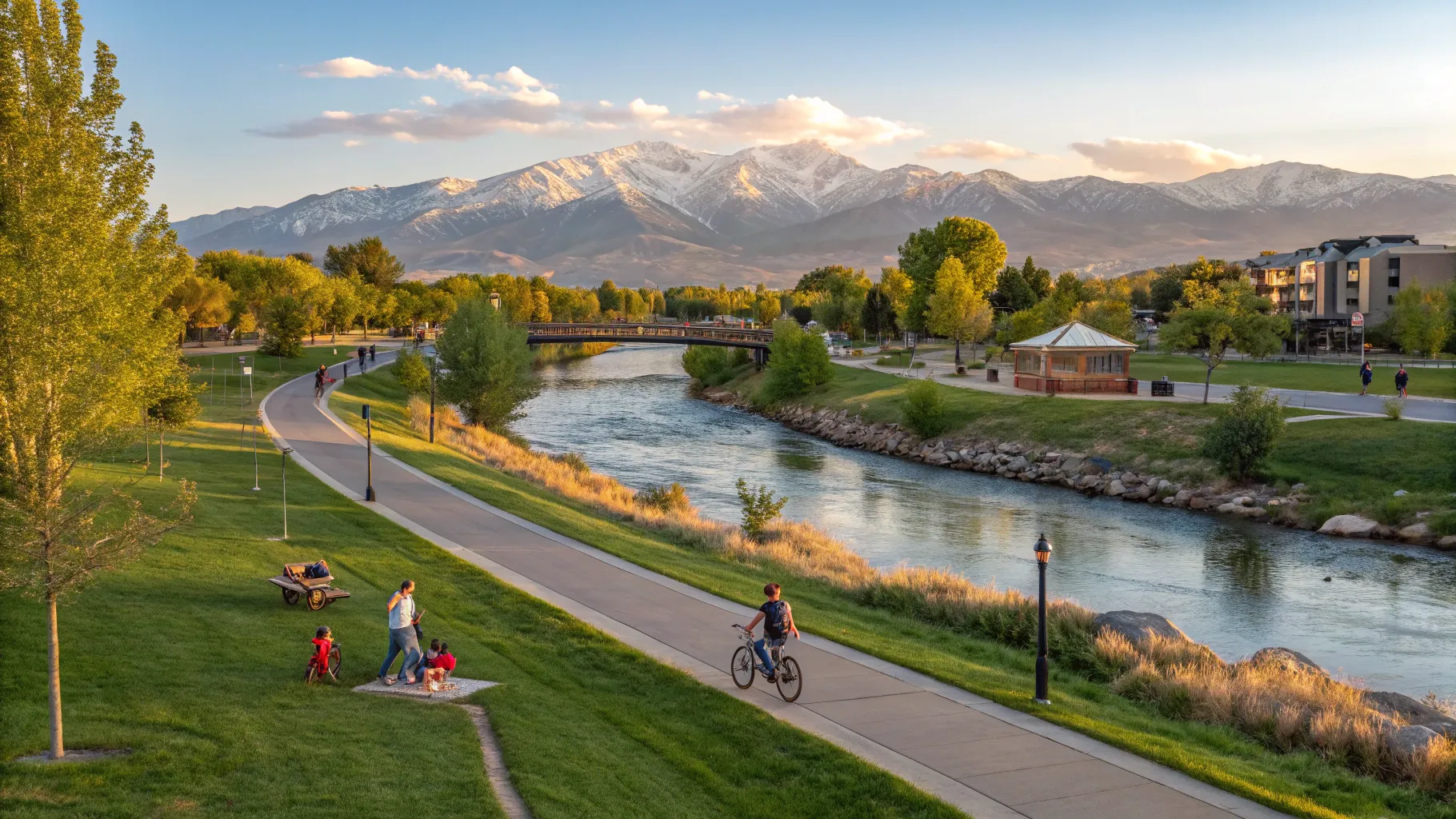
Best places to see in Murray, Utah
Kayenta Art Village in Ivins: Galleries, Festivals and Living Nearby
New Trails Around St. George: Cliffrose, the Zion Corridor Trail and More