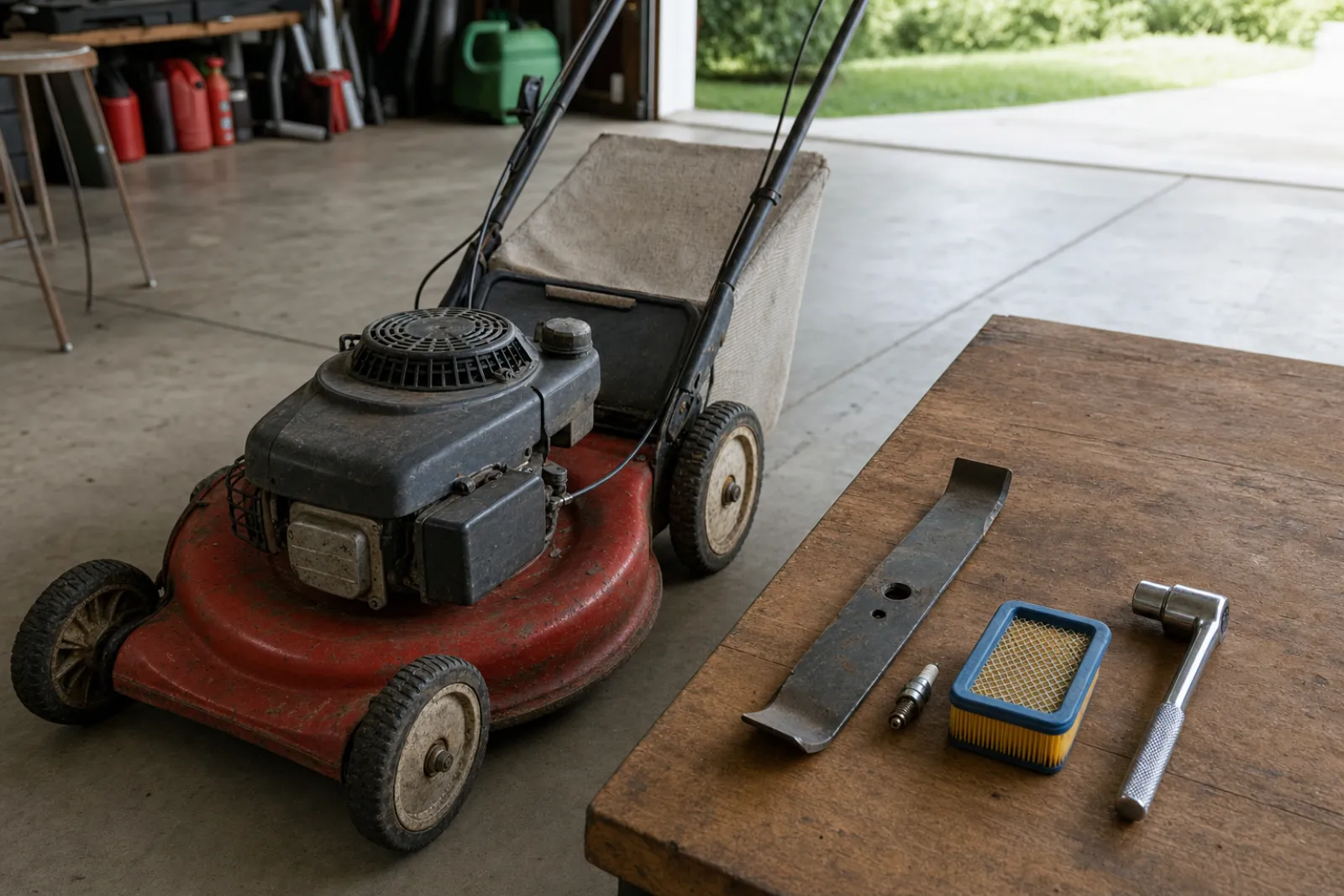
How to Choose Between Repairing and Replacing an Old Lawn Mower
Repair or replace an old lawn mower? Check its overall condition, find the real fault, compare full repair cost with a new mower and confirm parts are available.
An old lawn mower does not always need to be replaced when it breaks. Several common faults, such as a worn spark plug, a clogged air filter, a damaged belt or a dull blade, can be fixed for a relatively small outlay. That said, frequent breakdowns, costly repairs and poor cutting performance are all signs that a machine is near the end of its life. The decision comes down to its age, its condition, its repair history and the cost of a suitable replacement. A proper assessment keeps you from putting money into equipment that is likely to give out again soon.
Start by identifying the problem and checking whether a practical repair is available. Owners looking for replacement components can review UDC Parts when comparing parts and repair options. UDC Parts provides access to mower components that may help keep compatible equipment in service. Before ordering anything, confirm the mower's model and the required part number. A correct diagnosis matters more than the machine's age alone.
Assess the Mower's Overall Condition
Age can be an indicator, but it should not be the only question you ask. A well-kept mower can keep running for many years. Another of the same age may have extensive rust, a worn-out engine or a failing transmission, with little service life left. Look over the whole mower before narrowing in on one component. You need to know whether a single system has a problem or whether several systems are wearing out at once.
Check the deck, frame, wheels, handle and control cables first. Inspect the deck for obvious signs of heavy rust, cracks and holes. Surface rust is common, but structural damage can affect how securely the blade is held. Make sure the wheels turn with little resistance and the handle is still firmly in place. On a riding mower, look for damage to the frame, steering, tires, seat and cutting deck.
Identify the Cause of the Problem
A mower that will not start may have a simple fault rather than a failed engine. Old fuel, a dirty carburetor, a disconnected spark plug wire or a blocked air filter can prevent normal operation. Check these basic items first, before you assume a major repair is due. Before inspecting the blade or working around moving parts, follow the steps in the owner's manual and disconnect the spark plug wire first.
Use these checks to narrow down common problems:
- Engine will not start: Check the fuel level, fuel age, spark plug, air filter and safety controls.
- Engine starts but stops: Look for restricted fuel flow, a dirty carburetor or an obstructed air filter.
- Uneven cutting: Inspect blade sharpness, blade condition, tire pressure and deck level.
- Excessive vibration: Stop the engine and check for a bent blade, loose hardware or damaged components.
- Weak movement: On self-propelled and riding models, inspect the drive belt, cables and transmission.
Compare Repair Costs With Replacement Costs
Cost has a big influence on the decision. Look beyond the price of the failed component and estimate the cost of the full repair, including labor, additional parts, shipping and any servicing the mower will need soon after. Then compare that total with the price of a suitable replacement mower. A low repair price is worth less if you know another part is about to fail.
| Situation | Repair may make sense | Replacement may make sense |
|---|---|---|
| Engine issue | One affordable component needs attention | Several major engine problems occur together |
| Cutting deck | Blade, belt or pulley needs replacement | Deck has severe rust or structural damage |
| Drive system | A cable or belt is worn | Transmission repair costs are very high |
| Repair history | Breakdowns are rare | Repairs happen several times each season |
| Parts availability | Correct parts are easy to find | Essential parts are unavailable or costly |
A modest cost to replace a spark plug or drive belt can bring a mower that has been acting up back into service. Rebuilding an engine, replacing a transmission or fixing a deck badly damaged by corrosion may cost considerably more. The same repair is also worth more on a high-end mower than on a budget one. Spending more on a high-end riding mower can make sense when the rest of the machine is in good shape, but it is rarely wise to spend the same amount on a well-used, low-end push mower.
Check Parts Availability and Compatibility
Make sure the parts you need are available before you schedule a repair. Look up the mower's model number and the component's part number instead of relying on a general description. Different models can use different belts, blades, pulleys, filters and other components, and a wrong part can delay the repair or hurt performance. Read the specifications carefully when placing an order.
Follow these steps when checking parts:
- Find the complete model and serial numbers on the mower.
- Identify the faulty component and record its part number.
- Check dimensions, mounting points and compatibility details.
- Compare the price and availability of suitable replacement parts.
- Review return terms and warranty information before buying.
Consider Your Lawn and Mowing Needs
A mower can still run while doing a poor job: leaving uncut strips, bogging down in thick grass, discharging clippings badly or needing multiple passes. These problems can come from dull blades, a damaged deck, an underpowered engine or a poor design. Some can be solved with maintenance; others mean the machine no longer fits the property.
Consider the size and layout of your lawn before you choose a replacement. For a small, level patch of grass, a low-priced push mower may be all you need. A bigger property may call for a self-propelled or riding mower. Slopes, narrow gates, trees and landscaping also affect the best choice. Paying for extra power or a wider deck you can't use only adds cost. Think about how often you mow, how large each area is, how much a breakdown would disrupt your routine and where you can get service between seasons.
Put Safety and Reliability First
Safety matters more than saving a few dollars on a repair. A cracked deck, a failed blade adapter, a defective safety switch or a loose handle can make a mower dangerous to operate. Stop using the machine until a serious safety issue is resolved. Never weld or reinforce a major component unless a qualified professional has inspected the repair and confirmed it is safe. Replace damaged safety-related parts with the correct parts.
When Repairing Is the Better Choice
Repair is usually the better option when the frame is solid, the engine runs well and there are only one or two minor problems. It also makes sense when the replacement parts are inexpensive and easy to find. Many mower owners who keep up with basic maintenance handle small repairs themselves. Even when a technician does the work, a simple repair can cost significantly less than a new mower.
Repairing also spares you the work of shopping for, buying and learning a new machine, and the mower you have may already suit your lawn and storage space. If the fix restores normal performance and the rest of the mower is in good shape, there is little reason to replace it. Keeping a repair record helps you track costs over time and spot recurring problems.
When Replacing Is the Better Choice
Replacement looks more appealing as major faults or structural problems add up. A failing engine, a bad transmission, a rotted deck and hard-to-find parts can combine to make ownership costly, especially when repairs are frequent. At that point it is better to stop pouring money into a machine that will never run like new again.
Make a Decision Based on Evidence
Do not decide in a moment of frustration after a breakdown. A small broken part can keep a mower from starting, while a mower that still runs may be badly worn. Examine it, find the fault, check whether the part is in stock and compare the real cost of repair with the cost of replacement. The decision comes down to safety, reliability and what you need from your lawn. A few checks now can save you an expensive mistake.
Before deciding, use this final checklist:
- Are the frame and cutting deck structurally sound?
- Can you identify the fault with reasonable confidence?
- Are suitable parts available at a fair price?
- Will the repair restore safe and reliable performance?
- Is the total repair cost reasonable compared with replacement?
- Does the mower still suit your lawn and working needs?
Deciding whether to repair or replace an old lawn mower takes more than judging its age. Examine the condition of the engine, deck and drive system, the mower's repair history, parts availability and overall safety. Weigh the full repair cost against the cost of a suitable replacement, including future maintenance. A mower with a single low-cost fault and a sturdy frame may keep working for years. A mower that breaks down repeatedly, or needs expensive or unavailable parts, is a candidate for replacement. Base the decision on facts, and choose the option that gives you a safe, reliable cut at a sensible cost.
Frequently asked questions
Is it worth repairing an old lawn mower?
Often, yes. If the frame and deck are solid and the engine runs well, faults like a worn spark plug, clogged air filter, damaged belt or dull blade can usually be fixed for much less than a new mower. Frequent breakdowns, costly repairs and poor cutting are signs it is time to replace it.
Why won't my old lawn mower start?
Check the simple causes first: fuel level and fuel age, the spark plug and its wire, the air filter, a dirty carburetor and the safety controls. Disconnect the spark plug wire and follow the owner's manual before working near the blade.
When should I replace a lawn mower instead of fixing it?
Replace it when major problems add up: a failing engine, a bad transmission, a rotted or cracked deck, parts that are hard to find, or repairs several times a season. Compare the full repair cost, including labor and parts, with the price of a suitable replacement.
How do I find the right replacement part for my mower?
Find the complete model and serial numbers on the mower, record the part number of the faulty component, check dimensions and mounting points, then compare price, availability, return terms and warranty before buying.