Commercial Real Estate Law in Utah vs. New York: What Developers Need to Know
There are 500 commercial property transactions every day across the United States, yet the legal friction between a mountain state and a coastal powerhouse remains a primary hurdle for expanding firms.
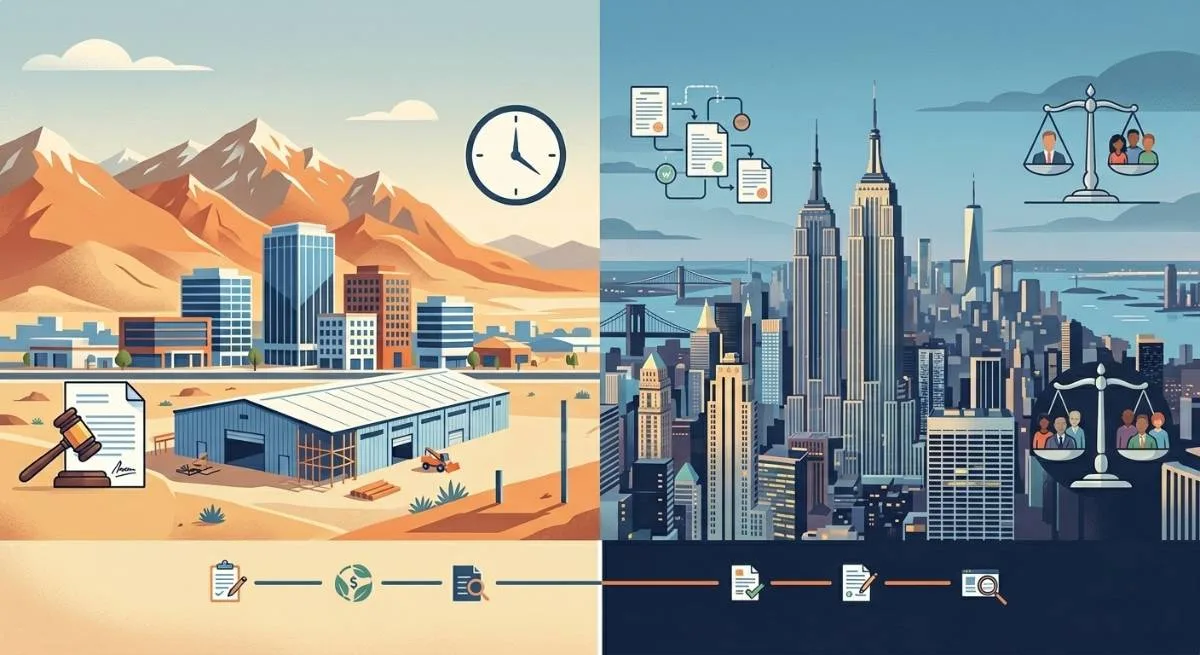
There are 500 commercial property transactions every day across the United States, yet the legal friction between a mountain state and a coastal powerhouse remains a primary hurdle for expanding firms. Moving a portfolio from the Salt Lake Valley to the Hudson River requires more than just a change in zip code. It demands a complete recalibration of how you view land use and environmental liability.
Zoning Speed and Local Law Compliance
Utah has recently moved to slash the red tape that typically strangles new construction. In early 2025, the state passed Utah HB 368 to streamline land use laws and force faster construction plan reviews across the state. This pro-growth stance offers a stark contrast to the regulatory climate in Manhattan.
New York developers are currently navigating the heavy lifting of Local Law 97, which mandates strict carbon emissions limits for buildings over 25,000 square feet. It is fast, Utah builds quickly, and the market rewards early movers. This difference in pace means a project that takes eighteen months in Salt Lake City might take three years in New York City due to environmental compliance and community board reviews.
Navigating these complexities requires commercial real estate law specialists who understand that a lease in Midtown is a different beast than a warehouse agreement in West Valley. While Utah focuses on sprawl and infrastructure, New York is defined by vertical density and aging infrastructure mandates. Developers must account for these disparate timelines when calculating their internal rate of return.
Reporting Standards and Judicial Trends
Transparency is the new baseline for 2026. The Utah DRE now emphasizes strict FinCEN reporting for non-financed transfers to legal entities to prevent fraud. New York has long operated under similar transparency requirements, but the state's judicial system remains significantly more tenant-friendly in commercial disputes than Utah’s more conservative, pro-landlord courts.
Successful developers generally focus on these three pillars:
-
Streamlined permit processing to avoid holding cost spikes
-
Sustainability audits to ensure long term New York compliance
-
Entity transparency to meet federal and state reporting goals
Know the code, manage the risk, physical assets require constant vigilance. These shifting legal landscapes mean that a "standard" contract is a myth. Every clause must be tailored to the specific jurisdiction to avoid costly litigation during the 2026 market recovery.
Litigation Risks and Venue Selection
There are many new commercial litigation filings every day in state courts, highlighting the massive divide between the legal cultures of the Intermountain West and the Tri-State area. Utah operates with a "Rocket Docket" mentality where judges prioritize moving cases through the system to keep development timelines predictable, which is worth knowing if you’re moving from out of state. New York remains famously bogged down by a massive backlog of commercial division cases that can trap a developer in discovery for years.
Because of these timing risks, New York contracts often include mandatory arbitration clauses to bypass the traditional court system entirely. Utah developers rarely see such clauses as the local courts are viewed as efficient and generally favorable to the sanctity of the written contract. Understanding these venue nuances is essential when drafting an interstate master service agreement.
Strategic Planning for Regional Shifts
The gap between these two markets is narrowing in price but widening in compliance. As Salt Lake City vacancy rates hold steady, the focus shifts toward maintaining the ease of doing business that attracted developers in the first place.
Meanwhile, New York remains a "flight to quality" market where legal excellence is the only way to protect a high-value asset. You should review our ongoing analysis on urban densification to see how these legal trends impact project financing.
Keep reading
More from the blog
Gas Line Installation: What Homeowners Need to Know First
Roof Timeline Guide for Buying an Older Utah Home

How to Choose Windows for a Utah Home With a Mountain View