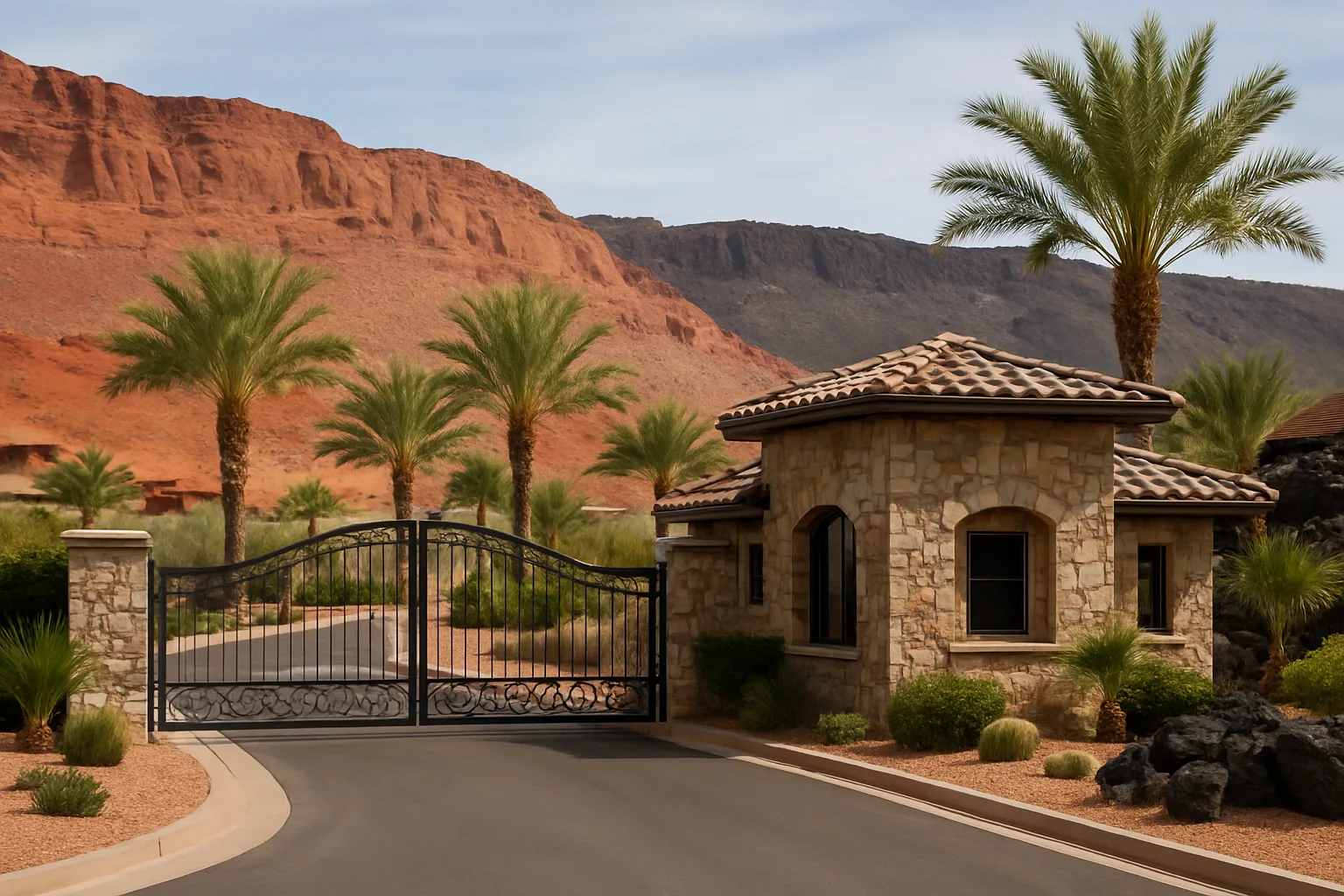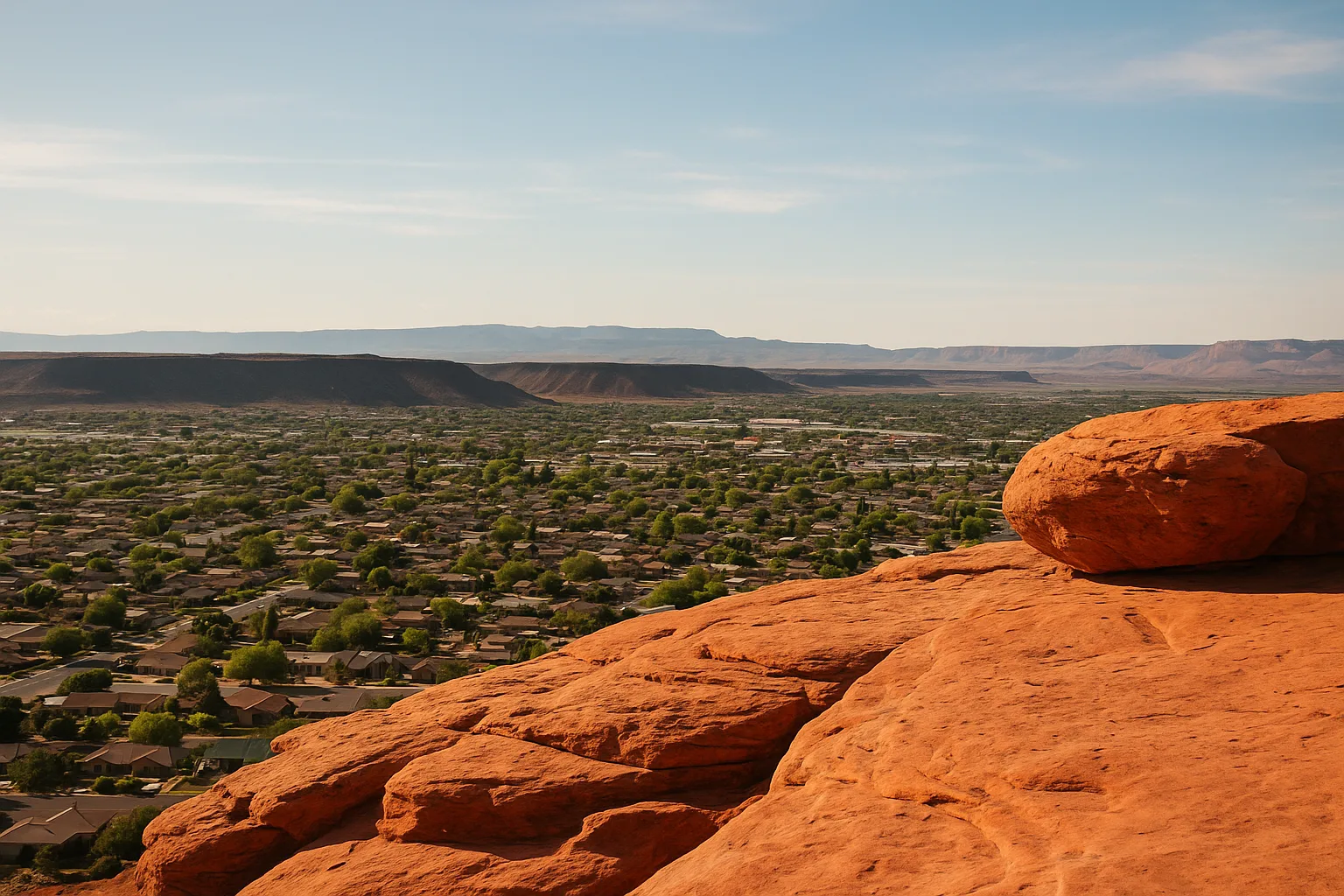
The Good and The Bad of Living in St. George, Utah
The good and bad of living in St. George, Utah: low crime, mild winters and red-rock trails, versus 100°F summers, tourist traffic and water limits.
St. George sits in Utah's southwest corner, about two hours from Las Vegas, surrounded by red cliffs, black lava ridges and desert. It has grown from a small pioneer town into a city of more than 100,000 people, and it draws retirees, remote workers and families from across the West. Most people who look at moving here ask the same few questions: Is it safe? How hot does it get? What's the catch?
This is a quick, honest read on the good and the bad. For a longer breakdown of each trade-off, see the full pros and cons of living in St. George, or browse every St. George home for sale to see what's on the market today.
St. George at a Glance
- Population: about 106,000 (U.S. Census Bureau estimate for 2024), up from 95,342 in the 2020 census.
- Location: Washington County, off I-15, roughly two hours northeast of Las Vegas and about an hour from Zion National Park.
- Climate: desert, with long-term averages of about 8 inches of precipitation and 3 inches of snow a year.
- Market: a median sale price of $502,500, with 997 homes for sale.
Is St. George, Utah Safe?
By the numbers, yes. St. George's crime rates sit well below national medians. Based on FBI data for 2024 compiled by NeighborhoodScout:
- Violent crime: about 2.1 incidents per 1,000 residents, compared with a national median of 4.0 and a Utah rate of 2.3.
- Property crime: about 10.3 incidents per 1,000 residents, compared with a national median of 18 and a Utah rate of 14.1.
Put simply, St. George's violent crime rate is roughly half the national median and a little below Utah's overall rate, and its property crime rate is lower than both. Like any city, it isn't crime-free. Property crime, such as car break-ins and package theft, is far more common than violent crime, and the usual habits apply: lock vehicles, keep valuables out of sight at trailheads and shopping centers, and bring packages in quickly.
One number can look confusing. NeighborhoodScout's overall index rates St. George as safer than about a third of U.S. cities and towns. That index compares St. George with every city and town in the country, including many very small towns with little reported crime, so a city of 100,000 rarely scores high on it. Compared with other cities its size, St. George's rates are low.
Buyers who want to check a specific street can look up recent incidents through the St. George Police Department and ask neighbors how the area feels. The city is especially popular with retirees; the 55-plus communities in St. George and resort-style neighborhoods such as SunRiver are a big part of the market. The guide to the best 55+ communities in St. George compares their prices and HOA dues.
The Good
Mild winters and lots of sunshine
Winter is the reason many people move here. January highs average around 54°F, snow is rare and usually gone by noon, and most of the year is dry and sunny. Golf, pickleball, hiking and cycling continue right through the winter months, when much of the country is shoveling. Spring and fall are the most comfortable seasons of all.
Red rock in every direction
Snow Canyon State Park is a short drive north of town, with lava tubes, sandstone hikes and a paved path. Zion National Park is about an hour away, Sand Hollow and Quail Creek reservoirs are east of town, and the city itself has an extensive network of paved trails, including trails along the Virgin River. Few cities this size have this much public land this close to home.
Low crime and a clean, orderly city
As the numbers above show, crime is low for a city of this size. Streets and parks are well kept, and residents tend to notice how little graffiti and litter there is compared with larger metros.
Arts, events and a college town
Utah Tech University brings college sports, concerts and lectures. Tuacahn Center for the Arts, an outdoor amphitheater in a red-rock canyon in neighboring Ivins, stages musicals and concerts. The city also hosts the St. George Marathon and the Huntsman World Senior Games each October, along with a steady calendar of races, tournaments and festivals.
Health care and everyday services
Intermountain St. George Regional Hospital is the region's main hospital, and the city has the big-box stores, restaurants and services that smaller towns in the region lack. Residents of nearby Hurricane, Ivins and other towns drive to St. George for shopping and specialists.
A flat state income tax
Utah has a flat individual income tax rate, 4.5% for the 2025 tax year. Buyers moving from Nevada, which has no state income tax, should budget for the difference.
The Bad
Summer heat is the real test
St. George's long-term July average high is about 101°F, and many summer days run hotter than that. It's a dry heat, but outdoor activity shifts to early morning and evening for much of the summer. Many people who visit in March or October and fall in love with the city haven't yet seen July. Anyone serious about moving should visit in midsummer first. Month-by-month details are in this guide to St. George weather. A pool, shade and an efficient air-conditioning system matter more here than in most places; browse St. George homes with pools.
Tourist and event traffic
St. George is the largest city on the way to Zion, and big events fill hotels and restaurants. Day-to-day traffic is still light by big-city standards, but busy weekends, race days and holiday periods mean longer waits and crowded roads. Locals learn to plan errands and dinners around the event calendar.
A smaller job market
The local economy is much smaller than the Wasatch Front's. Many newcomers arrive with remote work, their own business or retirement income rather than a local job offer.
Housing costs have climbed
Demand from out-of-state buyers has pushed prices far above where they were a decade ago. The latest median sale price is $502,500, homes are taking a median of 41 days to sell, and they are closing at 98.1% of list price. Monthly trends are on the St. George market stats page, and a line-item budget is in the St. George cost of living breakdown.
Water is limited
St. George is in one of the driest parts of the country, and water conservation shapes how yards look. The Washington County Water Conservancy District recommends avoiding outdoor watering from 10 a.m. to 8 p.m. in summer and offers incentives of up to $3 per square foot to replace grass with water-efficient landscaping. Most newer neighborhoods use rock, desert plants and drip irrigation instead of lawns, and many HOAs set their own landscaping rules.
Few late-night options and limited transit
St. George has a growing restaurant scene, but nightlife is quiet and most places close early. SunTran buses serve parts of the city, but daily life here assumes a car.
Before Moving to St. George
A few steps help buyers avoid the most common regrets:
- Visit in July or August. Spend a few days in peak heat, run errands at midday and see how it feels before committing.
- Budget for summer power bills. Air conditioning runs for months, so ask sellers for a year of utility bills and look at the home's insulation, windows and AC age.
- Read the HOA rules. Many neighborhoods regulate landscaping, short-term rentals, RV parking and exterior colors. Get the documents before making an offer.
- Check drainage and washes. Summer monsoon storms can send water through dry washes quickly. Check the address on FEMA flood maps and ask the seller about past water problems.
- Think about single-level living. Many buyers here plan to stay for decades; browse single-story homes in St. George.
- Learn the local culture. The city's pioneer heritage still shapes some of its social life and its Sunday rhythm. This guide on life in St. George for newcomers of every faith covers what to expect.
Who St. George Fits Best
St. George works well for:
- Retirees and near-retirees who want mild winters, golf, pickleball and good health care
- Remote workers who want outdoor access and a lower-crime city
- Hikers, cyclists and off-roaders who want red-rock trails close to home
- Buyers moving from higher-cost states who want a newer home
St. George is less ideal for:
- Anyone who can't tolerate long stretches of 100°F weather
- Professionals who need a large local job market
- Buyers who want a big green lawn and low water bills
- People who want late-night entertainment and public transit
Bottom Line
The good in St. George is real: low crime, mild winters, red-rock scenery and the services of a regional hub. The bad is real too: brutal summers, a smaller job market, rising housing costs and life built around water conservation. Buyers who visit in July, run the numbers and still want to come are the ones most likely to be happy with the move. For a look at where to live once the decision is made, see the guide to the best areas around St. George.
Posted by Kristopher Larson
Frequently asked questions
Is St. George, Utah a safe place to live?
Yes. Based on FBI data for 2024 compiled by NeighborhoodScout, St. George had about 2.1 violent crimes per 1,000 residents, roughly half the national median of 4.0 and a little below Utah's rate of 2.3. Property crime was about 10.3 per 1,000 residents, below both the national median (18) and the Utah rate (14.1). Property crime is far more common than violent crime, so basic precautions still apply.
How safe is St. George compared with the rest of Utah?
St. George's violent crime rate is slightly below Utah's overall rate, and its property crime rate is well below it: about 10.3 incidents per 1,000 residents, compared with 14.1 statewide, based on 2024 FBI data compiled by NeighborhoodScout.
What are the biggest pros of living in St. George?
Mild, sunny winters, low crime, quick access to Snow Canyon State Park and Zion National Park, a regional hospital, Utah Tech University, and a full range of shopping and services for Southern Utah.
What are the biggest cons of living in St. George?
Summer heat (the long-term July average high is about 101°F), tourist and event traffic, a smaller local job market, housing costs that have risen sharply, and water conservation rules that shape landscaping. Current market numbers: a median sale price of $502,500 and a median of 41 days on market.
Does it snow in St. George, Utah?
Rarely. St. George's long-term weather record averages about 3 inches of snow a year, usually in light storms that melt the same day. January highs average around 54°F, and nights often drop below freezing.
Does St. George have water restrictions?
The Washington County Water Conservancy District recommends avoiding outdoor watering from 10 a.m. to 8 p.m. in summer and offers incentives of up to $3 per square foot to replace grass with water-efficient landscaping. Cities and HOAs can set their own rules, so check the requirements for a specific address.
St George, Utah housing market
A quick read on what homes are doing in St George right now — pulled live from the MLS.
Keep reading
More from the blog
St. George Asking Prices Are 24% Below the 2022 Peak: What Late-2026 Buyers Should Weigh
What $800,000 Buys in St. George and Southern Utah, Town by Town
Luxury Neighborhoods in St. George and Southern Utah: 7 to Know