Selling a House With Fire Damage: Options for Homeowners
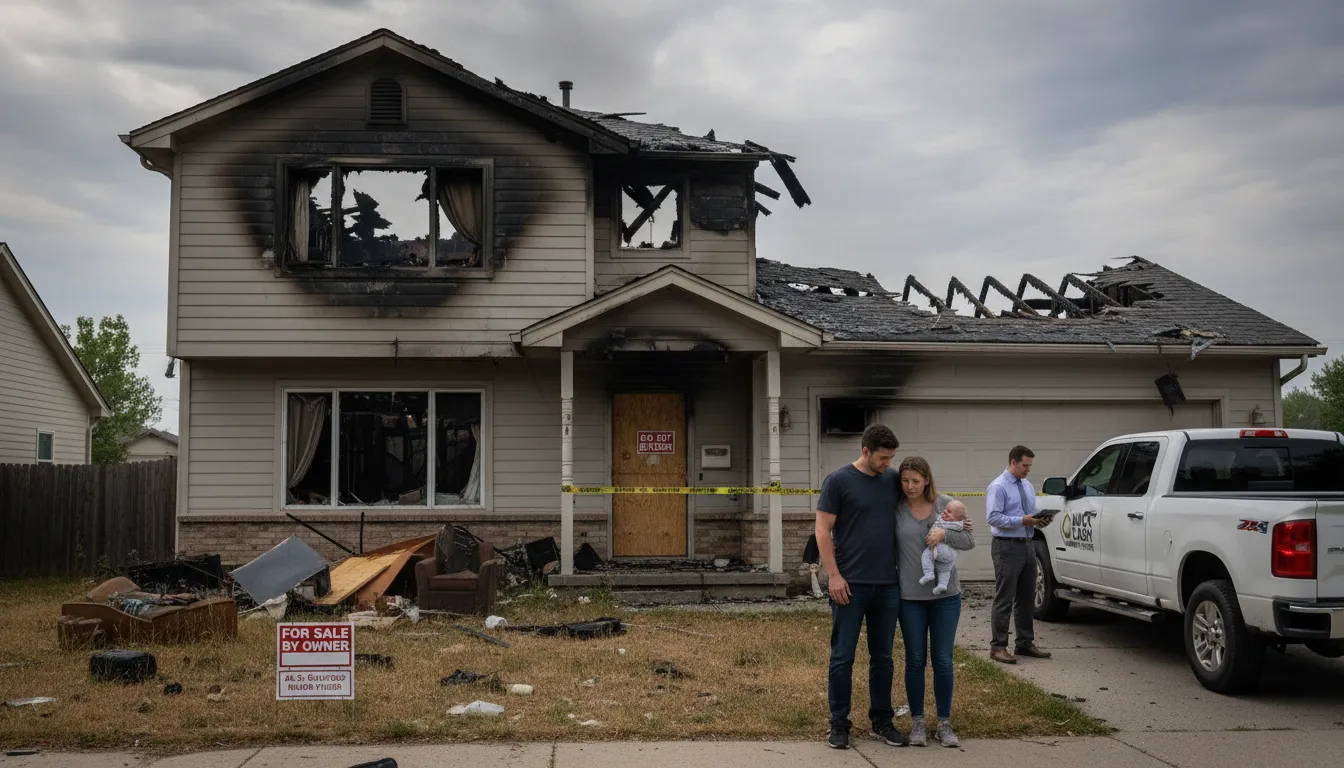
After a fire inside the home, two main types of damage can be accounted. One refers to the visible physical damage, while the other comprises the economic and emotional after-effects. Homeowners damaged by fire may find the decision-making process a source of confusion and stress, especially since the situation itself can be very difficult.
After a fire inside the home, two main types of damage can be accounted. One refers to the visible physical damage, while the other comprises the economic and emotional after-effects. Homeowners damaged by fire may find the decision-making process a source of confusion and stress, especially since the situation itself can be very difficult.
Nevertheless, there is a bright side of the story that these are actually real alternatives and a good grasp of them will make your way much more comfortable. Firstly, you should realize that even a severely fire-damaged house is still a piece of real estate that can be sold. The extent of damage, whether or not you are covered by insurance, the property market in the locality, and your own financial status will influence your most advantageous option among those available. Selling is not taken away from you completely however they mostly determine the relative merits of the options also in such a way that it is really worthwhile for you to get to know them before you decide on your course.
Understanding What You're Actually Dealing With
First of all, in order to make a selling decision logically, you have to be sure about the extent of the damage. When the fire damage, you damages only visually, seeing that not only, the smoke and the soot can penetrate walls and other places that are not seen immediately. The water from the firefighting also leads to a number of water problems; the growth of mold is only one of them and it takes place rapidly in the following weeks after the fire. You can rely on a structural assessment by a professional company and a restoration contractor's estimate as two pieces of critical information to be able to make wise decisions. Your selling directions may be significantly influenced by the property insurance claims process that is going on at the same time as this one.If you have a homeowner's insurance policy that covers fire damage - which most of the standard ones do - then you have the right to a settlement amount that reflects the cost of bringing the damaged property back to its original condition.
Option One: Repair and List on the Open Market
Generally, putting a house back in shape before the sale is the way to get the highest selling price. Nevertheless, it is the selling method with the greatest consumption of time, money, and risk. A home that has been totally renovated following the fire damage repair is capable of fetching a sale price that is at or close to the market value of the neighboring properties, provided that the repair work was performed properly and can be well documented. Buyers who rely on conventional mortgage financing are able to buy it without any restrictions and the pool of potential buyers is as large as for any regular listings.
On the other hand, there are major difficulties involved. Fire restoration is very expensive and at the same time a quite complicated process - you have to do structural repairs, smoke remediation, replacement of affected systems, and finally, cosmetic restoration to a level that will be able to pass inspection and at the same time satisfy a lender's appraiser. There is no doubt that the costs of the project will be higher than the initial estimation, the times for completion will be extended, and in the meantime, you will not only have to keep the property - pay for insurance, taxes and any remaining mortgage - but also bear these burdens through the entire process.
Option Two: Selling As-Is on the Open Market
You can technically put a property that has been fire-damaged on the open market in the as-is condition however this approach does have a number of very serious drawbacks. For starters, the buyers' pool will be greatly limited because most buyers who are looking to use FHA, VA or conventional financing will not be able to buy a severely fire-damaged property as lenders require the home to be up to minimum habitability standards for loan approval. So, you are basically stuck with cash buyers, investors, or those buyers who are willing and able to use renovation loan products, and these only represent a certain portion of the market.
Option Three: Selling Directly to a Cash Buyer
For a lot of homeowners who have fire-damaged houses, one option that completely financially and materially makes sense for them is to sell their house directly to a cash buyer. These cash buyers with the experience of dealing with distressed properties including fire-damaged homes purchase the property as is without them having to repair, will do their own inspection and planning for the remediation, as well as closing in a time frame of days or weeks rather than months. The negative side is the price. A cash buyer will factor in the costs of the restoration work along with the risks so their offer will be below that which the property would fetch on the market if it were fully repaired. That discount is the buyer's profit margin for doing the work - it is not by chance, and typically there is very little room for negotiating it quite substantially in either direction.
So, financially speaking, the question is whether the stock with a repair discount is less than total stock costs of carrying and managing the repair process, and accepting the risks.
For homeowners who are dealing with the emotional aftermath of a fire, who don't have the capital to fund restoration work upfront, whose insurance settlement doesn't cover the full repair cost, or who simply need to resolve the situation and move on, the cash sale route often looks considerably more attractive once the real numbers are on the table. Cash buyers like Milwaukee home buyers who specialize in fire-damaged and distressed properties understand these situations well and can typically provide a clear offer quickly which gives you a concrete data point to compare against your other options rather than making decisions in the abstract.
Navigating the Insurance Settlement Alongside a Sale
When it comes to selling your home that has been damaged by fire, one of the most challenging aspects is how the insurance settlement will impact the sale. If you have already received the settlement typically the money is yours to do whatever you want with it. You are not obligated to use the insurance money to repair the property before putting it up for sale. However, if you have made the claim and the settlement is still not finalized, then the issue of your insurance policy and how the settlement is made will be determining factors.
Some insurance policies release payments at different stages: the first being the actual payment of the cash value of the item, and then the recovery of the depreciation is paid after the repairs. If the property is sold without fixing it, then probably only the first payment will be receivable, and the recovery of the depreciation is waived. It is critical to be aware of this distinction before selling, as it may greatly change the bottom line of the various scenarios in ways that are not very obvious at first.
Making the Right Decision for Your Situation
Actually, there isn't a single, definitive answer to the question of what a homeownershould do with a fire-damaged property. Which options are best depends on a number ofthings including: how badly the house is damaged, insurance situation, your financial situation,time frame, and how complicated you want the process to be.
It is crucial to base your decision on clear facts rather than assumptions. Get a thorough assessment of the damage. Be aware of the exact coverage of your insurance. Work out the real numbers for each alternative - not the initial numbers but the final income after all the expenses and the timeframe have been considered.It is often this work that helps in making the right decision very clear compared to the initial decision.
Keep reading
More from the blog

Gas Line Installation: What Homeowners Need to Know First
Roof Timeline Guide for Buying an Older Utah Home
How to Choose Windows for a Utah Home With a Mountain View