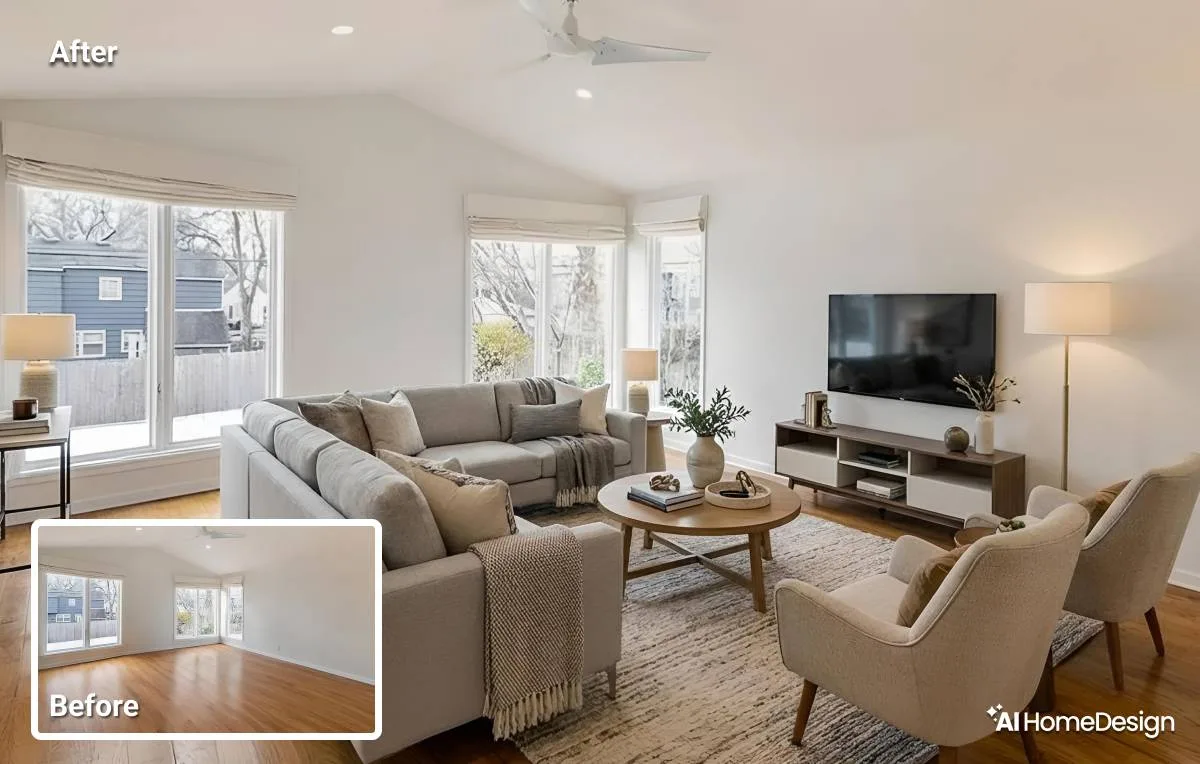
Online Real Estate Photo Editing: A New Standard for Realtors
Online real estate photo editing helps agents improve visuals, maintain MLS consistency, and build buyer trust.
Listing photos do more than document a space. They set expectations and shape buyer judgment before a showing is even scheduled. Agents and brokers see it every week: two listings with similar specs can get very different results when one photo set looks natural, well-prepared, and coherent at first scroll.
That’s why AI photo editing for realtors has evolved beyond basic correction. Smart teams now approach real estate photo editing as part of the overall listing strategy.
In the old workflow, editing mainly meant fixing what looked wrong after the shoot. In the newer workflow, agents apply edits with a defined visual direction, ensuring the whole gallery supports how the property is presented across channels.
Online real estate photo editing is not about repairing a single photo. It’s about delivering a full set that communicates space, light, and livability clearly, and that supports the listing’s positioning across every channel.
This change has less to do with new tools and more to do with earlier decisions. A clear visual direction is set for the entire gallery, then edits reinforce consistency, realism, and cohesion.
The Evolution of Real Estate Photo Editing: From Enhancement to Storytelling
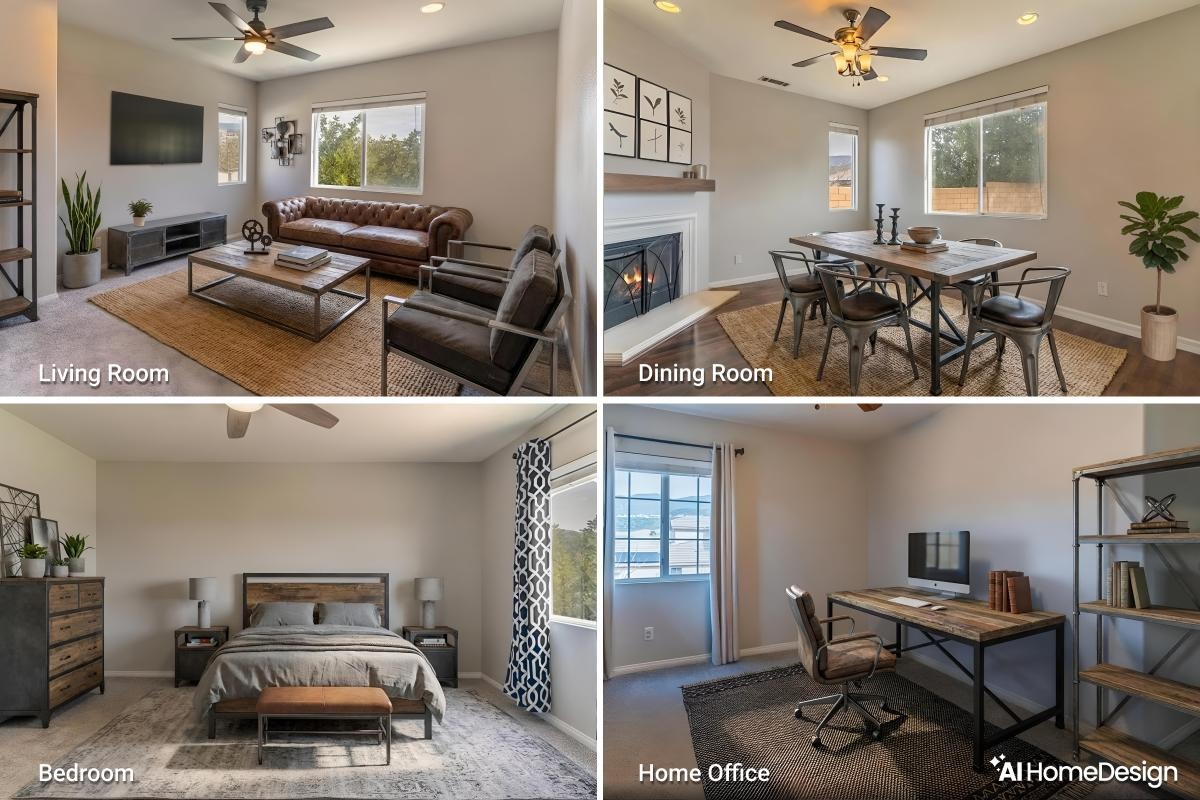
Real estate photo editing has followed a clear progression in how teams use it during listing preparation. It helps to think of it in four phases, with each phase moving closer to buyer psychology.
1) Correction
In early workflows, agents hired editors to fix obvious problems such as dark rooms, mixed lighting, crooked verticals, and small distractions. The main goal was simply to make the photo usable and visually accurate.
2) Enhancement
Teams then pushed toward clarity and polished their photos to perfection. They lifted shadow detail, managed window brightness more carefully, and cleaned minor clutter with more control. This phase raised the baseline, and buyers began to expect a cleaner look from most listings.
3) Presentation
Later, agents began treating the gallery as a set rather than a collection of single images. They wanted the same feel from shot to shot because buyers browse photos as a sequence. One odd image can break the story and create doubt.
At this stage, editing supports consistency across the full set, not just improvement of individual frames.
4) Storytelling
Today, agents favor editing tools that help them keep a believable, consistent look across the full photo set, so the gallery supports the listing’s positioning from the first scroll. A downtown condo can read crisp and modern, a family home can read calm and bright, and a renovated property can come across as finished and cared for.
The images do the early explanation: how the space feels, how it flows, and what kind of living it supports. In this context, online real estate photo editing supports the sale by shaping presentation, rather than merely patching problems.
The Perception Gap: Why Editing Changes What Buyers Perceive
Buyers make judgments about the property in seconds. They interpret photos as evidence, not as art. When a gallery feels “premium,” buyers rarely say “the exposure looks great.” They say “this place looks well maintained,” or “this home feels bright,” or “this looks like a property worth seeing.” Editing shapes that reaction through four interpretation points.
Space size
Deep shadows and muddy corners can make rooms feel smaller, while uneven contrast can make spaces feel cramped, and extreme wide-angle distortion can raise suspicion, especially when buyers expect the space to feel different in person, in terms of size and proportions.
Editing that restores readable edges, balanced contrast, and believable lines helps buyers understand scale without doubt with more confidence.
Light quality
Buyers do not think in technical terms. They react emotionally: warm, cold, bright, gloomy, and so on. Editing can shift a room from “dim and stale” to “bright and inviting” without inventing anything. When edits push too far, photos lose depth and start to look synthetic, which can trigger buyer distrust rather than confidence.
Balanced light keeps walls neutral, preserves texture, and maintains a natural falloff from windows to corners. Strong online real estate photo editing keeps that balance intact instead of over-brightening the entire frame.
Lifestyle potential
A clean, evenly lit kitchen signals everyday ease. A living room with controlled highlights feels comfortable and lived-in. A bedroom with a calm tone brings rest and ease to mind. Buyers use these cues to imagine routines. Editing can strengthen those cues, and it can also weaken them if it turns the home into something it is not.
Credibility
When buyers sense manipulation, they question everything else including price, condition, and even the neighborhood claim. The listing may still get clicks, but it loses trust quickly. The best results keep the home believable and simply present it at its best, rather than pushing it beyond reality.
That is the perception gap. The property stays the same, but the buyer’s interpretation shifts based on visual signals. Buyer-focused online real estate photo editing helps agents manage that gap deliberately.
A Self-serve Workflow Agents Can Repeat Without Back-and-forth
When agents edit their own photos, speed alone isn’t the win. Control is the real advantage, because it enables them to move fast while maintaining a consistent visual standard.
Step 1: Plan the gallery as a sequence
Decide on the order and narrative flow before editing begins. Think of the gallery as a guided walkthrough. The first 5–8 images should answer the buyer’s quickest questions: what the home is, how the main spaces connect, and what feels distinctive. When the sequence is defined early, it becomes clear which rooms carry the story and which ones simply complete it.
That approach keeps edits consistent across the full set, because adjustments happen with the overall flow in mind rather than treating each photo as a separate task. Here’s a simple sequence that works for most listings, with room to adjust based on what the property highlights first:
-
Exterior and entry
-
Main living area
-
Kitchen and dining
-
Primary suite
-
Secondary rooms
-
Backyard, views, amenities
This structure makes coverage gaps easier to spot and keeps the gallery from feeling scattered, so buyers can follow the property naturally.
Step 2: Apply one direction to the whole set
When editing real estate photos online, avoid chasing trendy styles or overly stylised looks. Choose the visual direction based on the home’s price range, location, and the lifestyle it realistically supports. Then apply the same editing direction across the full batch. Keep brightness and color tone even across rooms, and avoid “one-off” looks that break the flow.
Step 3: Review like a buyer
Online real estate photo editing can save you a lot of time, but speed should never override consistency. When editing is complete, run a structured final review. Start with a quick pass to judge the set as a whole, because buyers decide in seconds.
Watch for sudden jumps in brightness, color tone, or sharpness from one image to the next, and confirm that the main rooms feel visually connected.
Then do a second pass on the first 6–10 images, since those usually drive the decision to keep browsing or exit. Finally, zoom in on any photos that feel “off” to confirm what caused the reaction.
Ask three quick questions:
-
Do the rooms feel like one property?
-
Does the set feel believable at a glance?
-
Does any photo look pushed too far compared to the rest?
Step 4: Fix the outliers, not the whole set
If two images look off, re-edit those two. Don’t chase perfection across every photo. Buyers judge the set as a whole, and one or two outliers do the most damage. Fixing those images keeps the gallery coherent without turning editing into a time sink. After you redo the outliers, do one final quick scroll to confirm the set feels even from start to finish.
Mismatched Visuals That Reduce Trust
Listing photos appear across MLS, portals, social posts, email campaigns, and ad creatives, often within the same search session.
If buyers move between these surfaces and notice different versions of the same room, they assume something changed or was hidden, which quickly creates doubt.
Agents who’ve already tried online real estate photo editing often ask why one edited listing feels polished while another feels fake. Review the full gallery using these checks to keep the presentation natural and consistent from the first image to the last:
-
Depth stays intact. If shadows disappear completely, rooms look flat.
-
Windows make sense. Buyers accept a balanced view; they reject windows that look pasted or gray.
-
Color stays believable. White walls shouldn’t drift blue; wood shouldn’t turn orange.
-
Textures stay visible. Over-smoothing makes surfaces look plastic.
-
Perspective stays sane. If distortion exaggerates width, buyers suspect the room will feel smaller in person.
These checks answer the question buyers carry into the showing: “Can I trust what I’m seeing?”
One Tool, Full Listing Workflow
Many tools can edit real estate photos online, but only a few are built specifically for real estate workflows. Most platforms focus on one or two edits such as virtual staging or decluttering.
If agents want one single platform for real estate photo editing that covers the full listing workflow, AI HomeDesign supports image enhancement, item removal, day-to-dusk, virtual staging, and renovation features.
It’s a practical fit for agents and brokers who need listing-ready visuals across different properties, with an end-to-end workflow instead of switching between separate tools for online real estate photo editing.
The Real Shift Behind Online Real Estate Photo Editing
Online real estate photo editing is no longer just a technical correction step. It has become part of how agents manage perception, guide buyer attention, and maintain consistency across every channel where a listing appears.
The difference is not in how dramatic the edits look. It is in how intentional they are. When a gallery follows one clear visual direction, stays believable, and matches what buyers will see in person, it strengthens trust before the first viewing even takes place.
In today’s multi-channel environment, where MLS listings, portals, email campaigns, and social ads overlap in the same search session, consistency matters more than intensity. The goal is not to impress buyers with editing. The goal is to help them understand the space clearly and feel confident booking a viewing.
That shift, from fixing photos to shaping presentation, is what defines modern online real estate photo editing.
Keep reading
More from the blog
Gas Line Installation: What Homeowners Need to Know First

Roof Timeline Guide for Buying an Older Utah Home
How to Choose Windows for a Utah Home With a Mountain View