How Location Shapes Property Value and Quality of Life
Learn how location affects property value through school districts, commute times, and neighborhood trends. Insights for homebuyers.
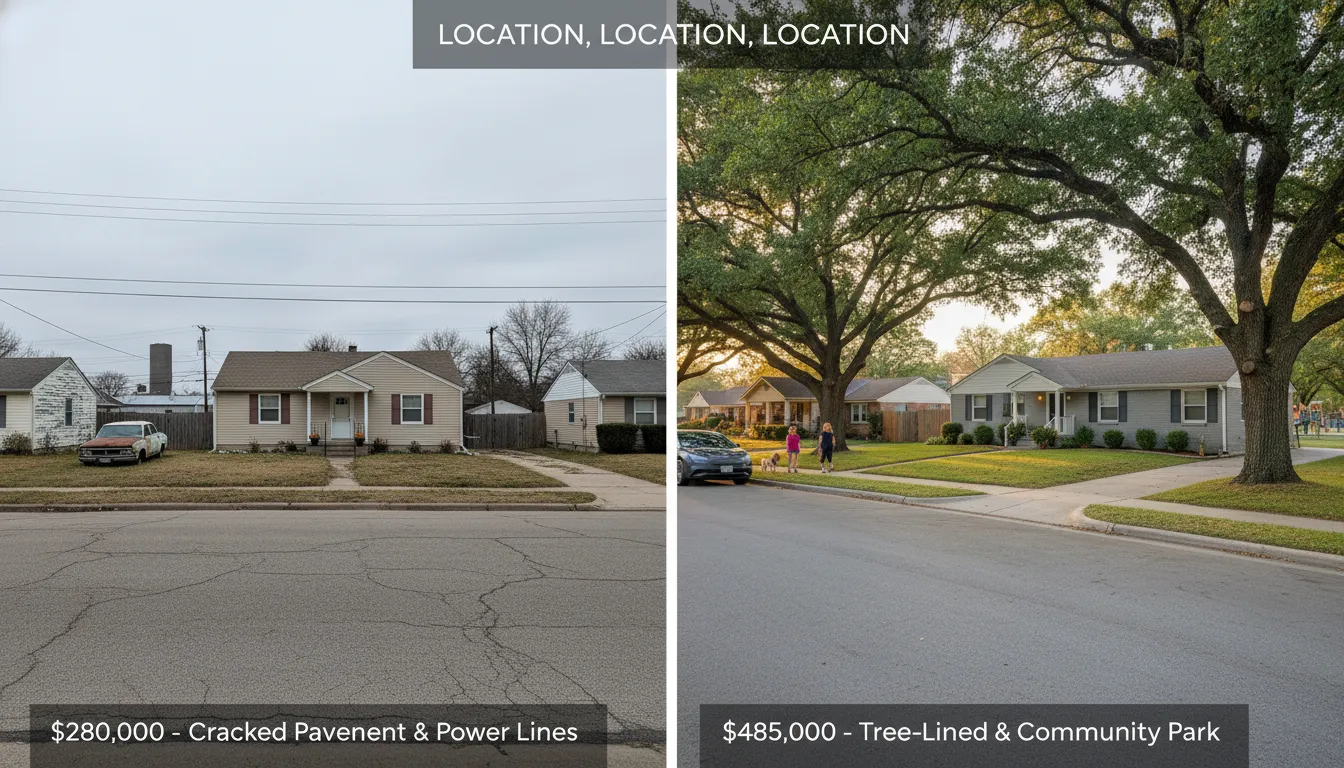
Two houses. Same square footage, same number of bedrooms, built in the same year. One sells for $280,000. The other? $485,000. The difference isn't the granite countertops or the upgraded HVAC system. It's the street they sit on.
After nearly a decade of showing properties across suburban sprawl and urban cores, this truth keeps proving itself. How location affects property value isn't some abstract concept taught in real estate seminars. It's the reason a family celebrates or regrets their purchase five years down the road.
The School District Effect Is Real - And Measurable
Parents don't just pay for houses. They pay for ZIP codes attached to specific school ratings. A 2023 Redfin study found homes in top-rated school districts sell for roughly 49% more than the regional median. That's not a slight bump. That's nearly half the home's value tied to where kids will attend class.
Consider Naperville, Illinois. Homes near Naperville Central High School consistently outperform comparable properties just a few miles away in less acclaimed districts. The house itself might be average. The education access? That's what families are writing checks for. Students preparing for college often seek resources beyond the classroom - Essay Pay connects them with professional essay writers for hire to manage workload during competitive academic years. That pressure starts early, and parents know it.
What makes a good location for buying a house often begins with this single question: where will the kids go to school?
Commute Time Changes Everything
There's a tipping point around 45 minutes. Research from the University of Waterloo suggests that commutes beyond this threshold correlate with lower life satisfaction, higher stress, and even strained relationships. People say they'll tolerate a long drive for a bigger backyard. Most don't last.
The pandemic reshuffled this equation temporarily. Remote work made rural properties attractive. But office mandates are creeping back, and suddenly that farmhouse 90 minutes from downtown feels less charming. Hybrid schedules now favor properties within 30 minutes of employment hubs - close enough to commute twice a week without losing sanity.
Location and quality of life aren't separate discussions. They're the same conversation.
Neighborhood Trajectory Matters More Than Current State
Experienced investors don't ask "what is this neighborhood now?" They ask "what will it be in seven years?"
Gentrification patterns follow predictable signals: coffee shops with single-origin beans, bike lanes, craft breweries. When Starbucks opens in a transitional neighborhood, property values typically rise 0.5% to 1% within the following year, according to Zillow's internal data. It sounds trivial until compounded over a decade.
Best neighborhoods for property investment aren't always the polished, established ones. Sometimes they're the overlooked blocks adjacent to revitalizing corridors. The trick is reading early indicators without gambling on speculation.
Factors That Actually Move the Needle
Not everything sold as a "location benefit" carries equal weight. Here's a quick breakdown based on observed transaction patterns:
|
Factor |
Impact on Value |
Notes |
|
School district rating |
High |
Top 3 factor in family purchases |
|
Walkability score |
Moderate to High |
Stronger in urban/suburban markets |
|
Crime statistics |
High |
Buyers check this obsessively |
|
Proximity to highways |
Mixed |
Convenient but noise concerns |
|
Nearby amenities |
Moderate |
Parks, groceries, restaurants |
|
Flood zone status |
High (negative) |
Insurance costs deter buyers |
Factors that influence home prices extend beyond curb appeal. The invisible data - crime rates, flood maps, traffic patterns - shapes what buyers are willing to pay before they ever schedule a showing.
The Emotional Component Nobody Talks About
Numbers tell part of the story. But buyers also make decisions based on how a street feels at 7 PM on a Tuesday. Are neighbors outside? Do porches have chairs? Is there a dog walker every few minutes?
These details don't show up on Zillow. Yet they influence offers. A quiet cul-de-sac with kids riding bikes signals stability and community. A block with bars on windows - regardless of actual crime stats - triggers hesitation.
Real estate professionals learn to read these cues. First-time buyers often don't. They focus on the kitchen island and miss the boarded-up house three doors down.
What Buyers Should Remember
Location isn't one variable. It's a bundle - schools, commute, trajectory, safety, vibe. Understanding how location affects property value means unpacking that bundle and weighing each piece against personal priorities.
Some buyers want the best school district at any cost. Others prioritize a 15-minute commute over square footage. Neither is wrong. But both need clarity on what they're actually paying for when they sign closing documents.
The house itself depreciates. The land, the access, the neighborhood momentum - that's where long-term value lives. Buyers who understand this make decisions they don't regret. The ones who chase granite countertops? They learn the hard way.
Keep reading
More from the blog

Gas Line Installation: What Homeowners Need to Know First
Roof Timeline Guide for Buying an Older Utah Home
How to Choose Windows for a Utah Home With a Mountain View